Costa Rica National Symbols: Flag, Bird, Tree & More
Costa Rica’s national symbols are far more than ceremonial icons — each one tells a chapter of the country’s history, ecology, and deeply held values. From the five-striped Costa Rica national flag to the hauntingly beautiful song of the yigüirro, these symbols offer travelers an intimate window into what makes Costa Rica uniquely itself.
The National Flag and Coat of Arms
Costa Rica’s flag is one of the most recognizable in the Americas. Its five horizontal stripes — blue, white, red, white, blue — were adopted in 1848, inspired by the ideals of the French Revolution. The wide red center stripe represents the warmth and generosity of the Costa Rican people; the white stripes stand for peace and wisdom; the blue stripes symbolize the sky, opportunity, and the two oceans that flank the country. The flag’s beauty has earned it recognition among the world’s most distinctive national banners, and you will see it flying proudly throughout the country.
The national coat of arms (escudo) is equally rich in symbolism. Three volcanoes rise between the Pacific Ocean and the Caribbean Sea, representing Costa Rica’s dramatic geography. Seven five-pointed stars arching overhead stand for the country’s seven provinces, and the rising sun behind the mountains signals a bright future. Two merchant ships, one on each coast, speak to the importance of trade in national life.
The National Anthem
Costa Rica’s national anthem, adopted in 1853 with its current lyrics formalized in 1949, is one of the most beloved in Latin America. Known as the “Noble patria, tu hermosa bandera” after its opening line, the national anthem is celebrated for its lyrical, almost poetic quality. The lyrics emphasize peace, hard work, and the nation’s natural beauty — themes that resonate as deeply today as when they were written. Costa Rica’s national anthem lyrics about peace and prosperity set it apart from the more martial anthems common across the region.
The Yigüirro — National Bird
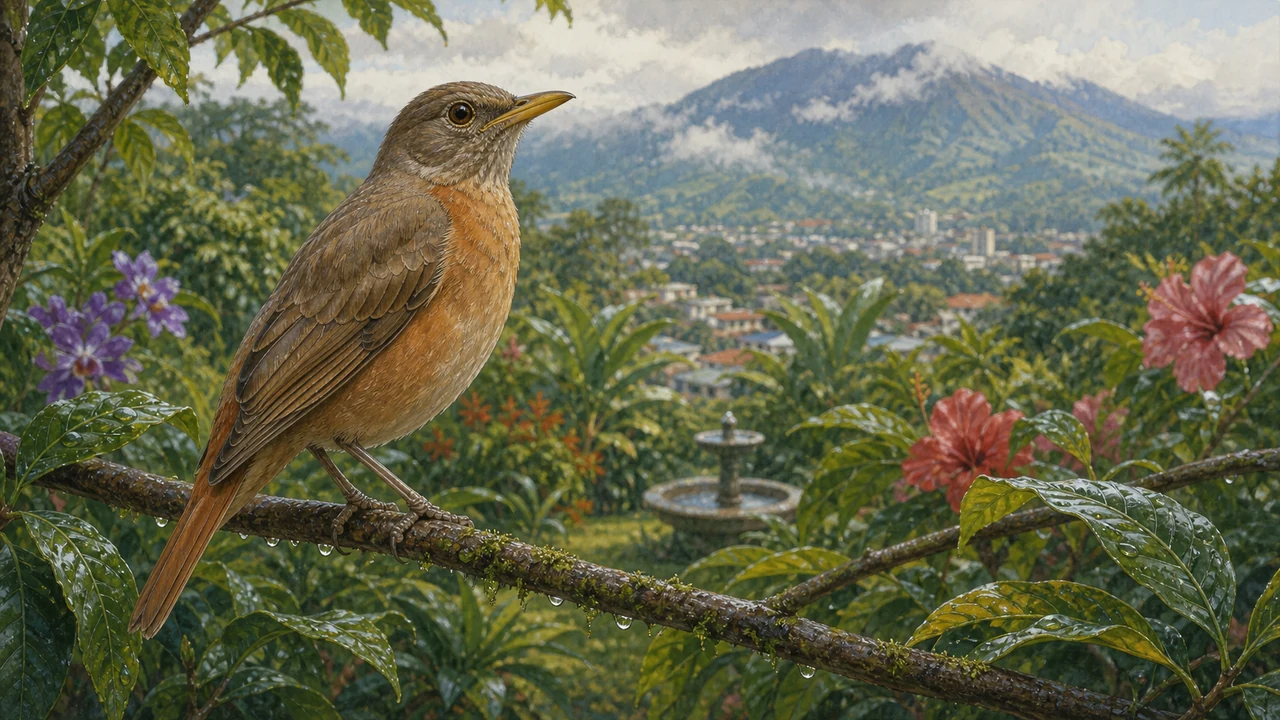
The clay-colored thrush, known locally as the yigüirro, is a deceptively plain-looking bird with a profoundly meaningful role in Costa Rican culture. Medium-sized and brown, it would be easy to overlook among the country’s thousands of more brilliantly colored species. Yet it was chosen as Costa Rica’s national bird for its melodious song, which swells through the highlands and Central Valley each year to herald the arrival of the May rains. Legend holds that the yigüirro calls the rain itself, making its song synonymous with renewal and agricultural plenty. Birdwatchers visiting the country will find it common in gardens, forest edges, and the grounds of many lodges — a democratic symbol that belongs to everyone. For deeper exploration of the country’s extraordinary avian life, see Birds of Costa Rica.
The Guanacaste Tree — National Tree
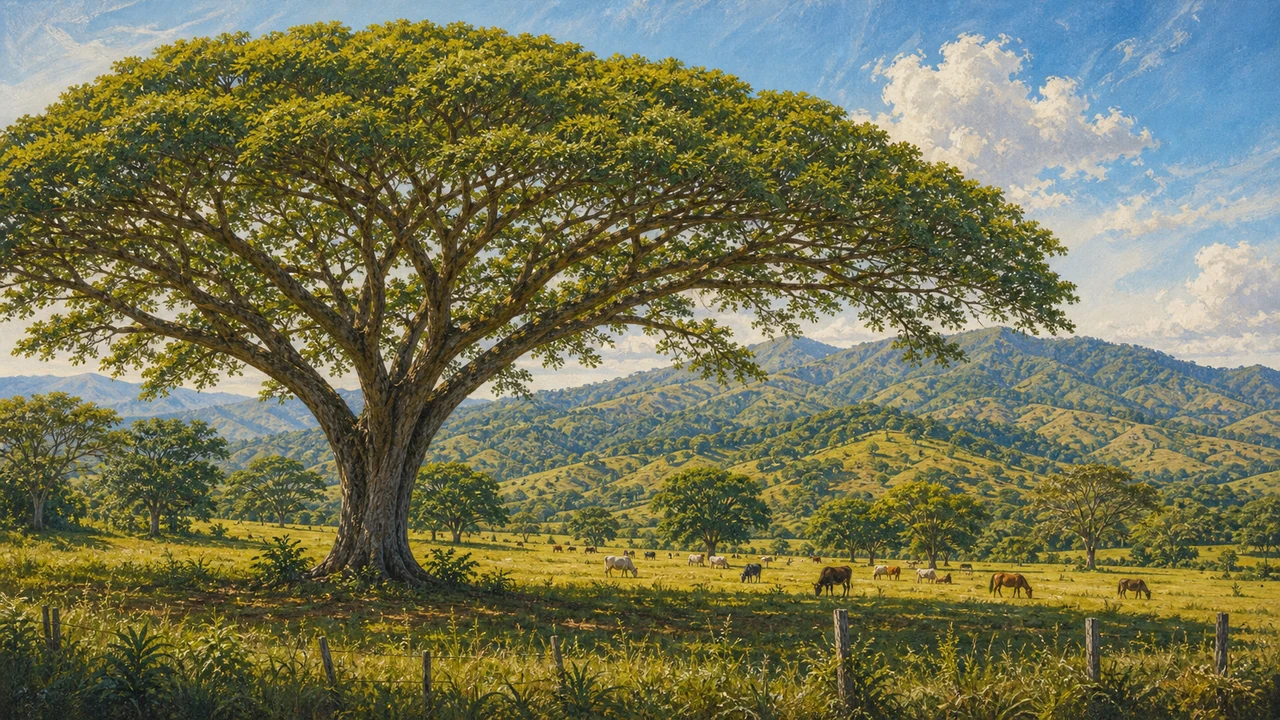
Few trees on earth command a landscape the way the guanacaste does. Its broad, umbrella-like canopy can span more than 30 meters, casting generous shade across the sun-baked savannahs of northwestern Costa Rica. The guanacaste tree (Enterolobium cyclocarpum) gives the province of Guanacaste its name — a word derived from the Nahuatl term for “ear tree,” a reference to the distinctive ear-shaped seed pods. The guanacaste as Costa Rica’s national tree was declared official in 1959, honoring both the biological grandeur of this species and the cultural identity of the Pacific northwest. Cattle shelter beneath it, songbirds nest in its branches, and its durable wood has long been prized by craftspeople. Visit Guanacaste National Park to see this magnificent tree in its natural habitat.
The Guaria Morada — National Flower
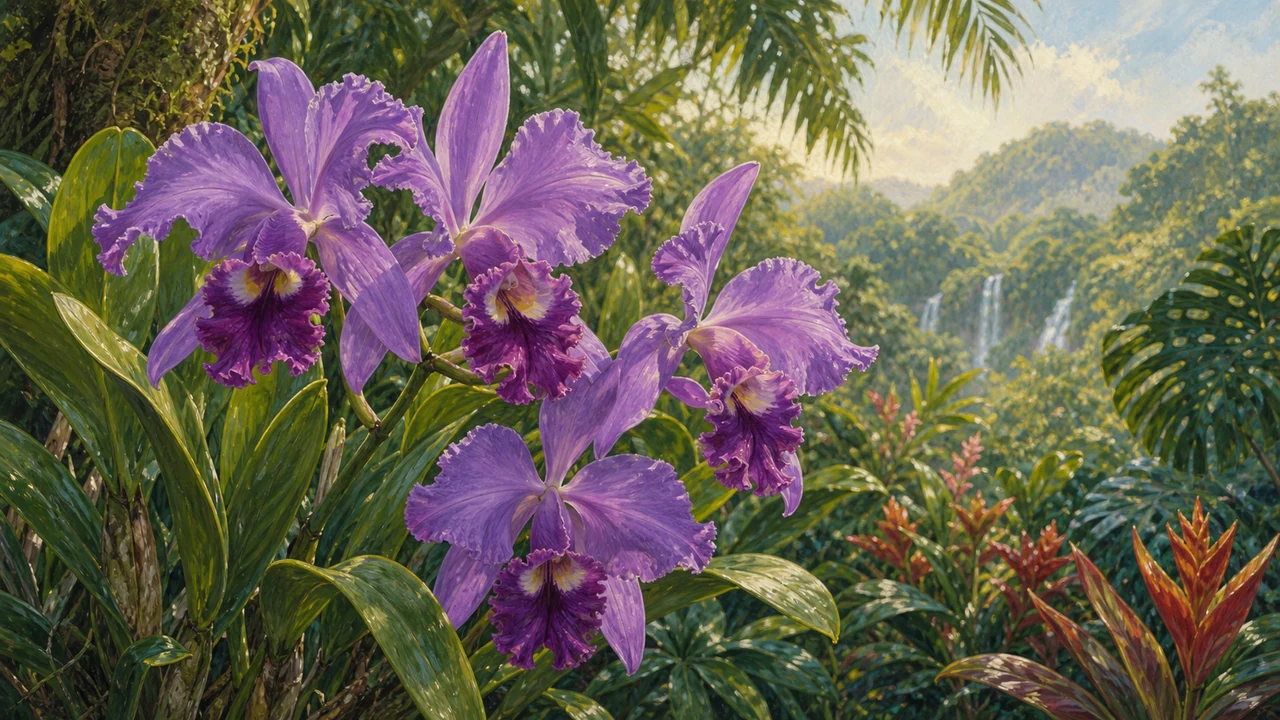
The guaria morada (Guarianthe skinneri) is a stunning epiphytic orchid — meaning it grows on the bark of trees rather than in soil — producing clusters of purple and white blooms that have captivated Costa Ricans for generations. The national flower blooms from January through April, making it a fixture of Easter Week (Semana Santa) markets and home altars across the country. It has been collected so intensively over the centuries that wild populations are now protected, and cultivated plants are sold widely throughout the Central Valley. The guaria morada orchid blooming season in Costa Rica draws orchid enthusiasts from around the world, and dedicated shows and fairs celebrate it each spring. Costa Rica’s ecotourism and nature scene offers many opportunities to see it growing in its natural forest setting.
The Painted Oxcart — National Labor Symbol
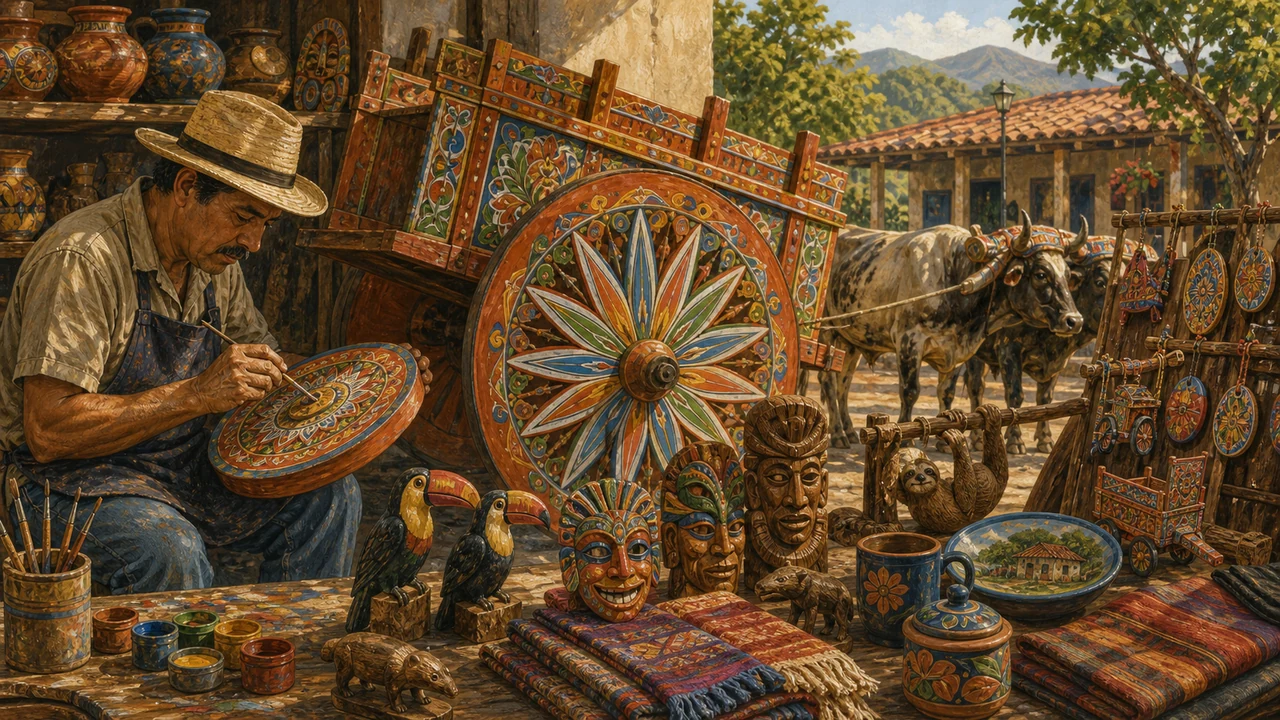
No symbol captures the spirit of Costa Rican rural heritage quite like the carreta — the brightly painted oxcart that is the country’s national labor symbol. In the 19th and early 20th centuries, these wooden carts, pulled by oxen, were the primary means of transporting harvested coffee beans from the highland farms of the Central Valley down to Pacific ports. Each region developed its own distinctive geometric and floral painted patterns, and artisans in the mountain town of Sarchí became famous for their intricate craftsmanship. UNESCO recognized the tradition of oxcart painting and the associated oxcart parade (Tope de Bueyes) as an Intangible Cultural Heritage of Humanity. Today, miniature painted oxcarts remain one of Costa Rica’s most beloved souvenirs. Authentic hand-painted Costa Rican oxcarts from Sarchí are still made by craftspeople working in the original tradition, and a visit to an oxcart workshop makes for a memorable cultural experience.
Other Protected National Symbols
Beyond the seven most prominent symbols, Costa Rica designates official national symbols across a wide range of categories, reflecting the country’s exceptional biodiversity and cultural depth. The white-tailed deer (Odocoileus virginianus) is the national mammal, roaming the dry forests and grasslands of Guanacaste. The West Indian manatee (Trichechus manatus) holds special status as the national aquatic mammal, and small populations can still be found in the canals of Tortuguero on the Caribbean coast — visit Tortuguero National Park for the best chance of a sighting. The bull shark is the national marine symbol, the monarch butterfly the national insect, and the guapote (rainbow bass) the national freshwater fish — each a reminder of the astonishing ecological richness that has made Costa Rica a global leader in conservation, with more than 25% of the country designated as protected areas.
Experiencing the Symbols in Context
Understanding Costa Rica’s national symbols enriches every part of a visit to the country. You might hear the yigüirro singing in the gardens of a San José guesthouse at dawn, encounter a guanacaste tree sheltering cattle near a rural road in the northwest, or find guaria morada orchids for sale at a Sunday market in the Central Valley. The painted oxcart appears everywhere from roadside craft stalls to the collections of the National Museum. And on any national holiday, the flag flies from nearly every building in the country, its bold stripes a source of quiet, genuine pride.
For more context on Costa Rican history, culture, and what makes this small nation so remarkable, explore why visit Costa Rica or check practical travel tips before you arrive.
Frequently asked questions
What is Costa Rica's national bird?
The clay-colored thrush — called the yigüirro in Spanish — is Costa Rica's national bird. It was chosen not for flashy plumage but for its rich, melodious song, which fills the countryside at the start of the rainy season each May.
What is Costa Rica's national flower?
The guaria morada (Guarianthe skinneri) is Costa Rica's national flower, a purple and white orchid that blooms from January through April. It grows on the branches of trees across the Central Valley and is deeply associated with Easter Week celebrations.
What is Costa Rica's national tree?
The guanacaste tree (Enterolobium cyclocarpum) is Costa Rica's national tree. This massive, wide-canopied tree is iconic in the dry Pacific northwest and gives the province of Guanacaste its name. Its ear-shaped seed pods are a distinctive feature.
What does the Costa Rica coat of arms depict?
The national shield (escudo) shows three volcanoes rising between two oceans, representing Costa Rica's geography. Seven white stars above the scene symbolize the country's seven provinces, and sailing ships on both coasts represent international trade.
What is the significance of the painted oxcart in Costa Rica?
The brightly painted oxcart (carreta) is Costa Rica's national labor symbol and a UNESCO-recognized piece of intangible cultural heritage. It represents the coffee-farming traditions of the 19th and early 20th centuries, when oxcarts transported coffee beans from highland farms to Pacific ports.