Costa Rica: The Happiest Country in the World
Costa Rica is widely called the happiest country in the world — and unlike most travel superlatives, this one has hard data behind it. A small Central American nation of roughly five million people, it has topped the world’s most rigorous happiness index four separate times and, in 2025, broke into the global Top 10 of the prestigious World Happiness Report. The reasons why turn out to be both simple and deeply instructive.
The Data Behind the Claim
 The Happy Planet Index (HPI), published by the New Economics Foundation and the Wellbeing Economy Alliance, is arguably the world’s most thoughtful happiness metric. Rather than ranking countries by GDP or self-reported mood alone, it measures sustainable wellbeing: how much genuine life satisfaction and longevity a country produces relative to the ecological resources it consumes.
Costa Rica has ranked #1 on the Happy Planet Index not once but four times — in 2009, 2012, 2016, and 2021. The logic is powerful: Ticos (Costa Ricans) report high levels of experienced wellbeing, live long lives, and do all of this while maintaining an ecological footprint far smaller than that of the wealthiest nations. The country proves that deep human flourishing does not require burning through the planet to achieve it.
Then came 2025. The World Happiness Report — drawn from Gallup’s global life-evaluation surveys and widely cited by governments and researchers — ranked Costa Rica #6 in the world, making it the first Latin American country ever to break into the global Top 10. Mexico came in at #10 in the same report, confirming that the region is rising, but Costa Rica’s position at the apex was historic. The Costa Rica World Happiness Report ranking had been climbing steadily for years; the 2025 result was the breakthrough the data had long suggested was coming.
Two independent methodologies, run by different research bodies, pointing to the same tiny country at the top of the world. That is not a coincidence — it is a signal.
Pura Vida: A Philosophy, Not a Slogan
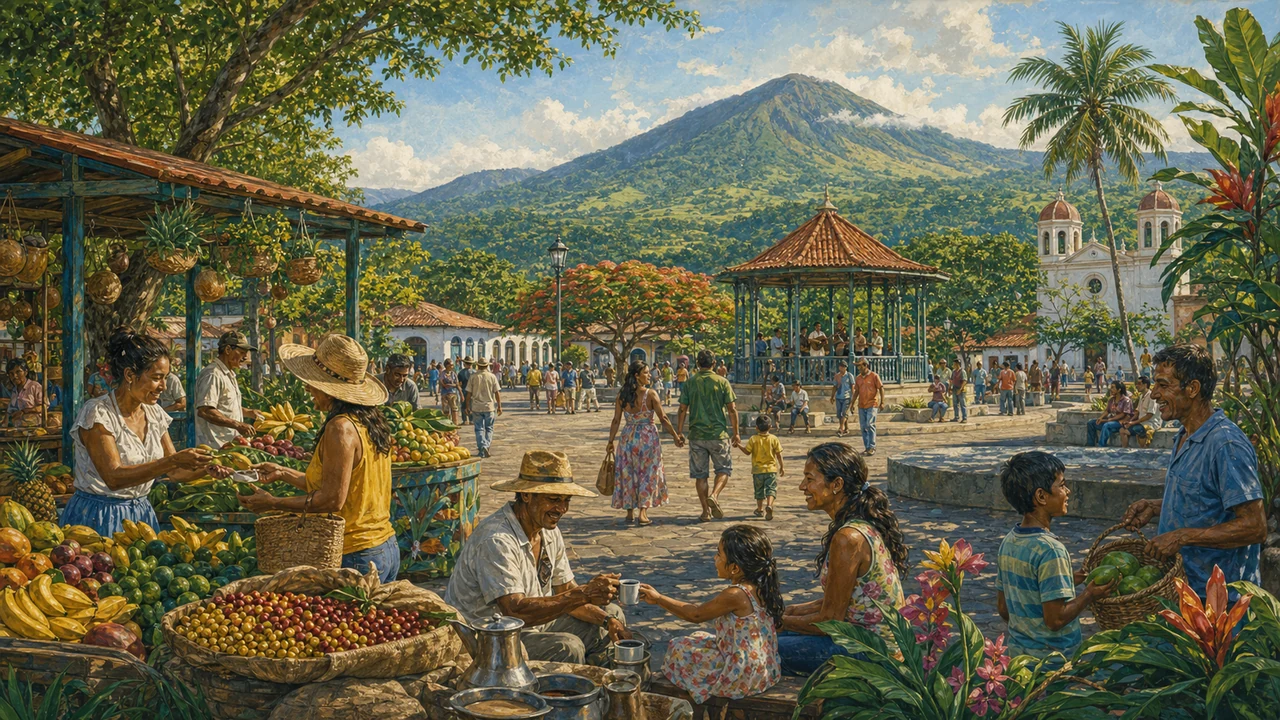 Walk through any Costa Rican town and you will hear it dozens of times a day: pura vida. Literally “pure life,” it functions as a greeting, a farewell, an expression of thanks, a response to “how are you?”, and a general affirmation that life, right now, is good.
Outsiders sometimes dismiss it as a tourism tagline. Spend a week here and you understand it is something else entirely — a genuine cultural operating system. Pura vida as a way of life orients daily decisions toward gratitude over complaint, simplicity over accumulation, and presence over anxiety. Psychologists who study happiness note that these are precisely the dispositions most strongly correlated with subjective wellbeing.
The national motto of Costa Rica — “Pura Vida” — enshrines this philosophy at the highest level of national identity. It is not aspirational. Ticos do not strive toward pura vida the way a corporation pursues a mission statement. They live it as a default orientation that has been passed down through families and communities for generations.
A Country That Chose Peace Over Arms
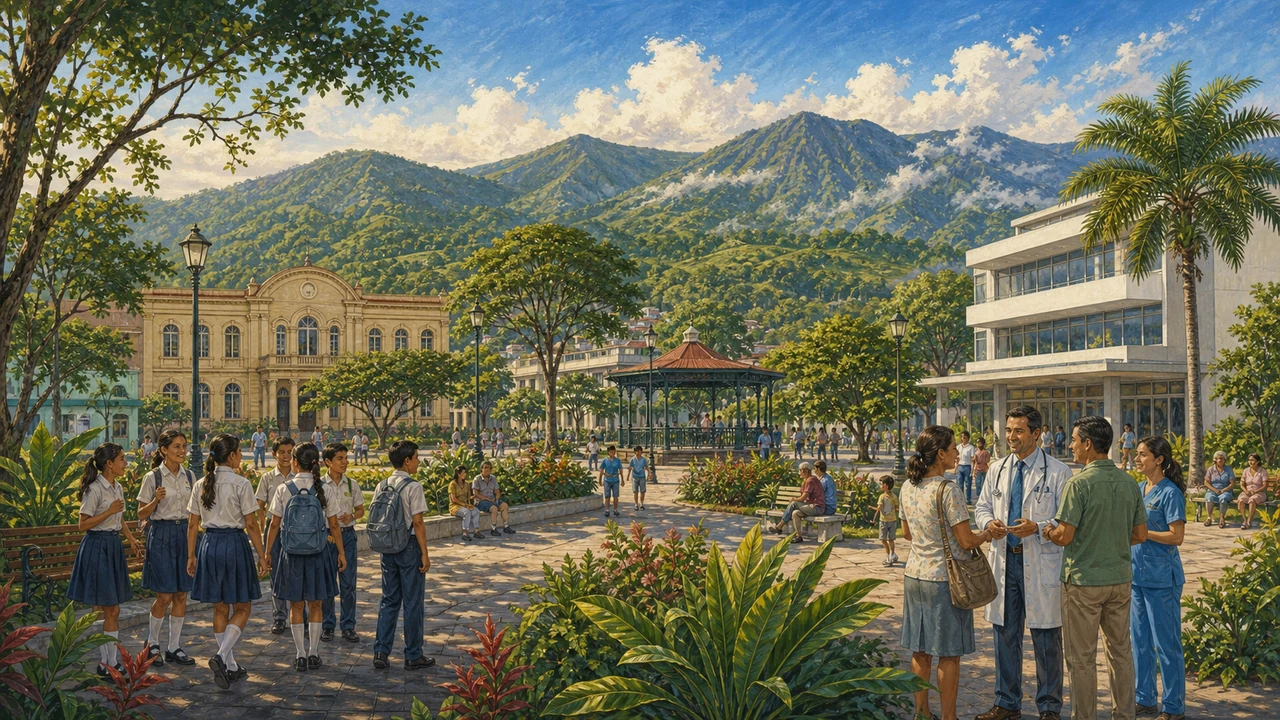 In 1948, at the end of a brief civil conflict, President José Figueres Ferrer made one of the most consequential decisions in Latin American history: he abolished the military entirely. Costa Rica has had no army for over seven decades — a fact that still astonishes visitors from countries where military spending is treated as non-negotiable.
The budget freed by that decision went directly into education and healthcare. The results compound over time. Costa Rica has near-universal literacy, a public healthcare system that delivers life expectancy comparable to far wealthier nations, and a citizenry that overwhelmingly trusts its social institutions. Costa Rica’s decision to abolish its military was not just a gesture of idealism — it was a structural choice that redirected national resources toward human wellbeing in ways that still pay dividends today.
A Nation Built on Peace
The commitment to peace in Costa Rica runs deeper than policy. It is woven into the national soul — and into the national anthem itself.
Remarkably, the word paz (peace) appears twice in the anthem. In an early verse, the lyrics describe the flag under a clear blue sky: “bajo el límpido azul de tu cielo… blanca y pura descansa la paz” — “beneath the limpid blue of your sky… white and pure, peace rests.” Then in the anthem’s closing line comes the final declaration: “¡vivan siempre el trabajo y la paz!” — “may work and peace always live!” A national hymn that mentions peace twice is unusual anywhere in the world. In Costa Rica, it is a mirror of lived reality.
That commitment bore international fruit in 1987, when President Óscar Arias won the Nobel Peace Prize for brokering the Esquipulas II peace accords that helped end the armed conflicts tearing apart Central America at the time. The oldest stable democracy in Latin America had sent a peacemaker to the Nobel stage — and the world took note.
The Nicoya Blue Zone: Longevity as Evidence
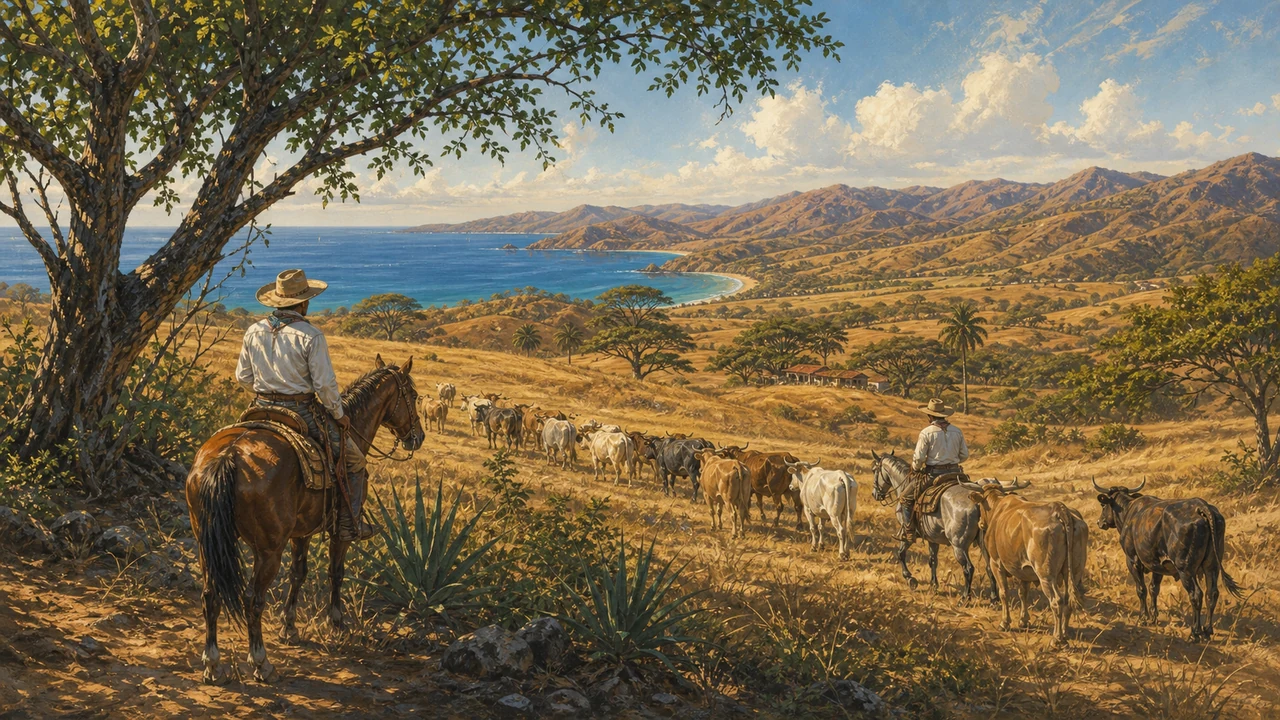 Happiness data can be abstract. The Nicoya Blue Zone is concrete.
The Nicoya Peninsula, in the northwestern province of Guanacaste, is one of the world’s five recognized Blue Zones — regions identified by longevity researcher Dan Buettner where people routinely live past 90 in good health, often with sharp minds and active bodies. Nicoyan men have one of the highest rates of reaching age 100 of anywhere on Earth.
Researchers attribute Nicoyan longevity to a combination of factors that overlap substantially with what the happiness indices are measuring: a traditional plant-rich diet anchored in beans, corn, and tropical fruits; strong multigenerational family networks; a sense of plan de vida (life purpose); regular moderate physical activity; and deep social integration. Blue Zone longevity in the Nicoya Peninsula is not a lifestyle brand — it is a measurable biological reality that validates what the survey data suggests. The wellbeing here is not just reported; it is lived out in extra decades of healthy life.
Nature, Community, and Social Investment
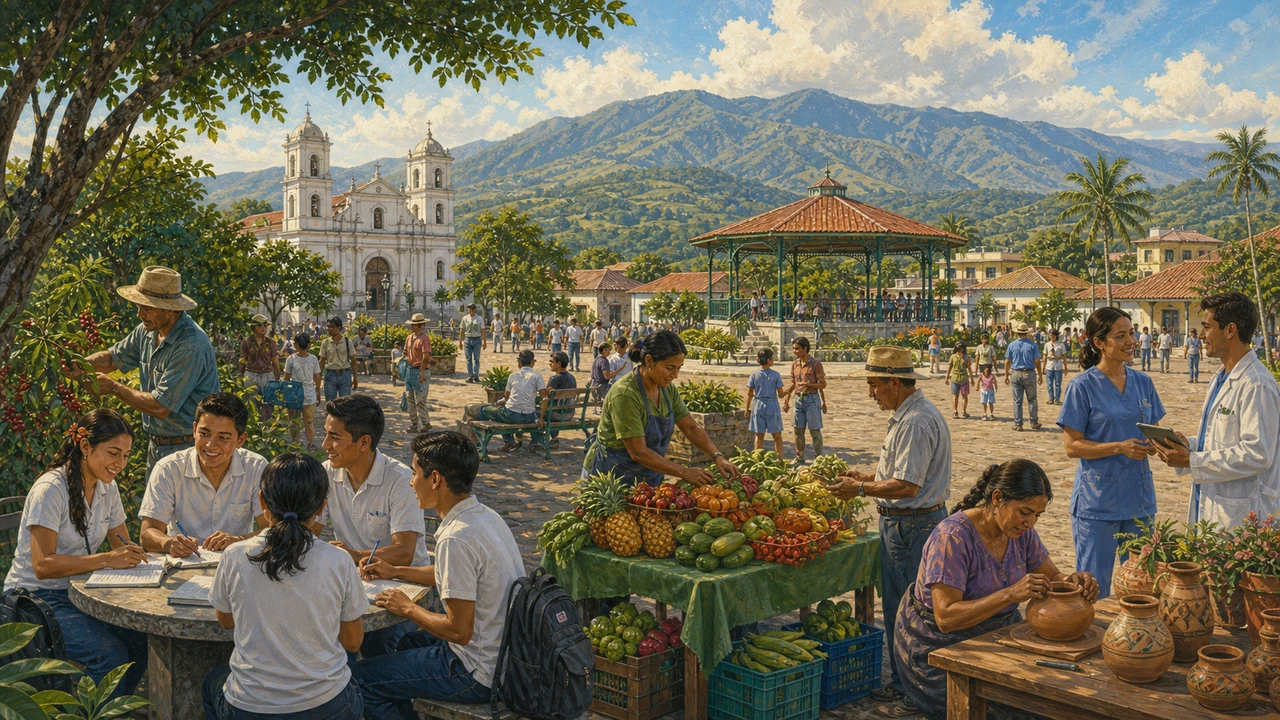 No account of why Costa Rica ranks as the happiest nation would be complete without acknowledging the role of the natural world. More than a quarter of the country’s land is protected — national parks, biological reserves, and wildlife refuges that preserve roughly 5% of the planet’s known biodiversity. Ticos grow up with access to cloud forests, Pacific and Caribbean beaches, volcanic highlands, and rainforest canopies that most of the world can only visit as a tourist.
Ecotourism and nature are not industries bolted onto Costa Rican life from the outside. They are expressions of a culture that has decided, at the level of law and national identity, that the natural world is worth protecting. Living surrounded by extraordinary biodiversity — and knowing that your government has committed to preserving it — contributes to a baseline of wellbeing that is hard to quantify but impossible to miss.
Social investment compounds all of this. Generations of public spending on education, healthcare, and community infrastructure have produced a society with relatively strong upward mobility, functional public institutions, and a middle class that can access most of what a good life requires. Costa Rica’s investment in social wellbeing over military spending is the structural foundation on which pura vida actually rests.
What It Feels Like to Visit
Statistics explain the ranking. Being there explains why it sticks.
Visitors consistently describe something they did not expect: a genuine, unhurried warmth from the people they meet. Not the performative hospitality of a tourism industry, but the casual, unforced kindness of a culture that is simply oriented that way. Taxi drivers who ask about your life. Hotel staff who apologize when something goes wrong as if they personally care. Strangers who wave from porches.
Whether you are exploring the national parks, surfing the Pacific coast, or simply sitting in a small-town plaza watching the afternoon go by, the same quality pervades the experience. This is a country that chose a different set of priorities decades ago — peace, education, nature, community — and the choice has produced something measurable in the data and palpable on the ground.
Why visit Costa Rica? Because the happiest country in the world is more than a ranking. It is an invitation to reconsider what a good life actually looks like — and to spend some time in a place that figured it out.
Frequently asked questions
Is Costa Rica really the happiest country in the world?
By several credible measures, yes. Costa Rica has ranked #1 on the Happy Planet Index four times — in 2009, 2012, 2016, and 2021 — and in 2025 broke into the global Top 10 of the World Happiness Report for the first time, placing #6. No other ranking method puts it at the top of every list, but the consistency across independent studies is striking.
Why is Costa Rica so happy?
Researchers point to several converging factors: a culture of pura vida (gratitude and present-moment enjoyment), the 1948 decision to abolish the military and redirect that budget into education and healthcare, strong family and community bonds, universal access to nature, and sustained social investment over generations.
What is the Happy Planet Index and how does Costa Rica score on it?
The Happy Planet Index, published by the New Economics Foundation and the Wellbeing Economy Alliance, measures sustainable wellbeing — combining experienced wellbeing and life expectancy relative to each country's ecological footprint. Costa Rica achieves high scores on both wellbeing and longevity while consuming a fraction of the resources used by wealthier nations, which is why it ranks #1 despite a modest GDP.
What is the Nicoya Blue Zone and what does it tell us about Costa Rica?
The Nicoya Peninsula in Guanacaste is one of the world's five recognized Blue Zones — regions where people live measurably longer and healthier lives than the global average. Researchers attribute this to a plant-rich traditional diet, strong social ties, a clear sense of life purpose, and regular physical activity well into old age.
Does the 'happiest country' label mean Costa Rica has no problems?
No. Like any country, Costa Rica faces real challenges — traffic, inequality, and urban poverty among them. What the data captures is the overall balance: strong social bonds, environmental connection, universal healthcare and education, and a cultural orientation toward contentment rather than accumulation. Visitors consistently remark that the warmth and calm they feel here is genuine, not a postcard illusion.