Costa Rica's National Labor Symbol: The Painted Oxcart
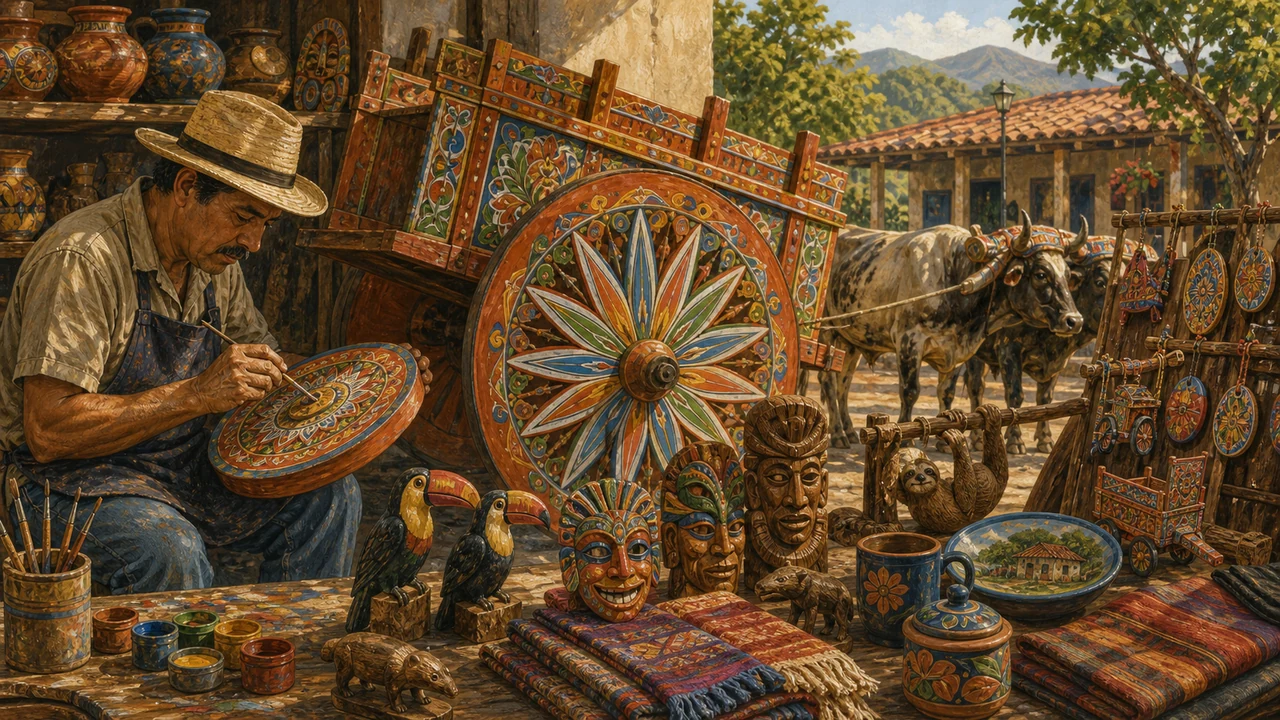 The painted oxcart (carreta) is Costa Rica’s national labor symbol, a title enshrined in law on March 22, 1988, and the country’s most internationally recognized folk-art tradition. More than a historical relic, the oxcart and its driver — the boyero — represent the enduring values of hard work, patience, and ingenuity that shaped the Costa Rican character. Today UNESCO lists the tradition as Intangible Cultural Heritage of Humanity, putting it in the same league as flamenco and the Venetian gondola.
From Farm Roads to World Commerce
The oxcart earned its iconic status the hard way. From the 1840s onward it was the only vehicle rugged enough to haul heavy coffee sacks across Costa Rica’s mountains, swamps, beaches, river crossings, and rocky highland trails. Its two compact, solid wheels and low-slung frame could go where mules struggled and wheeled wagons would have broken.
The consequences for the national economy were enormous. Costa Rica’s first coffee shipment to London in 1843 traveled every kilometer from mountain plantation to port aboard oxcarts. Between 1844 and 1846 a fleet of them worked the road between the Central Valley and Puntarenas, essentially creating the export pipeline that would fund public schools, roads, and the country’s first railways. The oxcart did not merely transport Costa Rica’s coffee — it bankrolled a nation.
The Art of the Carreta
 After World War II, mechanization rendered oxcarts obsolete as cargo vehicles. Rather than disappear, they underwent a remarkable transformation. Early in the 20th century, boyeros and craftsmen in the Alajuela highlands began decorating their carts with hand-painted geometric patterns — mandalas, florals, and interlocking shapes in vivid reds, blues, greens, and yellows. No stencil or machine was used; each design was applied freehand.
The defining rule of Costa Rican oxcart painting tradition is that no two carts are ever identical. A master artisan may use the same basic compositional template for decades, yet each individual cart gets its own unique arrangement of color tones and motifs. This intentional uniqueness turned a utilitarian object into an art form and gave every family that owned one a piece of work that was genuinely theirs.
The craft passed from parent to child, workshop to apprentice, generation to generation. Visit Sarchí today and you will find third- and fourth-generation painters producing everything from full-size, working oxcarts to miniature decorative replicas small enough to fit on a desk.
Sarchí: The Craft Capital
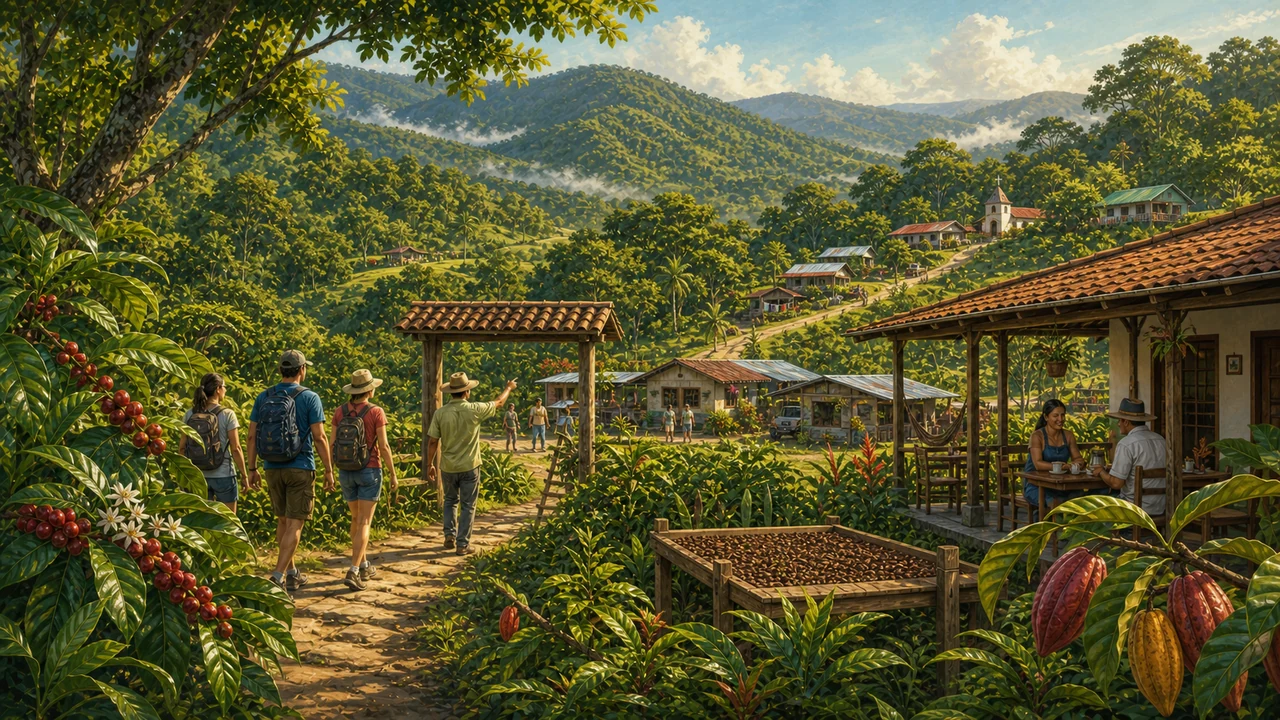 Alajuela province’s town of Sarchí is the undisputed center of painted oxcart craftsmanship in Costa Rica. Its workshops line the main street and its market overflows with handmade goods: full oxcarts, rocking chairs, leather goods, carved wooden bowls, and above all, painted decorative carts in every size imaginable.
Sarchí’s artisans were central to the UNESCO recognition. The community had maintained an unbroken apprenticeship tradition, documented design lineages, and a functioning market that kept the craft economically viable — exactly what UNESCO looks for when evaluating living heritage. Puriscal, southwest of San José, is a secondary center with its own workshops and its own slight regional variations in style.
A visit to Sarchí pairs naturally with other Alajuela highlights or a stop near Juan Santamaría International Airport before or after your flight.
The Boyero: The Man Behind the Cart
The law of 1988 designated not only the oxcart but also the boyero — the ox driver — as part of the national labor symbol. This dual recognition matters. The boyero’s skill lay in guiding a yoked pair of oxen along perilous mountain trails with nothing but verbal cues and a long goad. Getting a fully loaded cart from the Central Valley to Puntarenas without losing cargo, injuring an animal, or tipping on a switchback required intimate knowledge of the terrain and the animals.
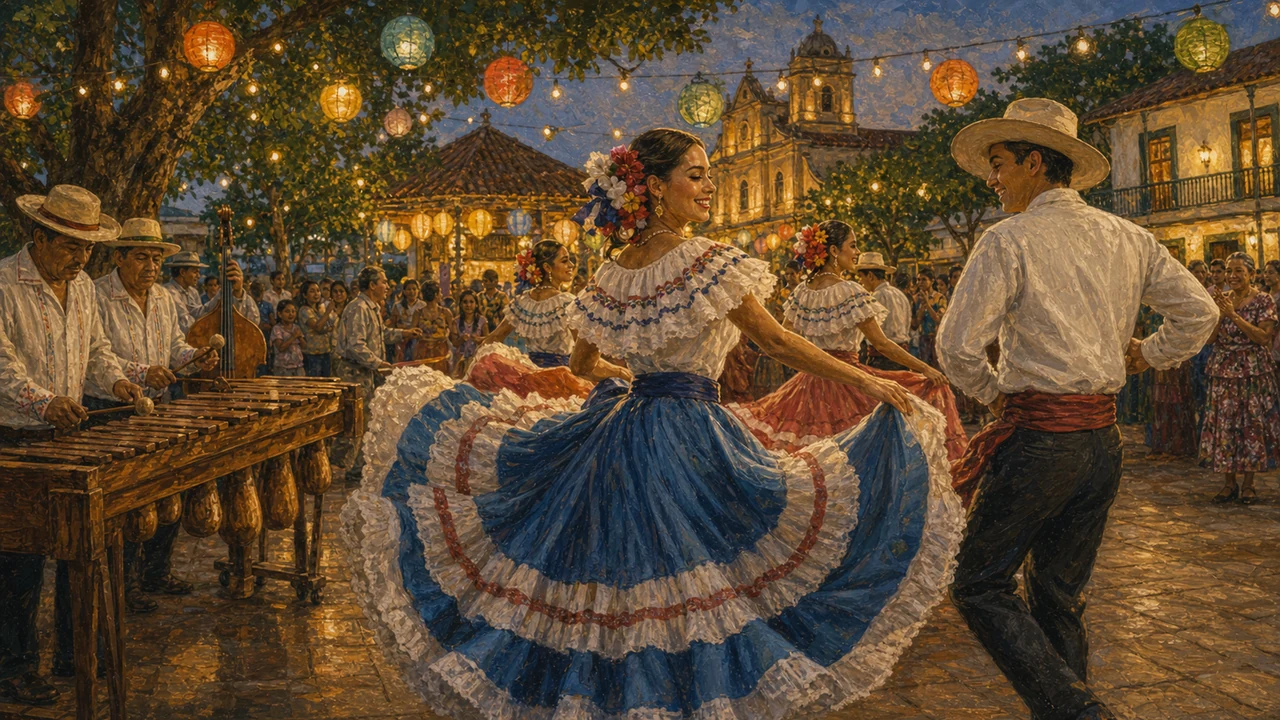
The boyero tradition in Costa Rica is now celebrated at folk festivals and parades. The most notable is the annual boyero parade through the town of Escazú, where decorated oxcarts and their drivers process through the streets to the sound of marimba music — a living link to the country’s agricultural past.
What the Oxcart Symbolizes
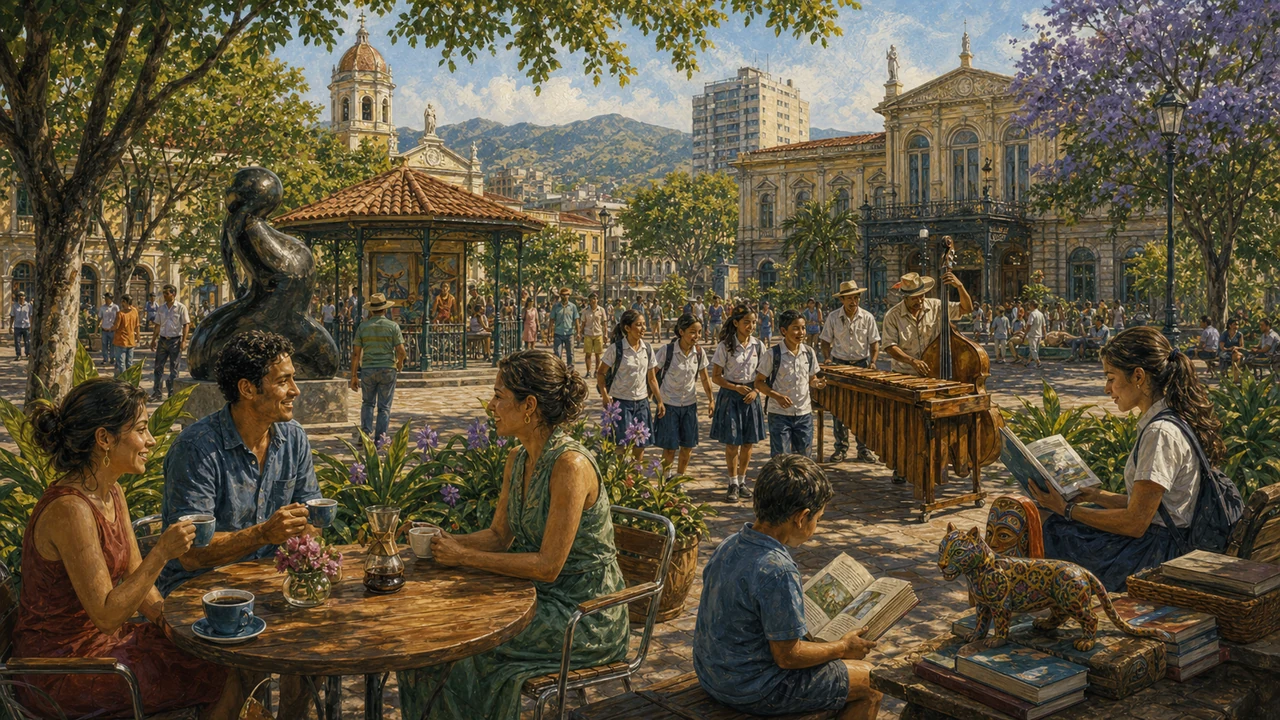
 Costa Ricans look at the oxcart and see something more than a painted wheel. It embodies the national values of laboriosidad (industriousness), humility, patience, and quiet determination. The cart did not race; it plodded. It did not take the easy road; it took the only road. And it carried its load reliably, day after day, season after season.
This symbolism resonates in a country that abolished its army in 1948 and channeled that energy into education and environmental stewardship. The painted oxcart is a fitting national emblem for a people who prefer steady, peaceful progress over force. You will find its image on souvenirs, postage stamps, restaurant murals, and hotel lobbies across the country — a quiet declaration of identity.
For travelers interested in Costa Rica’s art and culture, the carreta is a perfect entry point. It connects the country’s agricultural roots to its artisan present, its colonial economy to its modern identity, and its rural landscapes to its international reputation for creativity and craft.
Visiting and Taking One Home
Full-size painted oxcarts are still commissioned for festivals, parades, and private collections. Miniature replicas — ranging from palm-size to desktop — make among the most meaningful souvenirs in the country precisely because they carry genuine cultural weight. Unlike mass-produced trinkets, a Sarchí-made carreta is hand-painted by someone who learned the craft from a family member, in the same town where the tradition was born.
If you are planning a trip, consider building in a half-day in Sarchí. It is roughly an hour from San José and sits in the green hills of the Alajuela highlands. Combine it with a Costa Rica travel tips itinerary that already includes the Central Valley and you will have one of the most culturally rich mornings of your visit — browsing workshops where artisans are painting the next generation of a UNESCO-recognized tradition.
To explore more of what makes Costa Rica distinctive, see the country’s other national symbols — including the national bird, the national flower, and the national flag — or dive deeper into the ecotourism and nature that makes this small country one of the world’s great travel destinations.
Frequently asked questions
What is Costa Rica's national labor symbol?
The painted oxcart (carreta) and its driver (boyero) are Costa Rica's official national labor symbols, designated by law on March 22, 1988. The tradition represents the hard work, patience, and artisan spirit that built the country's early economy.
Why is the oxcart important to Costa Rican culture?
The oxcart was the primary vehicle for transporting coffee from highland farms to coastal ports throughout the 19th century, essentially integrating Costa Rica into international trade. Over time, artisans began hand-painting them with intricate geometric designs, turning a workhorse into a celebrated art form.
Is the oxcart tradition recognized by UNESCO?
Yes. UNESCO declared the oxcart and boyero tradition an Intangible Cultural Heritage of Humanity. The recognition honors both the craftsmanship of Sarchí's artisans and the living cultural practice of the boyero (ox driver).
Where can I see or buy authentic painted oxcarts in Costa Rica?
Sarchí, in Alajuela province, is the heartland of the craft. Its workshops and market stalls sell everything from full-size working oxcarts to miniature decorative replicas. Puriscal is another town known for this tradition. Both are easy day trips from San José.
Are no two painted oxcarts exactly alike?
Correct — every oxcart is unique. Even when artisans use the same mandala-like template, they vary the color tones, geometric patterns, and floral motifs by hand. This individuality is part of what makes each piece a one-of-a-kind work of art.