Costa Rica's National Tree: The Guanacaste
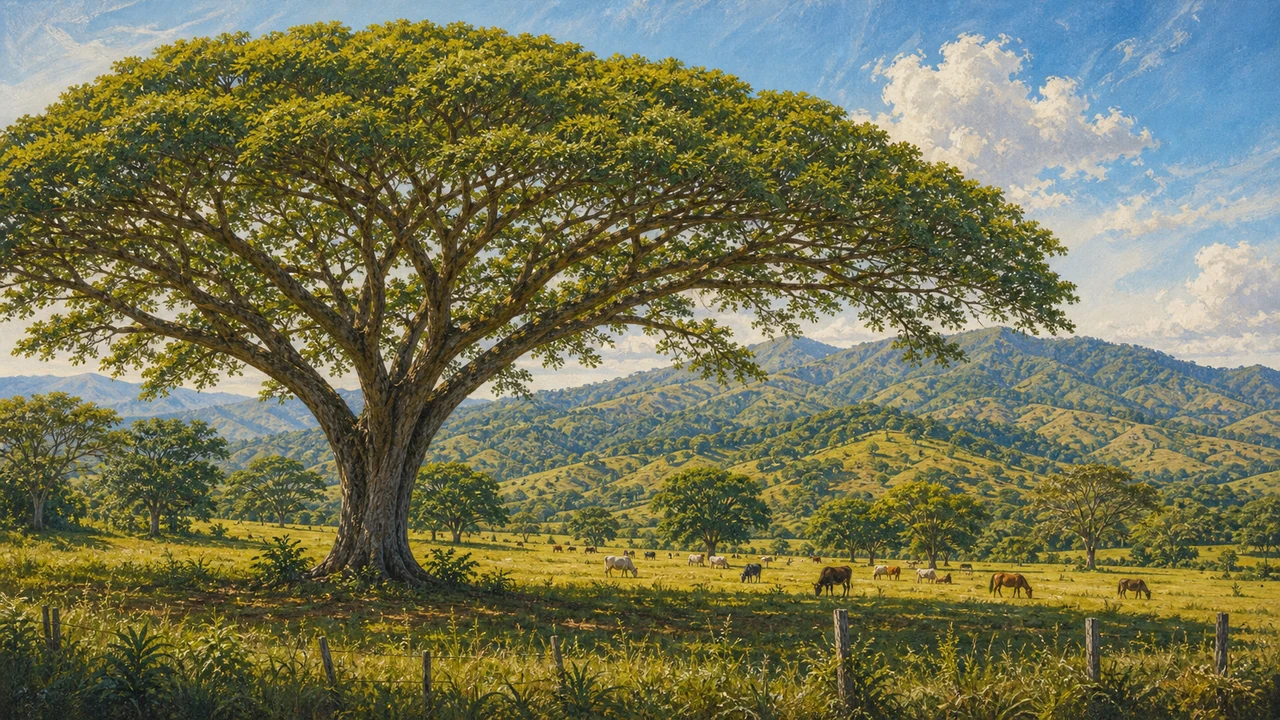 The Guanacaste tree (Enterolobium cyclocarpum) is Costa Rica’s national tree, a towering giant of the tropical dry forest designated with that honor on August 31, 1959. With its massive spreading canopy, water-resistant timber, and centuries of cultural significance, the Guanacaste is far more than a botanical curiosity — it is a living symbol of the country’s identity, resilience, and deep bond with nature.
What Is the Guanacaste Tree?
The Guanacaste belongs to the legume family (Fabaceae), in the mimosa subfamily — the same broad family as acacias and tamarinds. It is native to the lowlands of Central America, ranging from Mexico through Costa Rica and into South America, and it also grows naturally in Cuba and parts of the Caribbean.
In Costa Rica, the Guanacaste tree thrives from sea level up to roughly 900 meters (about 2,950 ft), favoring warm, sunny lowlands with a pronounced dry season. The Guanacaste province in northwestern Costa Rica is its heartland, though scattered giants appear across the country’s Pacific slopes and river valleys.
Growth is rapid when conditions suit it: a mature specimen typically reaches 25 to 50 meters (82–164 ft) in height, with a trunk diameter that can exceed 2 meters (6.6 ft). The crown spreads wide and nearly flat — a vast green umbrella that can shade a quarter-hectare all on its own.
The Ear Tree: Name and Seed Pod
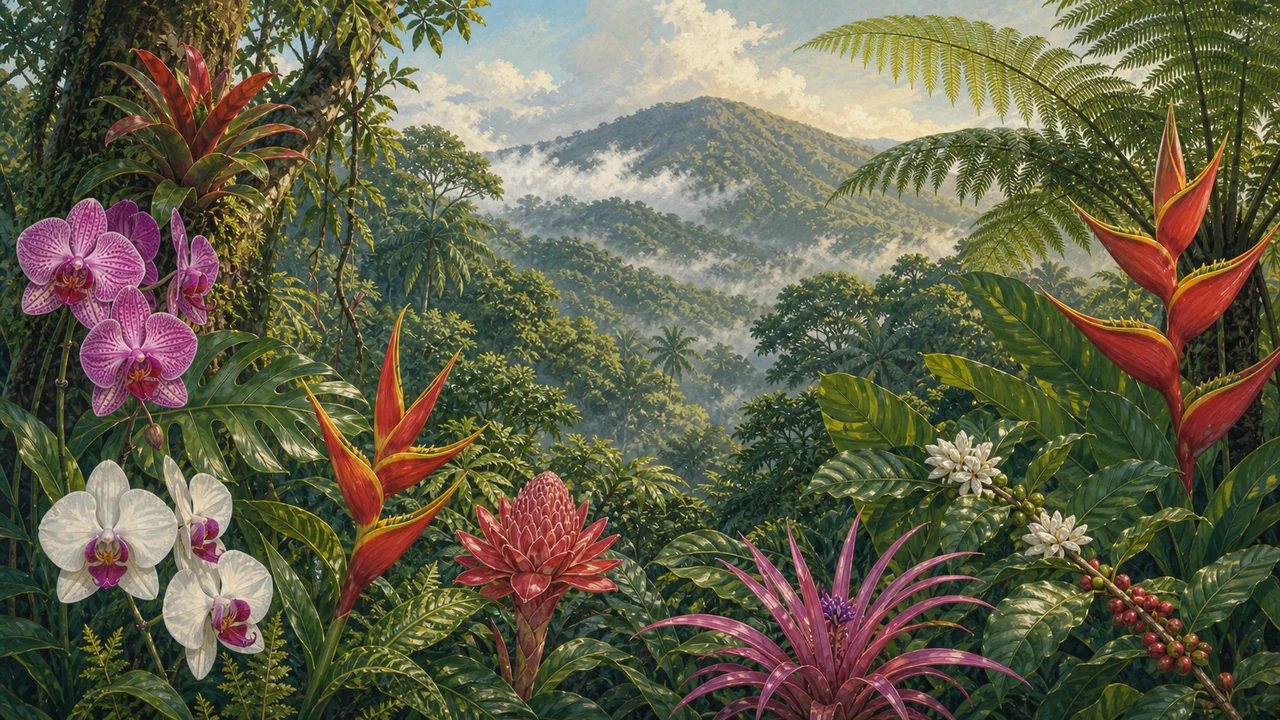 The name “Guanacaste” comes from the Nahuatl language, spoken by indigenous peoples across Mesoamerica before the Spanish conquest. It means, simply, “ear tree” — and the reason is easy to see once you spot the fruit.
During March and April the tree’s seed pods, called vainas, ripen from green to dark brown and drop to the ground. Each pod is flattened, compressed, and coiled into a shape that unmistakably resembles a human ear. A single pod typically carries between 10 and 22 hard seeds, which persist on the ground long after the pod itself dries out.
The flowers are small, white, and rounded — clustered into fluffy spherical heads that appear in the dry season when the tree briefly sheds its feathery compound leaves. The leaf structure itself — small paired leaflets arranged along graceful branches — gives the canopy a delicate, lacy quality that belies the tree’s enormous scale.
A Province Named After a Tree
Guanacaste province bears the tree’s name because the giant spread across its savannas and forests in such abundance that early settlers used it as a landmark and as the defining feature of the landscape. It is one of the few places in the world where a province takes its name directly from a species of tree — a testament to how deeply the Guanacaste shaped the region’s history and geography.
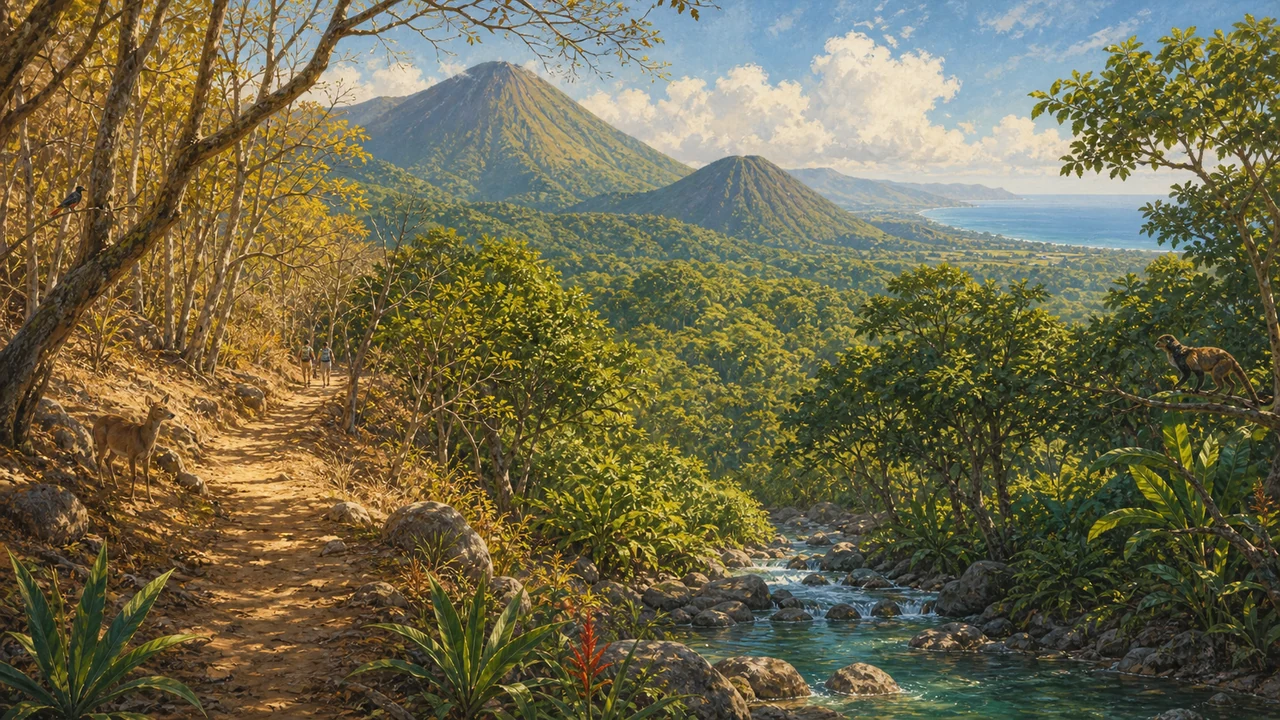
Today the province is home to some of Costa Rica’s most celebrated destinations: the Guanacaste volcanic range with Rincón de la Vieja and other craters, pristine North Pacific beaches, and the Guanacaste National Park, a UNESCO World Heritage site that protects some of the last remaining tropical dry forest ecosystems in Central America. Visitors arriving at the Daniel Oduber International Airport (LIR) in Liberia often encounter Guanacaste trees in the surrounding countryside within minutes of landing.
Ecological Role and Practical Uses
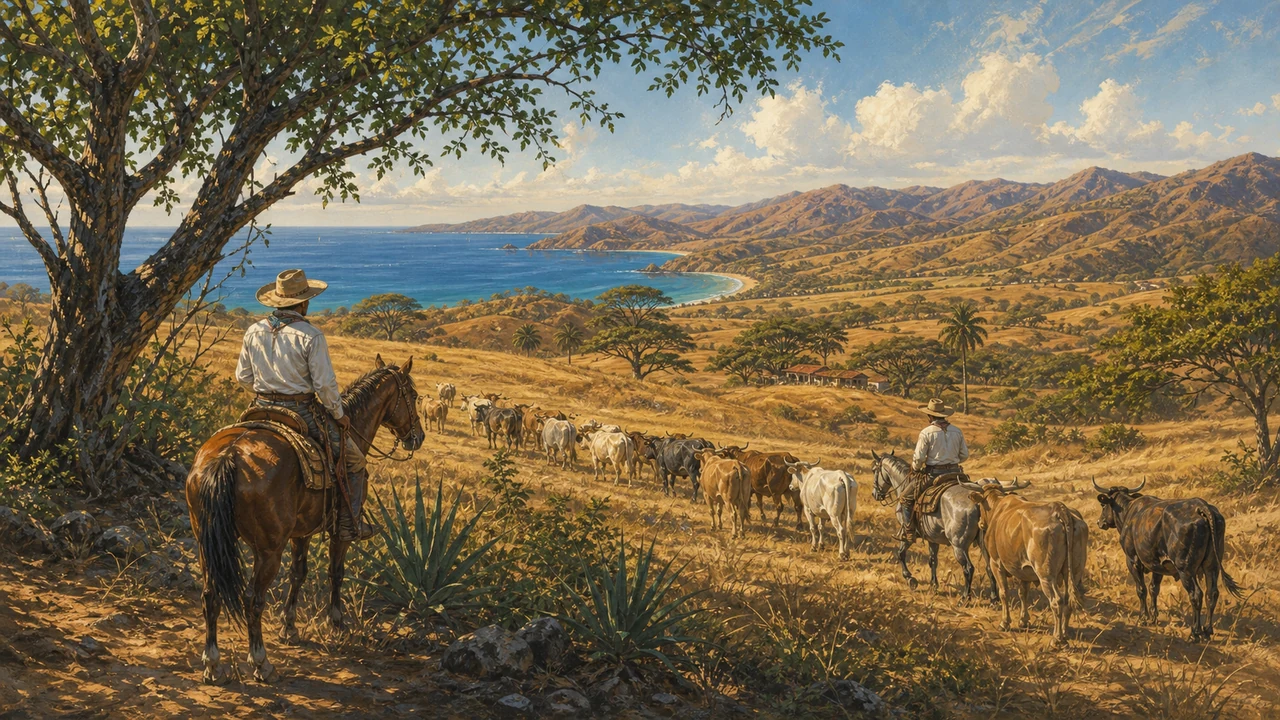
 The Guanacaste tree is an ecological keystone. Its broad canopy creates a microclimate beneath it — cooler, moister, and richer in organic matter than the surrounding dry forest floor. Cattle ranchers have relied on the tree for generations, allowing herds to shelter from the fierce Guanacaste dry-season heat and to graze on fallen leaves, branches, and seed pods that provide valuable protein.
Guanacaste timber is prized across Costa Rica for its durability and workability. The wood is naturally water-resistant, which makes it well-suited to furniture, flooring, decorative woodwork, and boat construction without requiring heavy treatment. Craftspeople also prize it for ornamental carvings.
Traditional medicine has long drawn on the tree’s other gifts. The tannin-rich bark has been used as a remedy for colds and respiratory complaints, and as a natural dye. The sap has folk uses for relieving bronchitis. While modern pharmaceuticals have largely replaced these remedies, the knowledge persists in rural communities across Costa Rica’s ecotourism and nature regions.
Ecologically, the tree’s root system is remarkable. Its roots extend wide and deep, binding soil against erosion, and in many specimens the surface roots spread outward in thick, buttress-like formations that anchor the giant against tropical storms. This combination of deep roots and horizontal spread makes the Guanacaste unusually stable in the saturated soils of river banks and valley floors.
Symbolism and National Meaning
Costa Rica’s choice of the Guanacaste as its national tree was not arbitrary. A country that has protected more than a quarter of its territory as national parks and reserves — and that hosts around 5% of the world’s biodiversity — needed a symbol that captured its relationship with the natural world.
The Guanacaste delivers. Its capacity to shelter and sustain life beneath its canopy mirrors the Costa Rican identity: generous, rooted, peaceable. (Costa Rica famously abolished its military in 1948 and redirected those resources toward education and environmental protection.) The tree’s roots represent attachment to the land and stability; its trunk, strength of will; its broad branches, the creative and protective spirit of the people.
 The Guanacaste is also seen as a symbol of universal equilibrium — its form echoing the balance between sky and earth, between human need and natural abundance. In a country where sustainable tourism and environmental stewardship are deeply embedded in the national culture, the shade-giving giant remains a fitting emblem of what Costa Rica aspires to offer the world: shelter, beauty, and renewal.
See the Guanacaste Tree
Visitors can encounter the Guanacaste tree across much of Costa Rica’s Pacific lowlands, but the finest specimens are in the northwest. The Guanacaste National Park and the Santa Rosa National Park are particularly good places to see mature Guanacaste trees in their natural tropical dry forest setting. Ranches and roadsides throughout the province also harbor centuries-old trees whose canopies spread so wide that a single tree creates its own landscape.
If you are exploring the rest of Costa Rica’s flora and fauna, the Guanacaste is hard to miss — towering above the surrounding vegetation, its flat-topped crown visible from considerable distance. Seeing one up close, with roots like gnarled serpents spreading across the earth and a canopy blocking out the midday sun, is one of those quiet, memorable moments that define a Costa Rica trip.
Explore more of what makes this country exceptional: Costa Rica’s national parks and protected areas, its remarkable ecotourism and nature scene, and the full collection of national symbols — including the national bird, the national flower, and the national flag.
Frequently asked questions
What is Costa Rica's national tree?
Costa Rica's national tree is the Guanacaste (Enterolobium cyclocarpum), a large leguminous tree native to Central America. It was officially designated the national tree on August 31, 1959.
Why is the Guanacaste tree called the 'ear tree'?
The name 'Guanacaste' derives from a Nahuatl word meaning 'ear tree.' The tree's seed pods are dark, flattened, and curled in a shape that closely resembles a human ear.
How big does the Guanacaste tree grow?
The Guanacaste tree is one of the largest trees in Central America, reaching heights of 25 to 50 meters (82–164 ft) with trunk diameters that can exceed 2 meters (6.6 ft). Its canopy can spread wide enough to shade a small herd of cattle.
Is Guanacaste province named after the tree?
Yes. Guanacaste province in northwestern Costa Rica takes its name directly from the tree, which historically grew in great abundance there and provided shade, food, and timber to communities throughout the region.
What is the Guanacaste tree used for?
The wood is water-resistant and easy to work, making it popular for carpentry and ornamental crafts. The bark has traditional medicinal uses as a cold remedy and natural dye, while the sap has been used to relieve bronchitis. In agriculture, the tree serves as shade and fodder for cattle.