Tortuguero National Park: Canals, Turtles & Rainforest
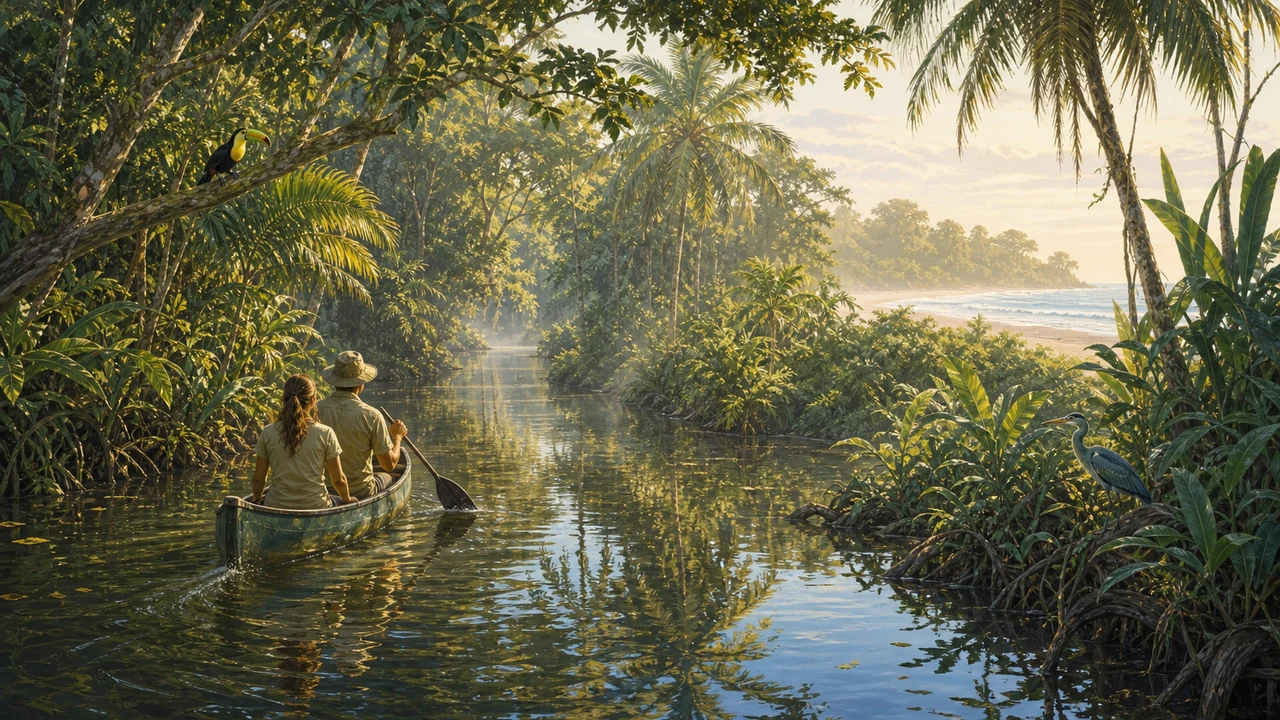
Tortuguero National Park protects the single most important green sea turtle nesting ground on the western Caribbean coast — a vast, rain-soaked wilderness of jungle canals, blackwater lagoons, and Atlantic beach that you can only reach by boat or small plane. The park covers roughly 26,000 hectares of some of the wettest terrain in Costa Rica, receiving between 5,000 and 6,000 millimeters of rain each year — which is precisely what makes it so extraordinarily alive.
Established in 1975, Tortuguero sits along a narrow Caribbean coastal strip north of Limón, bordered by Nicaragua to the north. Its name — “turtle catcher” in Spanish — reflects centuries of history that the park’s creation was designed to reverse. Today it draws visitors from around the world, not to harvest turtles, but to watch them nest in the moonlight and to drift silently through a labyrinth of waterways teeming with wildlife.
The Canal Network
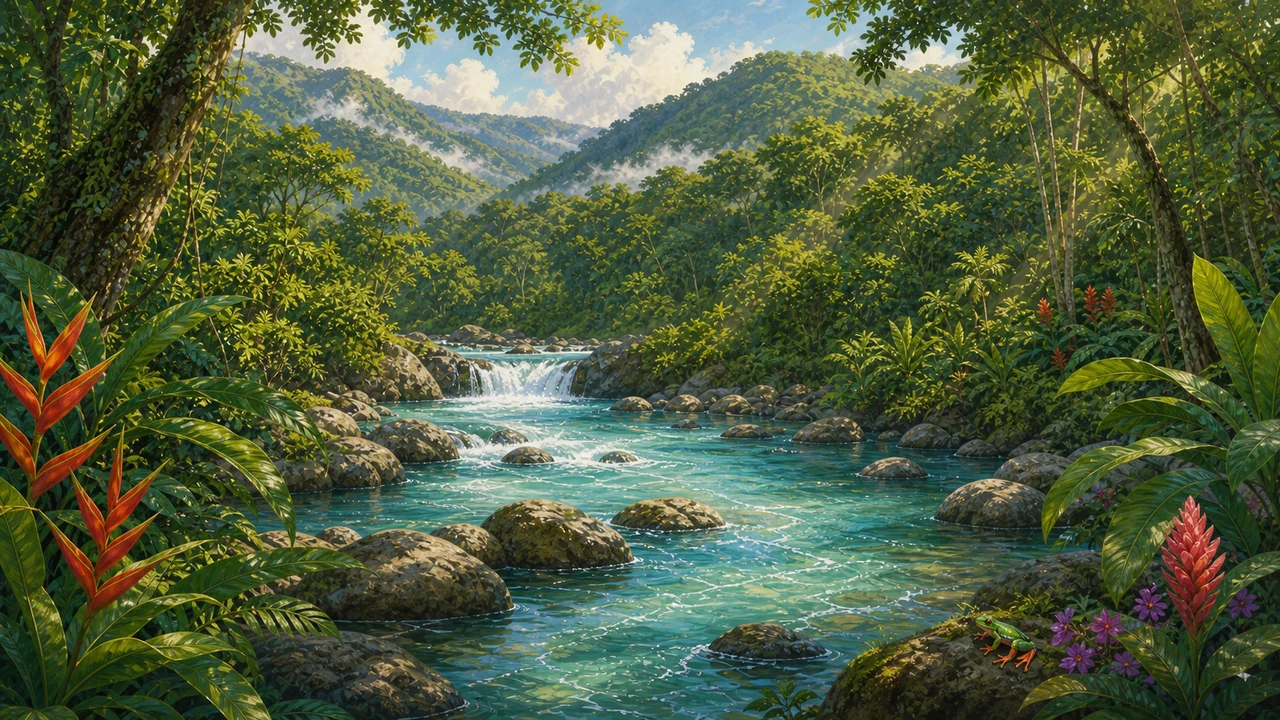
The defining experience at Tortuguero is exploring its natural and man-made canal system by motorboat, canoe, or kayak. A network of rivers, channels, and lagoons threads across the flat alluvial plain — remnants of ancient river deltas that filled a former geological trench — creating an interconnected water highway through pristine rainforest.
Part of this system links to the historic canal that runs from Limón toward the Nicaraguan border, built in the 1930s to allow the safer transport of timber than the old practice of towing log rafts through the open sea. Today those same channels are a wildlife corridor. Drifting through them at dawn, with the forest canopy reflected in the dark water and herons lifting from the banks, is one of Costa Rica’s classic experiences.
Boat tours — typically two to three hours — depart from the village of Tortuguero, which sits on a thin strip of land between the main canal and the Caribbean beach. Local guides know exactly where to look: a sleeping sloth draped over a cecropia branch, a caiman resting on a mudbank, a Jesus Christ lizard sprinting across the surface. The slower you move, the more you see.
Sea Turtle Nesting
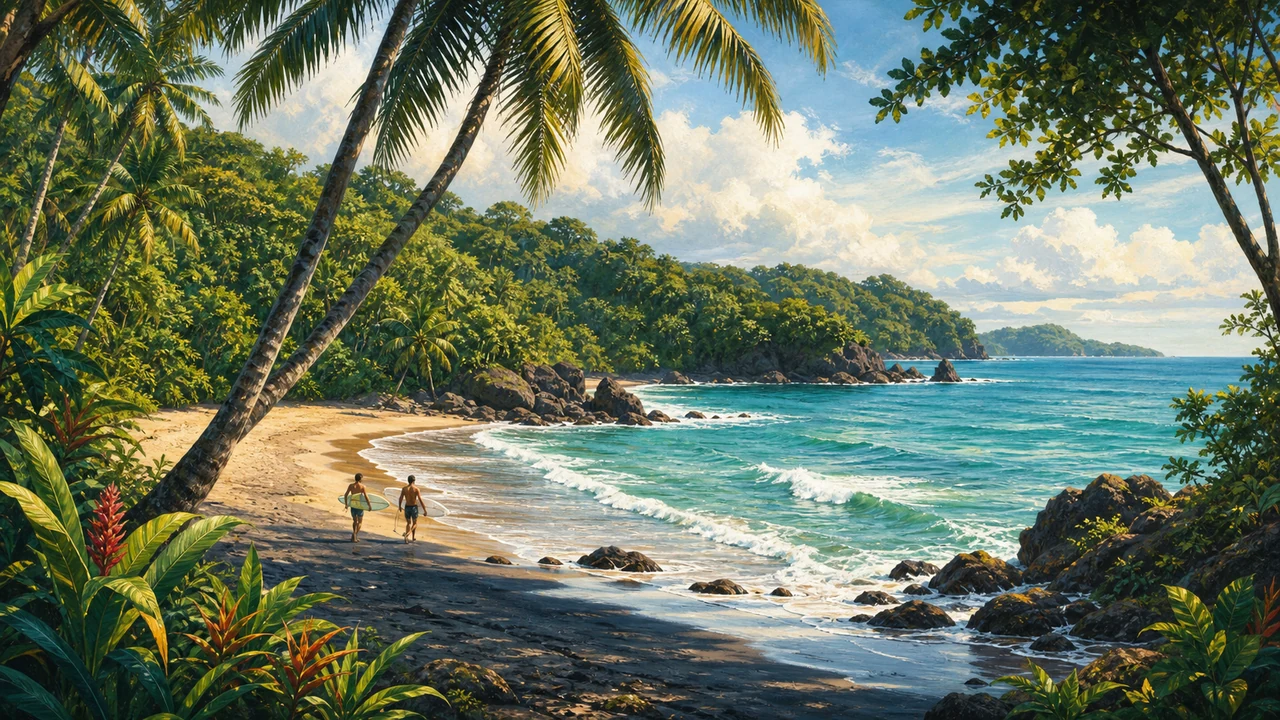
Tortuguero’s long, dark-sand Caribbean beach hosts nesting populations of four sea turtle species. The green turtle is by far the most numerous. These large, herbivorous reptiles — growing to roughly one meter in length and weighing between 75 and 200 kilograms — haul out of the sea at night from July through October to dig their nests and deposit clutches of eggs. The August and September peak can bring hundreds of turtles to the beach in a single night.
Leatherback turtles, the largest sea turtles on Earth, arrive earlier in the season — from February through July — and are typically seen in smaller numbers. Hawksbill turtles also nest here, identifiable by their distinctive pointed beak and beautifully patterned shell.
Conservation work at Tortuguero has a long history. In 1959, herpetologist Archie Carr founded the Caribbean Conservation Corporation (now Sea Turtle Conservancy) to address the collapse of turtle populations caused by commercial egg-harvesting and adult slaughter that had devastated numbers through the early twentieth century. That organization’s research and advocacy ultimately contributed to the park’s creation, and tagging and monitoring work has continued for decades, making Tortuguero one of the most-studied green turtle populations in the world.
Night visits to the nesting beach require a certified guide and are tightly regulated to minimize disturbance — no white flashlights, no flash photography, groups kept small. It is an extraordinary, quietly moving encounter.
Rainforest Wildlife
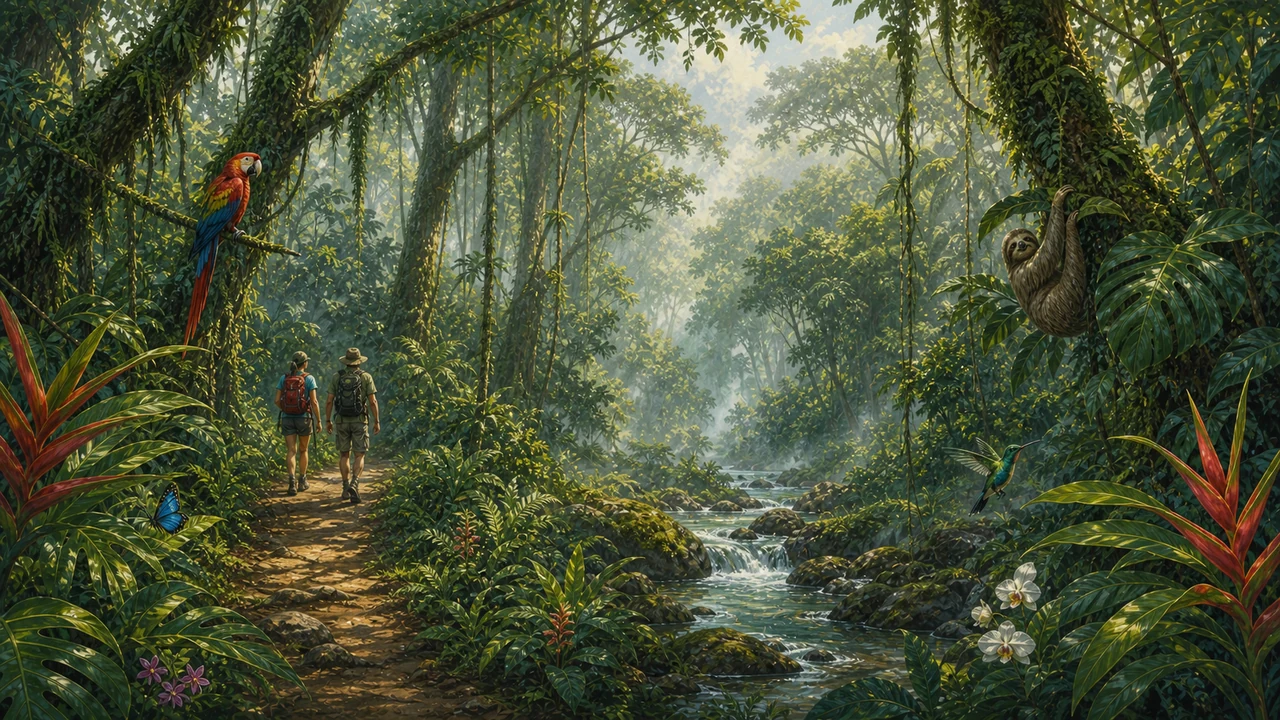
The park’s wet tropical forest — eleven distinct habitat types have been classified, from high rainforest to swamp forest, holillo palm groves, and herbaceous marshes — supports an exceptional diversity of species. Costa Rica protects more than 25% of its territory and harbors around 5% of global biodiversity; Tortuguero represents some of the richest of that protected land.
Among mammals, the park shelters jaguars, tapirs, ocelots, kinkajous, peccaries, pacas, tayras, Neotropical river otters, and three species of monkeys — white-faced capuchins, spider monkeys, and mantled howlers. The West Indian manatee, one of the most endangered Caribbean species, inhabits the calmer waterways. The canals also hold American crocodiles, seven species of freshwater turtles, and bull sharks, which can tolerate fresh water and grow to impressive size.
The amphibian community is particularly rich: more than 60 species have been recorded, including the glass frog (visible organs through its transparent underside), smoky jungle frog, and the red-eyed tree frog. The park’s tree diversity is equally remarkable — more than 400 species, including massive banak and cativo trees, stilt palms, and coconut palms along the coast.
Birdwatching
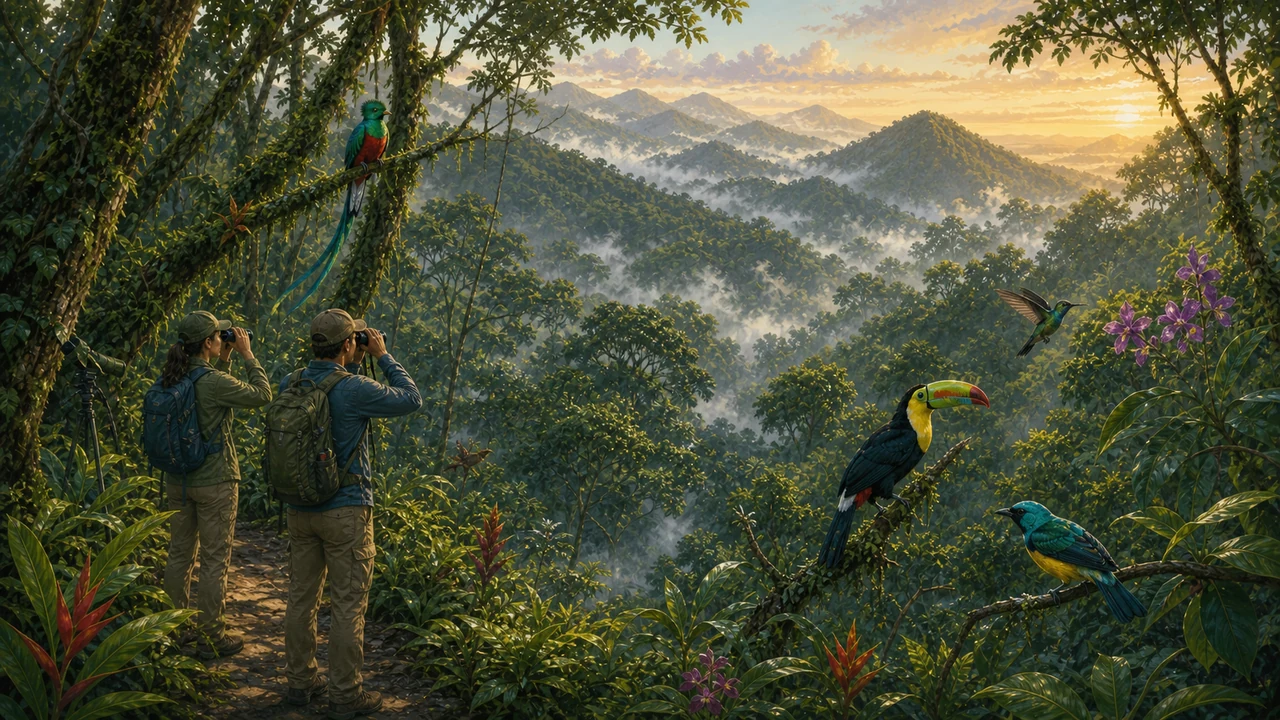
Tortuguero is one of Costa Rica’s premier birdwatching destinations. Over 300 species have been recorded — everything from the spectacular great green macaw (critically endangered across its range) to the great curassow, Montezuma oropendola, violaceous trogon, and white-necked Jacobin. Kingfishers, herons, anhingas, and roseate spoonbills work the canal edges, while common black-hawks hunt from overhanging branches.
During certain periods, spectacular migrations of North American-nesting shorebirds and waterfowl pass through or along the coast, adding to the seasonal diversity. The low perspective of a canal boat is ideal for eye-level views of perched and hunting birds — far better than straining upward through forest canopy.
For dedicated birders, early morning on the water before the day heats up is the most productive time. Many guides specialize in birds and can identify calls and locate species that casual visitors would miss.
Getting There and Practical Tips
Tortuguero is one of Costa Rica’s most remote accessible parks — no road reaches the village or the park entrance. Your options are:
- By boat: The classic route combines a shuttle bus from San José with a boat transfer through the canals from Cariari or Moín (near Limón). Journey time is roughly four to five hours from San José. The boat ride through jungle waterways is an attraction in itself.
- By small plane: Charter and scheduled flights operate from Tobías Bolaños Airport (Pavas, San José) and from Juan Santamaría International (SJO) to the small Tortuguero airstrip, cutting travel time dramatically.
The village of Tortuguero offers a range of lodges, guesthouses, and restaurants. Most visitors stay two nights to allow time for canal tours, a turtle-watching night excursion in season, and an early-morning walk. The park charges an entrance fee (check current rates before visiting). Turtle-nesting beach access at night must be booked in advance through the park or a licensed operator.
Rain gear is essential year-round. The driest months — February and March — still see significant rainfall; plan for wet conditions and pack accordingly. Rubber boots are useful for muddy trails.
Tortuguero pairs naturally with a visit to Cahuita National Park to the south, or with broader exploration of Costa Rica’s national parks and ecotourism destinations. For practical logistics on reaching either the Caribbean or the rest of the country, see Costa Rica travel tips.
Frequently asked questions
When is the best time to see sea turtles nesting at Tortuguero?
Green turtles nest primarily from July through October, with the peak in August and September. Leatherback turtles arrive earlier, from February through July. Night tours led by certified guides are the only way to access nesting beaches during this period.
How do you get to Tortuguero National Park?
Tortuguero has no road access — you arrive by boat or small plane. Most visitors take a combination of bus and boat from San José or the Caribbean port of Limón, or fly into the small airstrip near the village. The boat journey through jungle waterways is itself a highlight.
What wildlife can you see at Tortuguero beyond sea turtles?
The park shelters jaguars, tapirs, West Indian manatees, three species of monkeys, ocelots, sloths, caimans, crocodiles, and over 300 bird species including the endangered great green macaw. Canal boat tours bring you face-to-face with much of this wildlife.
Is Tortuguero good for birdwatching?
Excellent. More than 300 bird species have been recorded, including great green macaws, great curassows, Montezuma oropendolas, kingfishers, herons, and neotropical migrants that pass through in season. The canal system offers superb low-angle viewing from boats.
Can I visit Tortuguero independently or do I need a tour?
You can arrange your own boat transport and accommodation in Tortuguero village, and hire local guides on arrival. However, turtle-nesting beach access at night requires a certified guide and advance booking. Many visitors join multi-day packages for convenience, but independent travel is entirely feasible.