Costa Rica's National Flower: The Guaria Morada Orchid
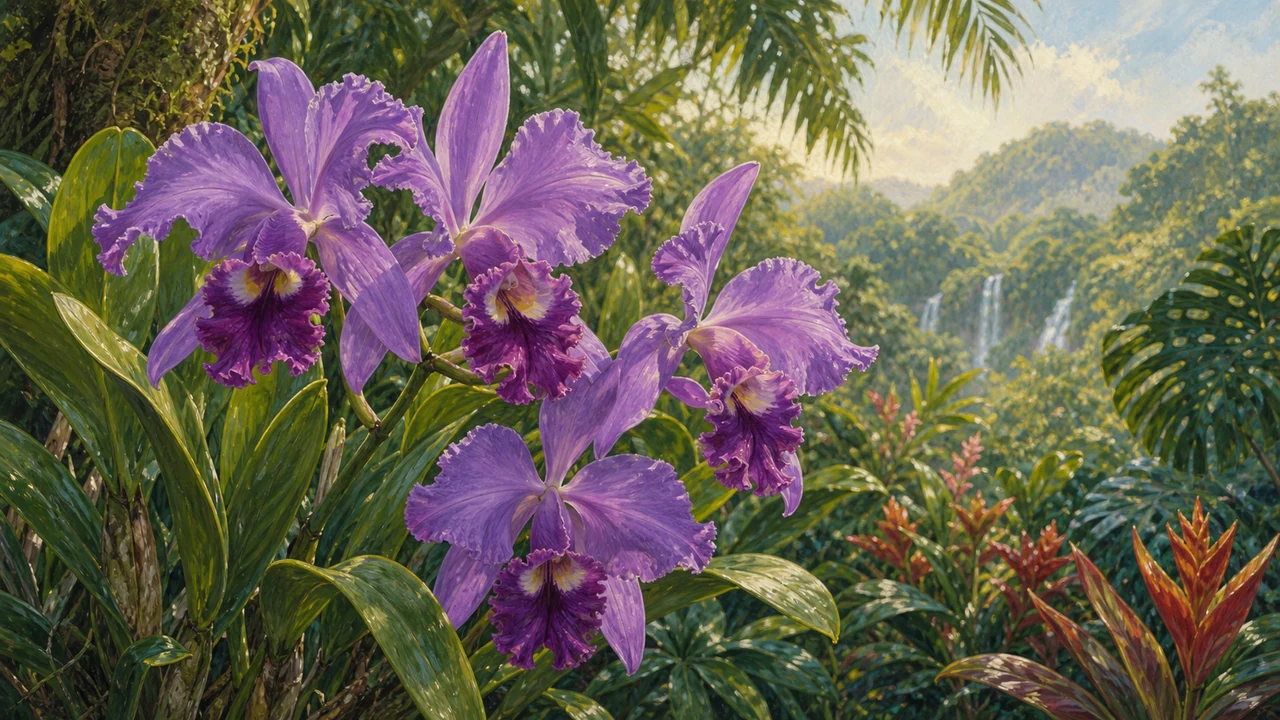
The Guaria Morada (Guarianthe skinneri) is Costa Rica’s national flower — a resplendent purple orchid officially declared a national symbol on June 15, 1939. More than a botanical designation, it is a living emblem of Tico identity, woven into the country’s folklore, festivities, and everyday sense of beauty. For anyone exploring Costa Rica’s ecotourism & nature, spotting this orchid cascading from a tree or adorning a farmhouse porch is one of those quietly memorable moments.
What Is the Guaria Morada?
The Guaria Morada belongs to the orchid family (Orchidaceae), one of the largest and most diverse plant families on Earth. Its scientific name was reclassified from Cattleya skinneri to Guarianthe skinneri, reflecting modern taxonomic understanding — though many botanists and Ticos still use both names interchangeably.
As an epiphytic orchid native to Central America, it does not grow in soil. Instead, it anchors itself to tree branches, mossy walls, rooftops, and even fence posts, drawing all the moisture and nutrients it needs from rain, dew, air, and the organic debris that collects around its roots. This self-sufficiency — living alongside its host without parasitizing it — has made the Guaria Morada a fitting metaphor for Costa Rican independence and resilience.
The flowers are striking: large, waxy blooms in shades of deep violet to soft lavender, typically with a darker or contrasting lip. Clusters of five to twelve blossoms open along a single stem, and a well-established plant in full bloom is genuinely spectacular.
Bloom Season and Where to Find It
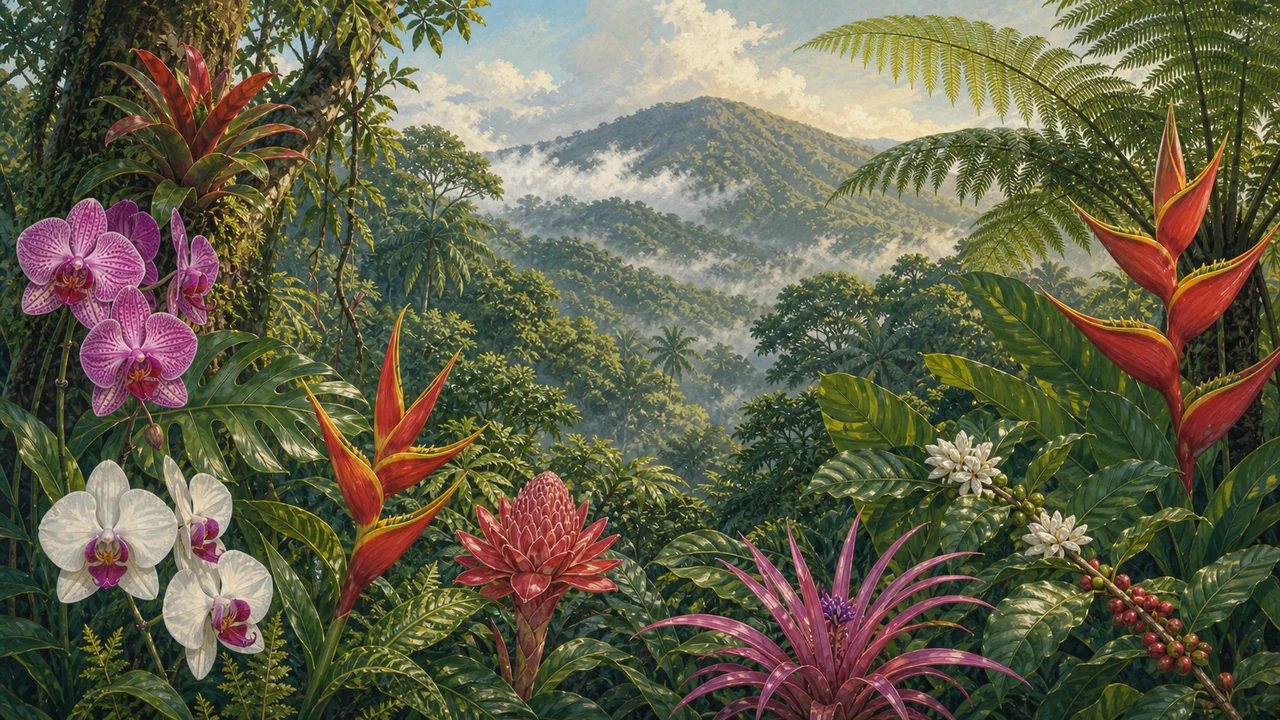
The Guaria Morada bloom season in Costa Rica runs primarily from February through April, peaking around Holy Week. This timing is no accident in the cultural calendar — the orchid’s purple hue aligns with the liturgical colors of Lent, and for generations Costa Ricans have placed sprays of Guaria Morada at home altars and church entrances during Semana Santa.
In the wild, the orchid thrives in mid-elevation forests between roughly 1,000 and 1,500 meters, where temperatures are mild and humidity is consistent. The Central Valley — home to San José, Heredia, Alajuela, and Cartago — sits squarely in this zone, which is one reason the Guaria Morada became so deeply embedded in urban and rural Tico life alike.
Outside bloom season you will still encounter the plant throughout the country. Its thick, leathery pseudobulbs remain a distinctive feature year-round, and many Costa Rican households keep established specimens on their porches, balconies, or garden walls as a point of pride.
If you are traveling to Costa Rica between February and April and want to see the orchid at its best, look for:
- Older farmhouses and colonial-style homes in the Central Valley, where Guaria Morada plants are often displayed along railings and roof eaves.
- Botanical gardens and orchid nurseries near San José.
- Village churches and community markets, especially in the weeks before Easter.
Cultural Significance and Folklore
The Guaria Morada occupies a unique place in Costa Rican cultural life that goes far beyond its official designation. For generations, campesinos (rural farmers) have cultivated it in their homes and associated its beauty with the grace and character of Costa Rican women. To offer someone a Guaria Morada was — and still is — an expression of deep respect and affection.
According to traditional Costa Rican beliefs surrounding the Guaria Morada, the orchid carries protective and auspicious powers. Families have long kept it in their homes to attract good fortune, promote harmony, and strengthen family bonds. It is said to channel positive energies and inspire the imagination — its lack of a pronounced fragrance is explained in folklore as the flower holding its fragrance inward, carrying the weight of dreams yet to be fulfilled.
These traditions connect the Guaria Morada to a broader Costa Rican worldview rooted in appreciation for nature, community, and the small, beautiful details of daily life — a sensibility closely tied to the national philosophy of Pura Vida. The country’s rich tapestry of national symbols — from the Clay-Colored Thrush (national bird) to the Guanacaste tree (national tree) — reflects this same deep regard for the natural world.
Orchids and Costa Rica’s Extraordinary Biodiversity
Costa Rica is one of the world’s great orchid nations. The country harbors an estimated 1,400 or more native orchid species — a staggering number for a country roughly the size of West Virginia. This richness reflects the same geographic and climatic factors that make Costa Rica one of the most biodiverse countries per square kilometer on the planet, holding roughly five percent of all known species on Earth.
The diversity of orchids mirrors the diversity of habitats: from humid Caribbean lowlands to cool Talamanca cloud forests to dry Guanacaste woodlands. Visitors focused on Costa Rica’s flora and botanical ecotourism will find the orchid family represented at virtually every elevation and in every ecosystem.
Conservation of the Guaria Morada specifically has become a touchstone for broader discussions about protecting native flora. Because of its cultural value, it was historically over-collected from the wild. Today it enjoys legal protection in Costa Rica, and nurseries and botanical programs actively propagate it to meet demand while reducing pressure on wild populations. This kind of conservation-minded approach is consistent with Costa Rica’s broader record of protecting more than 25 percent of its national territory in parks, reserves, and refuges — one of the highest proportions in the world. Exploring the national parks & protected areas network is the best way to see native orchids in their undisturbed habitat.
The Guaria Morada as a Travel Experience
For visitors, the Guaria Morada is both a botanical curiosity and a cultural window. Seeing it in bloom — cascading from an old mango tree in a Central Valley neighborhood, or massed along the entrance to a rural church — conveys something about Costa Rica that no brochure quite captures: that this is a country where people maintain a genuine, daily relationship with the natural world.
Birdwatching and orchid-spotting tours often overlap in Costa Rica because the habitats that support epiphytic orchids — mossy forest edges, coffee-growing highlands, riverine corridors — are the same habitats that attract a dazzling variety of birds. The Central Valley highlands in particular offer both pursuits within easy reach of San José.
If you are planning a trip timed to the orchid season, it also dovetails well with the dry season on the Pacific side and the shoulder season in many popular destinations, making February through April an excellent window for travel. See our Costa Rica travel tips for more on timing your visit.
For a deeper dive into what makes this small country so remarkable, explore why visit Costa Rica — the Guaria Morada is just one thread in a very rich tapestry.
Frequently asked questions
What is Costa Rica's national flower?
Costa Rica's national flower is the Guaria Morada (Guarianthe skinneri), a purple orchid officially designated as the national flower on June 15, 1939. It is one of the country's most beloved cultural symbols, appearing in homes, festivals, and folk traditions throughout the year.
Where does the Guaria Morada orchid grow in Costa Rica?
The Guaria Morada grows naturally in the mid-elevation forests of Costa Rica, particularly in the Central Valley and on the slopes of the mountains between roughly 1,000 and 1,500 meters. Being an epiphyte, it attaches itself to tree branches, rooftops, and building facades without drawing nutrients from its host.
When does the Guaria Morada bloom?
The Guaria Morada typically blooms from February through April, with peak flowering often coinciding with the lead-up to Holy Week (Semana Santa). This timing has deepened its association with Easter celebrations and spring renewal in Costa Rican culture.
Is the Guaria Morada endangered?
Habitat loss and over-collection have put pressure on wild populations of Guarianthe skinneri throughout Central America. In Costa Rica it is a protected species, and many conservation programs encourage cultivating it in gardens and nurseries rather than harvesting it from the wild.
Can I see the Guaria Morada while visiting Costa Rica?
Yes. During the bloom season (roughly February–April) you will spot clusters of Guaria Morada decorating homes, porches, and church entrances across the Central Valley. Orchid enthusiasts can also visit botanical gardens and nurseries that specialize in native orchid cultivation.