Costa Rica Weather & Climate: Complete Season Guide
Costa Rica’s weather is one of its greatest assets — a tropical country without a single boring climate. Instead, you get two clearly defined seasons, dramatic regional contrasts, and microclimates that can shift a landscape entirely within an hour’s drive.
The Two Seasons: Dry and Green
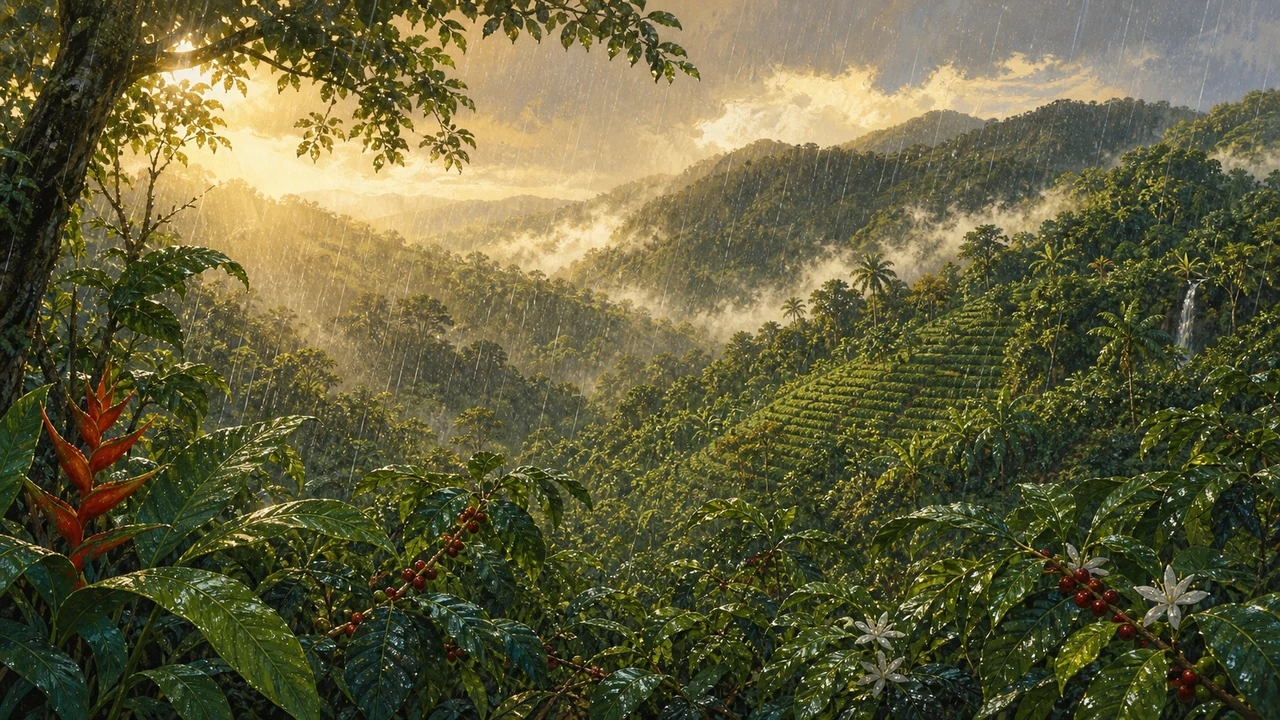 Costa Rica divides its year into two seasons rather than four. Locals call them verano (summer) and invierno (winter), but these are meteorological seasons, not temperature-based ones — the country sits near the equator and stays warm year-round.
The dry season runs roughly from December through April. Skies are clear, Pacific beaches are at their sunniest, and travel infrastructure operates at full capacity. This is the tourist high season, so expect more visitors and slightly higher prices at popular destinations.
The green season (also called the rainy season) runs from May through November. Afternoons bring tropical showers — often dramatic, always short-lived. Mornings are typically bright and beautiful. Vegetation explodes into vivid green, waterfalls run at full force, rivers swell for exciting whitewater rafting in Costa Rica, and wildlife is active. Prices drop and crowds thin considerably, making this an excellent value window for experienced travelers.
What Drives Costa Rica’s Climate
The seasonal shift is driven by the movement of the sun relative to the equator. From May through September, the sun tracks directly overhead in Costa Rica, heating the surface intensely. Warm air rises, picks up moisture, expands, cools, and releases it as rain — the classic tropical afternoon thunderstorm. By November, the sun has shifted south of the equator, reducing overhead heating and ending the rains across most of the country.
Trade winds from the northeast also play a role, pushing moisture from the Caribbean toward the central mountains year-round. This is why the Caribbean side never fully dries out.
Regional Microclimates
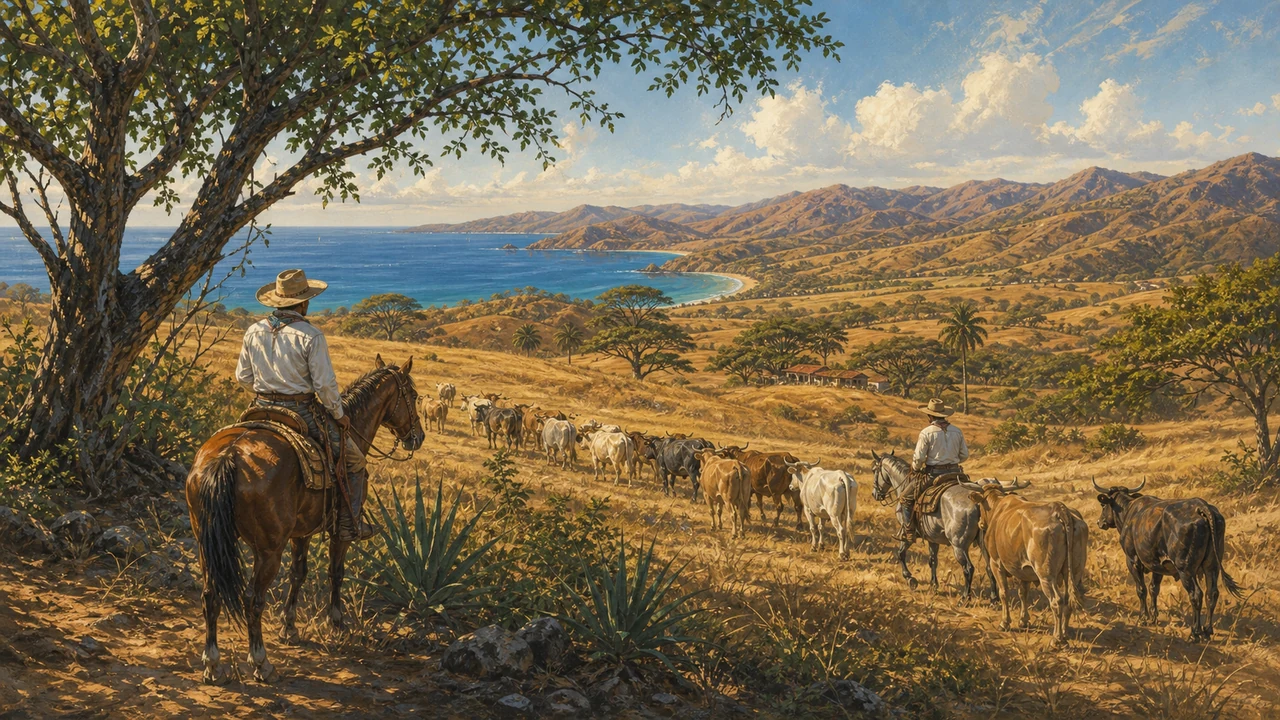 One of the most remarkable things about Costa Rica is how radically the weather can change within short distances. A two-hour drive from one coast to the other can take you from sweltering dry savanna to lush misty cloud forest.
Guanacaste (Pacific Northwest): The driest region in the country. The dry season here is pronounced and prolonged — expect golden, sun-baked landscapes from December to April. This is the premier beach destination for travelers prioritizing guaranteed sunshine. The Nicoya Peninsula, including popular beach towns, sits within this zone.
Central Valley: Home to San José, Alajuela, Heredia, and Cartago, the Central Valley sits at 1,000–1,500 meters elevation. The result is a spring-like climate in Costa Rica’s Central Valley that stays comfortable year-round — warm afternoons, cool evenings, and a gentle rainy season without the heavy tropical downpours of the coasts.
Caribbean Coast: The Caribbean operates on its own schedule. Rainfall arrives throughout the year, with no true dry season. The wettest months are typically December and January, while September and October see a relative lull — almost a mini dry season that is the reverse of the Pacific pattern. Rural tourism along the Caribbean coast thrives year-round in this lushly forested region.
South Pacific (Osa Peninsula): One of the wettest corners of the country. Corcovado National Park and the Osa Peninsula receive extremely high rainfall, sustaining some of the most biodiverse rainforest on the planet. The dry season here is shorter and less reliable than in Guanacaste.
Elevation and Temperature
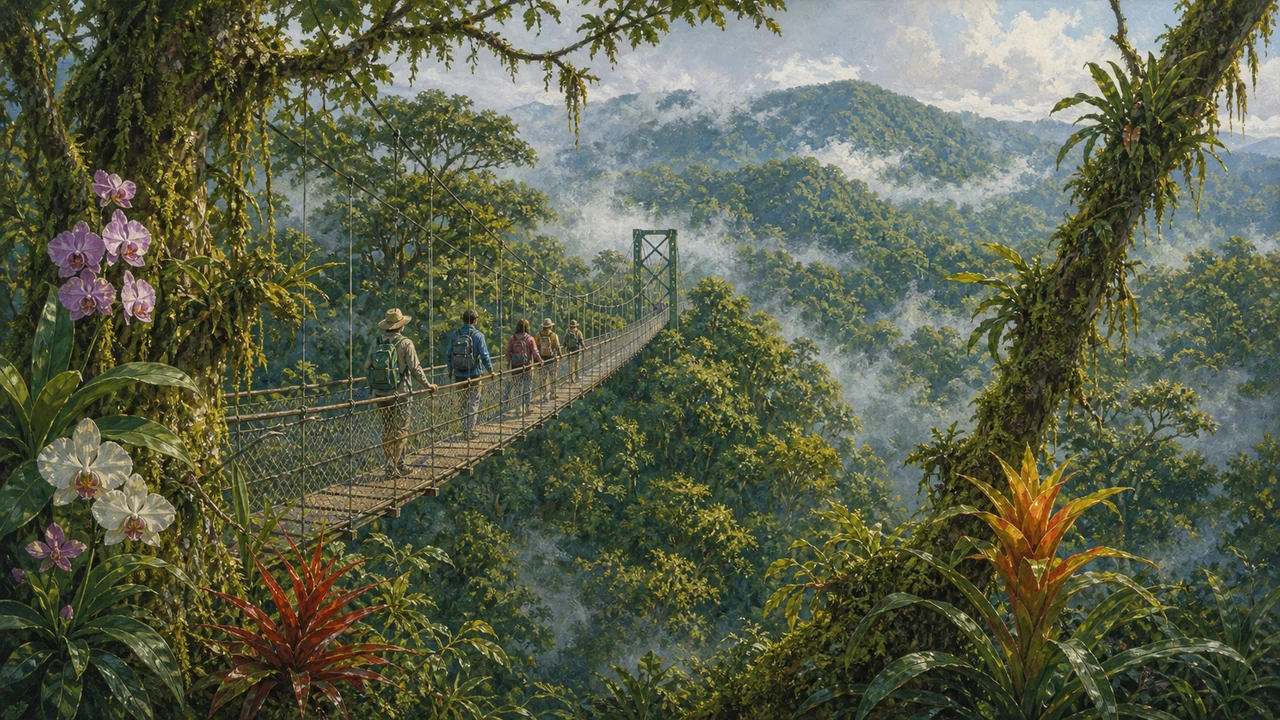 Altitude is the other great climate variable. As you climb from sea level into the mountains, temperatures drop noticeably — roughly 6°C (11°F) for every 1,000 meters gained.
- Coastal lowlands (0–500 m): Hot and humid, 28–35°C (82–95°F) year-round.
- Central Valley (1,000–1,500 m): Pleasantly mild, 18–26°C (64–79°F). The reason so many Costa Ricans and expats choose to live here.
- Cloud forests (1,500–2,500 m): Cool and misty, 12–18°C (54–64°F). Destinations like Monteverde are defined by their persistent cloud cover, which creates the unique cloud forest ecosystem.
- High peaks (above 2,500 m): Cold, especially at night. Cerro Chirripó, the highest point in the country at 3,821 m, can drop near freezing after dark.
This elevation effect means you can experience dramatically different climates on the same day — morning at a sun-drenched Pacific beach, afternoon in a cool mountain village.
The Caribbean Mini Dry Season
One of Costa Rica’s best-kept travel secrets is the Caribbean mini dry season in September and October. While the Pacific side — particularly the South Pacific — is at peak rainfall, the southern Caribbean coast around Cahuita and Puerto Viejo enjoys some of its sunniest, calmest weeks of the year. Seas settle, visibility improves for snorkeling, and the tourist crowd is thin. Savvy travelers who discover this window often describe it as the perfect off-season escape.
Planning Your Trip Around the Weather
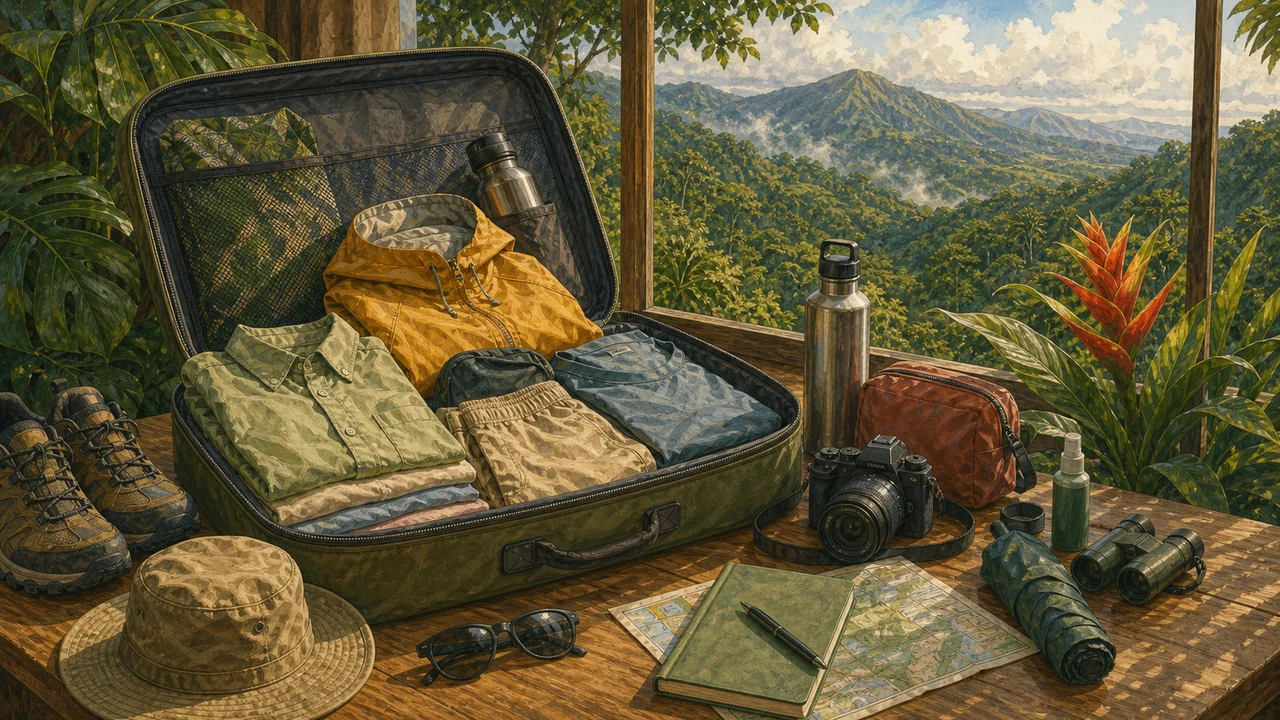 There is no universally “bad” time to visit Costa Rica — the right time depends on what you want to do.
- Beach holidays and Pacific hiking: December–April (dry season) for the most reliable conditions.
- Wildlife watching and photography: May–November when animals are active, rivers are full, and the landscape is at its greenest.
- Budget travel: Green season brings lower accommodation rates and shorter queues at Costa Rica’s national parks.
- Surfing: Depends on the coast. The Pacific gets its best swells from April to October; the Caribbean’s best surf season runs December to March.
- Birdwatching: Year-round excellent, but migratory species are present from October to April.
Whatever season you choose, pack a light rain jacket — even in the dry season, highland areas and the Caribbean can see showers. For complete planning advice, see our Costa Rica travel tips guide, or explore why Costa Rica consistently ranks among the world’s top nature destinations.
The country’s extraordinary biodiversity — more than 5% of global species on just 0.03% of Earth’s landmass — exists precisely because of this range of climates and microclimates. Rain, elevation, and geography conspire to create ecosystems and nature experiences found nowhere else on the planet.
Frequently asked questions
What is the best time to visit Costa Rica?
The dry season (December through April) offers the most reliable sunshine and is ideal for beach holidays and Pacific-side adventures. However, the green season (May–November) has lower prices, lush scenery, and its own charms — including a 'little dry season' in July and August.
Does it rain every day during the rainy season?
Not all day. Typical green-season rain falls in the afternoon or evening, often as dramatic tropical downpours that clear quickly. Mornings are usually bright and sunny, making outdoor activities entirely practical.
How does elevation affect the weather in Costa Rica?
Significantly. The Central Valley (around 1,000–1,500 m / 3,300–5,000 ft) enjoys a spring-like climate year-round with temperatures of roughly 18–25°C (64–77°F). Higher peaks like Chirripó can be cold at night. Coastal lowlands are hot and humid, often 28–35°C (82–95°F).
Which part of Costa Rica is driest?
Guanacaste province on the Pacific northwest is the driest region, with a clear dry season from December to April and relatively low annual rainfall. Beaches like Tamarindo and Playa del Coco are excellent choices for guaranteed sunshine.
Is the Caribbean coast different from the Pacific?
Yes — the Caribbean coast follows its own pattern. It receives rainfall throughout the year with no true dry season, though September and October are among the drier months. The Caribbean's lush, year-round green character makes it uniquely beautiful at any time.