Why Visit Costa Rica? Top Reasons to Travel
Costa Rica consistently ranks among the world’s top travel destinations, and the reasons go far beyond beautiful weather. Packed into a country roughly the size of West Virginia are two coastlines, a spine of volcanoes, some of the most biodiverse rainforests on the planet, and a national philosophy—pura vida—that turns simple interactions into genuine connections.
Whether you come for wildlife, adventure, beaches, or a complete change of pace, Costa Rica delivers. It is approachable, well-organized for tourism, and genuinely welcoming in a way that keeps visitors coming back.
If you are weighing where to spend your next vacation, here is why Costa Rica belongs at the top of the list.
Unmatched biodiversity and nature
 Costa Rica occupies just about 0.03% of the Earth’s land area, yet it shelters roughly 5% of all known species on the planet. That extraordinary concentration of life is not an accident. More than a quarter of Costa Rica’s territory is protected as national parks, wildlife refuges, and biological reserves—one of the highest percentages of protected land of any country on earth.
The result is a landscape that rewards curiosity at every turn. Lowland Caribbean rainforests give way to Pacific dry forests and misty cloud forests along the continental divide. Rivers run cold through highland valleys and warm through coastal mangroves. From the canopy of Manuel Antonio to the cloud-wrapped trails of Monteverde, Costa Rica’s ecotourism scene sets a global standard.
Even a short hike through a national park can yield sightings that would fill a photographer’s memory card: scarlet macaws, poison dart frogs, three-toed sloths, and iridescent morpho butterflies. This is not a curated zoo experience—it is wild nature, accessible and intact.
Beaches on two coastlines
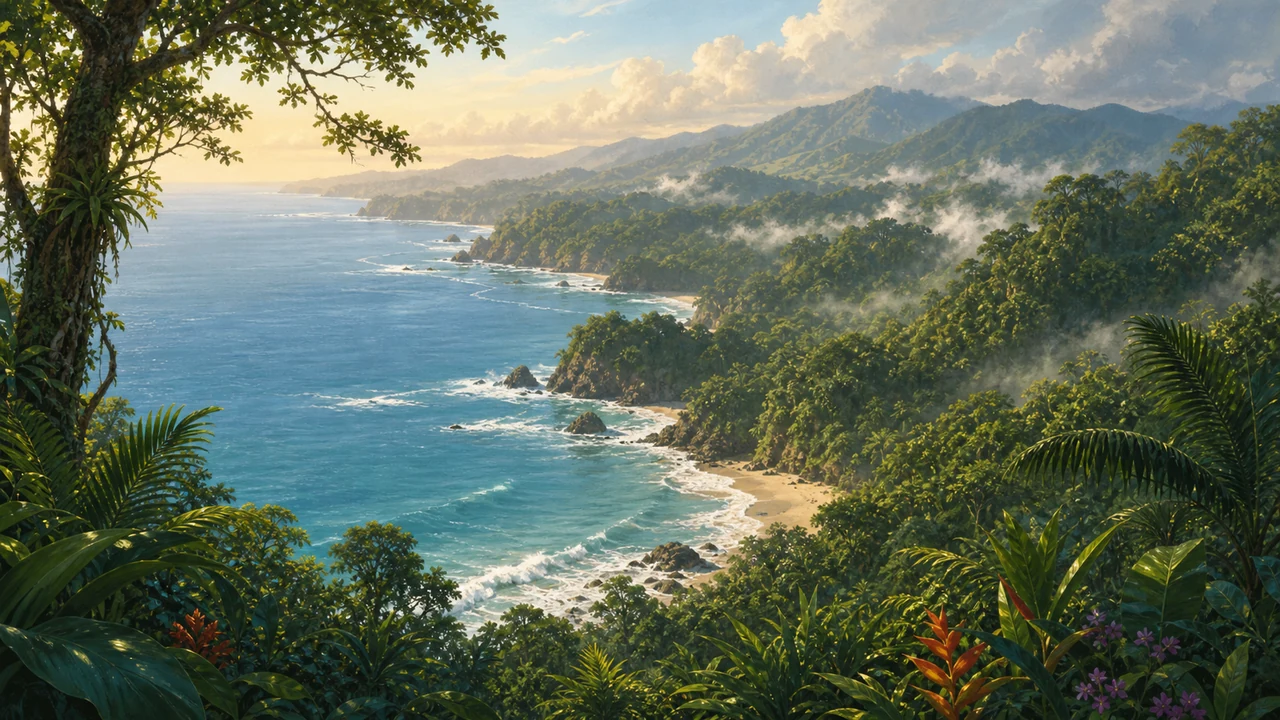 Bordered by the Pacific Ocean to the west and the Caribbean Sea to the east, Costa Rica offers two entirely different beach experiences without needing a long flight between them.
The Pacific coast stretches from the surf towns of the Nicoya Peninsula and Guanacaste in the north—think Tamarindo, Nosara, and Santa Teresa—down through the rugged shores of the Osa Peninsula in the south. Conditions range from powerful open-ocean swells ideal for experienced surfers to calm, family-friendly bays where the water is warm enough to stay in for hours.
The Caribbean coast has a slower, more intimate feel. Towns like Puerto Viejo de Talamanca are known for reggae rhythms, Afro-Caribbean food, turquoise water, and a laid-back pace that is hard to leave behind. Several Caribbean beaches are also key nesting sites for green and leatherback sea turtles.
Explore the full range in our guide to Costa Rica beaches.
Volcanoes, adventure, and wildlife
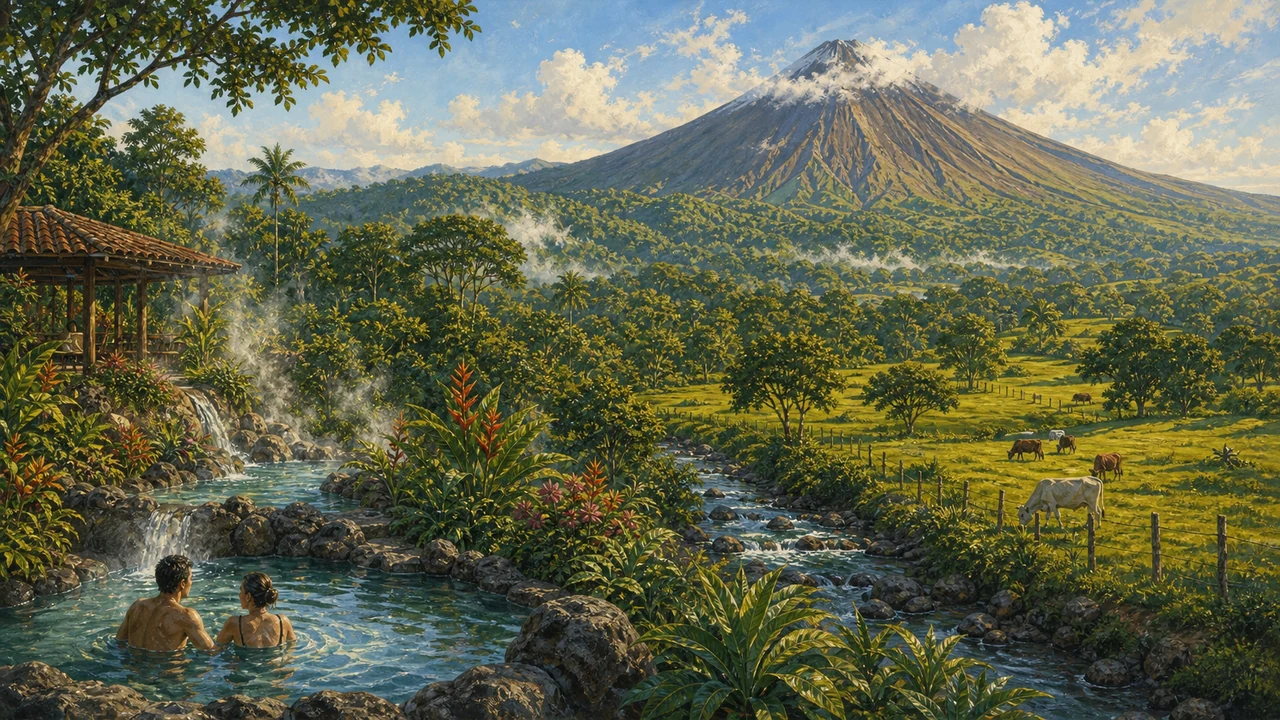 Costa Rica sits along the Pacific Ring of Fire, and its chain of volcanoes is one of the most dramatic in the Americas. Arenal—a near-perfect cone that dominates the northern lowlands—is the most visited, surrounded by hot springs, hanging bridges, and the adventure hub of La Fortuna. Poás and Irazú rise above the Central Valley and are accessible on day trips from San José, offering crater lake views that can feel almost surreal when the clouds part. See our full Costa Rica volcanoes guide for details on visiting each one.
Adventure is built into the landscape. White-water rafting on the Pacuare River, ziplining through cloud forest canopy, canyoning, sea kayaking, ATV tours, and world-class sport fishing are all readily available. Costa Rica is one of the few places where you can surf in the morning, raft a river in the afternoon, and spot a jaguar’s tracks the same evening.
Wildlife encounters are woven into everyday moments. Howler monkeys announce sunrise across the country. Toucans perch on branches over breakfast tables. Sea turtles nest on both coasts at predictable times of year. A single activities and sports trip here can cover experiences that would otherwise require a dozen separate destinations.
A safe, stable, and welcoming country
Costa Rica made a decision that set it apart from nearly every other nation: in 1948 it abolished its military entirely and redirected that budget into education and healthcare. It is the oldest continuously functioning democracy in Latin America, and that political stability is something travelers feel from the moment they arrive.
Crime exists in any country, and normal urban precautions are sensible. But Costa Rica has none of the persistent instability or travel advisories that affect some of its neighbors. The tourism infrastructure is mature and well-developed, with consistent safety standards across reputable hotels, tour operators, and transport services.
Locals—called Ticos—are known for being genuinely warm and helpful. The national greeting, con mucho gusto (“with much pleasure”), sums up an attitude toward hospitality that is hard to fake and easy to feel. Our travel tips for Costa Rica cover practical safety advice and what to expect on the ground.
Pura vida: the Costa Rican way of life
 Pura vida translates literally as “pure life,” but it means far more than that. Ticos use it as a greeting, a farewell, an expression of thanks, and a general affirmation that life is good. It reflects a genuine cultural orientation toward gratitude, simplicity, and enjoyment of the present moment.
That philosophy appears to have real, measurable effects. The Nicoya Peninsula—a long finger of land on the Pacific coast—is recognized as one of the world’s five Blue Zones, regions where people consistently live longer, healthier lives than average. Researchers point to diet, strong community ties, a sense of purpose, and low chronic stress as contributing factors. Whether or not you are thinking about longevity, the Nicoya way of life is worth experiencing.
Pura vida is not a marketing slogan. Spend a week here, slow down, eat fresh food, watch a Pacific sunset, and you start to understand it firsthand.
Easy to reach and explore
 Costa Rica is well-connected to North America, Europe, and South America. Two international airports handle most arrivals: Juan Santamaría International Airport (SJO), located near San José in the Central Valley, and Daniel Oduber Quirós International Airport (LIR), in Liberia in Guanacaste. Flying into Liberia cuts hours off a journey to the Pacific beaches of Guanacaste and the Nicoya Peninsula.
The country is compact enough that most destinations are reachable by ground in a few hours, though mountain roads and seasonal rains mean a four-wheel-drive vehicle is genuinely useful outside of the main highways. Domestic flights, shared shuttle services, and well-established tour operators make it easy to connect the dots even without a rental car.
The currency is the Costa Rican colón (CRC), and US dollars are widely accepted at hotels, restaurants, and tour operators throughout the country.
Between the wildlife, the coastlines, the adventure, the culture, and the sheer ease of getting here, Costa Rica earns its reputation. There are faster trips, cheaper trips, and more exotic trips—but very few destinations where every day delivers something genuinely worth remembering.
Frequently asked questions
Why should I visit Costa Rica?
Costa Rica packs an extraordinary range of experiences into a small country: tropical beaches on two coastlines, rainforests, cloud forests, active volcanoes, and some of the richest wildlife on earth. Add a warm, safe culture built around the pura vida philosophy and it becomes one of the most rewarding destinations in the world.
Is Costa Rica worth visiting?
Yes. Despite its small size, Costa Rica protects more than 25% of its territory as national parks and reserves, giving travelers access to roughly 5% of the planet's entire biodiversity. Few destinations offer such variety—surf, jungle, wildlife, adventure sports, and relaxation—within a short driving distance.
Is Costa Rica safe to visit?
Costa Rica is generally considered one of the safest countries in Latin America. It abolished its military in 1948, has no standing army, and has maintained a stable democratic government ever since. Normal travel precautions apply in cities, but most resort and tourism areas are very safe.
When is the best time to visit Costa Rica?
The dry season (roughly December through April) is peak season on most of the Pacific coast and is the easiest time to travel. The green season (May–November) brings lush landscapes, fewer crowds, and lower prices. The Caribbean coast has its own rhythm, with its driest stretch often falling in September and October.
Do I need to speak Spanish to visit Costa Rica?
Spanish is the official language, but you do not need to be fluent. English is widely spoken in tourist areas, national parks, hotels, and restaurants. Learning a few friendly phrases—'pura vida,' 'gracias,' 'con mucho gusto'—is appreciated by locals and goes a long way.