Costa Rica's National Anthem: History & Meaning
 Costa Rica’s national anthem, the Himno Nacional de Costa Rica, is one of the most peaceful and distinctly civilian national anthems in the world. Rather than celebrating military conquest, it honors the quiet dignity of farmers, the beauty of the land, and the country’s long commitment to democracy — themes that resonate deeply with the Costa Rican national identity.
The anthem has two authors: a military bandleader who composed the melody under diplomatic pressure in 1852, and a poet who gave it words half a century later. Together, they created an enduring symbol of a nation that defines itself not by force, but by labor, peace, and pride.
The Music: A Diplomatic Origin (1852)
 In 1852, Costa Rica achieved an important diplomatic milestone: the United States and the United Kingdom each accredited their first official representatives to the country. President Juan Rafael Mora planned a formal reception at the Presidential Palace to welcome both missions — and realized Costa Rica had no national anthem to play.
He turned to Manuel María Gutiérrez, director of the Costa Rican National Army Orchestra, and tasked him with composing a suitable piece of music on short notice. Gutiérrez delivered. The music was performed for the first time on June 11, 1852, at the Casa de Gobierno (Presidential Palace) at noon.
What is striking about the composition is its tone. Because it was created specifically to welcome foreign diplomats rather than to rouse soldiers, the music of Costa Rica’s national anthem carries no military character. It conveys unity, solidarity, and the spirit of peaceful agreement between nations — a quality that feels especially fitting for a country that would go on to abolish its army in 1948.
The Lyrics: Born from a Public Contest (1903)
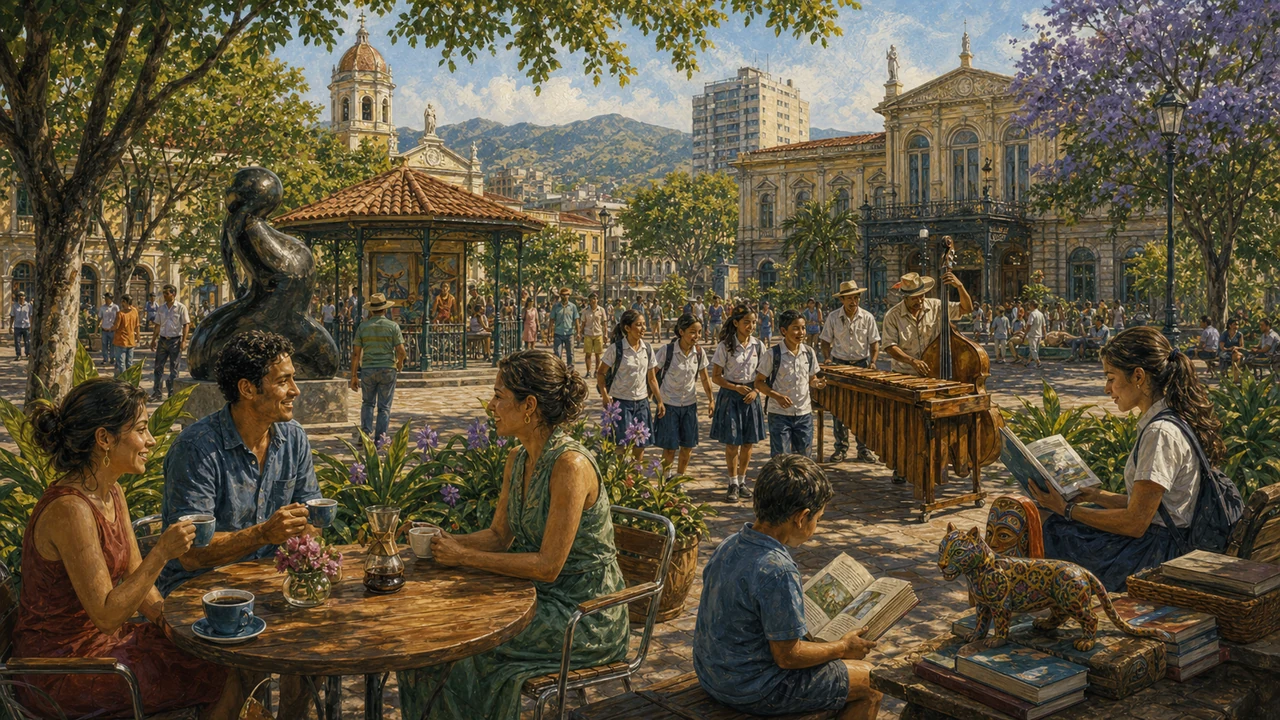 For fifty years, Gutiérrez’s melody was played without official words. In 1903, the Costa Rican government opened a public competition inviting all citizens to submit lyrics for the anthem. The contest was won by José María Zeledón Brenes, a poet and journalist whose words captured the soul of early 20th-century Costa Rica.
The lyrics of the Himno Nacional de Costa Rica were performed publicly for the first time on September 15, 1903 — Costa Rica’s Independence Day — giving the occasion added symbolic weight. Both the music and lyrics received official government recognition in 1949, when they were formally adopted alongside Costa Rica’s new constitution.
Zeledón’s words speak directly to the campesinos — the simple farm workers who cultivated the land, raised livestock, and built the foundations of the country’s democracy and economy. The anthem praises not wealth or conquest, but the dignity of daily labor and the beauty of the blue skies and green fields under which those workers lived.
Spanish Lyrics
Noble patria, tu hermosa bandera Expresión de tu vida nos da: Bajo el limpido azul de tu cielo Blanca y pura descansa la paz.
En la lucha tenaz de fecunda labor Que enrojece del hombre la faz, Conquistaron tus hijos, labriegos sencillos, Eterno prestigio, estima y honor, eterno prestigio, estima y honor.
¡Salve oh tierra gentil! ¡Salve oh madre de amor! Cuando alguno pretenda tu gloria manchar, Verás a tu pueblo, valiente y viril La tosca herramienta en arma trocar.
¡Salve patria! tu pródigo suelo Dulce abrigo y sustento nos da; Bajo el limpido azul de tu cielo ¡Vivan siempre el trabajo y la paz!
English Translation
Noble homeland, your beautiful flag Expresses for us your life: Under the limpid blue of your skies, Peace reigns, white and pure.
In the tenacious battle of fruitful toil, That brings a glow to men’s faces, Your sons, simple farm hands, Gained eternal renown, esteem and honour, Gained eternal renown, esteem and honour.
Hail, gentle country! Hail, loving mother! If anyone should attempt to besmirch your glory, You will see your people, valiant and virile, Exchange their rustic tools for weapons.
Hail, O homeland! Your prodigal soil Gives us sweet sustenance and shelter. Under the limpid blue of your sky, May peaceful labour ever continue.
What the Anthem Means for Costa Rica Today
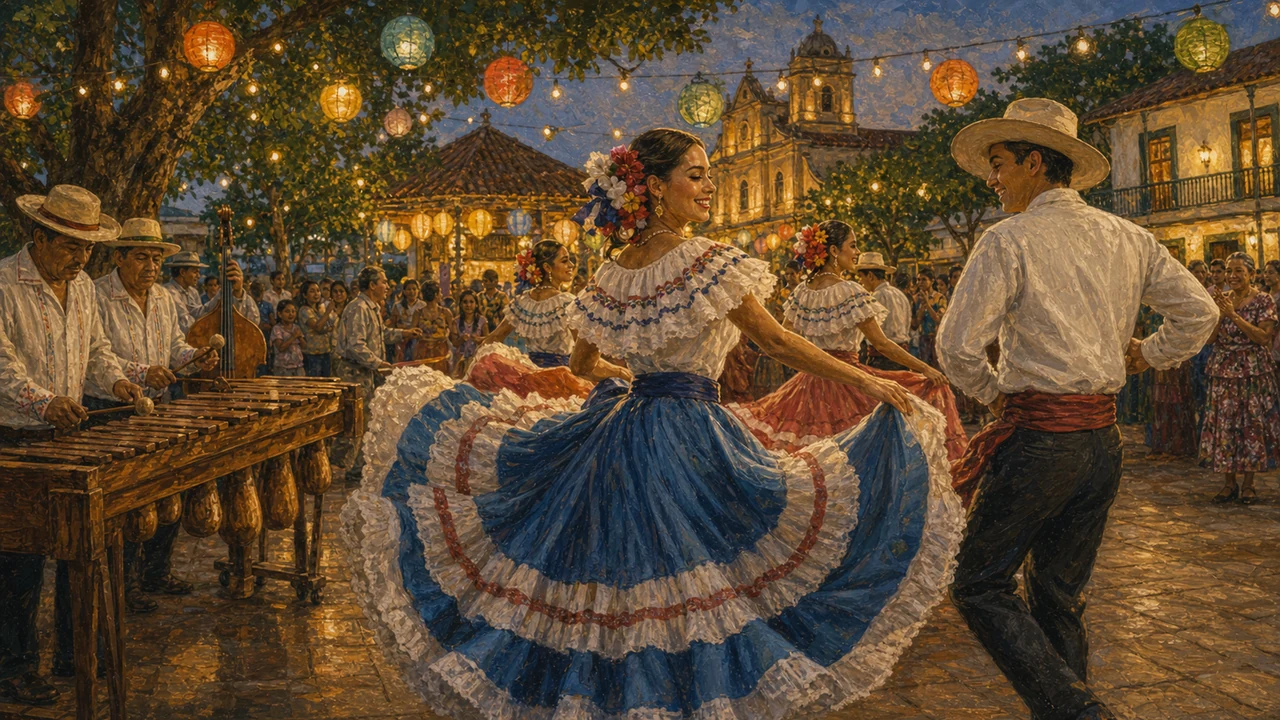 The Himno Nacional is played at official ceremonies, school events, and sporting matches, but its message feels especially resonant given Costa Rica’s unique place in the world. This is a country that has preserved more than 25% of its territory as protected land, earned a Nobel Peace Prize for a head of state, and built one of the oldest stable democracies in Latin America — all without a standing army.
The anthem’s emphasis on peaceful labor over warfare aligns perfectly with a national identity built around environmental stewardship, ecotourism, and sustainable development rather than military might.
The reference to campesinos — those “simple farm hands” — also reflects how deeply agricultural heritage is woven into Costa Rican culture. Costa Rica’s coffee tradition grew from this same rural backbone, and the pride in honest, productive work remains a defining characteristic of Tico culture.
When visitors hear the anthem — in a stadium, a school courtyard, or before a cultural performance — they are hearing a country define itself on its own terms: through its land, its people, and its peace.
The National Anthem in Context
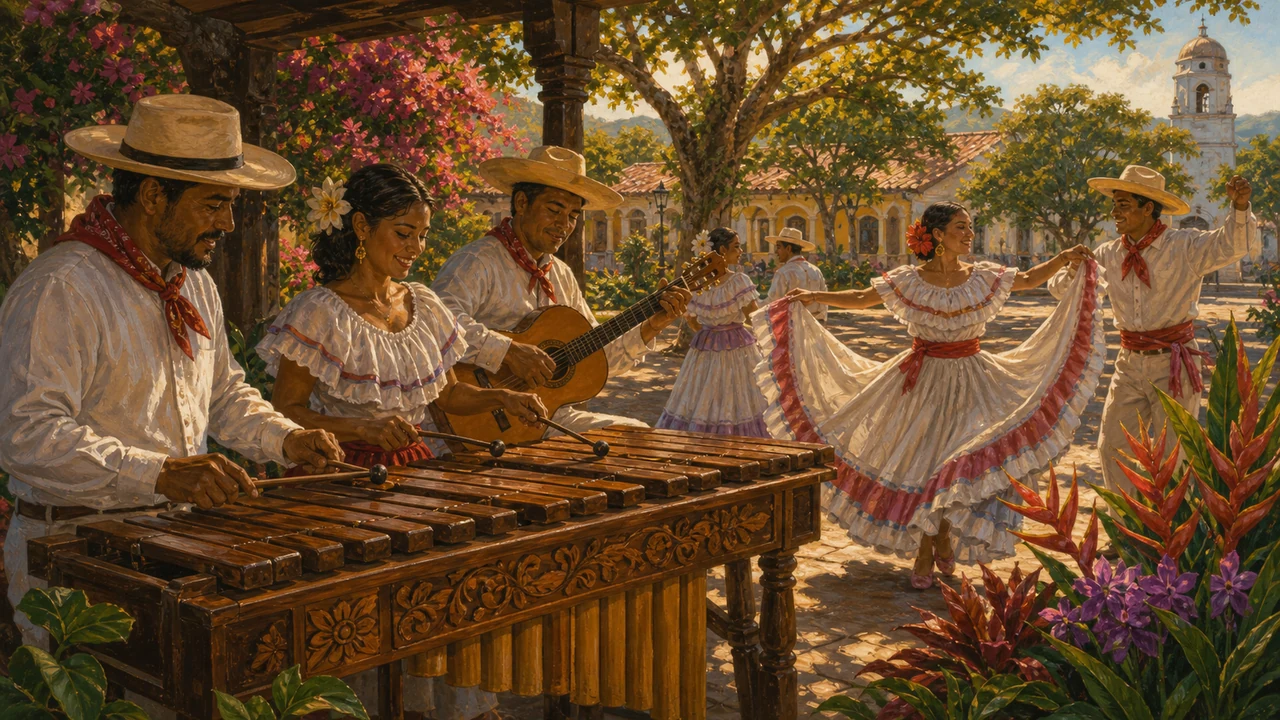 The anthem is one of several Costa Rica national symbols that collectively express the country’s values and natural identity. The national flag shares the anthem’s blue-and-white color symbolism of sky and peace. The national bird, the clay-colored thrush (yigüirro), was chosen partly because it sings most beautifully during the first rains of the planting season — again connecting to that campesino heritage Zeledón celebrated in the lyrics.
Together, Costa Rica’s national symbols as expressions of peace and nature form a consistent portrait of a country that has chosen a different path from most of its neighbors in the region. Exploring these symbols gives visitors a richer appreciation of why Costa Rica continues to attract travelers, conservationists, retirees, and dreamers from around the world.
If you’re planning a trip, our Costa Rica travel tips page is a good next stop — or dive into the country’s extraordinary national parks and natural areas to see the land that inspired those lyrics firsthand.
Frequently asked questions
Who composed the music for Costa Rica's national anthem?
Manuel María Gutiérrez, director of the Costa Rican National Army Orchestra, composed the music in 1852 at the request of President Juan Rafael Mora. It was first performed on June 11, 1852, at the Presidential Palace to welcome diplomatic delegations from the United States and the United Kingdom.
Who wrote the lyrics to Costa Rica's national anthem?
José María Zeledón Brenes won a public contest in 1903 to write the official lyrics. The anthem was sung for the first time with its words on September 15, 1903 — Costa Rica's Independence Day.
When did the national anthem become official?
The music and lyrics were formally adopted as the official national anthem of Costa Rica in 1949, enshrined alongside the country's new constitution.
What is the theme of Costa Rica's national anthem?
The anthem celebrates the country's campesinos (farm workers) who built the nation through honest labor. It honors peace, democratic values, and the natural beauty of the country, with no military glorification — reflecting Costa Rica's peaceful identity.
What language is the Costa Rica national anthem sung in?
The anthem is sung in Spanish. The title is 'Himno Nacional de Costa Rica.' Its opening line — 'Noble patria, tu hermosa bandera' ('Noble homeland, your beautiful flag') — is widely recognized throughout the country.