Costa Rica National Bird — The Clay-Colored Thrush
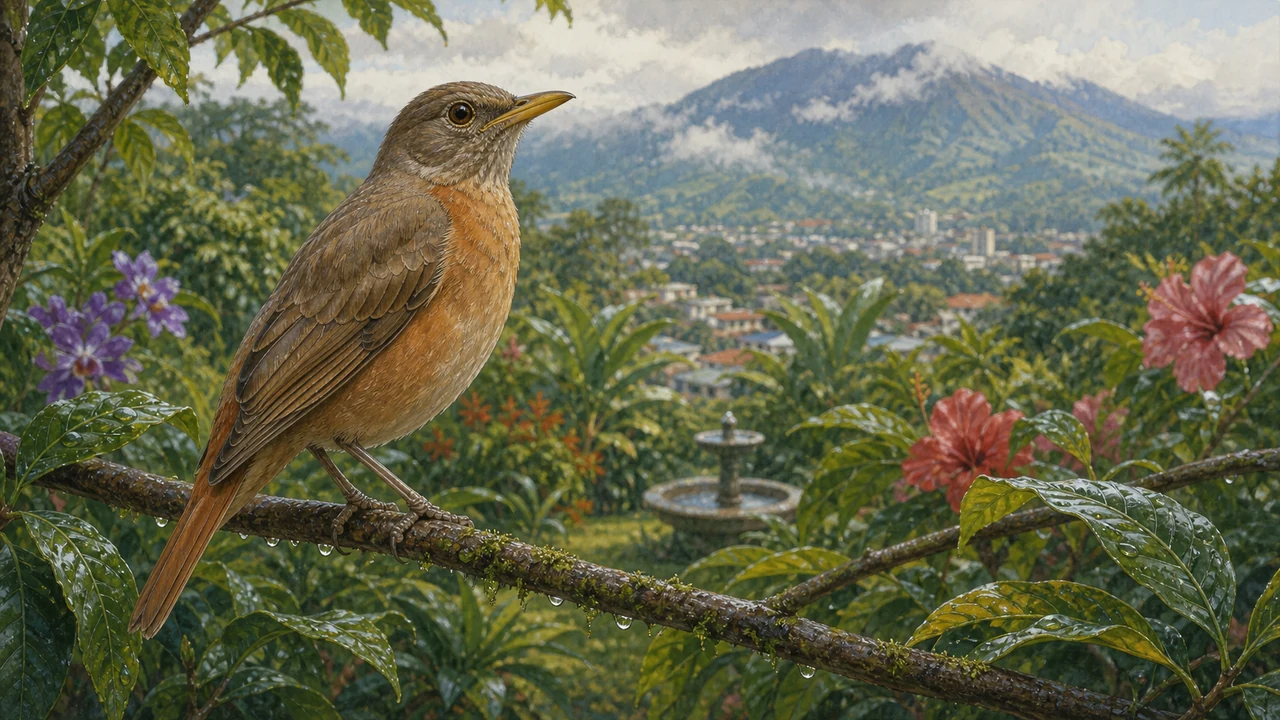
Costa Rica’s national bird is the yigüirro (Turdus grayi), a medium-sized thrush that may lack the flamboyant plumage of a toucan or a resplendent quetzal, but more than makes up for it with its voice. Officially designated the national bird in November 1976, the yigüirro holds a place in Costa Rican culture that goes far deeper than ornithology — it is a living calendar, a seasonal herald, and a symbol of the country’s agricultural soul.
A Bird with a Purpose: The Rain Herald
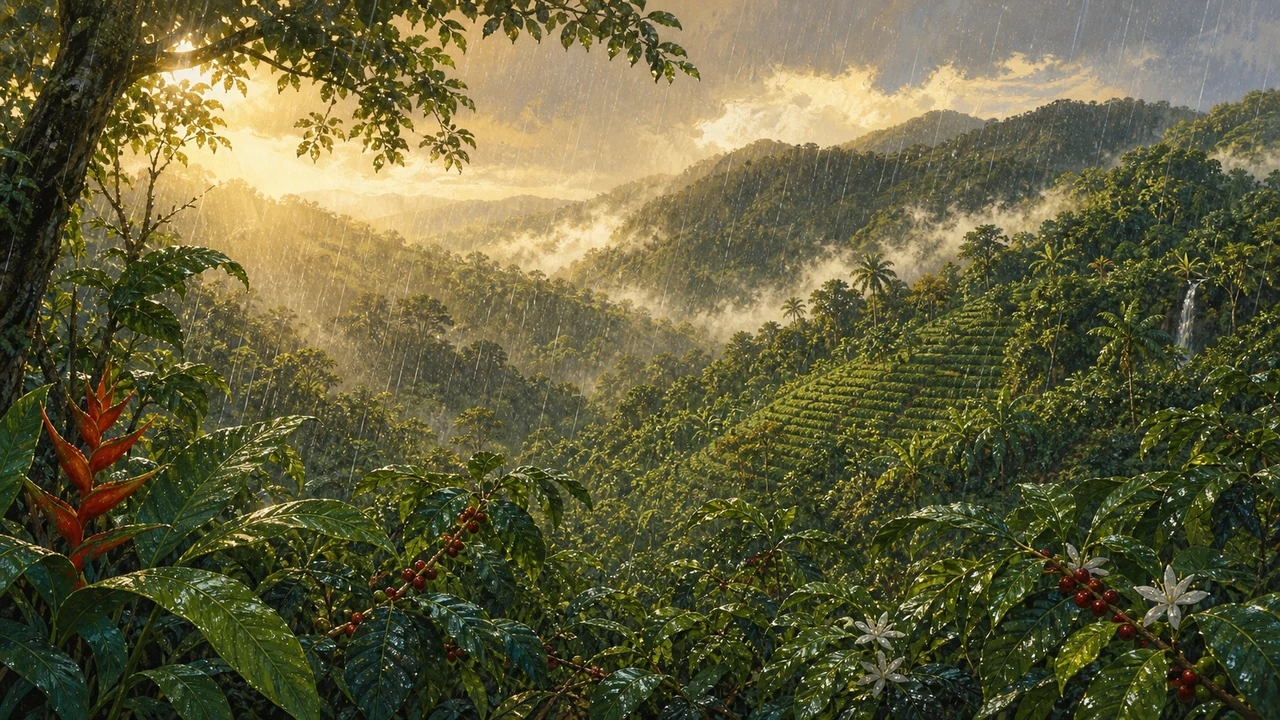
Costa Rica divides its year into two broad seasons: the dry verano and the rainy invierno. For generations of farmers — coffee growers, rice cultivators, and cattle ranchers alike — the arrival of the rains was the single most important event of the year. Long before modern meteorology, rural communities relied on natural cues, and the yigüirro provided one of the most reliable.
The yigüirro’s song as a herald of the rainy season is the central reason this bird holds the national title. Each year, as April approaches and the first rains begin to build, the male yigüirro launches into an extended, melodious song that fills gardens, forest edges, and open fields from dusk well into the evening. Costa Ricans have listened to this performance for centuries and come to regard it as a promise: the rains are coming, the earth will drink, and the planting season will begin.
This deep symbolic link between the bird and the fertility of the land explains the designation. While other Central American countries honor more visually spectacular species, Costa Rica chose a bird whose true value lies in what it says — and when it says it.
Appearance and Identification
The yigüirro is not a bird built for showmanship. It is roughly 23–25 cm long, dressed in warm earthy brown above and pale buff below, with a lightly streaked throat and a yellowish-green bill. There are no bright patches or iridescent feathers. What sets it apart, even visually, is a certain confidence: it walks unhurriedly, holds its head up, and seems entirely at ease in human company.
Identifying the clay-colored thrush in Costa Rica is straightforward for this reason. While more colorful species retreat into forest canopies or dense undergrowth, the yigüirro hops along garden paths, forages openly on lawns, and perches in plain sight at the tops of shrubs and low trees. It is one of very few wild birds that most visitors encounter up close without any special effort.
The species is a member of the thrush family (Turdidae), relatives of the familiar American robin. Like its cousins, the yigüirro is an accomplished songster with a rich, fluid repertoire of phrases that it strings together in long, improvised sequences.
Behavior and Life Cycle

The yigüirro’s year is structured around the rainy season in more ways than one. Singing peaks during the transition months of April and May as males establish territories and attract mates. The nesting season runs through this same period, with females typically laying two to three eggs per clutch in cup-shaped nests built in shrubs, low tree branches, or even window ledges and potted plants near houses.
Once eggs are laid, the male’s singing quiets noticeably — a shift locals have long observed. Parents share incubation and chick-rearing duties. The yigüirro is a protective parent and will mob much larger birds or animals that approach the nest too closely, a boldness that seems at odds with its generally calm demeanor around people.
The yigüirro’s diet is broad and opportunistic. It eats insects, earthworms, and other invertebrates that the rains bring to the surface, as well as a wide variety of fruits. This flexibility allows it to thrive in almost every habitat in Costa Rica, from sea level to mid-elevation cloud forests, and from pristine forest interiors to busy city parks in San José.
Where to Find the Yigüirro
Because the yigüirro is found throughout Costa Rica and is unafraid of human presence, you do not need a special expedition to encounter one. You are likely to hear its song from your hotel garden, a coffee-farm terrace, or a roadside rest stop. That said, a few settings offer particularly rewarding encounters:
- Hotel gardens and urban parks — The yigüirro is abundant in San José’s Parque Metropolitano La Sabana and in the gardens of hotels throughout the Central Valley.
- Coffee farm edges — The shaded coffee plantations of the highland regions provide ideal foraging habitat, and the birds are often seen hopping between rows at dawn.
- Forest edges at mid-elevation — The transition zones between open farmland and Costa Rica’s rainforest support dense yigüirro populations year-round.
- Costa Rica national parks — Many parks with visitor trails and open areas, from Carara to Braulio Carrillo, host the species in numbers.
Birdwatching and the Yigüirro
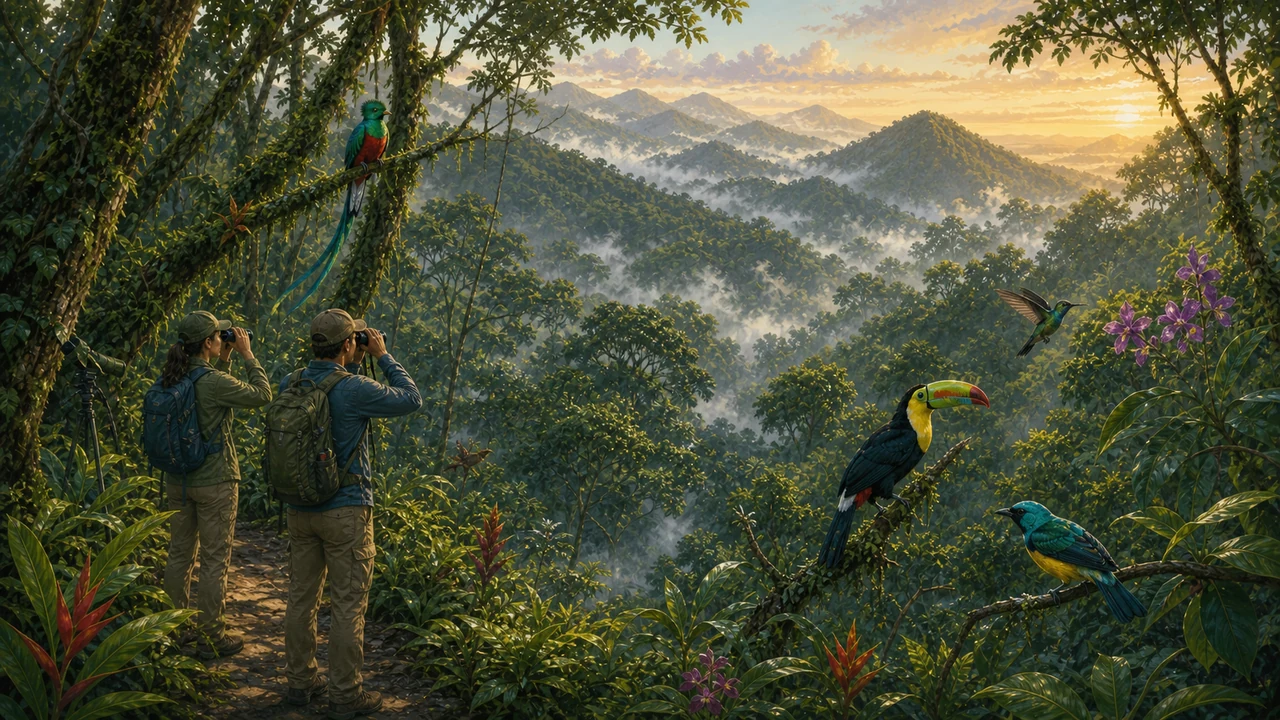
Costa Rica is one of the world’s premier birdwatching destinations, hosting more than 900 recorded species in a country smaller than West Virginia. For dedicated birders, the yigüirro is a guaranteed early tick — but it is also a useful gateway species that illustrates why Costa Rica’s avian diversity is so exceptional.
Costa Rica birdwatching tours frequently begin in the Central Valley before moving to specialized habitats where rarities and endemics await. The yigüirro’s abundance and approachability make it an ideal subject for practicing identification skills and understanding thrush behavior before heading into more demanding terrain.
For a broader look at the country’s remarkable birds of Costa Rica, the yigüirro is a fitting starting point. Its story — common, beloved, deeply woven into local life — mirrors something essential about Costa Rican ecotourism and nature: that the most meaningful wildlife encounters are not always the rarest ones.
The Yigüirro Among Costa Rica’s National Symbols
The yigüirro joins a set of national symbols that collectively tell the story of Costa Rica’s natural and cultural identity. The national tree, the guanacaste (Enterolobium cyclocarpum), provides shade to the country’s dry Pacific lowlands. The national flower, the guaria morada orchid, blooms in highland gardens and cloud-forest trees. And the national flag carries the blue, white, and red that represent the sky, peace, and the blood of patriots.
The yigüirro stands apart from these symbols in one important way: it is everywhere. The yigüirro as Costa Rica’s everyday national symbol means that every visitor, without any special planning, can share in the same experience that Costa Ricans have valued for generations — stepping outside on a warm April evening and hearing that clear, rolling song promising that the rains are near and the earth will soon be green again.
If you are planning a visit, explore Costa Rica ecotourism and nature for ways to experience the country’s extraordinary wildlife beyond the national bird, and check Costa Rica travel tips to make the most of your trip.
Frequently asked questions
What is Costa Rica's national bird?
Costa Rica's national bird is the yigüirro (Turdus grayi), also called the clay-colored thrush or clay-colored robin. It was officially designated the national bird in November 1976.
Why was the yigüirro chosen as Costa Rica's national bird?
The yigüirro was chosen because its song traditionally signals the arrival of the rainy season — a vital event for farmers throughout Costa Rica. Its call is deeply tied to the agricultural calendar and is regarded as a herald of fertility and renewal.
What does the yigüirro look like?
The yigüirro is a medium-sized songbird roughly 23–25 cm long. Its plumage is a warm earthy brown on the back and wings, fading to a pale buff on the breast and belly. It has a pale, slightly streaked throat and a dull yellowish-green bill.
When and where can I hear the yigüirro singing?
The yigüirro sings most persistently during the transition into Costa Rica's rainy season, generally from April through early June. It is found throughout the country — in gardens, forest edges, coffee farms, and urban parks — so you are likely to hear it almost anywhere.
Is the yigüirro easy to see in Costa Rica?
Yes. Unlike many tropical birds, the yigüirro is comfortable around people and does not shy away from settled areas. It hops along garden paths, forages on lawns, and perches openly in trees, making it one of the easiest birds to observe during any visit.