Ecotourism in Costa Rica: World Leader in Green Travel
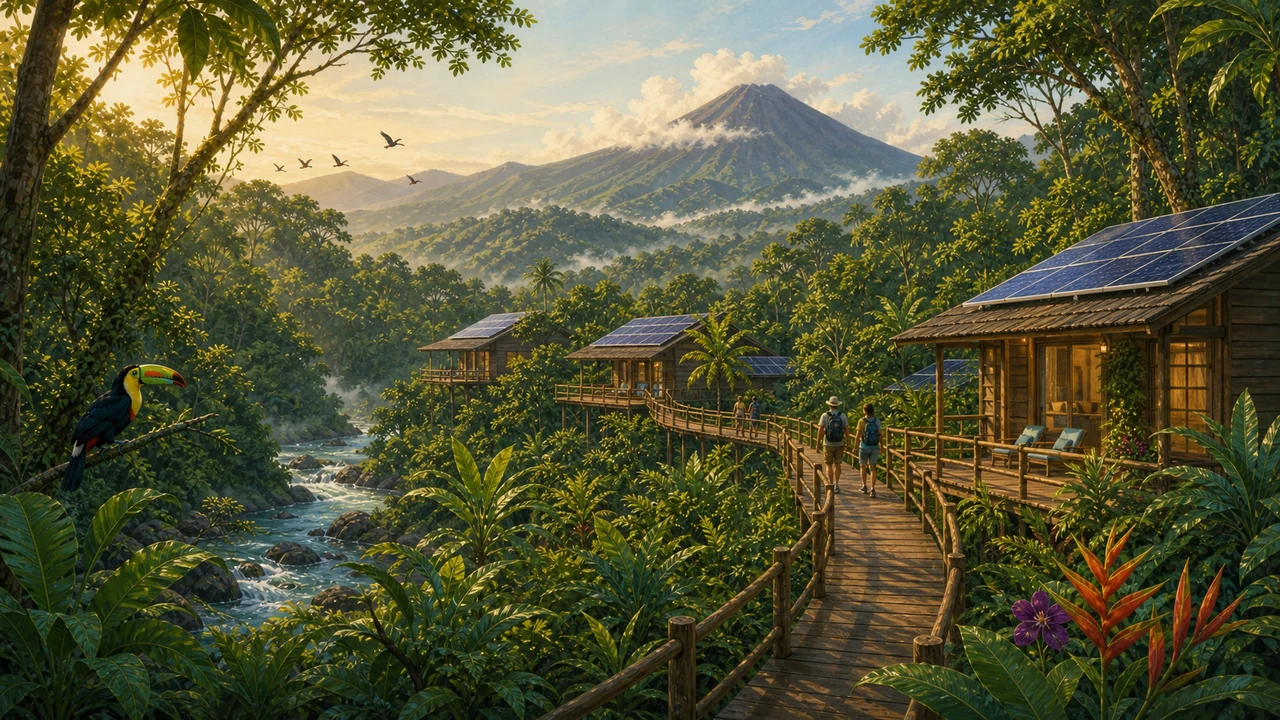 Costa Rica is widely recognized as the birthplace of modern ecotourism — a small country that proved nature conservation and thriving tourism can reinforce each other rather than compete. With more than 25% of its land area protected as national parks, wildlife refuges, and biological reserves, and a national certification system that holds businesses accountable, Costa Rica offers the most developed and honest ecotourism infrastructure on the planet.
Visitors here aren’t just sightseeing. They are participating in a model that has kept howler monkeys in the canopy, scarlet macaws on the wing, and leatherback sea turtles nesting on the same beaches they have used for millennia. Understanding what that model looks like — and how to engage with it responsibly — makes every rainforest walk, canopy tour, or river float more meaningful.
What Ecotourism Means in Costa Rica
The term “ecotourism” gets used loosely around the world, but Costa Rica defines it with unusual precision. The country’s Tourism Board (ICT) runs a Certificación para la Sostenibilidad Turística (CST) program that rates hotels, lodges, and tour operators on a one-to-five-leaf scale. Evaluations cover four domains: how a business interacts with the surrounding ecosystem, the sustainability of its physical infrastructure, the quality of its environmental education and waste management, and its positive contribution to local economies and cultures.
A lodge earning four or five leaves isn’t just recycling cans — it is sourcing food locally, treating its wastewater on-site, running interpretive programs, and paying fair wages to community members. When you choose a CST-certified property, your tourist dollar actively supports the conservation mission rather than just benefiting from it. The ecological blue flag program extends a similar standard to beaches and communities.
Six Ecosystems in One Small Country
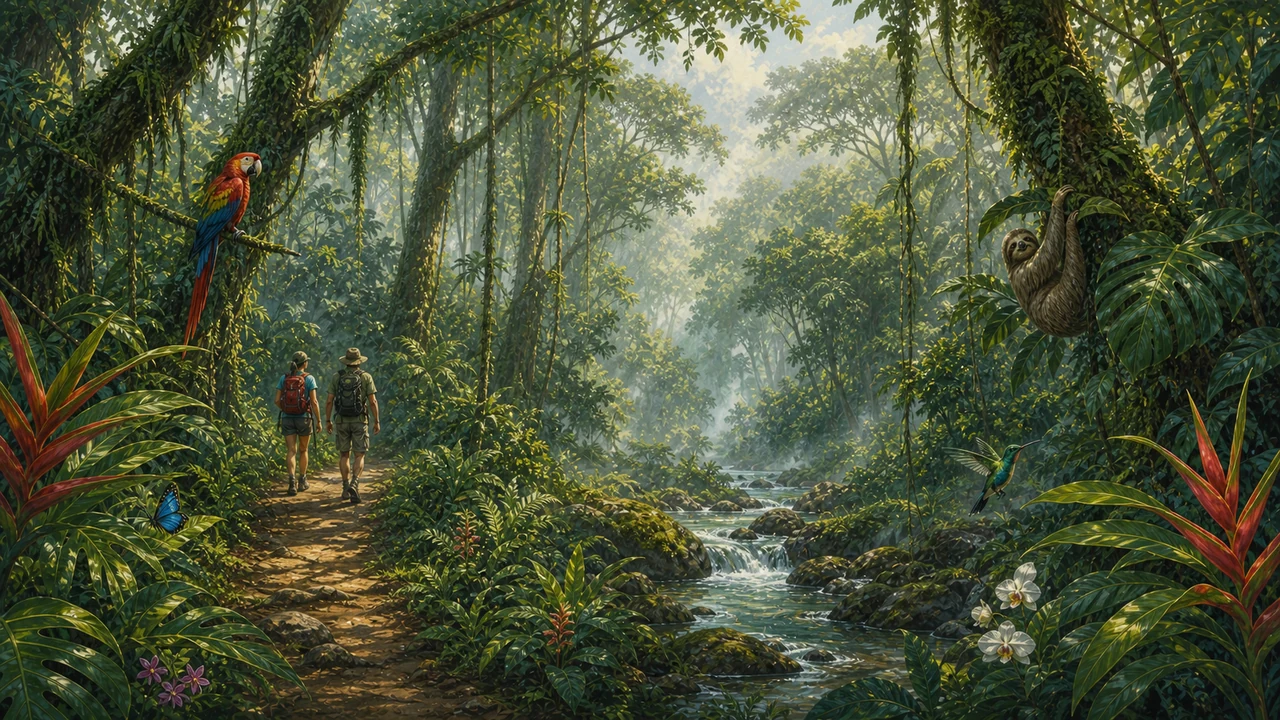 What makes ecotourism in Costa Rica so compelling is the sheer density of different habitats within a country roughly the size of West Virginia. Six distinct ecosystem types exist here:
- Tropical rainforest — the dominant landscape on the Caribbean slope and the Osa Peninsula, with towering trees, multi-layer canopies, and the highest biodiversity per hectare of any habitat type.
- Cloud forest — at elevations above roughly 1,500 meters, perpetually misted and draped in mosses, orchids, and bromeliads; famous for the resplendent quetzal.
- Dry tropical forest — concentrated in Guanacaste, seasonally deciduous and dramatically different from the green south, home to white-faced capuchins and white-tailed deer.
- Montane oak forest — found on the highest ridges of the Talamanca range, ancient and cathedral-like.
- Páramo — the high-altitude shrubland above the treeline, unique in Central America and best experienced in Chirripó National Park.
- Mangroves and wetlands — critical nursery habitat for marine life along both coasts, protected in parks like Palo Verde and Tortuguero.
Costa Rica also holds approximately 5% of the world’s total biodiversity in a land area that is a fraction of a percent of the Earth’s surface — a statistic that continues to astonish biologists and humble visitors alike.
National Parks and Protected Areas
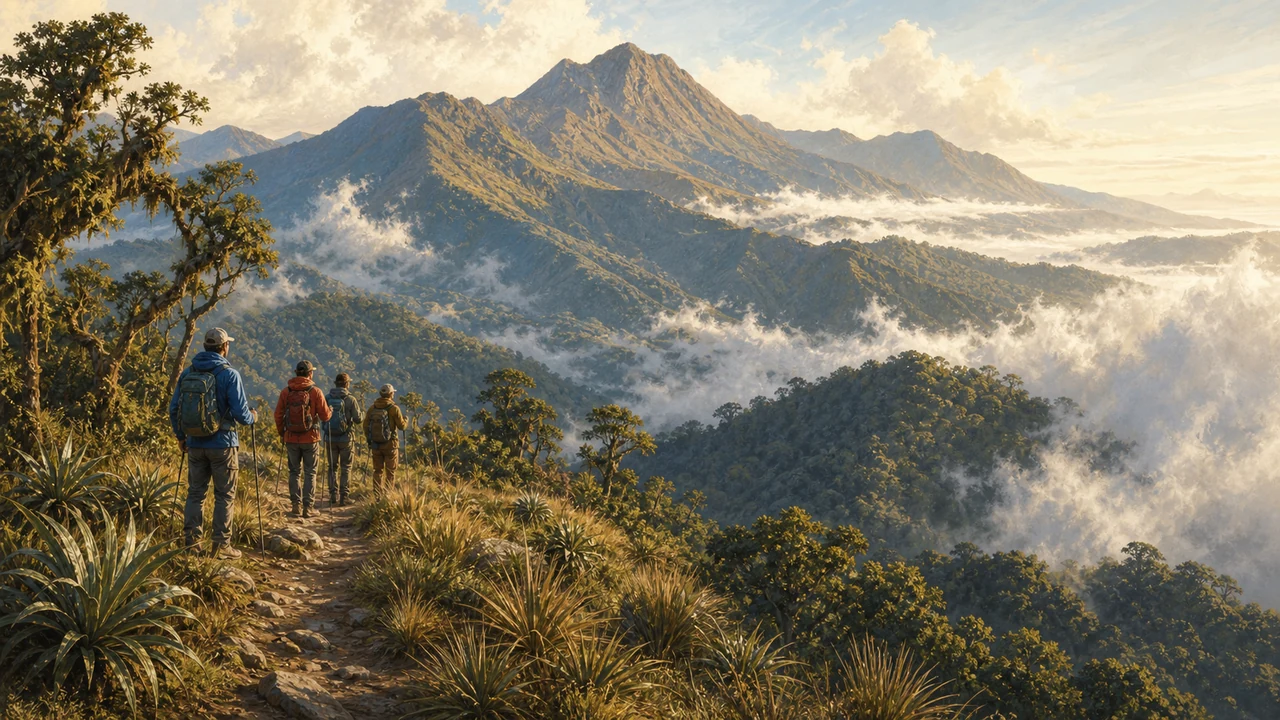 The backbone of Costa Rica’s world-class national park system is a network of parks, biological reserves, wildlife refuges, and protected zones managed by SINAC (the National System of Conservation Areas). Several stand out as ecotourism destinations of the highest order:
- Corcovado National Park on the Osa Peninsula is considered one of the most biologically intense places on Earth — tapirs, jaguars, harpy eagles, and all four of Costa Rica’s monkey species share its old-growth forests.
- Tortuguero National Park protects the most important green sea turtle nesting beach in the Western Hemisphere. Boat-based wildlife watching through its canal system is one of the great ecotourism experiences anywhere.
- Manuel Antonio National Park combines beachfront beauty with easily accessible wildlife viewing — ideal for families and first-time ecotourists.
- Carara National Park sits at the transition zone between dry and humid forests, producing exceptional birdwatching and a resident population of scarlet macaws.
- La Amistad International Park, shared with Panama, is the largest protected area in Central America and a UNESCO World Heritage site.
For a full overview of parks and refuges, see Costa Rica national parks and protected areas.
Wildlife: What to Expect
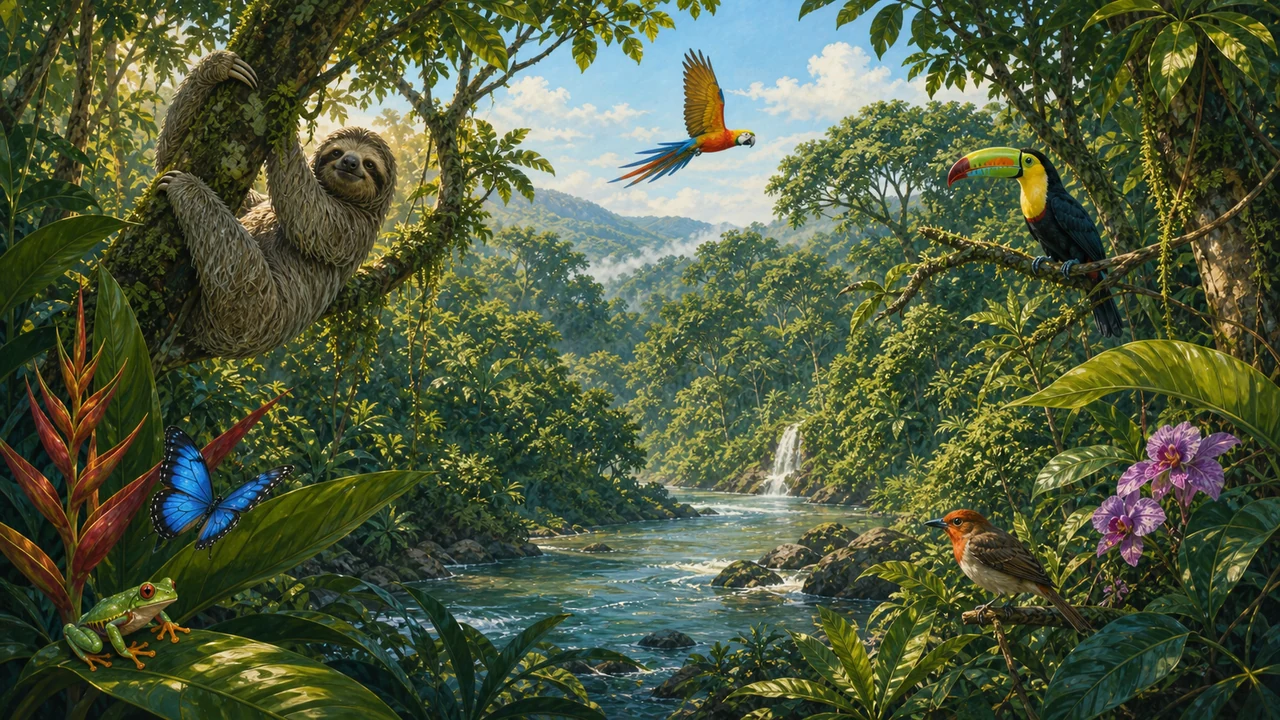 Few countries in the world can match Costa Rica’s exceptional biodiversity for wildlife watching. The numbers are staggering: more than 900 bird species (more than the entire North American continent north of Mexico), over 200 species of mammals, more than 200 reptiles, and roughly 175 amphibians. Even a short walk in a well-chosen forest can yield poison dart frogs, coatis, white-faced monkeys, toucans, and morpho butterflies all before breakfast.
Key wildlife experiences include:
- Sea turtle nesting at Tortuguero (green turtles, mainly July–October) and Playa Grande in Las Baulas Marine National Park (leatherbacks, October–March). Access is regulated and guided to minimize disturbance.
- Birdwatching throughout the country, with cloud forest sites like Monteverde and San Gerardo de Dota famous for quetzals, while the Caribbean lowlands attract rare forest species. See birds of Costa Rica for a deeper guide.
- Whale watching in the Marino Ballena area, where humpback whales from both hemispheres converge — making it one of the world’s most extended whale-watching seasons.
- Marine life at Cocos Island National Park, a remote UNESCO site and diving mecca for hammerhead sharks, manta rays, and whale sharks.
A licensed naturalist guide is worth every cent. Costa Rica’s guide corps — trained and certified through ICT — transforms a walk in the forest from a pleasant stroll into an unforgettable educational experience.
Sustainable Lodges and Eco-Accommodation
Choosing where to stay is one of the most powerful decisions an ecotourist makes. Costa Rica’s accommodation market ranges from basic jungle camps to luxury eco-lodges, but the meaningful distinction is not price — it is sustainability practice. Look for CST-certified properties, membership in the CANAECO (National Chamber of Ecotourism) network, or active community-benefit programs.
Community-based rural tourism is a growing and especially rewarding sector, placing visitors directly in farming families’ homes or small cooperative lodges managed by indigenous and rural communities. This model keeps economic benefit local in a direct and transparent way. Explore the rural tourism section for options across Guanacaste, the Central Pacific, and the Caribbean coast.
Tips for Responsible Ecotourism
Ecotourism at its best leaves a place better than you found it. These principles apply in Costa Rica as much as anywhere:
- Hire certified guides. Unlicensed operators can damage fragile habitats and give inaccurate information. Ask for ICT credentials.
- Stay on marked trails. Off-trail movement compacts roots, disturbs nesting animals, and erodes stream banks.
- Never feed wildlife. It disrupts natural behavior, causes dependency, and can spread disease between animals and humans.
- Choose CST-certified businesses for accommodation, transport, and tours wherever possible.
- Reduce single-use plastic. Bring a reusable bottle; many lodges provide filtered water stations.
- Support local economies. Eat at locally owned restaurants, buy handicrafts directly from artisans, and tip guides generously — they are the daily face of conservation.
- Respect nesting areas and wildlife viewing distances. Rangers enforce these rules, and they exist for good reason.
For broader advice on visiting responsibly, see Costa Rica travel tips and responsible travel in Costa Rica.
Plan Your Ecotourism Trip
Costa Rica’s ecotourism infrastructure is mature, well-signed, and welcoming to independent travelers and guided groups alike. Whether you spend a week chasing quetzals in cloud forest or a month moving between rainforest, volcano, and coast, the experience rewards preparation. Traveling to Costa Rica is straightforward — the country’s two international airports (San José and Liberia) connect to dozens of cities, and a good network of domestic flights and shuttle services reaches remote park gateways quickly.
The deeper reward of planning an ecotourism itinerary in Costa Rica is the discovery that conservation here is not a government slogan — it is a way of life built over decades by farmers who converted pasture back to forest, by communities that chose nature tourism over extraction, and by a political tradition that has kept parks funded and expanding since the 1970s. Visiting is an act of solidarity with that tradition. Go prepared, travel lightly, and you will leave having contributed to something worth returning for.
Frequently asked questions
What makes Costa Rica the birthplace of ecotourism?
Costa Rica pioneered the concept in the 1980s by combining a bold protected-areas policy with community-based nature tourism. More than 25% of the country's land is officially protected, and the government's CST certification program set a global model for measuring a tourism business's environmental and social impact.
What is the CST certification in Costa Rica?
The Certificación para la Sostenibilidad Turística (CST) is a voluntary national program run by the Costa Rican Tourism Board (ICT). It rates hotels and tour operators on a 1–5 leaf scale across four categories: the biological setting, infrastructure, service management, and socioeconomic impact on the local community.
Do I need a guide for ecotourism in Costa Rica?
A certified naturalist guide is strongly recommended. Costa Rica has hundreds of licensed natural-history guides expert in identifying birds, frogs, monkeys, and plants. As the founder of the Rara Avis project famously said, being in a rainforest without a guide is like being in a library without knowing how to read.
Which national parks are best for ecotourism beginners?
Manuel Antonio, Tortuguero, and Carara are especially welcoming for first-time ecotourists — well-maintained trails, abundant wildlife, and a strong infrastructure of licensed guides and nearby lodges. More remote parks like Corcovado reward experienced adventurers.
What should I pack for an ecotourism trip in Costa Rica?
Pack lightweight rain gear, insect repellent, sturdy waterproof boots, binoculars, a field guide or wildlife ID app, reef-safe sunscreen, and a reusable water bottle. A good camera with a zoom lens and a dry bag for electronics round out the essentials.