Corcovado National Park: Osa Peninsula Wildlife Guide
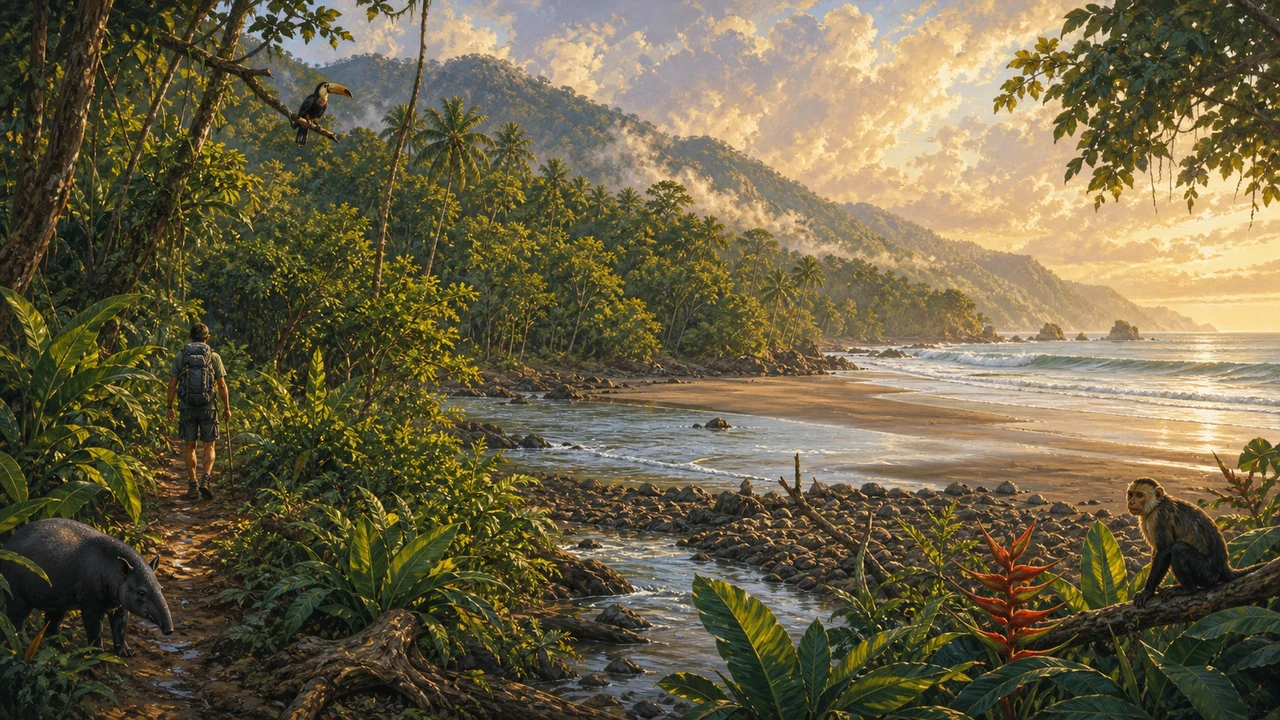 Corcovado National Park, sprawling across the remote Osa Peninsula in southern Costa Rica, is widely regarded as one of the most biologically intense places on Earth. Its 41,788 hectares of undisturbed primary rainforest harbor an extraordinary concentration of wildlife — including several large species that have vanished from most of Central America — making it an essential destination for anyone serious about ecotourism and nature in Costa Rica.
Why Corcovado Is Different
Most national parks have been fragmented or border human settlements. Corcovado is different: it protects a vast, contiguous block of lowland rainforest, coastal mangroves, freshwater wetlands, swamp forest, and 46 kilometers of wild beach — with almost no development inside. The result is a functioning, intact ecosystem that scientists visit from around the world.
Costa Rica holds roughly 5% of global biodiversity despite covering a fraction of a percent of the planet’s land area — and Corcovado is arguably the densest expression of that fact. Within the park’s boundaries, researchers have recorded around 500 tree species (a quarter of all tree species in Costa Rica), 367 bird species, 140 mammal species, 117 amphibian and reptile species, and approximately 6,000 insect species including more than 120 butterfly species.
Wildlife You Can Expect to See
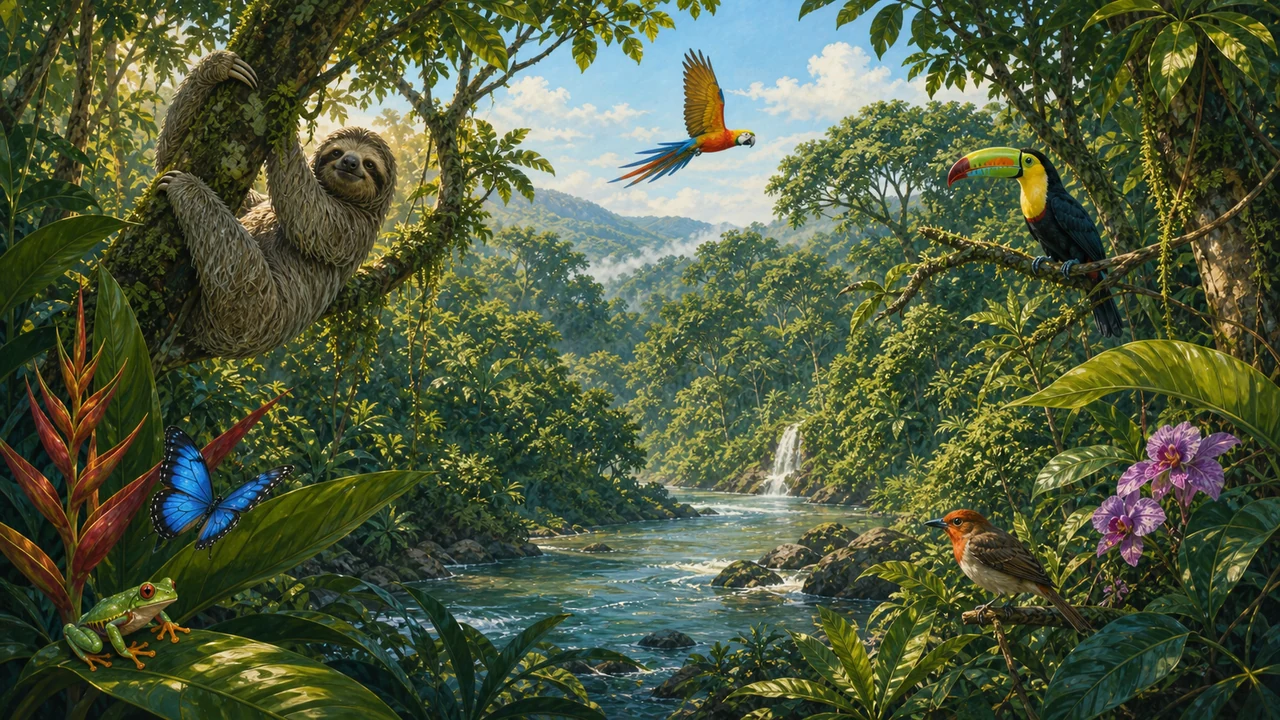 Corcovado is one of the last places in Central America where all four Costa Rican monkey species — howler, white-faced capuchin, spider, and squirrel — share the same forest. Guided hikes frequently encounter troops of all four species in a single morning.
The park is also the best place in Costa Rica to search for Baird’s tapir, the largest land mammal in Central America, which frequents river banks and forest clearings. Jaguar and puma roam the park’s interior, and while sightings require patience and luck, Corcovado has a higher density of these big cats than virtually anywhere else in the region. Ocelot, giant anteater, and white-lipped peccary (traveling in large, sometimes alarming herds) are also resident.
Scarlet macaws are one of Corcovado’s signature sights. The park hosts one of the largest and healthiest populations in Costa Rica — pairs and flocks wheel noisily above the canopy throughout the day, and you rarely go long without spotting them. The park also shelters harpy eagle, king vulture, keel-billed toucan, and dozens of hummingbird species.
The coastal side of the park adds marine dimensions: hammerhead sharks patrol the estuaries, American crocodiles bask on riverbanks, and Llorona Beach serves as a nesting site for four sea turtle species — olive ridley, leatherback, green, and hawksbill. Humpback whale sightings are common offshore.
Among the more unusual residents: glass frogs (so transparent that internal organs are visible through the skin) and the strawberry poison dart frog, an endemic species of Costa Rica.
How to Visit: Entry Points and Ranger Stations
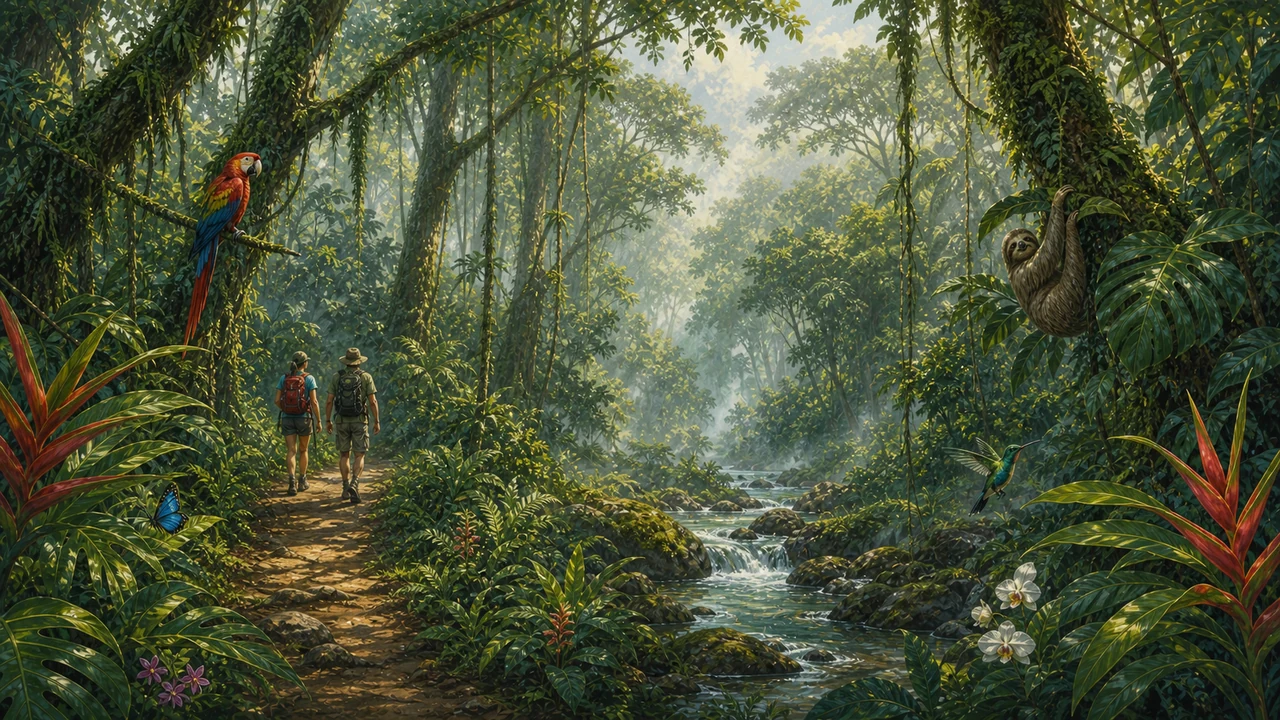 All visitors must enter with a certified local guide — this is a firm park regulation, not just a recommendation. Guides protect both the wildlife and the visitors in a genuinely wild environment where trails can flood, wildlife encounters can be intense, and getting lost carries real consequences.
The park has several ranger stations, each serving as an entry point:
- Sirena — the main hub, located in the heart of the park. It has dormitory lodging, a basic dining service, and an airstrip for small charter planes. Sirena is the best base for multi-day wildlife exploration and is the station most visitors aim for.
- La Leona — near the town of Carate, south of Puerto Jiménez. The most common entry point for visitors arriving overland from the south. From here, a coastal trail leads to Sirena (approximately 16 km).
- San Pedrillo — the northern entry, accessible by boat from Drake Bay or on foot via a coastal trail from Sierpe. Good for day trips.
- Los Patos — an inland station on the eastern side, reachable by road from Puerto Jiménez via La Palma. The trail from Los Patos to Sirena (about 20 km) passes through some of the most pristine interior forest.
Spaces at Sirena (both camping and dormitory beds) are limited and in high demand during the dry season. Reserve in advance through Costa Rica’s national conservation system (SINAC) or through a reputable tour operator.
Getting There: Drake Bay vs. Puerto Jiménez
The Osa Peninsula is remote — that’s what makes it special, and what requires some planning.
From Puerto Jiménez (the main gateway town on the Gulf Dulce side): small planes connect to San José’s Tobías Bolaños airport (SYQ) and to the Sirena airstrip directly. Collective taxis and 4WD vehicles run south to Carate for La Leona entry. Local boat services also operate across the Golfo Dulce.
From Drake Bay (the northern gateway): most visitors fly from San José to the Drake Bay airstrip, then continue to Corcovado by boat or foot. Many travelers base themselves at an eco-lodge in Drake Bay and take guided day trips into the park via San Pedrillo station.
Both gateways have local tour operators who handle guide permits, park reservations, and logistics. Booking through an established operator is strongly recommended for first-time visitors.
Trails, Terrain, and What to Expect
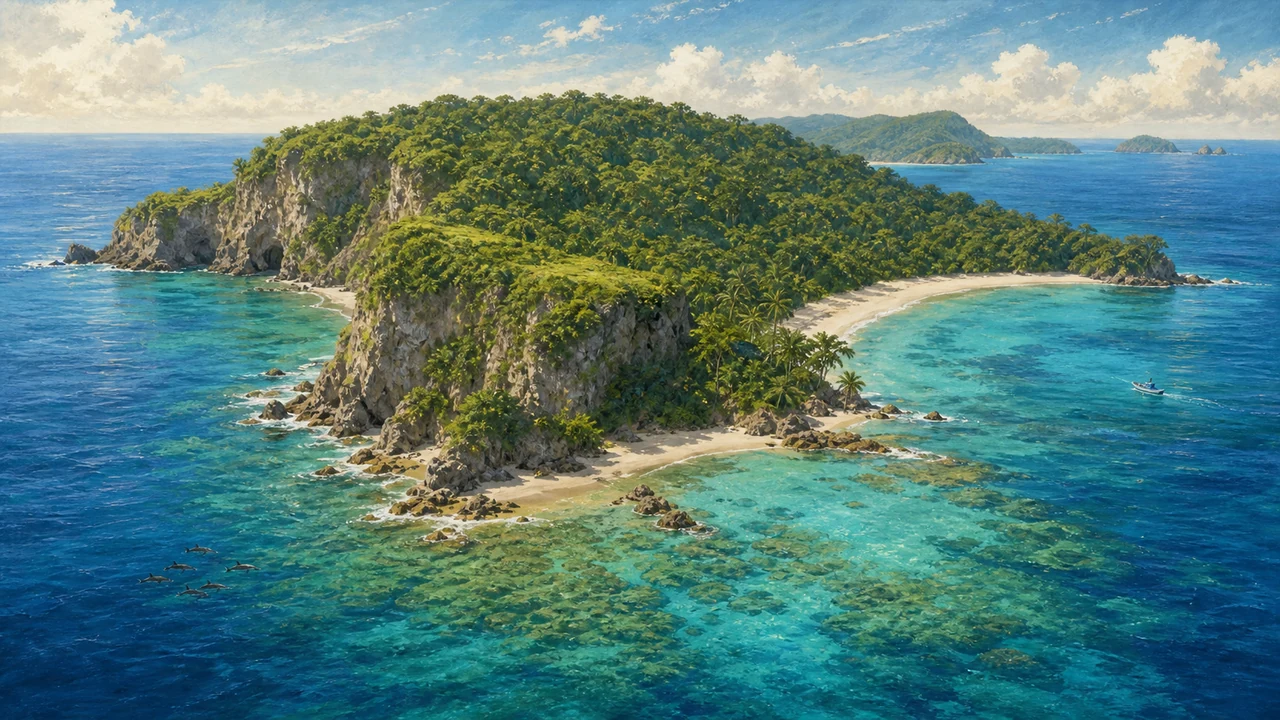 The hiking trails inside Corcovado range from manageable coastal walks to demanding multi-day treks through dense, humid jungle. River crossings are common, and some rivers require waiting for low tide. Trail conditions change with rainfall — Corcovado is one of the wettest places in Costa Rica, with some peaks recording over 5,500 mm of annual rainfall.
Expect heat, humidity, mud, and insects — and bring appropriate gear. Long sleeves, insect repellent, sun protection for the exposed coastal sections, and sturdy waterproof footwear are essential. Drinking water is available at staffed ranger stations.
The rewards for the effort are proportional: few places in the Americas offer multi-day immersion in primary forest with this density of large wildlife, undisturbed by roads, noise, or crowds.
Corcovado in Context
Corcovado was established in 1975 as part of Costa Rica’s ambitious national park expansion — part of what earned the country its global reputation for conservation. It sits within the broader Osa Conservation Area (ACOSA) and is surrounded by buffer zones and wildlife corridors connecting it to other protected lands in the region. The Golfo Dulce itself is a protected fjord-like embayment, adding marine protection alongside the terrestrial park.
For travelers who want to combine Corcovado with other parts of the country, the Osa Peninsula pairs well with a stop in the national parks system more broadly, or with time on Costa Rica’s Pacific beaches before or after the jungle immersion. Serious wildlife travelers often combine Corcovado with Tortuguero on the Caribbean coast for a contrasting lowland rainforest experience.
For orientation and practical travel tips before your trip, including getting to the Osa from San José’s international airports, see our broader Costa Rica travel guides.
Frequently asked questions
Do you need a guide to visit Corcovado National Park?
Yes. Costa Rica requires all visitors to Corcovado to enter with a certified local guide. This rule protects both the ecosystem and visitors in one of the most remote and wildlife-rich parks in the Americas. Book through an operator in Drake Bay or Puerto Jiménez.
What is the best time of year to visit Corcovado?
The dry season (roughly December through April) is the most popular window — trails are passable and wildlife concentrations near water sources are high. That said, Corcovado receives rainfall year-round; even in the dry season, expect brief showers.
How do you get to Corcovado National Park?
Most visitors fly or take a boat to Drake Bay or fly to Puerto Jiménez, then travel to one of the ranger stations. Small charter planes can land at the Sirena airstrip. A coastal hiking route connects La Leona station (near Carate, south of Puerto Jiménez) to Sirena.
What wildlife can you see in Corcovado?
Corcovado shelters all four Costa Rican monkey species, Baird's tapir, jaguar, puma, ocelot, giant anteater, white-lipped peccary, scarlet macaw, harpy eagle, and American crocodile — plus sea turtles nesting on Llorona Beach.
Is camping available inside Corcovado National Park?
Yes, basic camping and rustic dormitory-style lodging are available at Sirena station and some other ranger stations, but spaces are limited and must be reserved in advance through SINAC (Costa Rica's national conservation system). Book early for the dry season.