Costa Rica Architecture: Churches, Theaters & Historic Landmarks
 Costa Rica’s architecture tells the story of a small nation that built with purpose — adapting Spanish colonial forms to a volcanic landscape, commissioning European grandeur on the profits of a coffee boom, and later developing a distinctly tropical modernism suited to heavy rain, warm humidity, and the perpetual threat of earthquakes. The result is a built heritage that ranges from whitewashed colonial churches in mountain valleys to audacious glass-and-steel towers in the capital, with vernacular wood farmhouses and ornate theater lobbies in between.
For visitors, architecture is woven into nearly every cultural landmark worth seeing. You cannot explore San José seriously without pausing at historic plazas, theater facades, and museum buildings that carry the country’s memory in stone, iron, and tile.
The National Theater: Costa Rica’s Architectural Crown Jewel
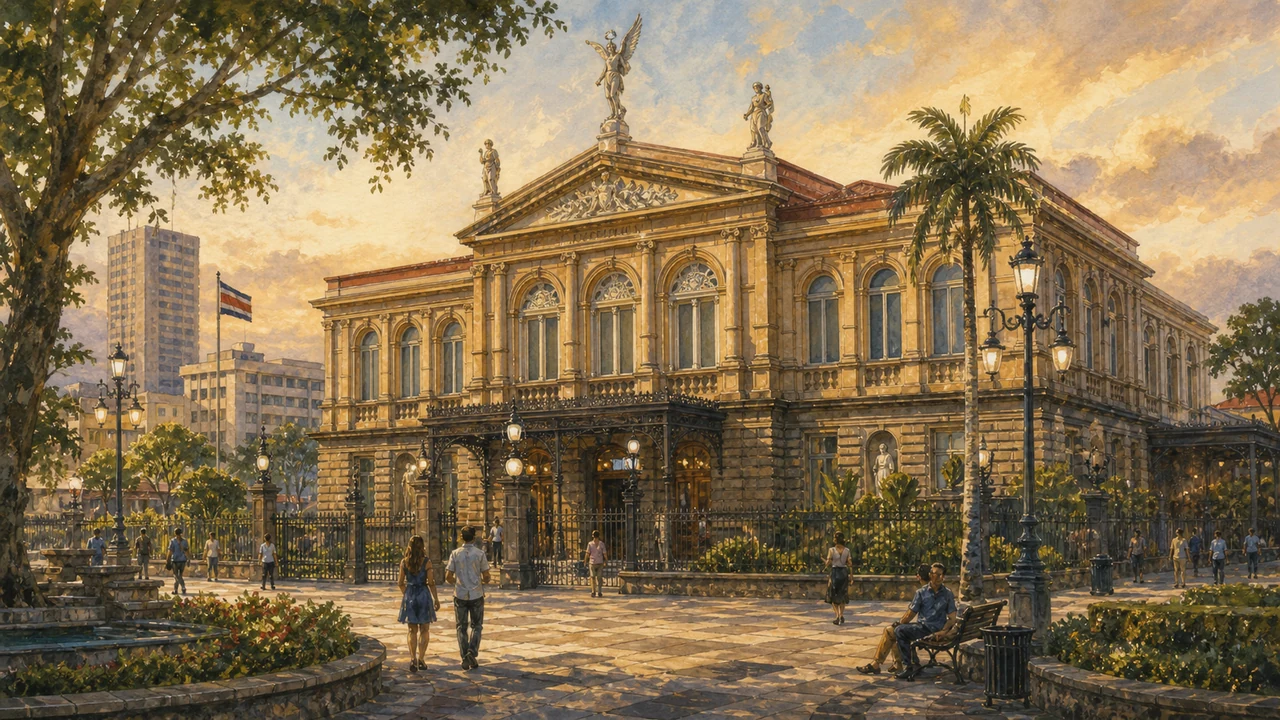
No building defines Costa Rican civic architecture more completely than the Teatro Nacional in the heart of San José. Inaugurated in 1897, the theater was financed by coffee growers who taxed themselves to fund a structure worthy of the European opera companies they wanted to attract. Italian architects and craftsmen shaped a neoclassical exterior of Portland stone, while the interior received Venetian marble floors, gilded balconies, and a celebrated allegorical ceiling fresco depicting the coffee and banana industries that paid for everything.
The National Theater remains an active performance venue — and a living argument that a small tropical republic can aspire to world-class grandeur. Its baroque lobby café, set beneath original murals, is one of the most photographed interiors in the country. Guided tours are available on non-performance days. Read the full story on the National Theater page.
Colonial Churches: Sacred Architecture Across the Highlands
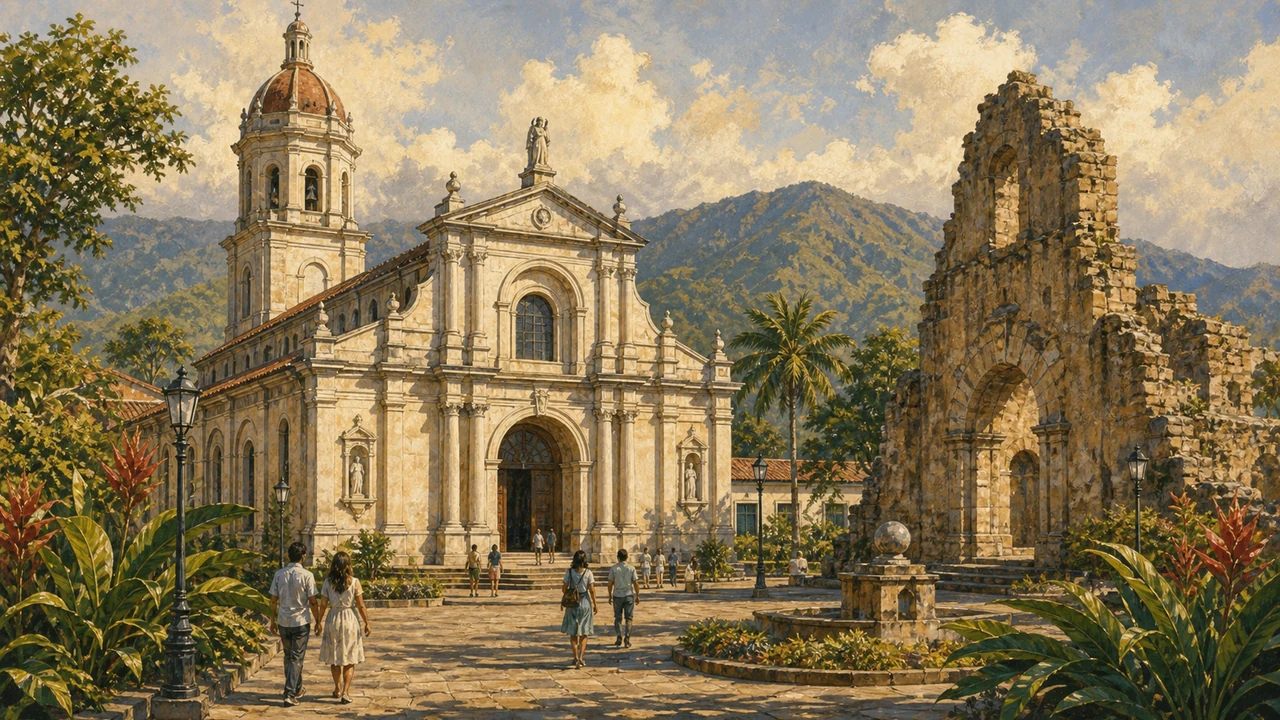 Spanish missionaries and colonial settlers built churches across Costa Rica’s central highlands beginning in the 17th century, and those structures — damaged, rebuilt, and adapted repeatedly by earthquakes — constitute the country’s oldest surviving architectural tradition. The variety is striking: solid stone Baroque facades in Orosi, Byzantine-influenced domes in Cartago, a prefabricated metal church in Grecia shipped from Belgium in the 19th century, and the surreal topiary-framed church in Zarcero whose sculpted cypress hedges form one of the most photographed churchyards in Central America.
Costa Rica’s colonial religious architecture is concentrated in the Central Valley, making it accessible on day trips from San José. The most significant pilgrimage site is the Basílica de Nuestra Señora de los Ángeles in Cartago — a Byzantine-style basilica destroyed and rebuilt multiple times by earthquakes that draws hundreds of thousands of pilgrims every August 2nd. Explore these landmarks on the Costa Rica churches page.
The Melico Salazar Theater and San José’s Performing-Arts Heritage
A block from the National Theater stands the Teatro Melico Salazar, a second major civic performance hall whose Moorish-influenced facade anchors the north side of Avenida 2. Named for the celebrated Costa Rican tenor Manuel “Melico” Salazar, the theater was built in the early 20th century and has served as an anchor for popular theater, zarzuela, and national folklore performances. Together with the National Theater, it frames San José’s historic theater district — an area that rewards a slow walking tour.
Details on the building’s history and current programming are on the Melico Salazar Theater page.
Museums Housed in Historic Buildings
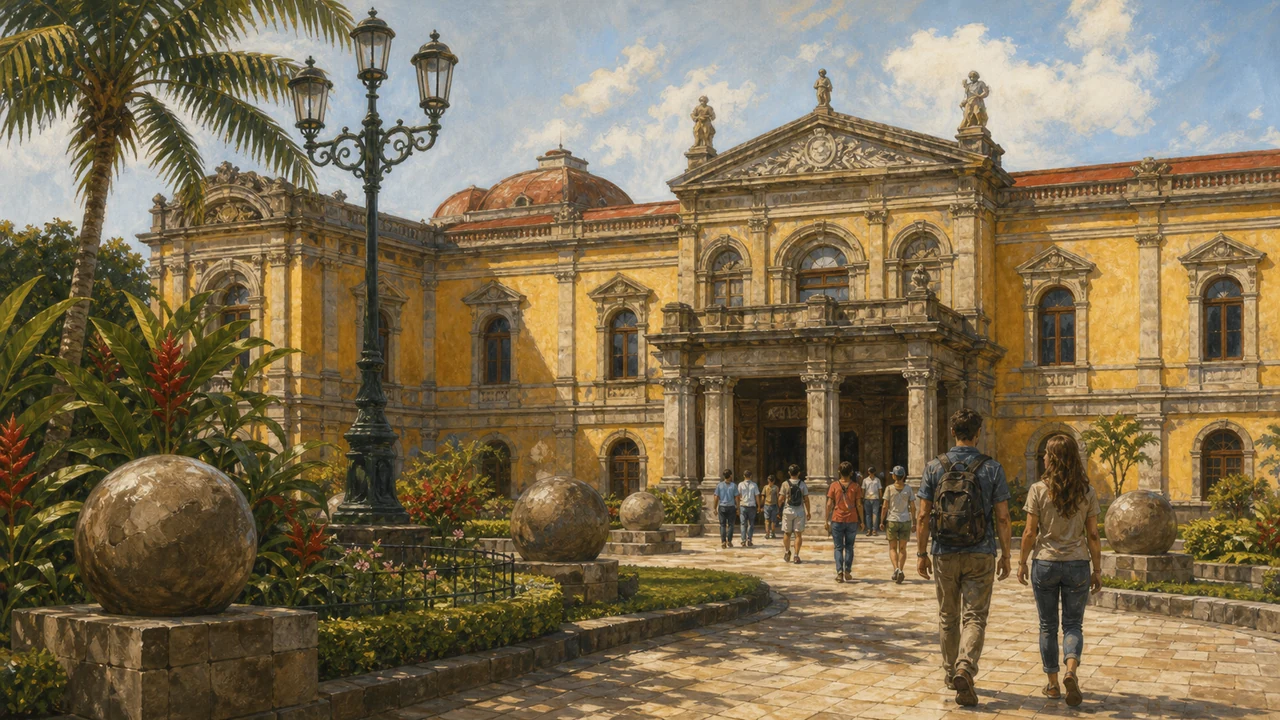 Some of Costa Rica’s most architecturally interesting buildings are the institutions housed within them. The National Museum occupies the Bellavista Fortress, a 19th-century military compound whose bullet-pocked towers still bear marks from the brief 1948 civil war that ended with Costa Rica abolishing its army — a defining moment in the nation’s history. The fortress’s thick stone walls and interior courtyard now shelter pre-Columbian gold artifacts and natural history collections.
The Numismatic Museum occupies the elegantly restored former headquarters of the Central Bank, with handsome mid-century architecture that reflects Costa Rica’s postwar economic confidence. The Numismatic Museum page covers its architecture and collections in detail.
For families, the Children’s Museum (El Museo de los Niños) repurposed a former penitentiary — its castellated stone facade now shelters interactive science and culture exhibits, an architectural reuse that says something about how Costa Rica has chosen to invest in education over incarceration. An overview of the city’s full museum landscape is on the museums page.
Tropical Modernism: Víctor Cañas and Bruno Stagno
Costa Rica produced two internationally recognized architects in the late 20th century whose work consciously addressed the country’s climate, topography, and cultural identity rather than simply importing European or North American models.
Víctor Cañas became celebrated for residential architecture that dissolves the boundary between interior and tropical landscape — deep overhanging eaves, cross-ventilated volumes, and the integration of water, stone, and planted courtyards that respond to the rainy-season downpours that define Central Valley living. His houses are considered benchmarks of tropical residential architecture in Latin America. The Víctor Cañas page profiles his philosophy and key works.
Bruno Stagno, trained in Europe but committed to Costa Rica, developed a theoretical framework for tropical architecture that drew on vernacular construction wisdom — thick walls, shaded galleries, raised floors — and reinterpreted it in contemporary form. His writings and buildings have influenced a generation of Costa Rican architects. Explore his legacy on the Bruno Stagno page.
Liberia: A Colonial Streetscape Preserved
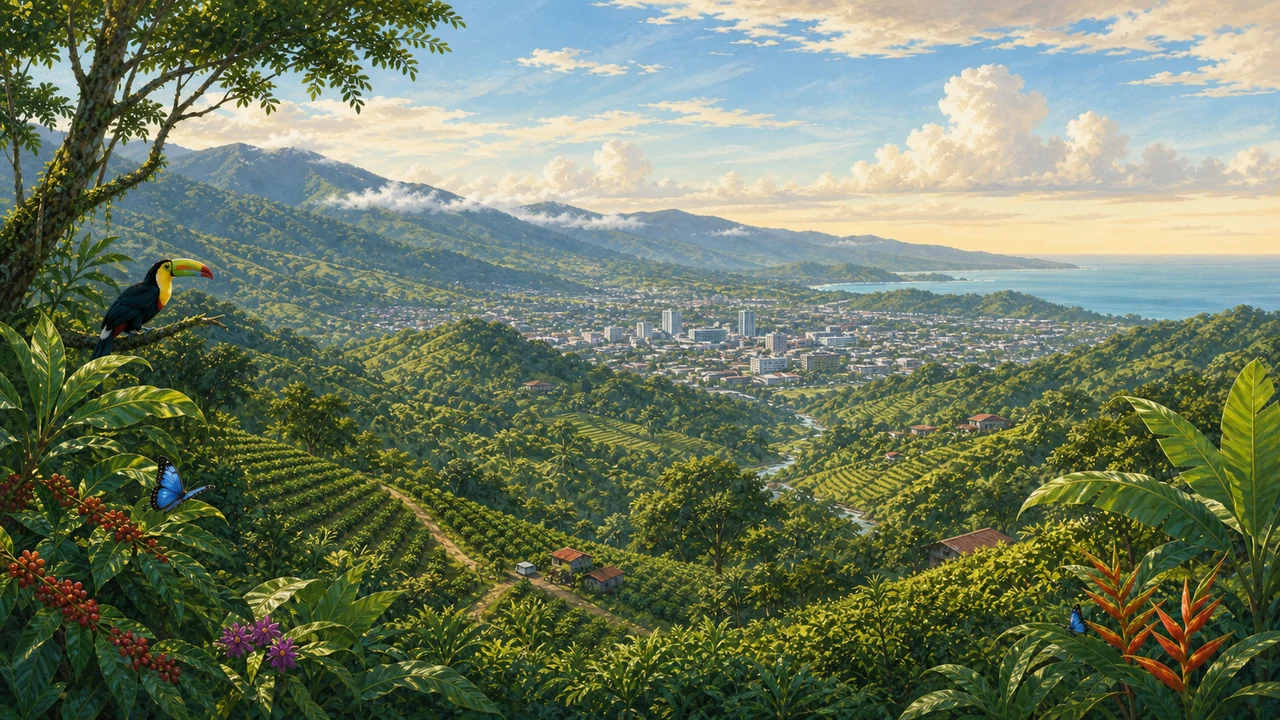 While San José has lost much of its 19th-century fabric to development, the city of Liberia in Guanacaste preserves a remarkably intact colonial streetscape. Known as the “White City” for its whitewashed adobe and stucco facades, Liberia’s historic center features corner-door houses — a distinctive design feature where the main entrance is set at 45 degrees to the corner, allowing maximum airflow from the Guanacaste winds. Walking its central streets is one of the most atmospheric colonial architecture experiences in Costa Rica. The Liberia memory lanes page is a dedicated guide to this heritage district.
Parks, Squares, and Public Monuments
San José’s public spaces — the Plaza de la Cultura, the Parque Central, the Parque Morazán with its Temple of Music bandstand — form an outdoor architecture of civic life that reflects the country’s democratic and cultural aspirations. These squares were designed not just as open space but as stages for community gathering, political expression, and the public concerts that still animate weekend evenings. The parks, squares, and monuments page maps the key landmarks across the capital.
Exploring Costa Rica’s Built Heritage
Architecture in Costa Rica is never purely aesthetic — it is also a record of earthquake survival, coffee wealth, colonial faith, and tropical adaptation. The best way to experience it is on foot through San José’s historic core, on day trips to highland church towns, and through the dedicated pages linked throughout this section.
For broader cultural context, the Costa Rica art and culture section covers music, folklore, cuisine, and other dimensions of Tico life. If you are planning your visit, travel tips and general country information provide the practical grounding you need before you arrive.
Frequently asked questions
What is the most famous building in Costa Rica?
The Teatro Nacional (National Theater) in San José is universally considered Costa Rica's architectural crown jewel. Inaugurated in 1897 and financed by coffee-era wealth, it features Italian marble, gilded interiors, and an iconic allegorical ceiling fresco — and it still hosts world-class performances today.
What architectural styles are found in Costa Rica?
Costa Rica's built landscape spans several styles: Spanish colonial and Baroque in churches from the 17th–19th centuries, European neoclassical in landmark civic buildings like the National Theater, vernacular tropical construction in rural adobe and wood homes, and modernist and contemporary work by architects such as Bruno Stagno and Víctor Cañas.
Are Costa Rica's historic buildings earthquake-safe?
Costa Rica sits in a seismically active zone, so historic structures have faced repeated earthquake damage over the centuries. The Basílica in Cartago was destroyed and rebuilt several times. Modern restoration projects incorporate seismic reinforcement while preserving historic facades and interiors.
Which city in Costa Rica has the best architecture to explore?
San José has the highest concentration of historic and cultural buildings — the National Theater, the Melico Salazar Theater, the Gold Museum, the National Museum (former Bellavista Fortress), and numerous belle époque storefronts. The white-colonial city of Liberia in Guanacaste is also celebrated for its 19th-century streetscapes.
Can you tour the Costa Rica National Theater?
Yes. The Teatro Nacional offers guided tours of its foyer, auditorium, and backstage areas when no performances are scheduled. The café inside the theater, set beneath the famous allegorical murals, is a highlight even without a full tour. Check current schedules on arrival in San José.