Museo de los Niños San José — Costa Rica's Castle of Dreams
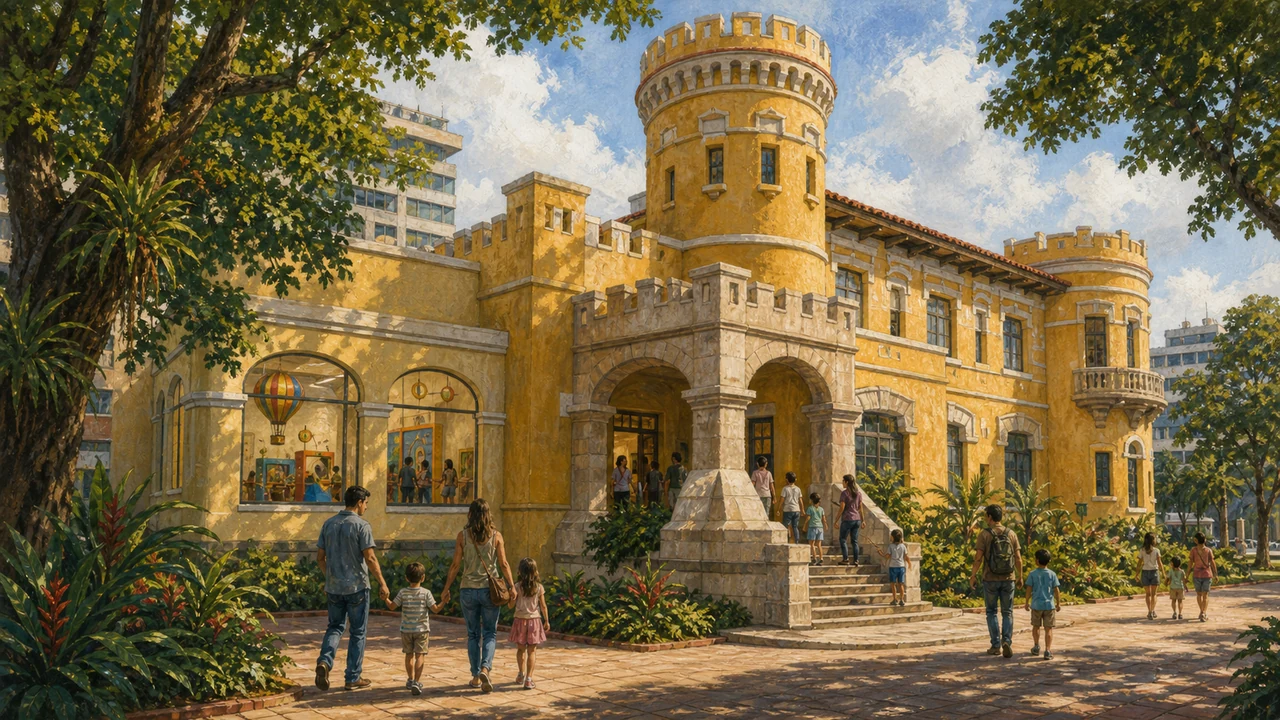
The Museo de los Niños (Children’s Museum) in San José is one of those rare places that surprises every visitor — not just because of what it offers, but because of what it once was. Set inside a massive yellow castle-like building in the heart of the city, it is in fact the Centro Costarricense de Ciencias y Cultura (Science and Culture Center of Costa Rica): a sprawling cultural complex that houses an interactive children’s museum, the National Gallery, the National Auditorium, and a juvenile library — all within the walls of the country’s former Central Penitentiary.
Few cultural institutions anywhere in the world carry a backstory quite like this one. What was once Central America’s largest prison has been transformed into a celebration of knowledge, art, and childhood — and the building itself, declared National Heritage in 1988, is part of the attraction.
The Castle in the Heart of San José
Walking toward the complex, the first thing you notice is the architecture. The yellow, castle-like façade — towers, thick stone walls, arched gateways — stands in marked contrast to the modern city around it. this iconic San José landmark is one of the oldest surviving structures in the capital, and its profile alone draws photographers and curious passersby.
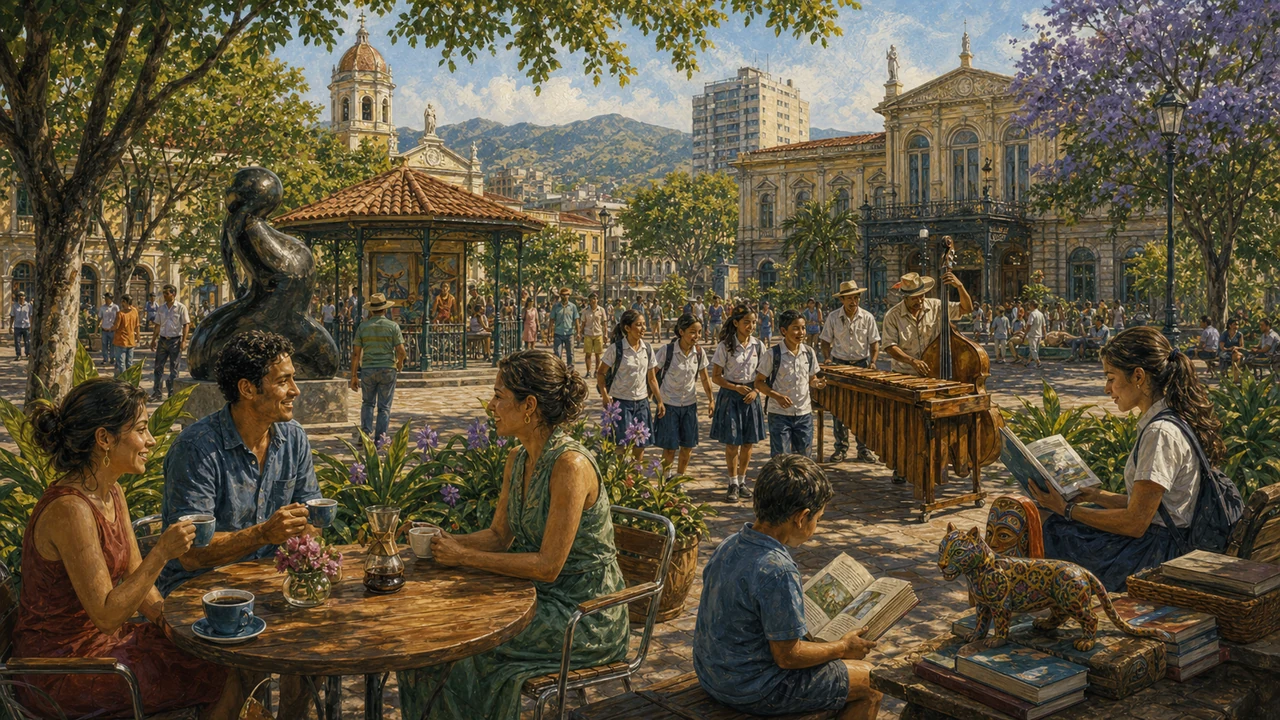
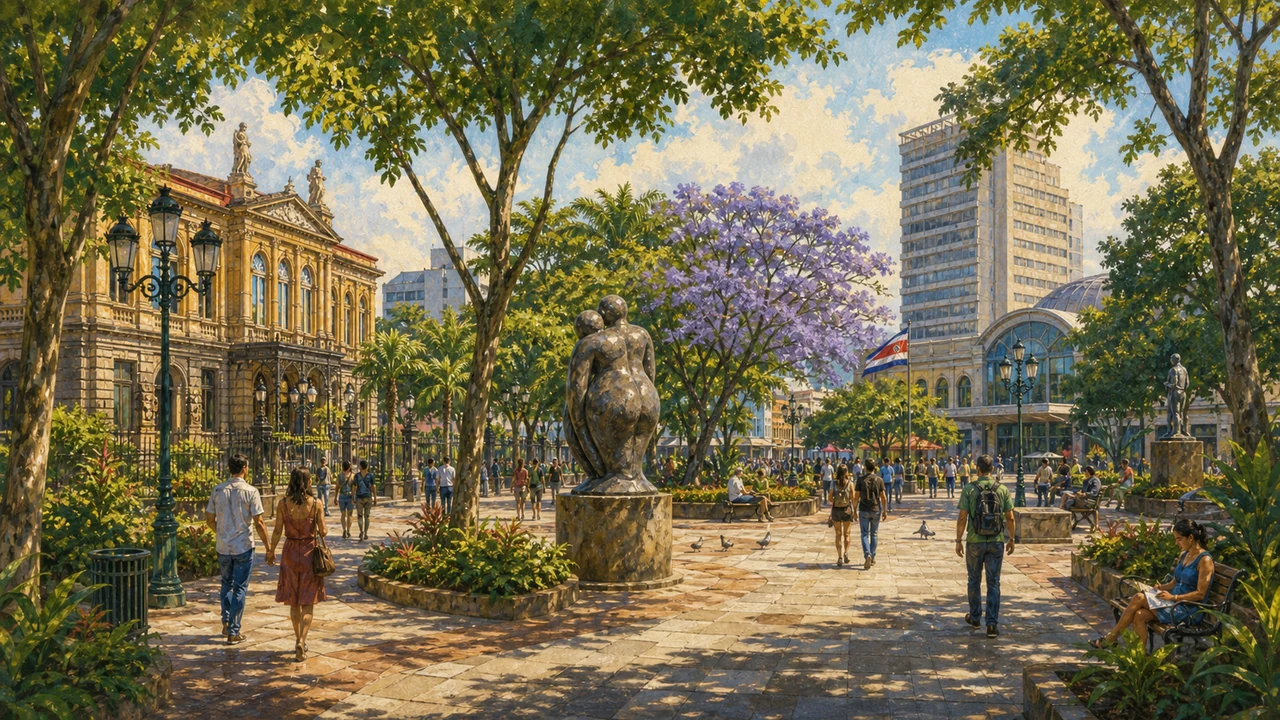
The building covers 12,000 square meters (roughly 129,000 sq ft) of enclosed space, surrounded by an additional 80,000 square meters of open green areas that belong to the complex. Those grounds contain what locals call the “Arboreto” — a living collection of native tree species threatened by disappearing forest cover, including Saman rain trees, mahogany, savannah oak, poro, and yellow corteza. In a dense city center, this green lung serves the capital as both a conservation space and a peaceful respite.
The government declared the structure National Heritage by executive decree in 1988, recognizing both its architectural value and the weight of its history. That designation ensured the building would be preserved rather than demolished, and ultimately paved the way for its remarkable second life.
From Penitentiary to Museum: The History
The story of this building spans more than a century. In the late 1880s, Costa Rica’s growing urban population brought rising concerns about crime, and government leaders recognized the need for a modern prison facility. In 1889, a lawyer named Octavio Beeche was dispatched to Europe to study prison design, architecture, and administration — bringing back the concepts that would shape the final plans.
Designed by engineer Nicolás Diñas, the Central Penitentiary of Costa Rica opened in 1910 at considerable expense for the era. In a cruel irony, the Cartago earthquake struck the same year, causing significant damage to the newly completed structure. Despite that setback, the penitentiary became operational and, for nearly seven decades, it functioned as the primary federal prison — surpassed in prestige among public buildings only by the National Theater.
Over the decades, conditions inside deteriorated severely. By the 1970s, overcrowding had reached a crisis point. Prisoners roamed freely within the compound, fires were set deliberately, and mass escapes became regular events. The situation spiraled until a devastating fire on December 20, 1979, prompted President Rodrigo Carazo to order the prison closed permanently — calling it a “national embarrassment.”
For the next fifteen years, the castle sat largely abandoned: a ruin of broken walls, trees growing through ceilings, and what historian Alonso Rodríguez described as an atmosphere of “horrible semi-darkness.” Authorities debated demolishing it. Instead, it would rise again.
Gloria Bejarano and the Vision for a Cultural Complex
The transformation from prison to cultural landmark began with one person’s vision. Gloria Bejarano de Calderón, then First Lady of Costa Rica, visited the derelict building and saw past its decay. In her own words: “Upon entering for the first time, I came across pavilions, pavilions and more pavilions. The place was immense. At this moment all of the pieces fell into place and I realized that this was the ideal place for a cultural center.”
The idea of converting a ruined penitentiary into the first children’s museum in Central America seemed improbable to many. But the project moved forward through years of collective effort, private donations, and institutional support. On April 27, 1994, the Science and Culture Center of Costa Rica opened its doors to the public — and the transformation was complete.
The Interactive Children’s Museum
The heart of the complex is the interactive children’s museum with 35 themed galleries, each built around a specific subject — science, history, art, technology, ecology, and more — with one guiding principle: that play is the best form of learning. Nothing here is behind glass or roped off. Visitors interact with every exhibit.
Among the highlights:
- Three animated robots built to honor cultural contributors: children’s author Carmen Lyra, scientist Clorito Picado, and astronaut Franklin Chang Díaz
- An earthquake simulator that lets you feel the ground shift beneath your feet
- A shadow-capture photographic installation
- A giant foot-played piano
- Hands-on exhibits on Costa Rican history, astronomy, ecology, and human biology
A team of bilingual guides accompanies visitors through the galleries, providing context and answering questions. Adults frequently find themselves as engaged as the children they bring — the museum takes its “100% interactive” premise seriously, and the experience holds up for all ages.
The National Gallery and Art Exhibitions
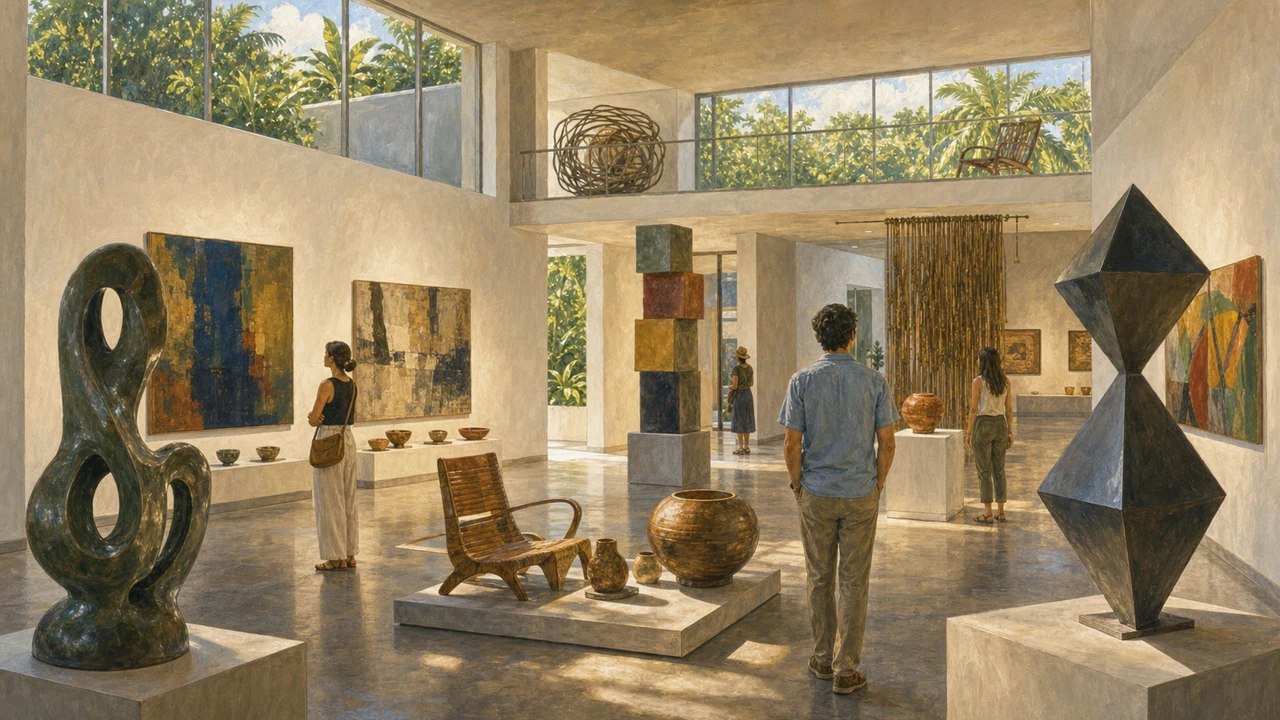
Beyond the children’s galleries, the complex houses the National Gallery — one of the largest spaces dedicated to fine art in Costa Rica. Its spacious salons display rotating exhibitions covering the full spectrum of the country’s artistic output: painting, sculpture, photography, and conceptual work in contemporary, traditional, and vanguard styles.
The gallery typically features a minimum of seven different artists each month, ensuring that repeat visitors always encounter something new. It has also served as the venue for major regional events, including the Central American Biennial of Painting — a significant gathering for visual arts across the isthmus. For travelers interested in Costa Rica’s art and culture, the National Gallery alone warrants a visit.
The National Auditorium and Performing Arts

The Science and Culture Center is also home to the National Auditorium, a modern performance venue built to international standards. Equipped with advanced lighting systems and excellent acoustics, it offers comfortable seating in a setting that would be at home in any major city.
The National Auditorium as home to the National Symphonic Orchestra is one of the complex’s most noteworthy roles — the orchestra performs there regularly, particularly on Sundays. The space also hosts theater productions, dance performances, opera, and music concerts ranging from classical to contemporary. Checking the auditorium’s schedule is worthwhile for any traveler who will be in San José for more than a day.
The Carlos Luis Sáenz Library
Completing the cultural ecosystem is the Carlos Luis Sáenz Juvenile Library, which departs sharply from the traditional library model. Rather than rows of books in silence, the library combines printed collections with encyclopedias, compact discs, educational videos, and internet access — designed as an active learning resource for young visitors rather than a passive reading room.
Planning Your Visit
The Museo de los Niños sits in central San José and is straightforward to reach from most parts of the city. The castle façade makes it impossible to miss. Given the scope of what the complex offers — museum, gallery, auditorium, library, and green grounds — allow at least a half day, and consider a full day if you plan to attend a performance or linger in the Arboreto.
For families traveling to Costa Rica with children, this is one of the capital’s most rewarding stops. For travelers without children, the National Gallery and National Auditorium make it worth the trip on their own merits. And for anyone interested in history, the building itself — a former prison reborn as a place of learning — tells one of the most compelling stories in Costa Rica.
Check current admission fees, opening hours, and event schedules directly with the museum before your visit, as these may change seasonally. For more on what the capital offers, see our Costa Rica travel tips and the broader Costa Rica activities and sports section for day-trip options from San José.
Frequently asked questions
What is the Museo de los Niños in San José?
The Museo de los Niños (Children's Museum) is part of the Centro Costarricense de Ciencias y Cultura (Science and Culture Center of Costa Rica), housed in the city's former Central Penitentiary — a grand castle-like building dating to 1910. It opened in 1994 and combines an interactive children's museum, the National Gallery, the National Auditorium, and a public library.
Is the Museo de los Niños suitable for adults as well as children?
Absolutely. The 35 themed interactive galleries are designed for hands-on learning and play, but adults find them just as engaging. The National Gallery and National Auditorium attract art lovers and concert-goers of all ages, making it a genuine cultural destination for the whole family.
What is the history of the building that houses the museum?
The castle-like building served as Costa Rica's Central Penitentiary from 1910 until 1979, when it was closed after years of overcrowding and unrest. It was declared National Heritage (Patrimonio Nacional) in 1988 and was subsequently transformed into a cultural complex, opening as a museum in 1994.
Does the National Symphonic Orchestra perform at the Museo de los Niños?
Yes. The National Auditorium inside the complex serves as a regular venue for the National Symphonic Orchestra, as well as theater, dance, opera, and music performances. It is equipped with modern lighting and acoustics and features comfortable seating.
How do I get to the Museo de los Niños from downtown San José?
The museum sits in central San José, making it easy to reach by taxi, Uber, or a short walk from downtown. It is one of the most recognizable landmarks in the capital, identifiable by its yellow castle-like façade. Check current opening hours and admission fees directly with the museum before your visit.