Costa Rica Folklore & Faith: Saints, Legends & Traditions
Costa Rica’s cultural identity is woven from two inseparable threads: Catholic faith brought by Spanish colonizers and a rich folk tradition rooted in indigenous and mestizo life. The blending of Catholic devotion and folk customs in Costa Rica is not merely historical — it plays out every year in patron-saint festivals, candlelit processions, costumed street parades, and oral legends that parents still whisper to children on dark nights.
Patron-Saint Festivals: The Heart of Community Life
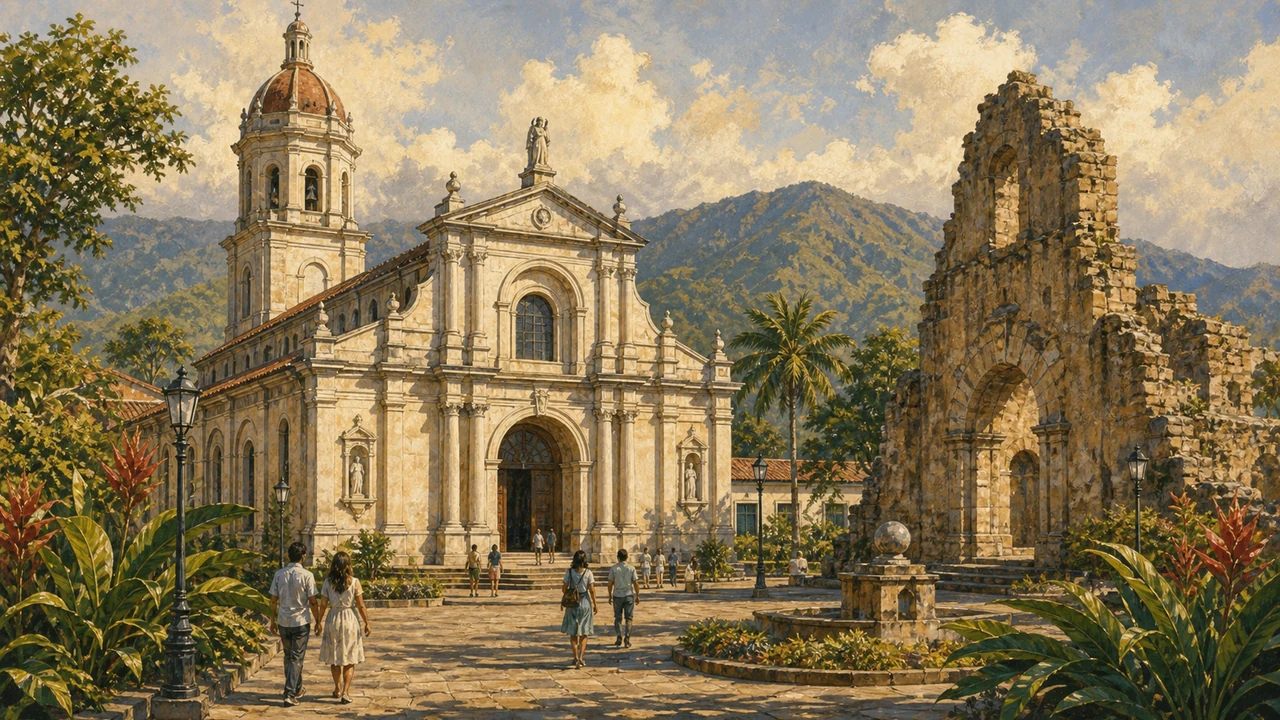 Nearly every town and village in Costa Rica centers its social calendar on the feast day of its patron saint. These celebrations — known locally as turnos or fiestas patronales — typically run for several days and blend solemn religious masses with exuberant street festivals. Marimba bands, folkloric dance troupes, food stalls selling chicharrones and tamales, and even informal bullfights (in which the bull is never harmed) fill the main plaza.
The fishing community of Sámara on the Nicoya Peninsula offers a vivid example. Every July the town honors La Virgen del Mar, patron saint of fishermen, with a floating procession across the bay. Boats draped in tropical flowers and palm fronds carry her effigy slowly across the water while families aboard pray for safe seas ahead. The tradition has continued for generations and reflects the deep bond between coastal communities and the rhythms of the ocean.
In Nicoya — the oldest continuously inhabited settlement in Costa Rica after the Spanish Conquest — a centuries-old oxcart tradition precedes the December feast of the Virgin of Guadalupe. In the pre-dawn hours, teams of oxen pulling brightly painted carts set out from the House of the Virgin (the Cofradía), accompanied by horseback riders and marimba bands, to cut firewood at a designated farmland site. The wood is returned and stored before noon according to time-honored custom, after which the community shares a meal and a cup of chirrete, a traditional fermented maize drink. One month later the dried wood fuels a community cook-out honoring the Virgin.
The Romería: A Nation Walks in Faith
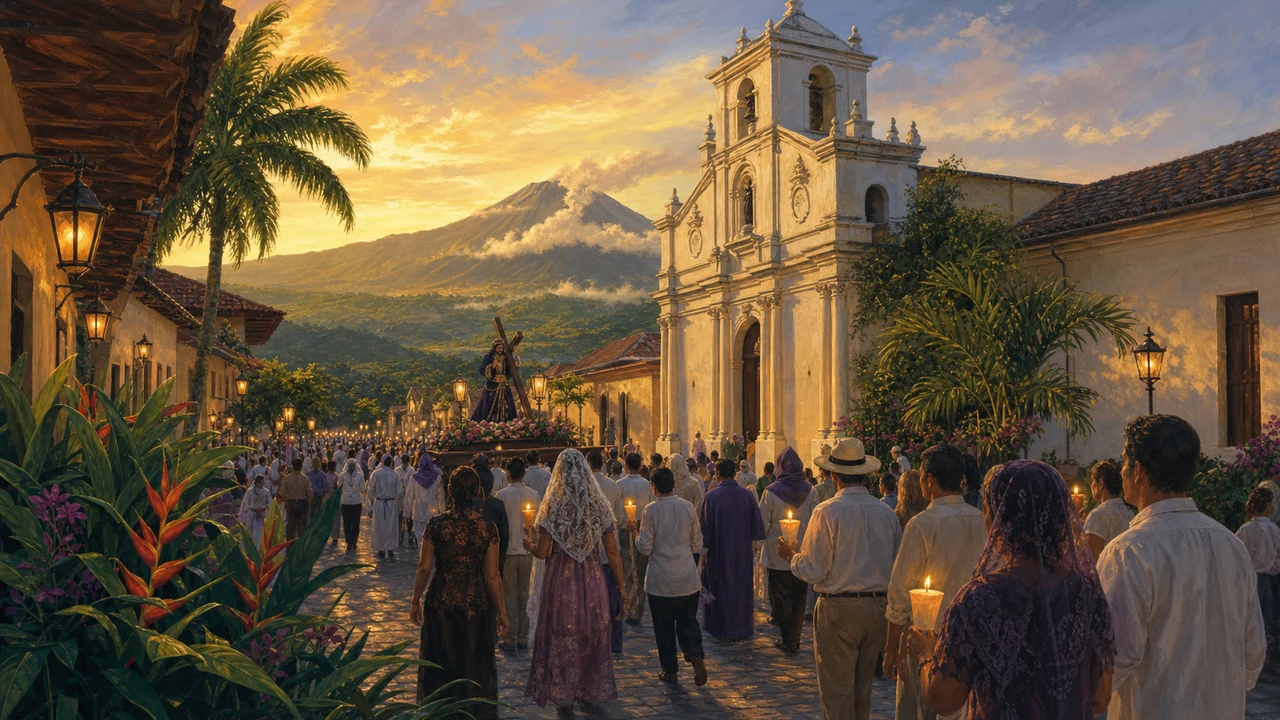 No event better illustrates the fusion of Catholic devotion and communal identity than the annual Romería to Cartago. On August 2nd each year, hundreds of thousands of Costa Ricans undertake a pilgrimage to the Basílica de Nuestra Señora de los Ángeles to venerate La Negrita — a small dark-stone image of the Virgin Mary discovered, according to legend, by a young indigenous girl in 1635. Pilgrims walk from across the country, some completing the journey barefoot, fulfilling promises made in moments of personal crisis. The Romería is the single largest annual gathering in Costa Rica and a profound expression of popular Catholic faith in Central America.
Semana Santa (Holy Week) is equally important. During the week leading up to Easter, San José and provincial towns stage solemn processions in which life-size statues of Christ and the Virgin are carried through the streets by robed brotherhoods. Businesses close, beaches fill with Costa Rican families, and the country’s characteristic informality gives way to a moment of collective reflection.
Mascaradas: When the Sacred Meets the Carnivalesque
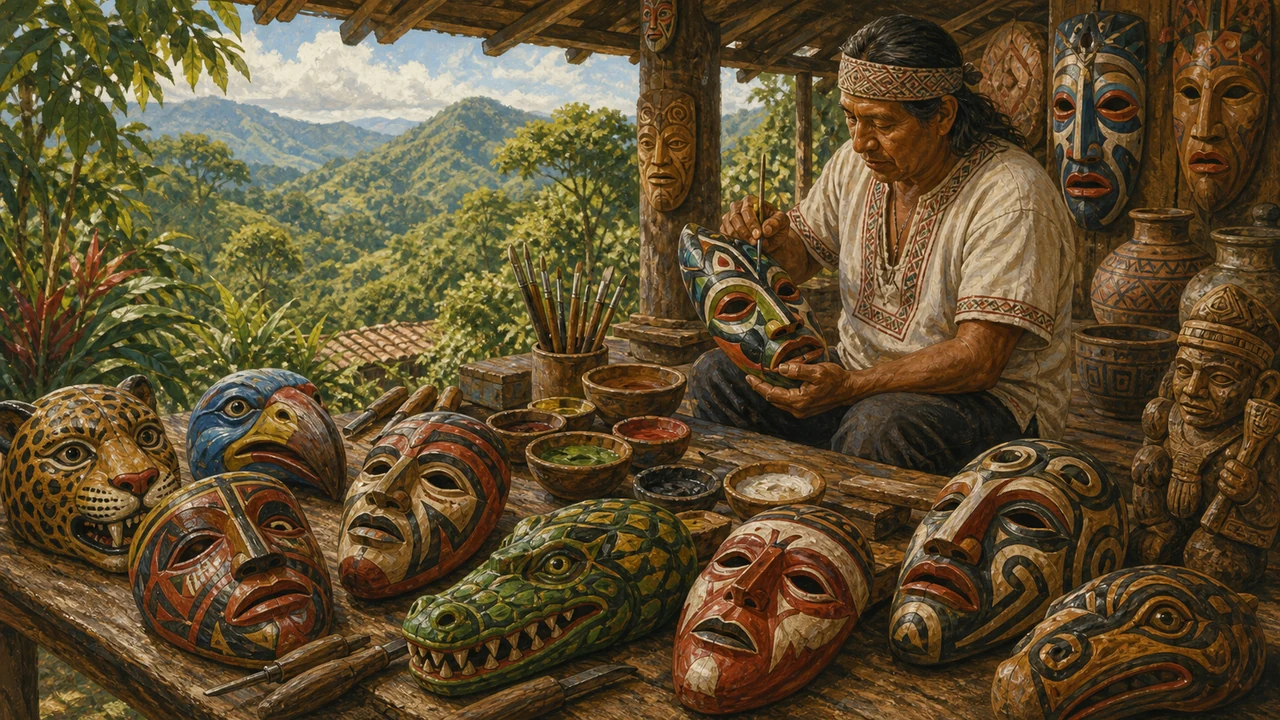 Alongside solemn processions runs a parallel tradition of joyful subversion: the mascaradas costarricenses. These street performances feature dancers wearing enormous papier-mâché masks — mascaras gigantes — representing devils, clowns, politicians, animals, and archetypal folk characters. To the insistent beat of a cimarrona band, the masked figures chase onlookers (especially children), dance wildly, and parody authority with a humor that has deep roots in both Spanish Colonial carnival culture and indigenous masking traditions.
The Central Valley towns of Barva, Aserrí, and Desamparados are particularly known for their mascarada traditions. The craft of making the masks — hand-painting layered papier-mâché into vivid, often terrifying expressions — is recognized as an important form of popular art.
Indigenous communities maintain related but distinct mask traditions. The Boruca people of the southern Pacific zone perform the Danza de los Diablitos (Dance of the Little Devils) each January, in which masked dancers representing their ancestors symbolically defeat a bull figure representing the Spanish conquistadors.
The Painted Oxcart: Symbol of Labor and Beauty
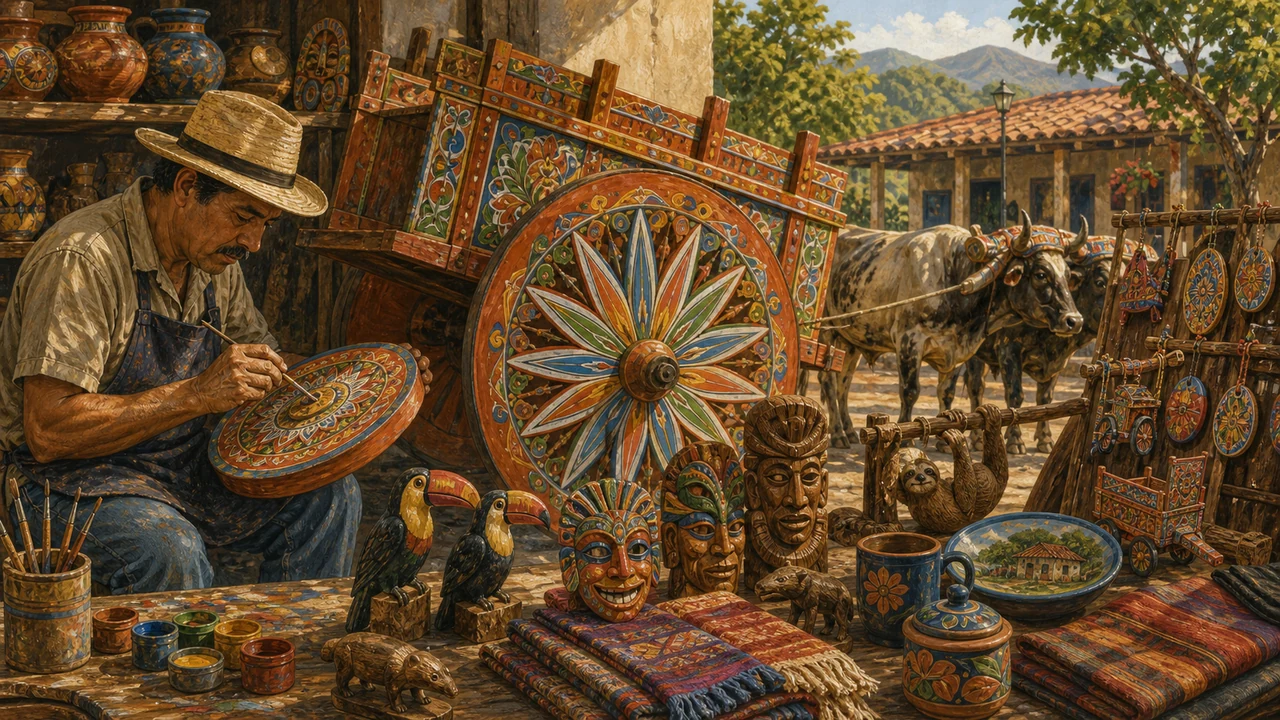 The painted oxcart — la carreta — is Costa Rica’s most recognized national symbol of folk art, elevated to the status of a UNESCO Intangible Cultural Heritage of Humanity. From the 19th century onward, artisans in the Central Valley, particularly in Sarchí, decorated the wheels and panels of working carts with intricate mandala-like geometric patterns. Originally each workshop developed its own signature design, allowing a cart to be identified by origin from a distance.
Today oxcart parades in Costa Rica remain a fixture of patron-saint festivals and national celebrations. Teams of oxen, their horns polished and their yokes decorated, pull spectacularly painted carts through cheering crowds. The carts are no longer farm workhorses but living canvases that connect contemporary Ticos to their agricultural heritage. Miniature carretas are among the most popular souvenirs visitors take home, and full-scale carts grace town plazas across the country.
The connection to faith runs here too: oxcarts traditionally formed the procession of the Virgin of Guadalupe in Nicoya, and patron-saint festivals throughout the country often feature oxcart parades as a centerpiece event.
Legends of the Night: La Llorona, La Segua, and the Cadejos
No account of Costa Rican folklore is complete without its gallery of supernatural figures — the leyendas that populate dark roads and riverbends after sunset. These stories are not merely entertainment; they encode moral lessons and serve as memory of a world where nature, faith, and the unexplained overlap.
La Llorona (The Weeping Woman) is perhaps the most universal. She wails near rivers and empty streets in the small hours, searching for children she lost or drowned. Her cry is a warning — to children who stray too far from home, to adults who linger too long at the cantina. La Segua is a more distinctly Costa Rican figure: a beautiful woman encountered on lonely roads who, when her suitor leans in for a kiss, reveals a monstrous horse skull. She is said to punish drunken or unfaithful men, and her legend carries an implicit temperance message that would not have been lost on churchgoing communities.
El Cadejos is a large spectral dog — appearing in both black and white forms — that haunts night travelers. The black Cadejos menaces the wicked; the white one protects the righteous. Together they represent a folk dualism of good and evil that runs parallel to formal Catholic theology while drawing on indigenous cosmologies that predate the Conquest.
These legends are told across generations, reshaped by each storyteller. Visitors who spend time in rural communities or join a cultural tour may find that Costa Rican oral folklore traditions are alive and far from museum pieces.
Experiencing Folklore and Faith as a Visitor
The best way to encounter this living tradition is to align a visit with a local festival. The Costa Rica travel tips page lists practical planning advice. August is ideal for the Romería in Cartago; December brings the Virgin of Guadalupe celebrations in Nicoya. Semana Santa (March or April, depending on the year) is unmissable for processions in any provincial capital.
Cartago itself rewards a day trip for its colonial atmosphere and the extraordinary Basílica. The Guanacaste region hosts some of the country’s most traditional patron-saint festivals, and the Boruca territory in the south Pacific offers an opportunity to witness indigenous masked dance ceremonies that have survived five centuries.
For a broader picture of Costa Rica art and culture, the country’s museums and cultural centers in San José document both the folk and the fine-art traditions. And if you want to understand what makes Costa Rica distinctive as a destination, the folklore that fills its plazas every festival season is as revealing as any volcano or rainforest.
Frequently asked questions
What is a turno in Costa Rica?
A turno is a community festival held in honor of a town's patron saint. These multi-day events combine Catholic religious ceremonies with marimba music, traditional food stalls, folkloric dance, and bullfights. Nearly every town in Costa Rica celebrates its own turno at some point during the year.
What are mascaradas in Costa Rica?
Mascaradas are traditional street processions featuring oversized papier-mâché masks called mascaras gigantes. Performers wearing these colorful, often grotesque heads dance through crowds to the beat of cimarronas (brass-and-percussion bands). The tradition has pre-Columbian and Spanish Colonial roots and is most vibrant in central valley towns.
What is the Romería to Cartago?
The Romería is Costa Rica's most important pilgrimage, held each August 2nd in honor of La Negrita (Our Lady of the Angels), the nation's patron saint. Hundreds of thousands of Costa Ricans walk to the Basílica de Nuestra Señora de los Ángeles in Cartago — some covering dozens of miles on foot — to give thanks for answered prayers.
What is La Llorona in Costa Rican folklore?
La Llorona ('The Weeping Woman') is a widespread Latin American legend with a distinctly Costa Rican flavor. She is said to wail near rivers and lonely roads at night, mourning lost children. Parents have long used the tale to keep children from wandering after dark. La Segua is a related local legend of a beautiful woman who transforms into a horse-skulled apparition to punish unfaithful men.
What is the painted oxcart tradition in Costa Rica?
The painted oxcart (carreta) is Costa Rica's foremost national symbol of labor and craftsmanship. Artisans in Sarchí and the Central Valley have decorated oxcarts with intricate geometric mandala-like patterns since the 19th century. Oxcart parades — where teams of oxen pull elaborately painted carts through town streets — remain a beloved feature of patron-saint festivals and national holidays.