Costa Rica's Notable Churches, Cartago Ruins and Sacred Architecture
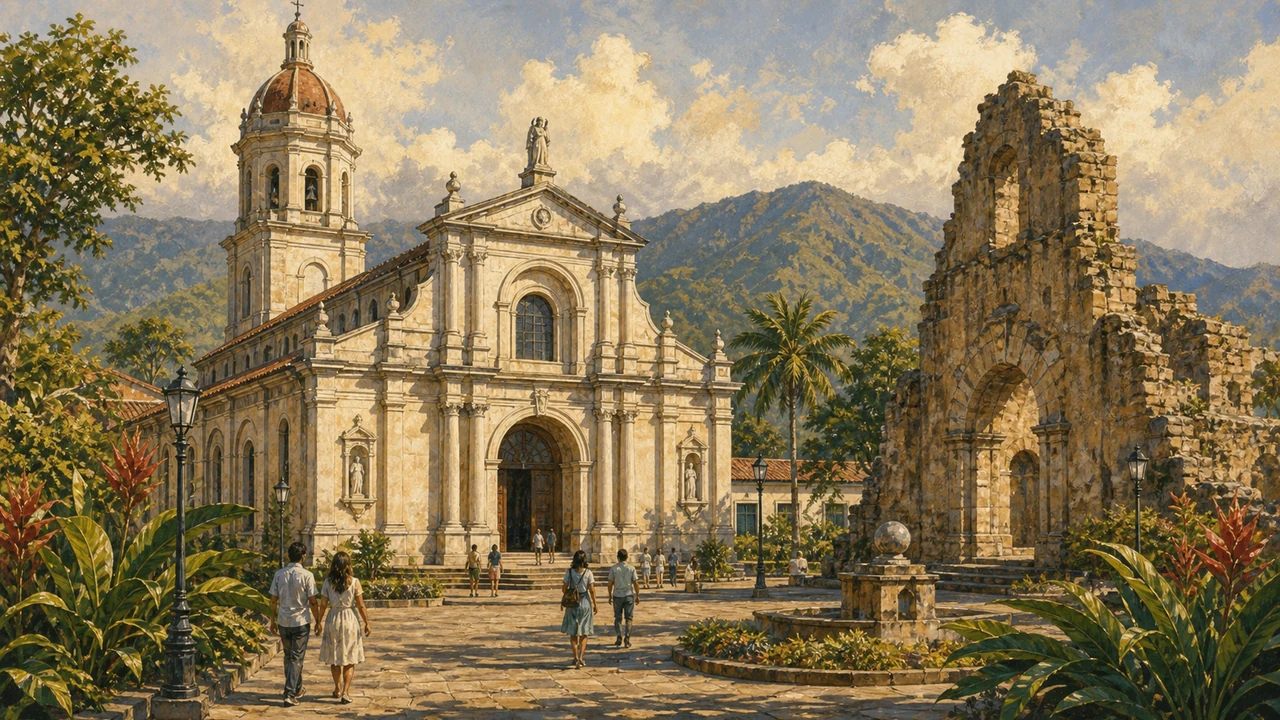
Costa Rica’s churches tell the country’s story better than almost any other architecture — from earthquake-battered colonial ruins to a Byzantine basilica that draws hundreds of thousands of pilgrims every year. Shaped by Spanish colonization, recurring seismic activity, and a deeply Catholic population, these sacred buildings span five centuries and range from modest whitewashed village chapels to nationally significant shrines. Whether you are visiting Cartago, Alajuela, or the highlands of the Central Valley, the churches you encounter are as much cultural landmarks as they are places of worship.
Why Costa Rica’s Churches Matter to Architecture
Older references to this page often cite it as “Costa Rica’s Churches” in the context of Costa Rican architecture. That connection is important: churches are not simply religious buildings in Costa Rica, but some of the clearest surviving records of how communities adapted European architectural traditions to a volcanic, tropical, and earthquake-prone landscape.
In the Central Valley, church architecture shows the country’s practical response to repeated seismic destruction. Stone and masonry churches were damaged again and again, especially in Cartago, forcing builders to rebuild, reinforce, abandon, or completely rethink their materials. The roofless Santiago Apóstol Parish Ruins preserve that story in stone. Grecia’s red metal church tells the same story from a different angle, using prefabricated steel panels as a late-19th-century engineering answer to the same seismic problem.
The result is a sacred architectural landscape that is unusually varied for a small country. A traveler can compare colonial adobe and tile in Orosi, Byzantine and Romanesque revival forms in Cartago, Gothic-inspired metal construction in Grecia, neoclassical urban churches in San José and Alajuela, and folk garden art in Zarcero. Together, these landmarks explain why churches remain essential to understanding Costa Rica architecture, not just Costa Rican religion.
Basílica de Nuestra Señora de los Ángeles — Costa Rica’s National Shrine
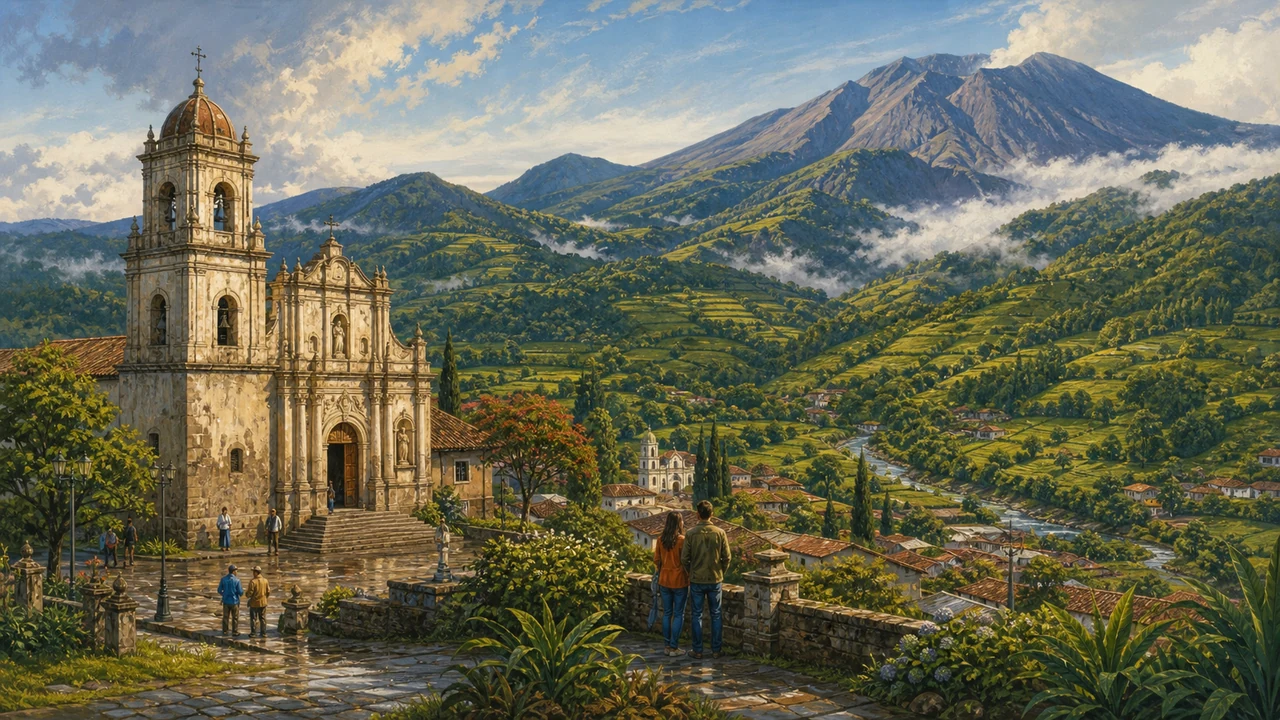
No church in Costa Rica commands more devotion than the Basílica de Nuestra Señora de los Ángeles, standing in the city of Cartago. The basilica was erected on the spot where, according to tradition, a young indigenous girl discovered a small carved image of the Virgin Mary on a rock in 1635. Each time the statue was removed it reportedly returned to the same stone — the rock is still visible today in a crypt beneath the main altar, entered from the left side of the nave.
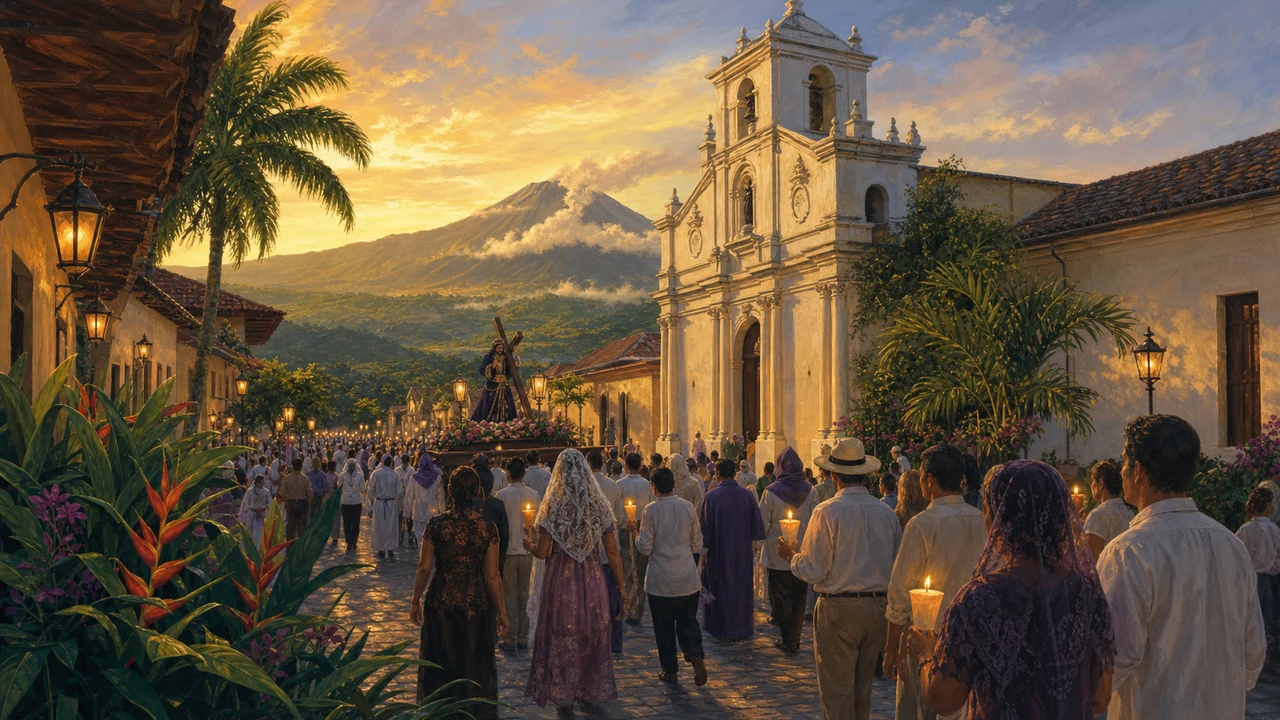
The present building is a striking Byzantine-Romanesque hybrid with ochre towers and a richly decorated interior. What truly sets the basilica apart, however, is the annual La Negrita pilgrimage on August 2nd. On that date hundreds of thousands of Costa Ricans — many walking from San José, a journey of roughly 22 kilometers — arrive on foot to honor La Negrita and give thanks for answered prayers. It is one of the largest religious gatherings in Central America and a defining event in Costa Rican cultural life. Tiny silver or gold milagros (votive charms) left by the faithful line the walls of the crypt in extraordinary numbers.
The Metal Church of Grecia — An Engineering Solution to Earthquakes
In the coffee-growing town of Grecia, northwest of San José in Alajuela province, stands one of the most unusual churches in the Americas. The Grecia metal church built from Belgian prefabricated panels — officially the Parish Church of Our Lady of Mercy — was assembled in the 1890s from sections shipped from Belgium and painted a distinctive deep red. The design was a pragmatic response to Costa Rica’s devastating earthquake history: masonry churches kept falling down, so builders turned to flexible metal construction instead.
The result is surprisingly elegant. Gothic arches, pointed spires, and stained glass windows give the church the look of a traditional European parish, while the corrugated metal exterior catches the light in a way stone never could. Inside, the vaulted ceiling and ornate altar are well worth a visit. Grecia itself is a prosperous, well-kept town frequently cited in quality-of-life surveys, and the church anchors its central plaza.
San Rafael de Zarcero — Topiary, Whimsy, and Faith Combined
Perched at over 1,700 meters in the cool highlands north of San José, the Iglesia de San Rafael de Zarcero and its famous topiary garden form one of Costa Rica’s most memorable and photographed sights. The pastel-colored church itself is a pleasant 19th-century building, but the garden in front of it is the real attraction.
For decades, local gardener Evangelista Blanco sculpted the cypress hedges of the church’s front garden into an extraordinary menagerie: arched tunnels, an elephant, a helicopter, a bull, human figures, and abstract geometric forms. Walking through the garden toward the church doors feels like passing through a living sculpture park. The interior of the church continues the surprising theme with colorful murals. Zarcero is about an hour’s drive from San José via the Pan-American Highway and is often combined with a visit to the nearby Naranjo region.
Orosi Colonial Church — One of Central America’s Oldest Active Churches
The Orosi Valley, southeast of Cartago, is one of the most scenically beautiful corners of the Central Valley — and at its heart sits the Church of San José de Orosi, among the oldest colonial churches still in use in Central America. Franciscan missionaries built the original structure in the mid-18th century, and despite the earthquakes that toppled so many of Costa Rica’s churches, Orosi’s low adobe-and-tile construction survived. The thick walls, heavy wooden beams, and red-tile roof are characteristic of Spanish colonial religious architecture across Latin America.
Adjacent to the church is a small museum of colonial religious art displaying paintings, vestments, and carved wooden pieces from the 18th century — a rare surviving collection given how much was lost to earthquakes and the passage of time. The Orosi Valley’s thermal springs, coffee farms, and the nearby Tapantí National Park make this a natural half-day excursion from Cartago or San José.
Santiago Apóstol Parish Ruins in Cartago
In the center of Cartago, a few blocks from the basilica, a roofless shell of a church rises from a garden filled with bougainvillea. These are the Santiago Apóstol Parish Ruins, better known locally as Las Ruinas de Cartago. They are among Costa Rica’s most recognizable religious landmarks and one of the clearest examples of how earthquakes shaped the country’s sacred architecture.
The original parish church was begun in the 16th century and repeatedly damaged as Cartago endured major seismic events. Generations of builders tried to restore or continue the structure after earthquakes in 1575, 1715, 1841, and later tremors, but the catastrophic 1910 Cartago earthquake ended all serious repair attempts. What remains today is not a functioning church but a stone enclosure: thick walls, arched openings, garden paths, and the memory of a city that kept rebuilding around its spiritual center.
Rather than demolish the shell, the city converted the ruins into an open-air garden park. Locals sit on benches beneath the old walls, visitors photograph the arches, and the surrounding streets keep the site woven into daily life rather than isolated as a museum object. A local legend, passed down over generations, attributes the church’s repeated destruction to the sins of a faithless priest — lending the ruins a haunted reputation that adds to their appeal. The Santiago Apóstol Parish Ruins are a designated national monument and a natural companion stop to the nearby Basílica de Nuestra Señora de los Ángeles.
For travelers, the Cartago ruins are easy to visit on foot as part of a half-day cultural route through the old capital. The site pairs well with the basilica, the central market, nearby cafés, and excursions into the Orosi Valley or toward Irazú Volcano. Because the ruins are open-air, morning light and late afternoon are especially pleasant for photography.
San José Cathedral and Urban Church Architecture
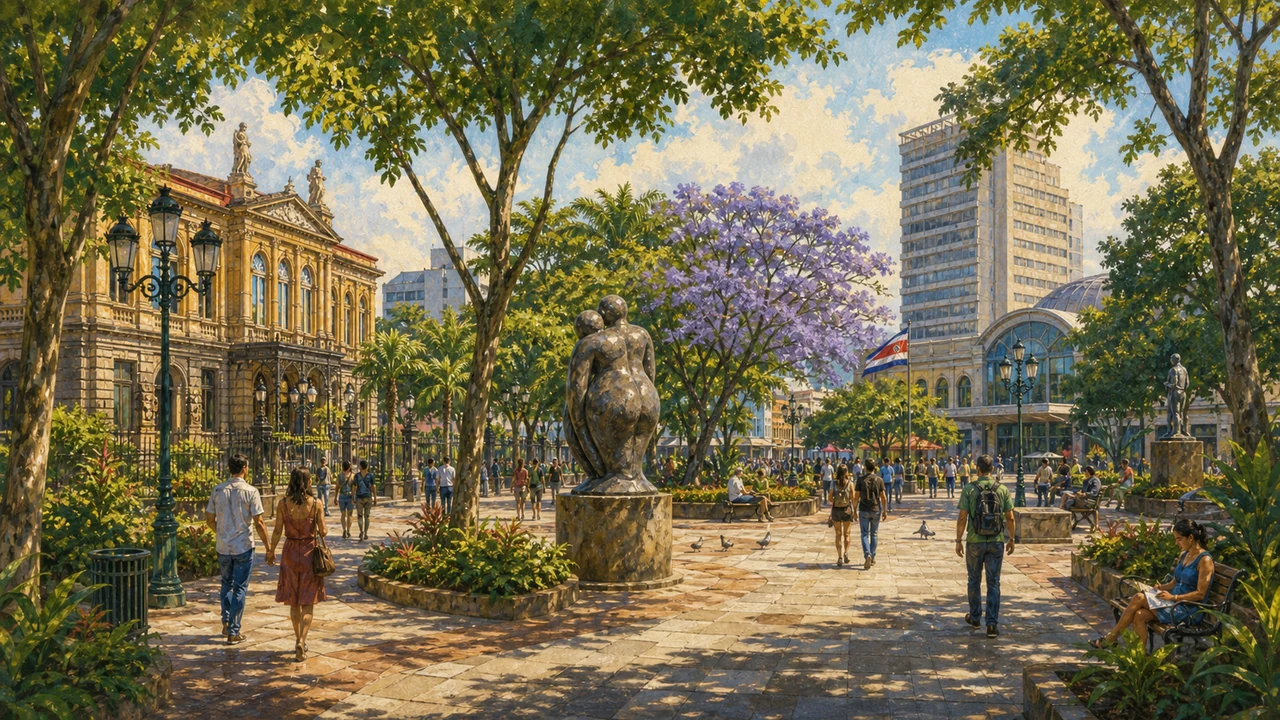
The Metropolitan Cathedral of San José anchors the capital’s central plaza — a neoclassical structure that replaced an earlier building destroyed by earthquake and rebuilt in its current form in the mid-19th century. The yellow exterior and green dome are landmarks of downtown San José. Inside, the cathedral holds the remains of several historic figures and features fine painted columns and a carved altar. Across the Parque Central, the Iglesia de la Merced and the Iglesia de la Soledad offer additional examples of the capital’s layered ecclesiastical history.
The Cathedral of Alajuela on its own Parque Central is another rewarding stop: a large structure with a red dome, marble details, and iron fencing that give it a distinctive presence in the city. Though the interior is relatively simple, the ornate pulpit stands out as a piece of skilled local craftsmanship.
Planning Your Church-Touring Route
Costa Rica’s best churches are conveniently clustered for a Central Valley circuit. A logical loop from San José runs: Cartago (basilica and ruins) → Orosi Valley (colonial church and museum) → back through Cartago and northwest to Grecia (metal church) → north to Zarcero (topiary garden) → return via San José. Allow two days to do this unhurried. The drive itself passes through coffee country, rolling hills, and the agricultural landscapes that define the Central Valley.
For broader context on Costa Rican art and culture, the country’s colonial and indigenous heritage, and practical travel advice before you go, the Costa Rica travel tips page covers everything from transportation to etiquette. Many visitors pair a church tour with ecotourism & nature excursions in the Orosi Valley or the Central Volcanic Range.
Frequently asked questions
What is the most important church in Costa Rica?
The Basílica de Nuestra Señora de los Ángeles in Cartago is Costa Rica's national religious shrine. Every August 2nd hundreds of thousands of pilgrims walk from across the country to honor La Negrita, a small carved image of the Virgin Mary discovered there in 1635.
Why is the church in Grecia made of metal?
The Parish Church of Our Lady of Mercy in Grecia is built from pre-fabricated metal panels imported from Belgium in the late 19th century. The metal construction proved highly resistant to Costa Rica's frequent earthquakes, which had repeatedly destroyed conventional masonry churches.
What makes the church in Zarcero unique?
The Iglesia de San Rafael de Zarcero is famous not only for its pastel façade but for the extraordinary topiary garden in front of it, sculpted over decades by local gardener Evangelista Blanco into arches, animals, and whimsical figures — one of Costa Rica's most photographed sights.
How old is the Orosi church and can visitors enter?
The Church of San José de Orosi dates to the mid-18th century and is one of the oldest churches still in use in Central America. Visitors are welcome to enter; a small colonial religious museum adjoining the church displays antique artifacts and vestments.
Where are the Santiago Apóstol Parish Ruins in Cartago?
The Santiago Apóstol Parish Ruins, commonly called Las Ruinas de Cartago, sit in the center of Cartago city. Construction began in 1575 but the building was damaged and rebuilt multiple times by earthquakes. The 1910 Cartago earthquake caused final, irreparable damage; the stone shell was converted into a garden park and declared a national monument.