San José Parks, Plazas & Monuments Guide
San José is a city best understood on foot, and its parks, plazas, and monuments form the connective tissue of downtown life — shaded refuges, civic gathering points, and open-air museums of Costa Rican history all rolled into one.
Parque Nacional and the National Monument
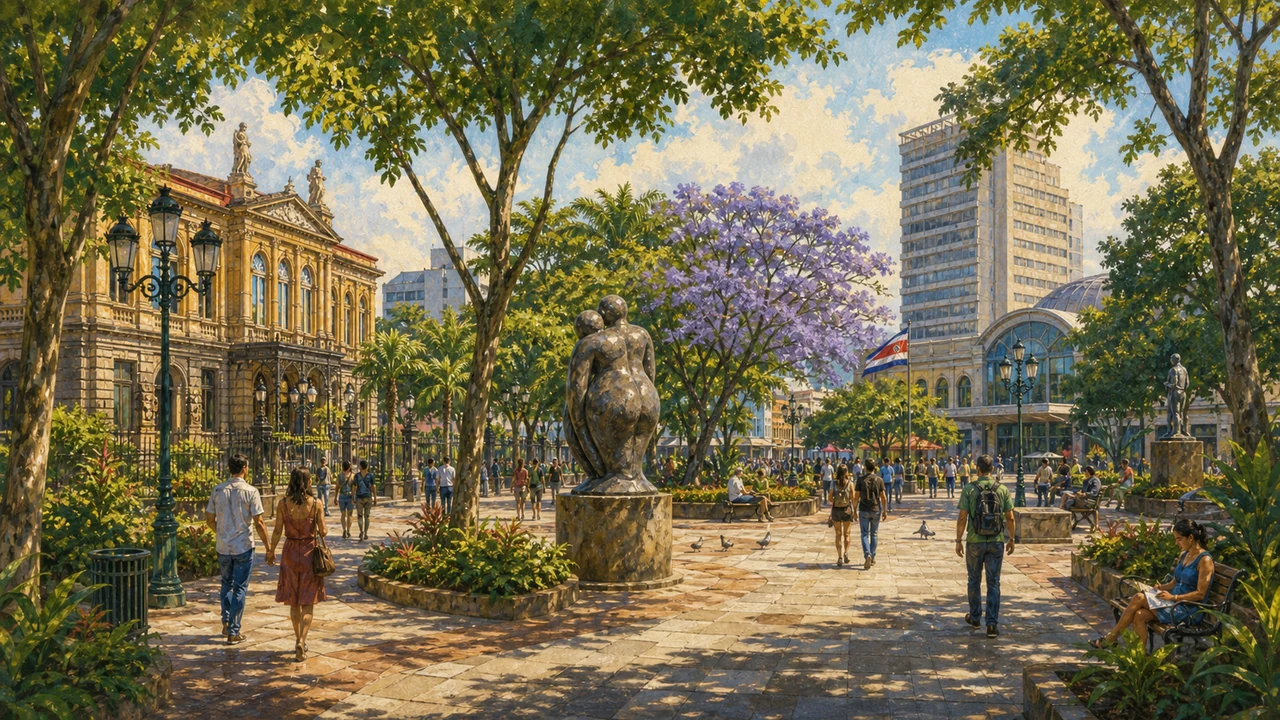 Parque Nacional is the crown jewel of San José’s public spaces, widely considered the finest park in the capital. At its center stands the National Monument to Central American solidarity — a striking bronze grouping depicting the five nations of Central America expelling the North American filibuster William Walker following his failed invasion in the 1850s. The monument is a potent symbol of regional unity and is one of the most photographed landmarks in Costa Rica.
The park itself is a pleasant place to slow down, with mature trees providing generous shade along well-kept paths. The National Library sits directly adjacent, and the surrounding streets preserve some of the best examples of late 19th- and early 20th-century architecture in downtown San José. The nearby National Museum of Costa Rica gives the whole area a strong cultural weight — plan at least an hour if you want to visit both.
Parque Central
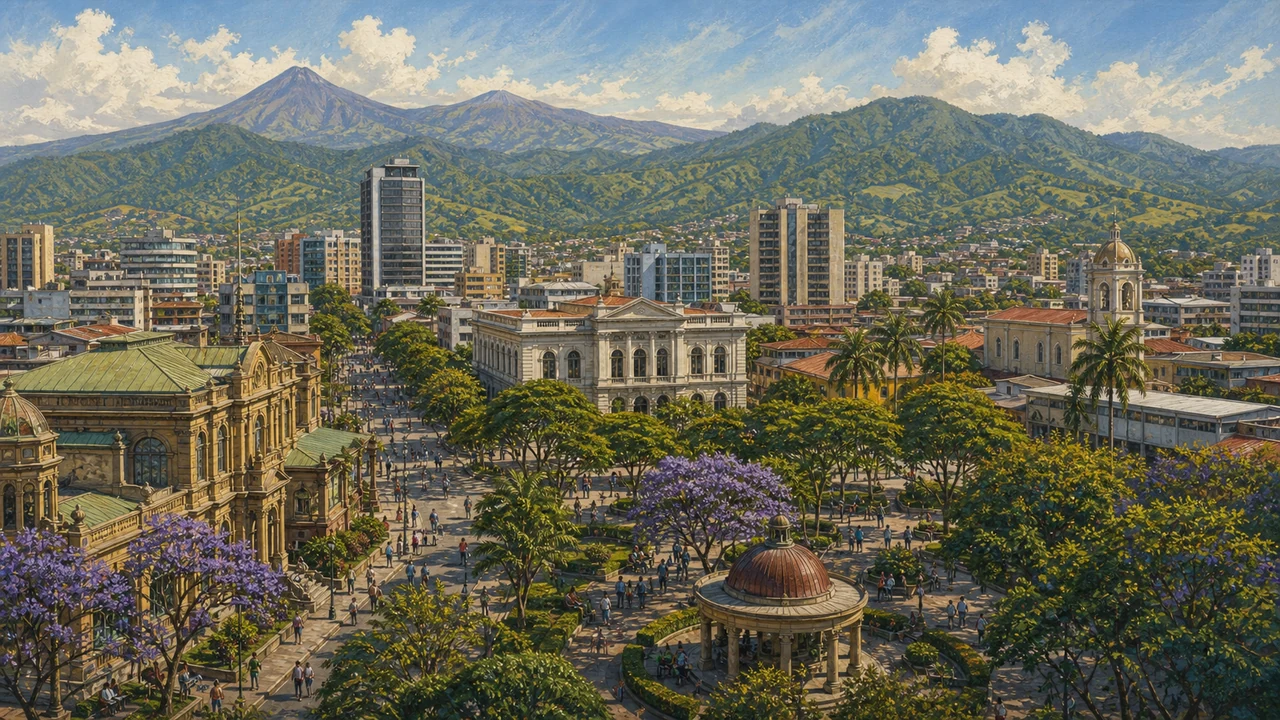 Parque Central is the traditional heart of the city, sitting a block from the Metropolitan Cathedral along the main commercial corridor. It has the character of a classic Latin American plaza — a central bandstand, shaded benches, and a constant flow of office workers, vendors, and families passing through.
The park underwent renovation in recent years to improve pedestrian access and the quality of its green space. It remains a useful landmark and orientation point for visitors exploring downtown on foot. Street food vendors and informal commerce lend it an authentically Tico atmosphere that no museum can replicate.
Parque Morazán and the Music Temple
Two blocks northeast of Parque Central, Parque Morazán anchors a slightly quieter corner of downtown that tends to attract families and couples, particularly on weekend afternoons. The park’s standout feature is its neoclassical Music Temple (Templo de la Música) — a graceful open-air kiosk that serves as the park’s visual focal point and a popular backdrop for photographs.
The park was enlarged and improved in recent years, and the surrounding streets are lined with older buildings that hint at what San José looked like a century ago. Street musicians occasionally set up near the temple, especially on weekends, making it one of the more pleasant spots to simply sit and take in the city.
Parque España
Just north of Parque Morazán, Parque España’s tree canopy and bohemian character set it apart from the more formal parks nearby. Though compact, it is genuinely charming — one of those rare urban green spaces that feels like an escape from the surrounding streets rather than just a gap between buildings.
The park is a favorite with artists, musicians, and pensioners seeking shade. On Sundays, local artisans set up stalls around its perimeter selling handmade crafts, making it a good low-key spot to browse for souvenirs without the pressure of a tourist market. The historic INS Building (Instituto Nacional de Seguros), home to the Jade Museum, sits directly beside the park.
Plaza de la Cultura
At the geographic and social center of downtown San José, Plaza de la Cultura is the city’s main public plaza and arguably its most vibrant outdoor space. Above ground, it is a broad open terrace where musicians perform, street artists work, vendors sell handicrafts and snacks, and locals of every age gather throughout the day and into the evening.
What makes the plaza especially remarkable is what lies beneath it: the Pre-Columbian Gold Museum (Museo del Oro), one of the most impressive collections of pre-Columbian goldwork in the Americas, is housed entirely underground beneath the plaza pavement. Together with the adjacent National Theater of Costa Rica — one of the most beautiful buildings in Central America — the plaza forms a cultural hub that rewards a long, unhurried visit. Modest but good restaurants, art galleries, and the National Tourism Institute (ICT) visitor information office all cluster within a short walk.
Plaza de la Democracia
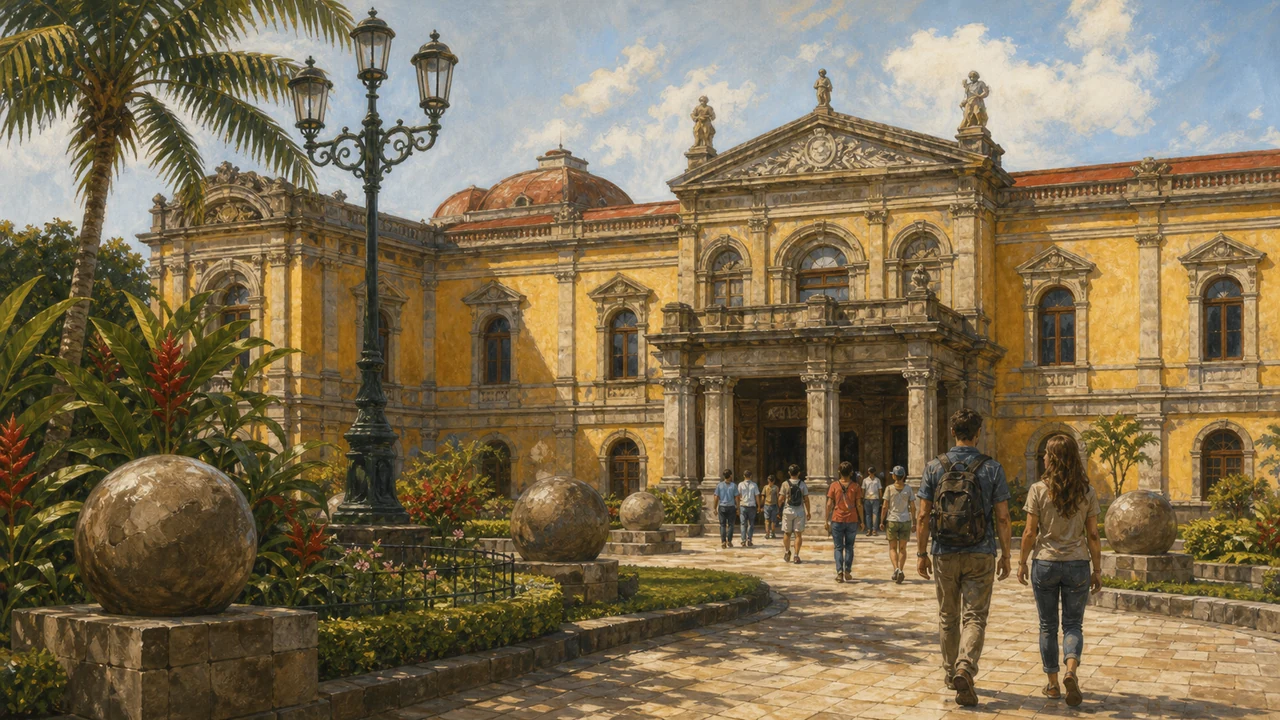 Sloping down from the western wall of the National Museum (formerly the Bellavista Fortress), Plaza de la Democracia was commissioned by Nobel Peace Prize laureate President Óscar Arias Sánchez to mark the centennial of Costa Rica’s democratic government. Costa Rica abolished its army in 1948 — the oldest and most stable democracy in Latin America — and the plaza carries that civic pride visibly.
The open-air artisan market along the plaza’s lower terrace is one of the best places in San José to buy quality handicrafts, leather goods, jewelry, and souvenirs directly from vendors at negotiable prices. The views back up toward the fortress walls and into the park beyond give this space a theatrical quality unlike anywhere else in the capital.
La Sabana — San José’s Lungs
Parque Metropolitano La Sabana, at the western end of Paseo Colón, is the largest urban park in San José and serves as the city’s primary recreational green space. Where the downtown parks are largely ornamental and social, La Sabana is genuinely active — locals jog its perimeter paths, play football on its fields, swim in its Olympic pool, and picnic by its artificial lake on weekends.
The park occupies the site of the country’s original international airport, and one of the original terminal buildings now houses the Costa Rica Art Museum (Museo de Arte Costarricense), which holds the definitive collection of Costa Rican painting and sculpture. The museum’s celebrated Salón Dorado (Golden Hall) features a striking bas-relief mural depicting the nation’s history. Admission is free on Sundays.
La Sabana is about 2 km west of Plaza de la Cultura and is best reached by taxi or by bus along Paseo Colón. It makes a good half-day excursion paired with a visit to the museum.
Planning Your Visit
The downtown parks are all accessible on foot if you base yourself centrally — Parque Central, Plaza de la Cultura, Parque Morazán, and Parque España form a tight cluster that can be covered in a morning walk. Parque Nacional is a pleasant extension to the east. La Sabana works best as a separate afternoon outing.
San José’s parks are active during the day; as with any urban area, it pays to stay alert in the evenings in less-trafficked spots. For broader Costa Rica travel tips and safety advice, consult the dedicated guides before your trip. And don’t limit your San José visit to architecture alone — the capital is also a gateway to ecotourism and nature and activities across the entire country.
Frequently asked questions
What is the most important park in San José?
Parque Nacional is widely regarded as San José's finest park. It anchors the eastern edge of downtown, houses the impressive National Monument, and sits beside the National Library and other historic buildings. It's an ideal starting point for any walking tour of the capital.
Is Plaza de la Cultura worth visiting?
Absolutely. Plaza de la Cultura sits at the heart of downtown San José, directly above the Pre-Columbian Gold Museum and adjacent to the National Theater. It's a lively gathering place for musicians, street performers, vendors, and locals of all ages — and one of the best spots to feel the pulse of the city.
What is La Sabana and is it far from downtown?
La Sabana (Parque Metropolitano La Sabana) is San José's largest urban park, located at the western end of Paseo Colón, about 2 km from the city center. It contains sports facilities, jogging paths, a lake, and the Costa Rica Art Museum housed in the former international airport building.
Who commissioned Plaza de la Democracia and why?
Plaza de la Democracia was commissioned by former President Óscar Arias Sánchez — Nobel Peace Prize laureate — to mark the centennial of Costa Rica's democratic government. It slopes down from the National Museum and hosts a popular open-air artisan market along its lower terrace.
Can I walk between all the main parks and plazas?
Yes. The core of downtown San José is compact and walkable. Parque Central, Plaza de la Cultura, Parque Morazán, and Parque España are all within a few blocks of each other. Parque Nacional is a short walk further east. La Sabana requires a taxi or bus ride west along Paseo Colón.