Costa Rica Artists and Artisans
Costa Rica’s art scene works on two levels at once. On one side are the village traditions that remain tied to family workshops, ritual, and daily life. On the other are museums, galleries, and contemporary artists working in San Jose and beyond. The result is a cultural landscape that is small enough to understand but deep enough to reward return visits.
If you want to see how Costa Rica expresses itself visually, start with the makers. The strongest art here is not only in museums. It is in the workshops, homes, and community spaces where people still build, paint, carve, and fire by hand.
The Sarchi oxcart tradition
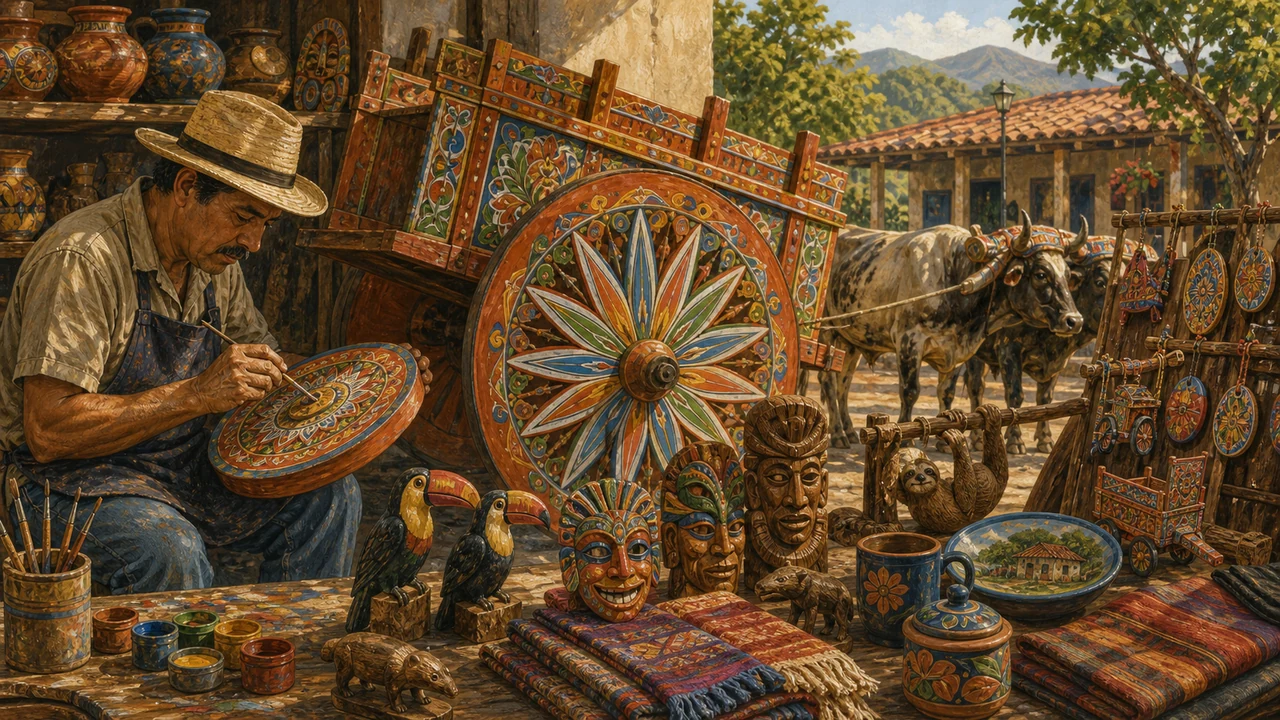
No craft says Costa Rica quite like the painted wooden oxcart. The town of Sarchi, in Alajuela province, has been the epicenter of this tradition for more than a century. Its workshops are also a useful example of how artisan work can become part of national identity.
Painters use freehand methods, and the geometric designs vary from workshop to workshop. Visitors can watch the work, buy directly, and often speak with the same families who have kept the tradition going for generations.
Guaitil and Boruca
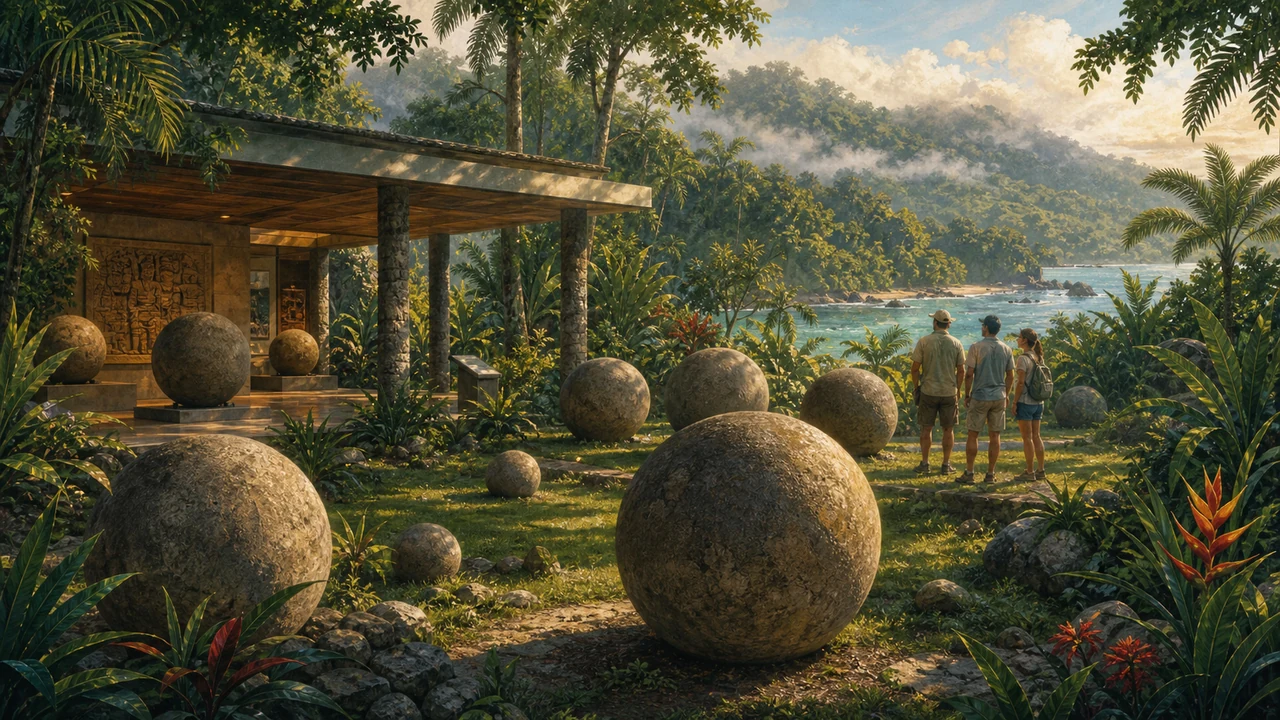
Guaitil in Guanacaste preserves Chorotega pottery, one of the most important living craft traditions in Costa Rica. The pieces are hand-built, fired, and decorated with motifs that echo pre-Columbian ceramics.
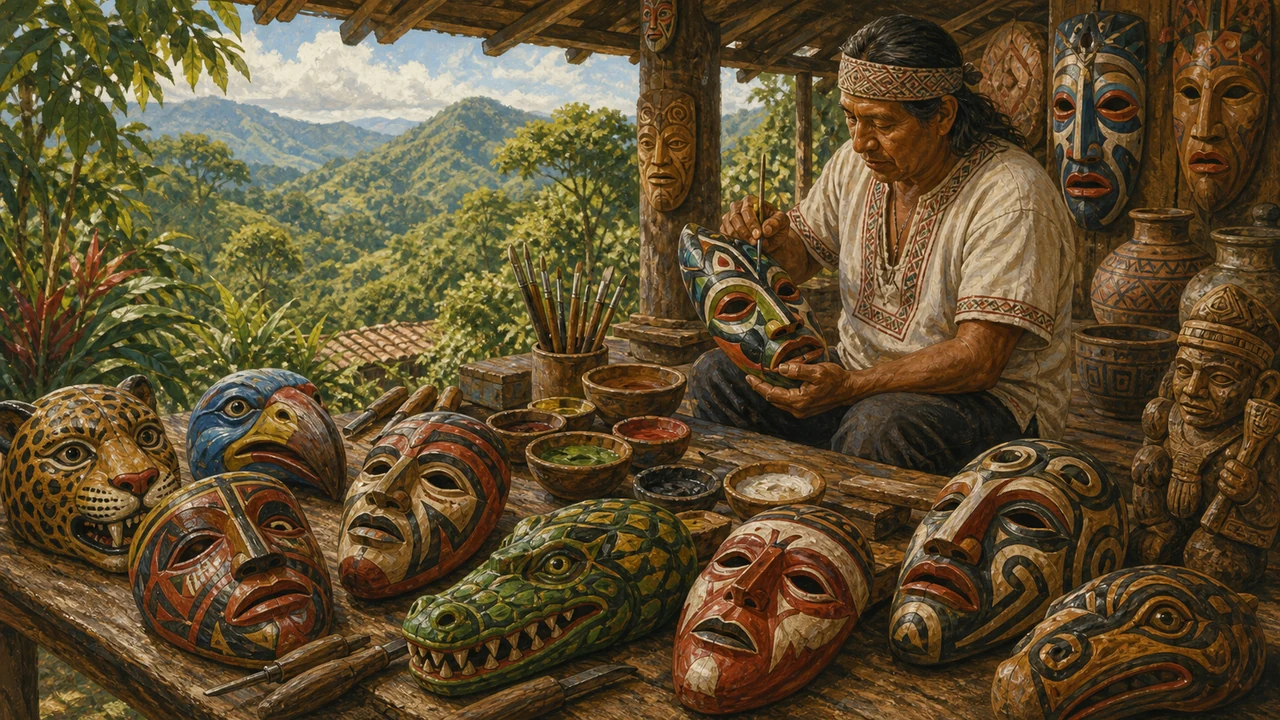
Boruca masks belong to a different but equally important visual world. They are carved and painted by indigenous artisans and tied to annual ritual performances. Buying directly from the community is the most respectful way to encounter the work.
Fine art in San Jose
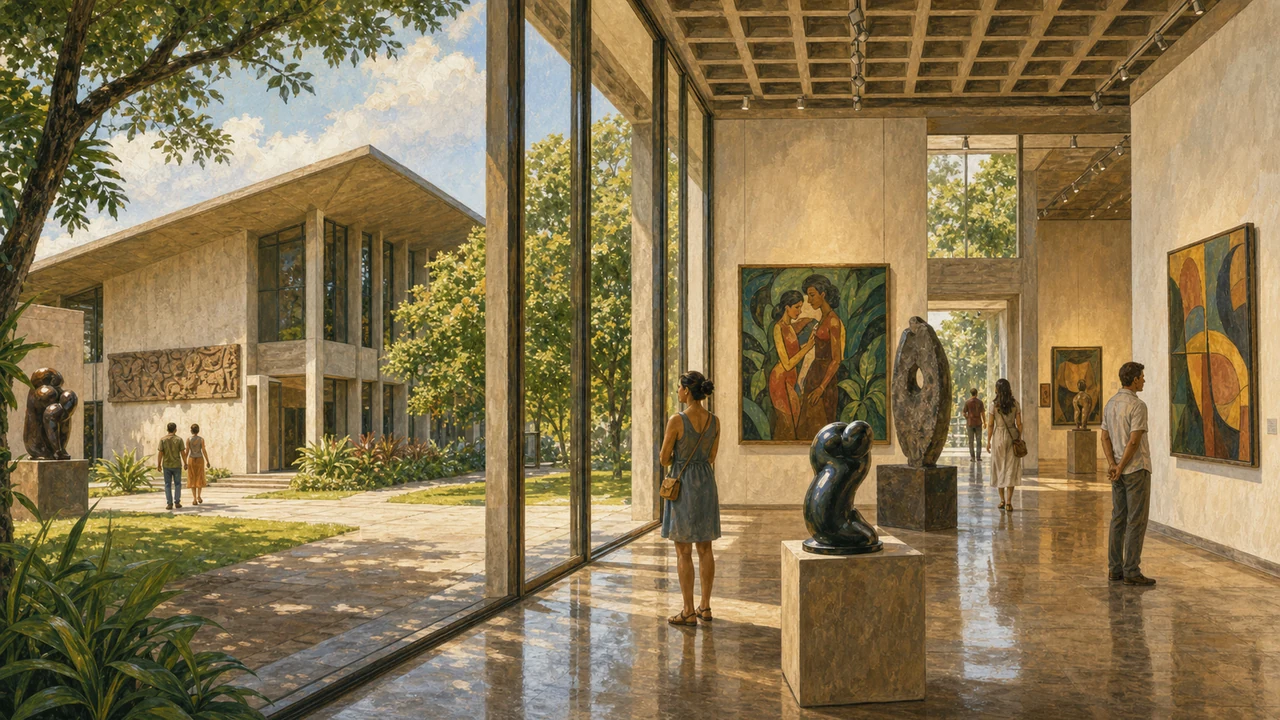
The Museo de Arte Costarricense in La Sabana is the country’s main fine-art museum. It helps place Costa Rican painting and sculpture into a broader story that includes landscape painting, abstraction, modern experimentation, and contemporary practice.
San Jose also has university galleries, private galleries, and cultural spaces where new artists show work. The scene is not huge, but it is active and worth seeking out if you care about visual culture.
What ties it together
What connects all of these traditions is not a single style. It is a shared respect for handwork, place, and cultural continuity. Whether you are looking at an oxcart, a ceramic vessel, a mask, or a contemporary canvas, the work often comes back to the same question: how do Costa Ricans express belonging through form and material?
For travelers, the easiest way to see that answer is to combine museum time in San Jose with day trips to Sarchi, Guaitil, and the southern Pacific communities that keep indigenous craft alive.
That is what makes Costa Rica artists and artisans worth studying. The work is beautiful, but it is also part of how the country remembers itself.
Frequently asked questions
Where can I meet Costa Rican artists and artisans?
Sarchi, Guaitil, and Boruca are the best known craft communities. In San Jose, the Museum of Costa Rican Art and smaller galleries show the country's fine-art side.
What is the relationship between fine art and folk art in Costa Rica?
They are closely connected. Many artists draw on the same landscapes, symbols, and craft traditions that appear in everyday artisan work.
Is it better to buy art in San Jose or in artisan communities?
Buying in the communities is better when possible because it supports the makers directly and gives you more context about how the work is produced.
What are the most recognized artisan traditions?
The painted oxcart, Chorotega pottery, Boruca masks, and tropical woodwork are among the most recognizable and durable traditions.
Does Costa Rica have a serious contemporary art scene?
Yes. San Jose has active museums, university galleries, and private spaces that show painting, sculpture, photography, and installation work.