Costa Rica Museums: A Complete Visitor's Guide
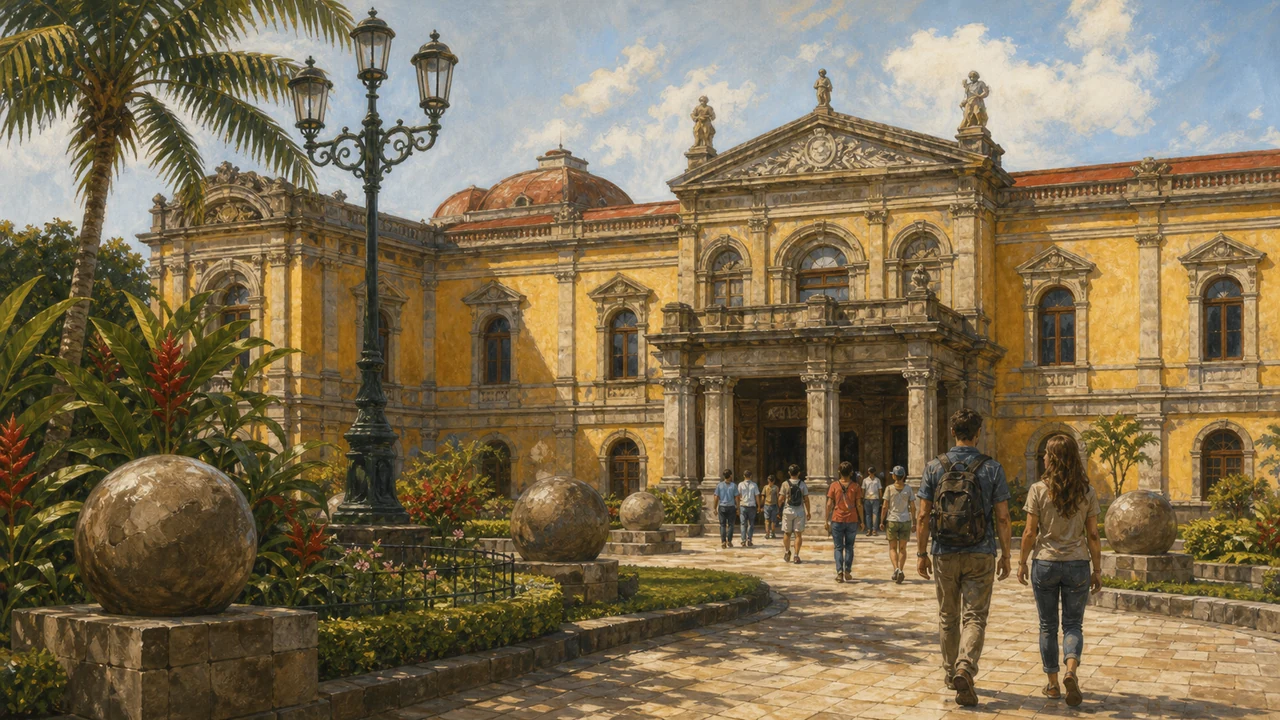 Costa Rica packs a remarkable concentration of world-class museums into a small country, and the vast majority of them are in San José, the capital — meaning you can tick off several significant collections in a single day. From pre-Columbian gold and jade artifacts that predate European contact by centuries, to colonial history, fine art, and interactive science, the city’s museum district rewards curious travelers who build in a day away from the coast.
Museo del Oro Precolombino (Pre-Columbian Gold Museum)
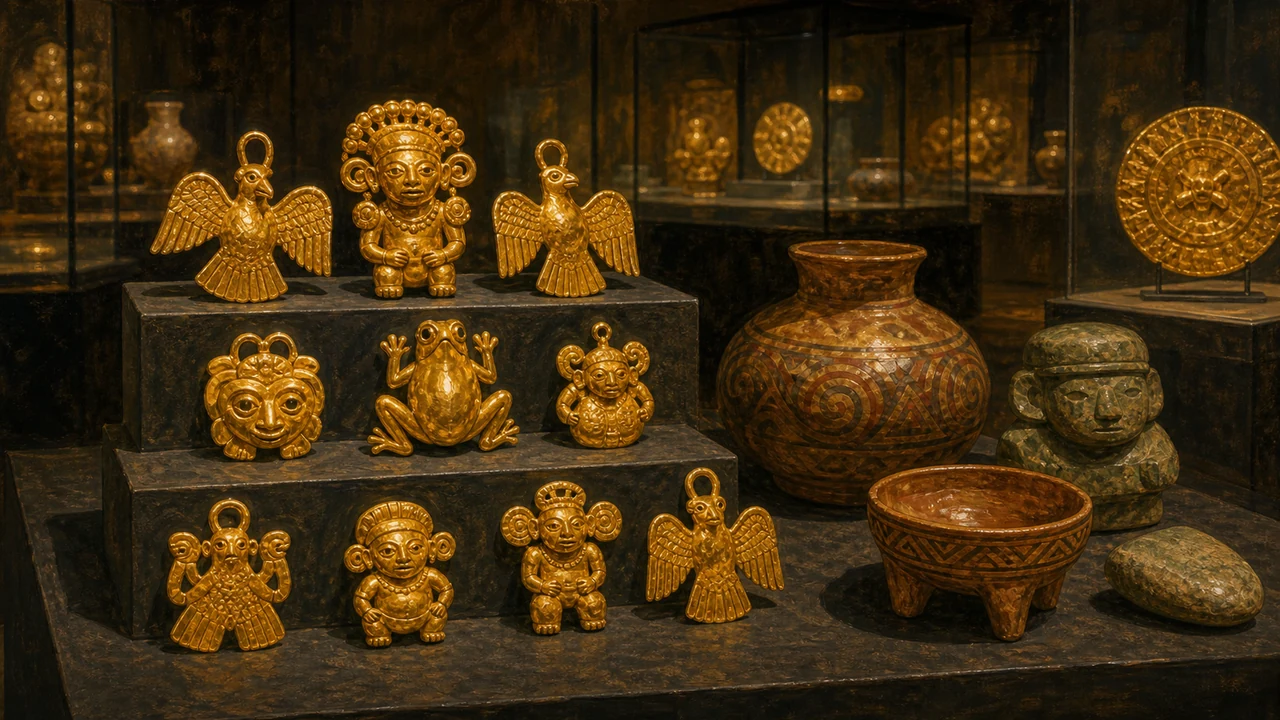 The Museo del Oro Precolombino is one of the finest pre-Columbian museums in the Western Hemisphere, and it sits directly beneath the Plaza de la Cultura in downtown San José. The intentionally dramatic underground setting — dim galleries carved below street level — creates a striking contrast with the luminous golden pieces displayed within. Indigenous craftspeople created these objects centuries before Spanish contact, suspending them on transparent mounts so they appear to float in the dark.
The collection spans frogs, serpents, birds, crocodiles, lobsters, and sharks — animals that held deep cosmological significance for Costa Rica’s pre-Columbian peoples. The sheer density of objects on display makes this one of the largest collections of pre-Columbian gold in the Americas. In the same underground complex, the Museo de Moneda (Numismatic Museum) documents the country’s monetary history through coins, banknotes, and currency artifacts — a compact but worthwhile companion visit.
Museo del Jade (Jade Museum)
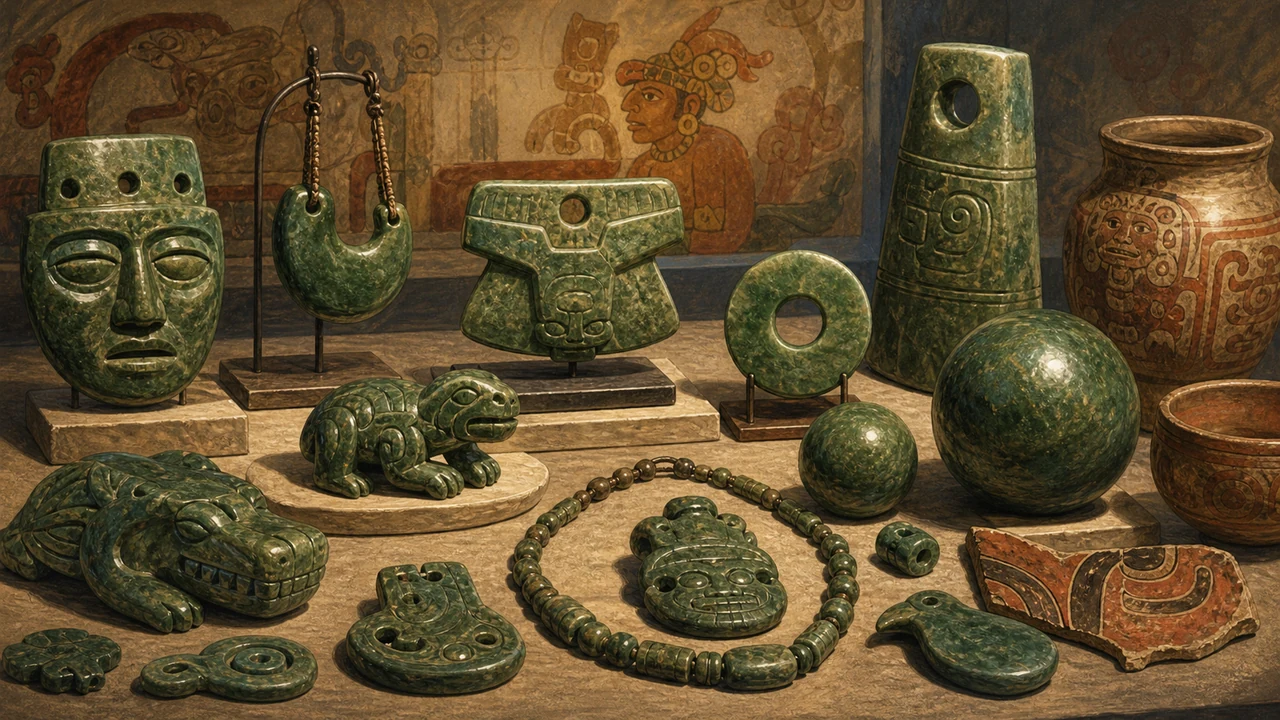 Costa Rica contains no jade deposits of its own, yet it was home to one of the most sophisticated jade-working traditions in ancient Mesoamerica — a fact that speaks volumes about the long-distance trade networks that connected the region. The Museo del Jade holds what is recognized as the largest collection of pre-Columbian jade in the Americas, making it a must-visit for anyone interested in indigenous cultures of the Caribbean and Central American lowlands.
The museum’s modern building offers a layered journey through anthropology, archaeology, and art. Jade pendants, axes, and ceremonial pieces are displayed alongside ceramic pottery and stone carvings. Many objects take animal forms — jaguars, crocodilians, and avian figures that mirror the same cosmological symbols found in the Gold Museum nearby. The upper floors provide panoramic views over San José, offering a pleasant bonus after time spent in the galleries.
Museo Nacional (National Museum)
The Museo Nacional de Costa Rica occupies an 1870s-era fortress known as the Bellavista Barracks, whose exterior walls still bear bullet holes from the brief 1948 Civil War — the conflict that led Costa Rica to abolish its military entirely. That decision, now embedded in the constitution, makes this one of the most historically resonant buildings in a country that prides itself on being the oldest stable democracy in Latin America.
Inside, the museum traces the full arc of Costa Rican history. The pre-Columbian rooms display stone carvings, ceramic vessels, and artifacts excavated from indigenous settlements across the country. The colonial section covers the Spanish conquest and early settlement period, including religious art and ecclesiastical objects brought from Europe. A courtyard butterfly garden — a living exhibit inside a historic fort — offers a genuinely unexpected and charming interlude.
Museo de Arte Costarricense (Costa Rican Art Museum)
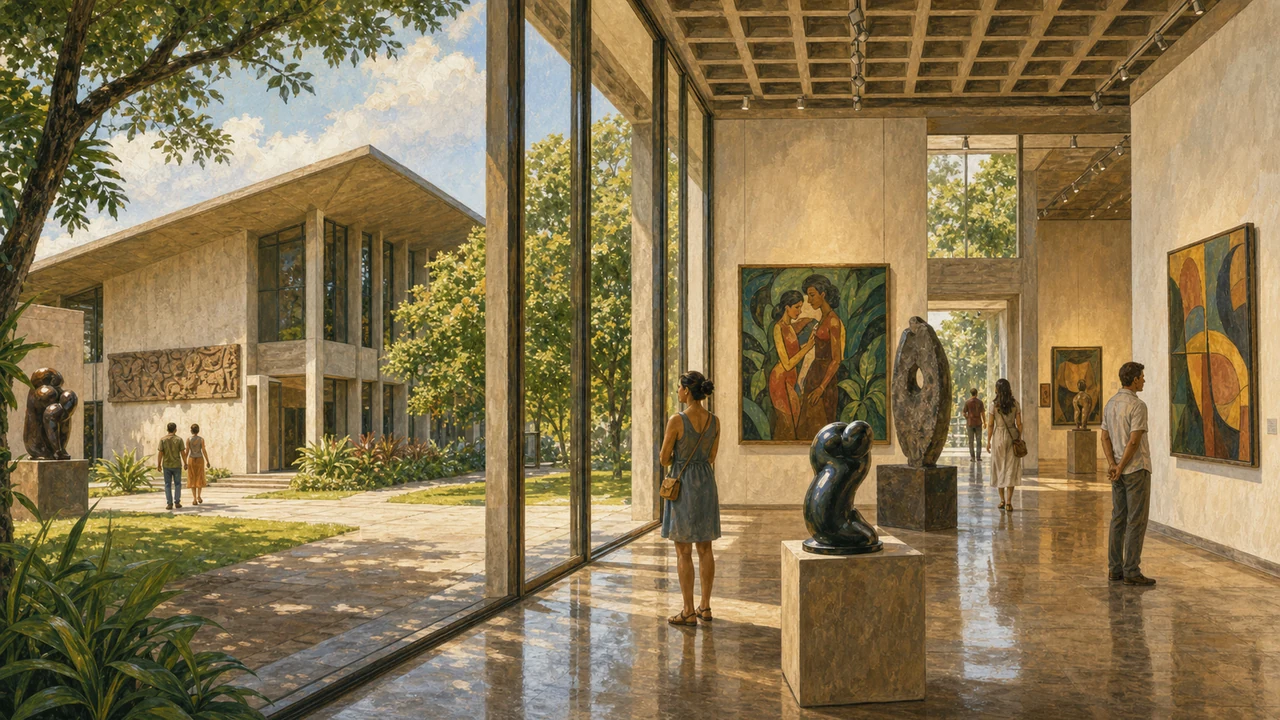 For fine art, the Museo de Arte Costarricense is the country’s premier institution. It occupies a beautiful Art Deco building on the eastern edge of Parque La Sabana — the structure originally served as the terminal of Costa Rica’s first international airport, a past life that gives it both architectural distinction and a certain romantic resonance. The permanent collection showcases Costa Rican painting and sculpture from the late 19th century to the present, tracing the development of a national artistic identity from academic realism through modernism and abstraction.
The museum’s ground-floor salon features a remarkable gold and bronze bas-relief mural depicting the history of Costa Rica — a piece that warrants extended looking. Temporary exhibitions bring contemporary regional artists into dialogue with the permanent holdings. The surrounding park, with its jogging paths, sports courts, and weekend crowds, makes this one of the most livable cultural destinations in the city.
Museo de los Niños (Children’s Museum)
The Museo de los Niños turns one of San José’s most historically charged buildings into an educational playground. The museum occupies a restored 19th-century penitentiary in the northern part of downtown — the imposing stone walls and original cell blocks are visible throughout, giving the institution an architectural drama that no purpose-built children’s museum could replicate. One wing of the old prison has been preserved as a historical exhibit, allowing visitors to understand both what the building once was and what it has become.
The interactive galleries cover science, technology, the environment, society, and Costa Rican culture in a format designed for families. Hands-on exhibits encourage children to experiment, create, and explore, making this one of the best family-friendly cultural attractions in San José. For travelers to Costa Rica who are visiting with children, it pairs naturally with a walk through the nearby barrios or a visit to the National Museum a short distance away.
Museo de Arte y Diseño Contemporáneo (Contemporary Art)
The Contemporary Art and Design Museum occupies a former National Liquor Factory — an industrial complex that has been imaginatively converted into gallery spaces, courtyards, and small performance venues. The transformation is part of the point: the contrast between the raw utilitarian architecture and the work displayed inside is itself an aesthetic statement. Rotating exhibitions feature painting, photography, installation art, and design from Costa Rican and international artists, ensuring that repeat visitors always encounter something new.
Small and medium-sized auditoriums within the complex host dance performances, theatre productions, and cultural events throughout the year, making this one of the most active cultural venues in the capital.
Planning Your Museum Day in San José
Most of San José’s major museums cluster in two areas: the historic downtown core — where the Gold Museum, Jade Museum, National Museum, and Children’s Museum are all within comfortable walking distance of one another — and the La Sabana district to the west, where the Costa Rican Art Museum and the Contemporary Art Museum sit. A morning in the downtown cluster followed by an afternoon in La Sabana makes for a full and rewarding cultural day.
A few practical notes for planning a museum itinerary in San José:
- Opening hours and admission fees — check current information before visiting, as schedules vary and some institutions close on Mondays.
- Getting around — taxis and rideshare apps are the most convenient option; the museums are not always well-connected by direct bus routes.
- Combined visits — the Gold Museum and Numismatic Museum share a building, so a single entry covers both. The Jade Museum and National Museum are a short taxi or walk apart.
- Language — most larger museums offer exhibit labels in both Spanish and English, and some provide audio guides.
Costa Rica’s museums are a rewarding counterpart to the country’s celebrated ecotourism and nature offerings, reminding visitors that the country’s richness is as much cultural and historical as it is ecological. For more on getting the most from your trip, see our Costa Rica travel tips and why visit Costa Rica guides.
Frequently asked questions
Where are Costa Rica's main museums located?
Nearly all of the country's most important museums are concentrated in San José, the capital city. Most sit within the downtown core or along the Paseo Colón corridor, making it easy to visit two or three in a single day.
What is the Pre-Columbian Gold Museum in San José?
The Museo del Oro Precolombino sits beneath the Plaza de la Cultura in downtown San José. Its underground galleries house one of the largest collections of pre-Columbian gold artifacts in the Americas, featuring intricate animal-shaped pendants, ceremonial pieces, and figurines crafted by indigenous peoples.
Is the Jade Museum worth visiting?
Absolutely. The Museo del Jade holds the largest pre-Columbian jade collection in the Americas, a testament to the extensive trade networks of ancient Costa Rican civilizations. The museum's modern building also offers sweeping views of San José from its upper floors.
Is the Children's Museum (Museo de los Niños) suitable for adults too?
Yes. While designed with children in mind, the Museo de los Niños occupies a restored 19th-century penitentiary, and the dramatic architecture alone is worth the visit. The interactive science and culture exhibits engage visitors of all ages.
Do I need to book museum tickets in advance in San José?
For most of San José's museums, walk-in entry is possible. However, checking current opening hours and entry requirements before your visit is always advisable, as schedules can change. The Gold Museum and Jade Museum attract the most visitors and can be busier on weekends.