How Costa Rica Inspires Artists: Light, Color & Nature
Costa Rica has a singular ability to stop artists in their tracks — painters, photographers, sculptors, and illustrators who arrive as tourists and find themselves reaching for a sketchbook before they’ve even unpacked. The country’s saturated tropical color palette, extraordinary biodiversity, and cinematic quality of light have drawn creative visitors from across North America, Europe, and beyond for generations, and the pull shows no sign of weakening.
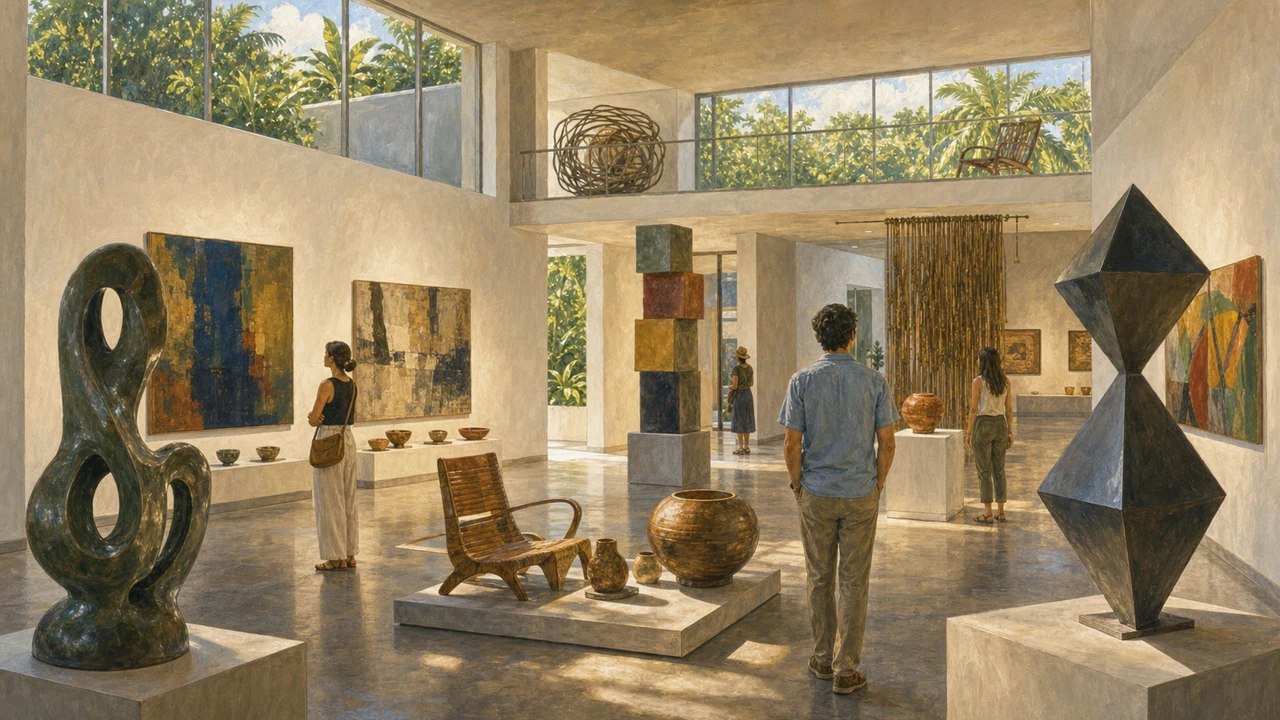
What makes Costa Rica so uniquely generative for visual artists? It is partly the sheer density of subject matter — cloud forests draped in morning mist, scarlet macaws banking over palm canopies, volcanic peaks reflected in still lagoons — compressed into a country smaller than the state of West Virginia. But it is also something less quantifiable: the quality of tropical light itself, which shifts every hour of the day and saturates color in ways that feel almost artificially vivid, like a monitor turned to its highest brightness. More than one artist has described the experience as finding a world where the color “hasn’t run out.”
What the Landscape Offers Painters and Photographers
Costa Rica’s geography provides artists with an extraordinary range of environments within easy reach of each other. The Central Valley’s coffee-plantation landscapes and colonial church towns offer a gentler, pastoral palette of greens and earthy terracottas against a backdrop of volcanic ridgelines. Descend to the Pacific coast and the color temperature shifts dramatically — teal water, bone-white sand, and the electric orange-pink of dry-season sunsets. Head east to the Caribbean and you encounter a softer, rain-washed atmosphere where the jungle meets a sea of deep turquoise.
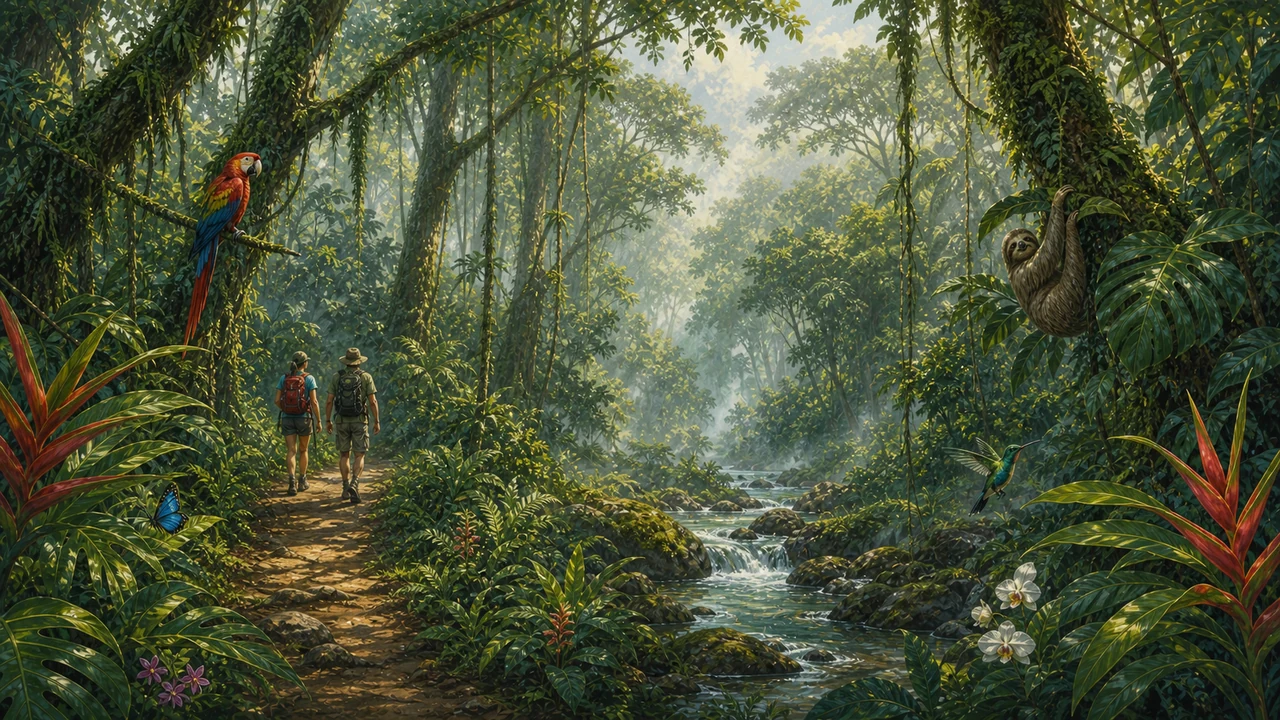
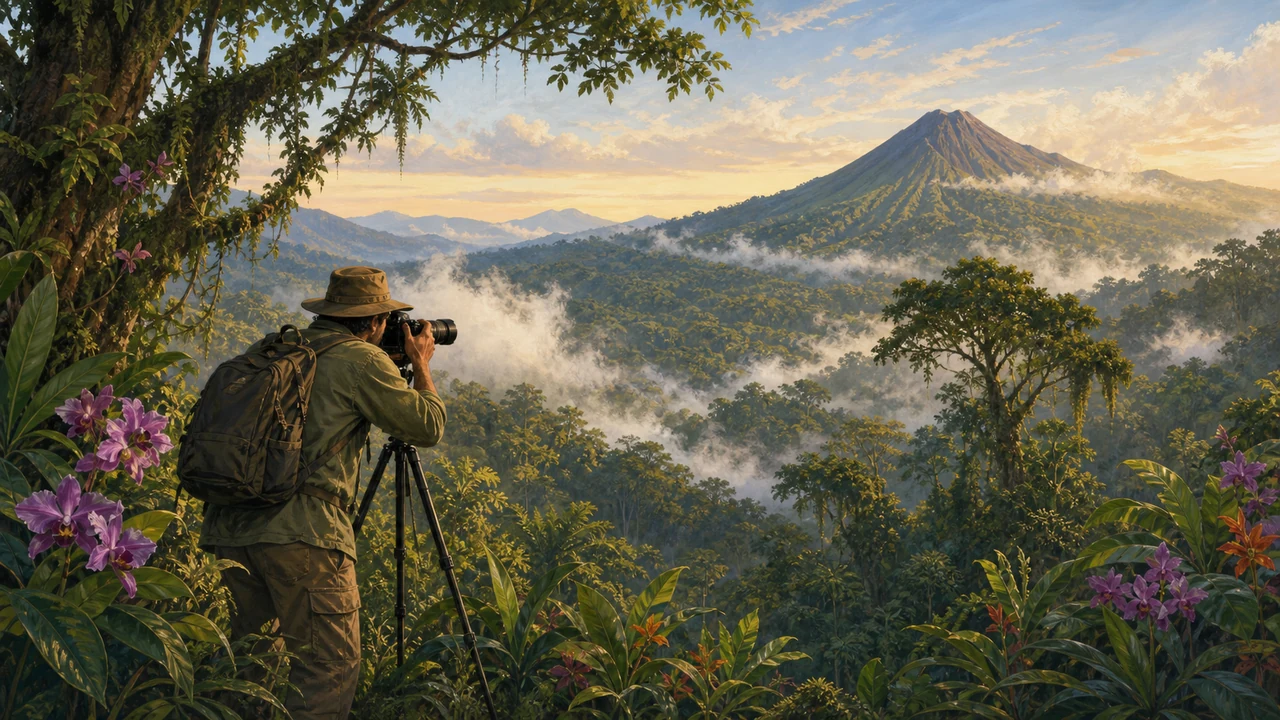
For landscape photographers, the country offers a rare gift: dramatic weather transitions that happen fast. A morning that begins with clear blue skies over Arenal can dissolve into rolling cloud by midday, reshaping the scene entirely. Waterfalls that trickle in the dry season thunder after a week of rain. This dynamism means a single location can look completely different from visit to visit, rewarding artists who return again and again.
Wildlife artists and nature illustrators find Costa Rica’s ecotourism & nature particularly compelling. More than five percent of the planet’s biodiversity is packed into this small nation, giving wildlife painters access to resplendent quetzals in the cloud forests, poison dart frogs in the lowland jungles, humpback whales off the southern Pacific coast, and sea turtles hauling onto moon-lit beaches. The country’s commitment to protecting over a quarter of its territory in national parks and reserves means that undisturbed wilderness subjects are genuinely accessible.
Plein-Air Painting Spots Worth Knowing
Outdoor painting in Costa Rica is as rewarding as it is challenging — the humidity can be hard on certain materials, afternoon rains are common, and insects are persistent companions — but artists who embrace these conditions tend to produce work that carries an unmistakable vitality.
Popular destinations for plein-air painters include:
- Monteverde and Santa Elena — cloud-forest compositions with epiphyte-laden trees, hummingbirds, and atmospheric mist that diffuses light beautifully
- The Osa Peninsula — one of the most biologically intense places on Earth, where Corcovado National Park offers primary rainforest, wildlife encounters, and isolated beaches
- Arenal region — the iconic volcano cone rising above Lake Arenal provides a dramatic focal point; the surrounding lush meadows and rivers offer foreground variety
- Guanacaste — the dry tropical forest, cattle ranches, and dramatic Pacific coastline provide a distinctly different palette, drier and more golden, especially in the dry season (December through April)
- The Caribbean coast — Puerto Viejo and the Cahuita area draw artists drawn to lush, rain-drenched colors and the distinctive Afro-Caribbean cultural visual language
For wildlife and botanical illustration, the trails around biological research stations and eco-lodges are particularly productive. Morning light in tropical forests is especially prized — low, directional, and filtering through multiple canopy layers in ways that create natural spotlighting effects.
Artist Residencies and Creative Programs
A growing number of eco-lodges, rural fincas, and cultural organizations in Costa Rica offer residency programs or live-work arrangements for visiting artists. These vary widely in structure and cost, from informal exchanges — where an artist contributes a mural or workshop in exchange for accommodation — to more formal programs with dedicated studio space, critique sessions, and connections to local galleries.
The art and cultural scene in San José has matured considerably in recent years. The capital’s gallery district and its museums host rotating exhibitions, including shows by foreign artists whose work has been shaped by time spent in the country. The Museo de Arte Costarricense (MAC) and a number of independent commercial galleries are worth visiting both for their collections and as starting points for connecting with the local creative community.
Community arts programs in rural areas — particularly in indigenous communities in Guanacaste, the Caribbean coast, and the southern zone — offer a different kind of creative encounter. The ceramics traditions of Guaitil, for instance, trace back to pre-Columbian Chorotega culture and attract artists interested in traditional craft alongside contemporary visual art.
The Color of Costa Rica
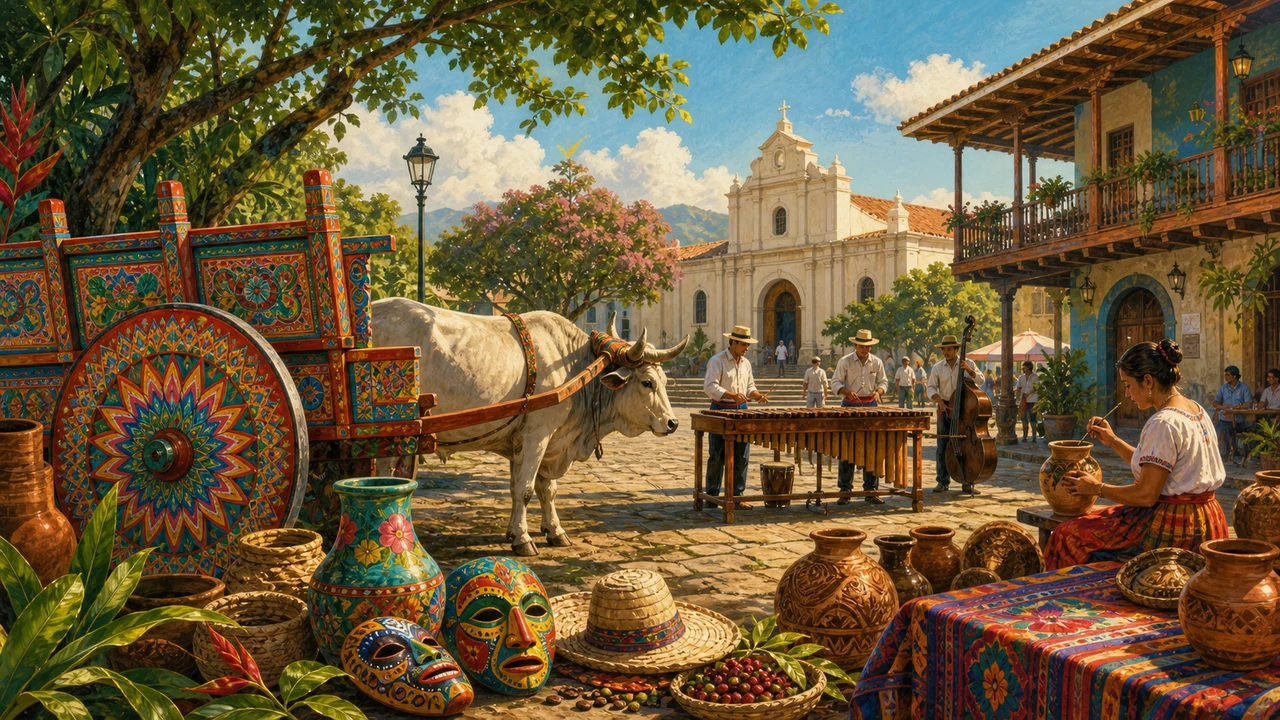
Artists who have worked in Costa Rica frequently describe the color as the central revelation. Unlike the bleached-out quality of strong midday light in arid climates, tropical light in Costa Rica tends to enrich rather than wash out color. The deep greens of the rainforest, the iridescent plumage of tropical birds, the vivid pinks and yellows of heliconia and orchid — all hold their saturation even in bright conditions.
This is partly a function of the atmosphere itself: high humidity and the scattering of light through water vapor give tropical environments a luminosity that is notoriously difficult to capture faithfully in paint or photography. Mastering the iridescent quality of Costa Rican light is a challenge that draws artists back repeatedly, and many describe their Costa Rica work as a turning point — technically and emotionally — in their practice.
The connection artists feel to Costa Rica often goes beyond the visual. The country’s “pura vida” philosophy — a genuine cultural orientation toward openness, gratitude, and presence — creates an environment that many artists describe as psychologically freeing. There is a loosening of constraint that shows up in the work: more saturated color, more expressive mark-making, more willingness to let the painting surprise you.
Planning a Creative Trip to Costa Rica
For artists planning a trip with creative work in mind, a few practical considerations help:
- Dry season (December through April) offers more predictable outdoor painting conditions, especially on the Pacific side. Cloud forests and the Caribbean coast can be visited year-round, with lush conditions in the green season.
- Lightweight, portable materials are practical — compact watercolor sets, travel easels, and mirrorless camera bodies handle the humidity and the distances better than heavier equipment.
- Guided nature walks serve double duty: they bring you into wildlife encounters at the right time of day and light conditions, and knowledgeable naturalist guides can help identify the birds, plants, and insects you’re observing and painting.
- Cultural etiquette: ask permission before painting or photographing local people, particularly in indigenous communities. Many communities are welcoming to visiting artists who engage respectfully.
Costa Rica travel tips are useful for any first-time visitor, and the country’s well-developed ecotourism infrastructure means that most natural areas of artistic interest are accessible without sacrificing comfort. For context on just how much the country has to offer creatively, see why visit Costa Rica.
Whether you arrive with a blank canvas or a camera body, Costa Rica tends to give you more than you came looking for. The light is generous, the wildlife is improbably beautiful, and the landscape shifts fast enough to keep even experienced artists surprised. It is, in short, a country that paints itself.
Frequently asked questions
Why do so many artists visit Costa Rica for inspiration?
Costa Rica's extraordinary biodiversity, saturated tropical color palette, and ever-changing light across rainforest, cloud forest, and coastline offer painters and photographers an almost overwhelming source of visual material. The country's compact geography means artists can move from misty highland forests to sun-drenched Pacific beaches within a few hours.
Are there artist residencies in Costa Rica?
Yes. Several eco-lodges, cultural centers, and private studios offer short- and long-term residency programs for visual artists, writers, and musicians. Programs range from informal live-work arrangements at rural fincas to structured residencies with critiques and exhibition opportunities in San José.
What are the best locations in Costa Rica for plein-air painting?
Popular outdoor painting spots include the Monteverde Cloud Forest for mist-and-canopy compositions, the Osa Peninsula for old-growth jungle and wildlife, the Central Valley for mountain-framed coffee landscapes, and the Nicoya Peninsula for dramatic Pacific sunsets. Birding areas and national parks also draw wildlife illustrators and nature photographers.
Can I study or take art workshops in Costa Rica?
Watercolor, oil, and photography workshops are offered periodically in San José and in rural communities across the country. Local galleries and cultural centers often coordinate these sessions; checking with venues in San José or with ecotourism operators is the best way to find current offerings.
Where can I see Costa Rican and internationally inspired art?
San José is the main hub for galleries and museums, including the Museo de Arte Costarricense and several commercial galleries. Art inspired by Costa Rica — by both local and foreign artists — appears regularly in rotating exhibitions and cultural festivals throughout the year.