Sport Fishing in Costa Rica: Pacific & Caribbean Guide
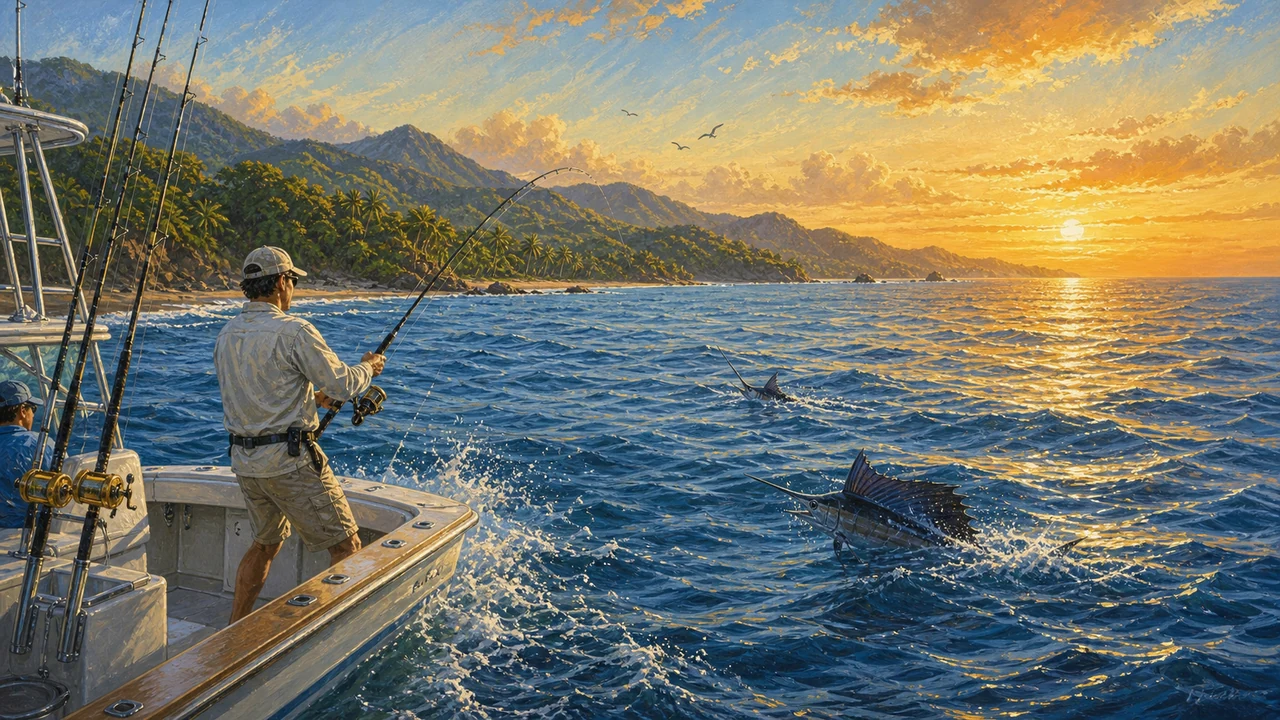 Costa Rica ranks among the world’s premier sport-fishing destinations, offering two productive coastlines, dozens of dedicated fishing lodges, and a year-round calendar that always puts trophy fish within reach. Bordered by the Pacific Ocean and the Caribbean Sea — and laced with rivers, lakes, and estuaries between them — the country delivers an astonishing diversity of species in a compact geography that few destinations can match.
Whether you are chasing Pacific sailfish and blue marlin, hunting tarpon and snook in Caribbean lagoons, or targeting inshore roosterfish along reef-edged beaches, Costa Rica’s waters reward both first-time anglers and seasoned veterans. A strong conservation ethic, enforced catch-and-release rules for billfish, and a well-developed charter fleet make it as responsible as it is exciting.
The Pacific Coast: Sailfish, Marlin, and More
 The Pacific side is where most visiting anglers begin their Costa Rica story. Warm, bait-rich waters produced by converging currents and upwellings concentrate a remarkable range of pelagic and inshore species up and down the 1,000-kilometer coastline.
Sailfish are the signature catch. These acrobatic billfish are present in Pacific waters year-round, with peak action typically running from December through April and a strong mid-year pulse around June and July. Marlin — blue, black, and striped — share the same offshore grounds and are targeted on multi-day expeditions from the country’s major marinas.
Other top Pacific species include:
- Dorado (mahi-mahi) — hard fighters that run in large numbers along current edges, especially December through April
- Yellowfin and bigeye tuna — found year-round offshore; the southern Pacific near the Osa Peninsula and Caño Island is particularly productive
- Roosterfish — a prized inshore species found close to rocky headlands, accessible on half-day trips without heading far offshore
- Wahoo, cubera snapper, and Pacific amberjack — mix-bag targets on both inshore and nearshore grounds
Key Pacific Fishing Hubs
Los Sueños and Quepos (Central Pacific): The town of Quepos, and the Los Sueños marina nearby, form the undisputed center of Costa Rica’s Pacific charter industry. Dozens of fully equipped sportfishing vessels operate from a modern marina, with bilingual crews, tournament-grade tackle, and top-tier accommodation options ranging from budget inns to luxury sport-fishing lodges. Offshore fishing out of Quepos is considered world-class for sailfish and blue marlin, and the proximity of Manuel Antonio National Park makes it a natural base for non-fishing days.
Guanacaste (North Pacific): The north Pacific province of Guanacaste — accessed through the Liberia airport — offers excellent dry-season fishing from December through April. Fleets based in Playas del Coco, Tamarindo, and the Papagayo Gulf target sailfish, roosterfish, and dorado. The shallower nearshore grounds here are also popular for inshore roosterfish and snapper trips that suit anglers who prefer to stay within sight of the dramatic Guanacaste coastline.
Golfito and the Osa Peninsula (South Pacific): The remote southern Pacific is arguably the least-pressured fishery on the coast. The waters around Golfito and the Corcovado National Park coastline hold large populations of cubera snapper, roosterfish, and yellowfin tuna. Offshore, blue and black marlin are the headline targets. Fishing pressure is lower here, and for anglers willing to travel farther afield, the Osa grounds can feel like going back in time.
The Caribbean Coast: Tarpon and Snook Country
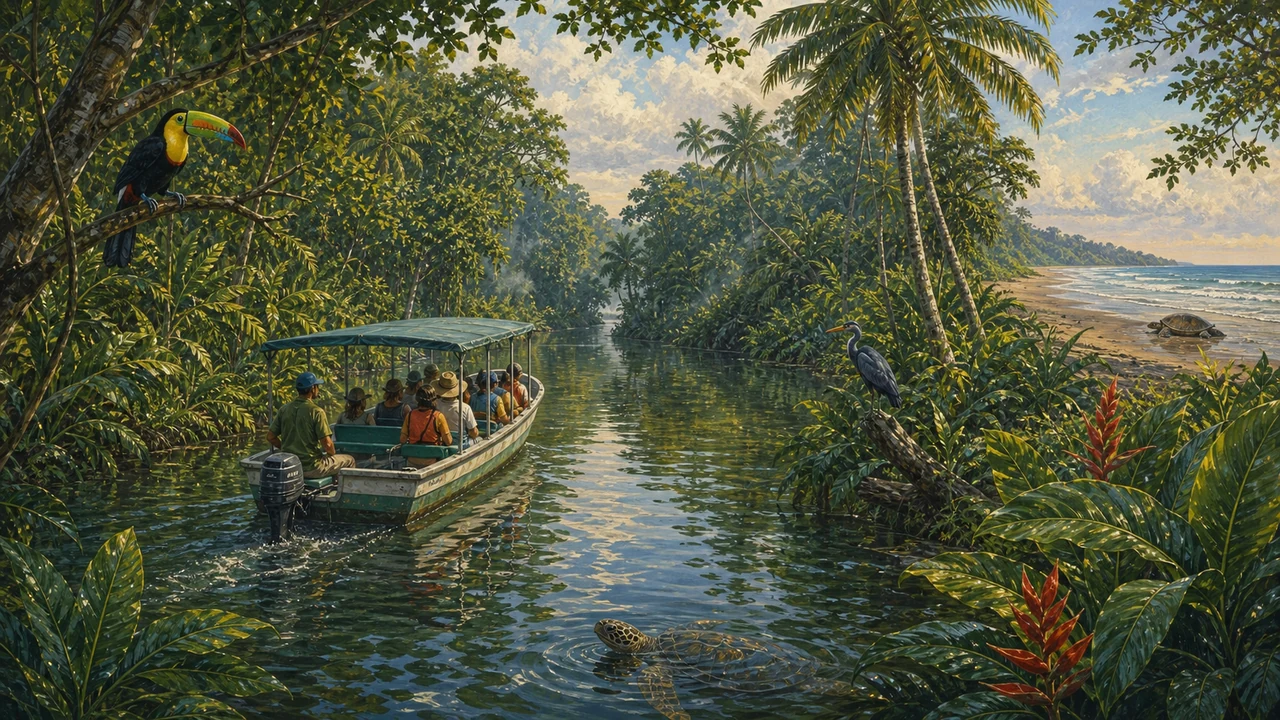 Costa Rica’s Caribbean coast offers a completely different style of fishing — more intimate, more wild, and centered on two legendary species: tarpon and snook.
Barra del Colorado is the most celebrated destination. This remote outpost near the Nicaraguan border, accessible by small plane or boat, draws anglers from around the world who come specifically to wrestle Atlantic tarpon in the lagoons and river mouths of the Barra del Colorado Wildlife Refuge. Tarpon are strongest from January through May and again in September and October, though the refuge’s waterways hold fish year-round.
Snook — both common and fat snook — are the other prized Caribbean quarry. They inhabit the same estuaries, river channels, and mangrove edges as tarpon, and experienced local guides know exactly where to find them on a given tide. Most Caribbean lodges operate on an all-inclusive model that bundles accommodation, meals, guides, and boats into a single daily rate.
Tortuguero adds another dimension. The canal network of Tortuguero National Park provides both exceptional wildlife viewing and surprisingly productive fishing for tarpon, snook, and a range of tropical freshwater species including machaca (brycon), guapote (rainbow bass), and mojarra.
Other Caribbean species worth targeting include king mackerel, grouper, and snapper in the nearshore Atlantic waters off Limón.
Inshore vs. Offshore: Choosing Your Style
 Inshore fishing in Costa Rica suits anglers who prefer action-packed half-day or full-day trips without traveling too far from port. Targets vary by coast but typically include roosterfish, snook, snapper, jacks, and barracuda. Lighter tackle makes the fights more exciting, and inshore trips are ideal for families or beginners.
Offshore fishing requires a longer run — typically one to four hours depending on the hub — but delivers the headline species: sailfish, marlin, tuna, and wahoo. Full-day offshore trips are the norm; multi-day live-aboard expeditions are available for serious anglers targeting the most remote Pacific grounds or the waters around Cocos Island National Park, one of the world’s most productive big-game fisheries.
Most charter operators offer:
- Half-day inshore (4–5 hours)
- Full-day inshore or nearshore (8 hours)
- Full-day offshore (8–10 hours)
- Multi-day offshore packages
Boats range from 26-foot center-consoles for inshore work to 50-plus-foot luxury sport-fishers for blue-water expeditions. Modern vessels are equipped with outriggers, fighting chairs, live bait wells, and GPS/sonar systems.
Seasons at a Glance
Costa Rica’s fishing calendar is dictated by ocean current patterns, rainfall, and species behavior rather than a single “best season.” As a rule:
- December–April (dry season, Pacific): Prime sailfish and marlin season; calm seas; excellent visibility offshore
- May–November (rainy season, Pacific): Productive fishing continues, particularly for dorado and yellowfin tuna; some offshore days affected by weather
- January–May and September–October (Caribbean): Peak tarpon and snook activity around Barra del Colorado and Tortuguero
- Year-round: Some species are always available somewhere; consult your operator about fishing outlooks for specific months
Catch and Release and Conservation
Costa Rica has built its reputation as a sport-fishing powerhouse in part through a genuine commitment to conservation. Mandatory catch-and-release for billfish — sailfish and marlin — has been the de facto standard among responsible operators for years and is backed by law. Many operators are members of international tagging programs that track migration patterns and population health.
The result is a fishery that sustains itself. Sport fishing in Costa Rica on a catch-and-release basis has minimal ecological impact, and the economic value of a live billfish — brought to the boat, tagged, photographed, and released to be caught again — far exceeds any consumable value.
When booking, look for operators who:
- Practice and enforce catch-and-release for billfish
- Use circle hooks (which reduce deep-hooking and improve release survival)
- Participate in billfish tagging programs
- Hold valid INCOPESCA permits
Fishing is part of a much broader adventure culture here. Visitors who want to explore beyond the water will find the country’s activities and sports scene — from whitewater rafting to diving and surfing — equally rewarding. Before you arrive, browse our Costa Rica travel tips for practical planning advice, and explore why Costa Rica continues to be the top ecotourism and adventure destination in the Americas.
Frequently asked questions
What is the best time of year for sport fishing in Costa Rica?
It depends on the coast and target species. Pacific sailfish and marlin run strongest from December through April along most of the Pacific, with a secondary peak mid-year. On the Caribbean, tarpon and snook fishing peaks from January through May and again in September–October around Barra del Colorado and Tortuguero.
Do I need a fishing license in Costa Rica?
Yes. Foreign visitors need a Costa Rican sport-fishing license, which most reputable charter operators include in their package price. Check current INCOPESCA regulations before your trip, as requirements and fees change periodically.
Is catch and release mandatory in Costa Rica?
Catch and release is strongly encouraged and legally required for billfish (sailfish and marlin) and some other protected species. Most quality sport-fishing operators in Costa Rica run mandatory catch-and-release programs for billfish, contributing to long-term population health.
What are the main fishing hubs on the Pacific coast?
The central Pacific hub of Los Sueños/Quepos is the most developed, with large marinas and dozens of charter boats. Guanacaste (Playas del Coco, Tamarindo, Papagayo) serves the north Pacific, while Golfito and Puerto Jiménez anchor the southern Osa Peninsula fishery.
Can I combine Caribbean and Pacific fishing in one trip?
Yes — Costa Rica's small size makes it possible. Some operators run dawn-to-dusk multi-coast itineraries, and the country's domestic flight network makes scheduling a Caribbean day trip from Pacific lodges (or vice versa) straightforward.