Costa Rica Whitewater Rafting: Top Rivers & Guide
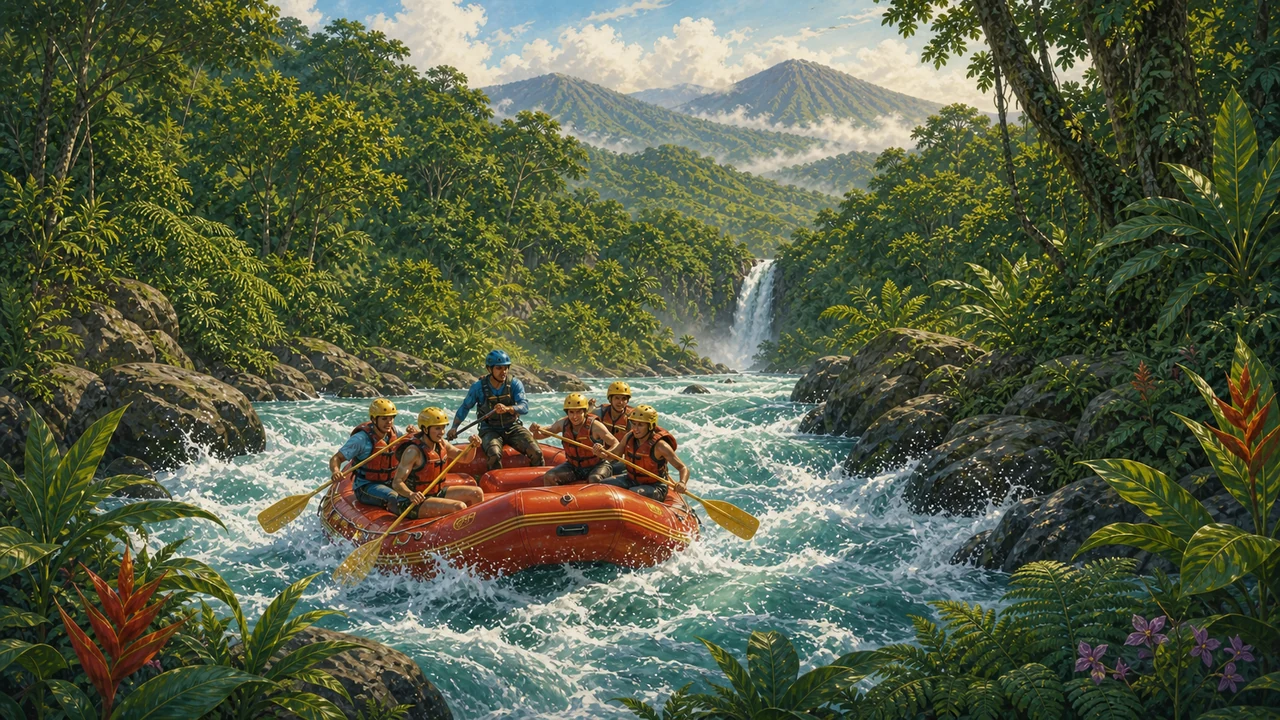 Whitewater rafting in Costa Rica puts you at the center of some of the most dramatic river scenery in the Americas. A network of fast-dropping tropical rivers carves through rainforest canyons, over volcanic rock, and past jungle wildlife — delivering everything from gentle family floats to expert-level Class V challenges. For thrill-seekers and nature lovers alike, a day on the water is one of the most memorable activities and sports Costa Rica offers.
Costa Rica’s Top Rafting Rivers
The country’s mountainous spine funnels enormous rainfall toward both coasts, creating rivers that are both powerful and scenic. These five rivers are the ones rafters keep coming back for.
Pacuare River
The Río Pacuare Class III and IV stretches are widely regarded as one of the top ten rafting runs in the world. Located in the Caribbean lowlands near Turrialba, the Pacuare drops through a pristine gorge lined with old-growth rainforest, making it a standout for ecotourism and nature as much as for adventure. The river offers sections ranging from Class III to Class IV+, with multi-day expeditions that include overnight stays at riverside jungle lodges. Wildlife sightings — toucans, poison-dart frogs, river otters — are common. Most operators offer a one-day run from put-in to take-out, but a two-day itinerary allows real immersion in the canyon.
Reventazón River
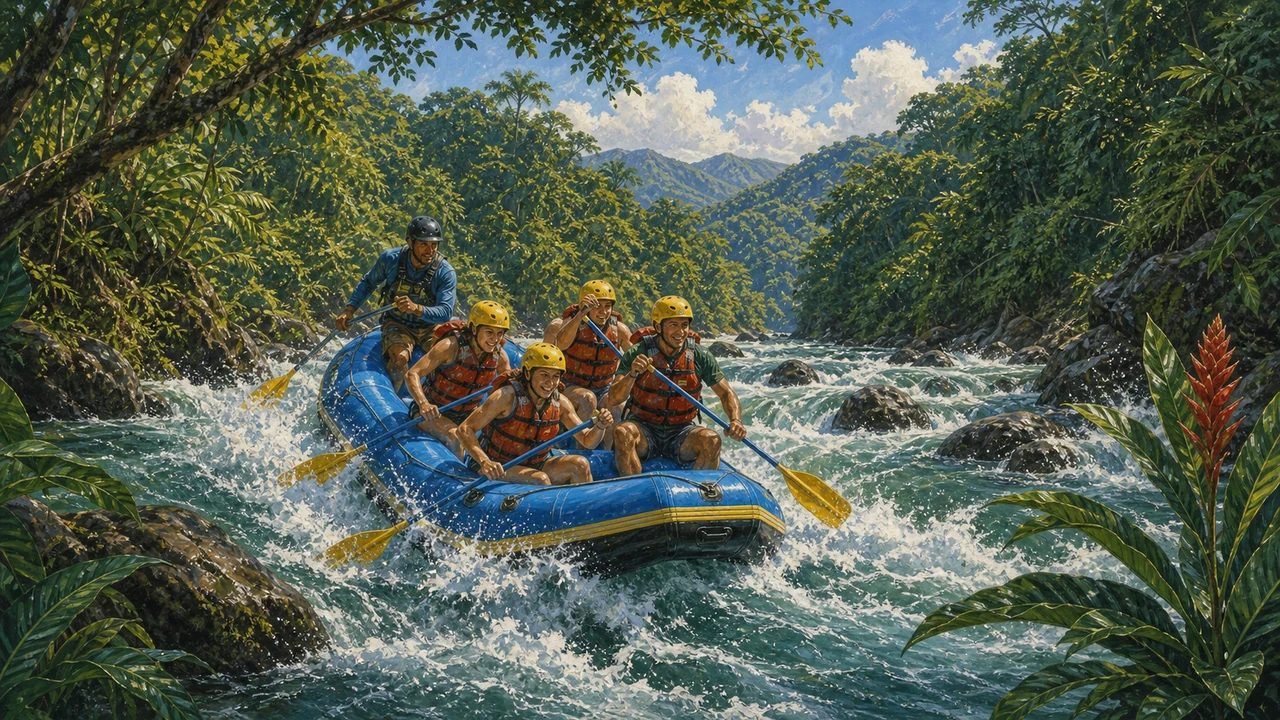 Also near Turrialba, the Reventazón River whitewater runs the gamut from Class II family floats to a demanding Class IV–V section known as the “El Huevo” gorge. Hydroelectric development has changed some of the upper sections, but the lower and middle reaches remain excellent. The river is shorter than the Pacuare and more accessible from San José, making it a popular day-trip choice. Beginners often start here before tackling the Pacuare.
Sarapiquí River
The Sarapiquí flows north through the lowland rainforests of Heredia and Alajuela, combining Class II–III rapids with extraordinary wildlife habitat. It borders Braulio Carrillo National Park on its upper reaches, and the riverside jungle supports monkeys, sloths, kingfishers, and river turtles. Because the Sarapiquí’s rapids are manageable and its scenery spectacular, it is consistently among the best picks for family-friendly rafting in Costa Rica — including children old enough to paddle.
Savegre River
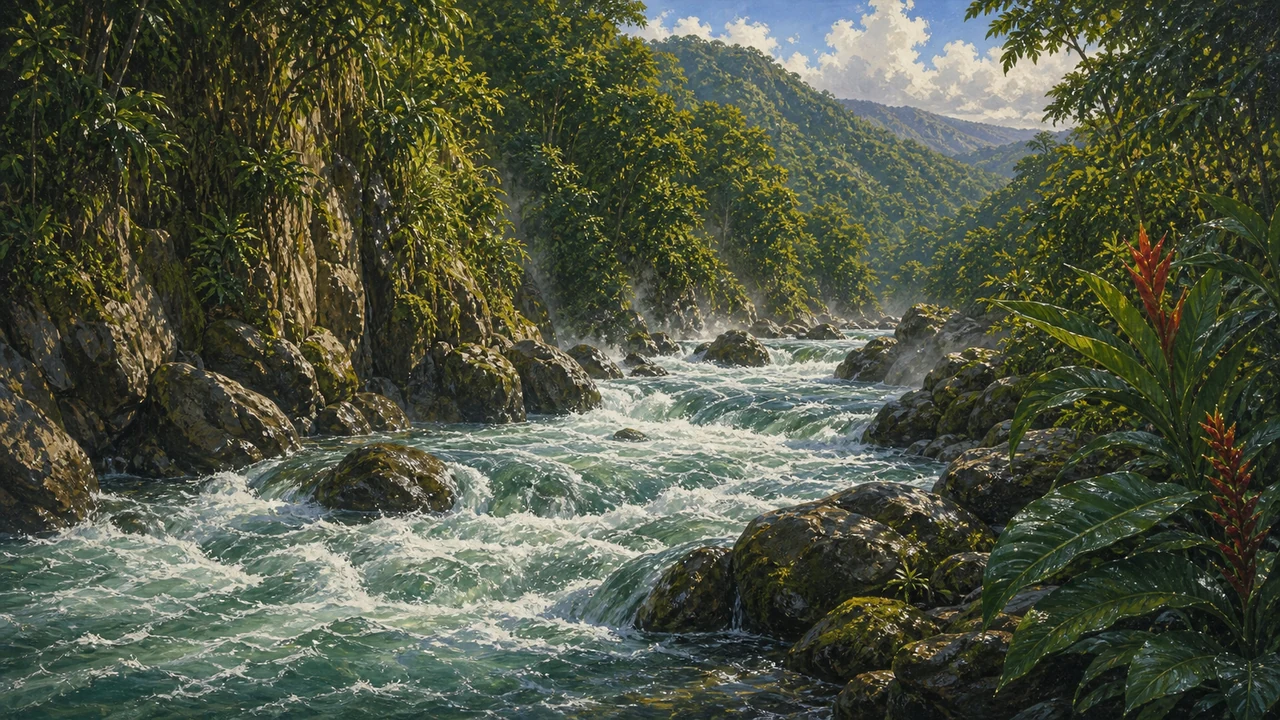 In the southern Pacific highlands near Manuel Antonio, the Savegre descends from cloud forest at altitude, cutting through one of the country’s most pristine river valleys. The Río Savegre rafting experience is Class III–IV in the upper canyon, surrounded by dense canopy. The Savegre watershed is critically important for water conservation and is home to the resplendent quetzal in its upper reaches. Rafting here pairs naturally with a visit to Manuel Antonio or the nearby beaches of the Central Pacific.
Naranjo River
The Naranjo, also in the Central Pacific near Quepos, is shorter but punchy — a Naranjo River Class IV whitewater run that packs considerable technical challenge into a tight canyon section. It is a favorite for experienced paddlers who want big rapids without committing to a full day on a longer river. The river drops sharply from the highlands and delivers a fast-moving experience suited to intermediate and advanced rafters.
Understanding Class Ratings
Costa Rica’s rivers are rated using the international whitewater scale:
- Class I–II — Calm to easy, with small waves. Ideal for beginners and children. The lower Sarapiquí and some Reventazón sections fall here.
- Class III — Moderate rapids with irregular waves and clear channels. Most commercial rafting falls in this range; no prior experience needed with a guide.
- Class IV — Powerful, predictable rapids requiring precise maneuvering. Most Pacuare sections are Class IV. Some prior river experience is helpful.
- Class V — Extremely difficult, violent rapids with serious hazard. The Reventazón’s El Huevo gorge and the Pacuare’s hardest drops can reach Class V in high water. Experienced paddlers only.
Most reputable operators assess the river level on the day of your trip and will adjust the route or cancel if conditions are unsafe.
Best Season for Rafting
 Whitewater rafting during Costa Rica’s rainy season (roughly May through November) delivers the most dramatic rapids as rivers run high and fast. Flows peak between September and October when rainfall is heaviest on the Caribbean side. This is the time for paddlers seeking adrenaline and powerful water.
The dry season (December through April) sees lower, clearer water with a slower pace — still exciting at Class III, but more manageable for groups with nervous first-timers. Some rivers, particularly the Sarapiquí and the lower Pacuare, are excellent year-round. Check with your operator on current conditions before you book.
Family vs. Advanced Trips
One of the best things about rafting in Costa Rica is that there is genuinely something for every ability level.
For families and beginners: The Sarapiquí (Class II–III) is the top recommendation. Half-day trips are widely available, guides are experienced with mixed-ability groups, and the wildlife viewing along the river makes it rewarding even if the rapids are modest. The lower Reventazón and some Pacuare tributary runs are also excellent for introducing younger paddlers to the sport.
For intermediate paddlers: The Pacuare’s standard one-day run (Class III–IV) is the bucket-list choice. Book early in the dry season for comfortable logistics, or in the rainy season for bigger water. The Naranjo and the Savegre upper canyon are also strong options.
For advanced and expert paddlers: The Reventazón’s El Huevo section, the Pacuare in high-water flood stage, and the Naranjo’s steepest drops are the targets. These require prior Class IV–V experience and are typically guided by operators who specialize in technical runs.
What to Expect on a Rafting Trip
Most operators depart from San José or from river towns like Turrialba and La Fortuna. The typical experience runs like this:
- Safety briefing — guides cover paddle commands, swimming position, and how to re-enter the raft. This is mandatory and thorough.
- Gear up — helmets and personal flotation devices (PFDs) are provided. Wetsuits are sometimes available for cooler highland rivers.
- On the water — guides steer from the stern or coach from the bank on technical sections. You paddle as a team.
- Breaks and wildlife — most trips include pauses to swim in calmer pools, spot animals, or take photographs in the gorge.
- End of trip — operators typically provide lunch or snacks at the take-out and a shuttle back to your starting point.
For a multi-activity day, combining rafting with kayaking in Costa Rica or a canopy zip-line tour is popular — many operators in the Turrialba and Arenal areas bundle these into full-day adventure packages. See also the Arenal region adventure activities page for what can be combined in the north.
Practical Tips
- Book with certified operators. Look for guides certified through the Instituto Costarricense de Turismo (ICT) or affiliated with recognized adventure tourism associations.
- Tell your operator your experience level honestly. River placement depends on it.
- Travel insurance that covers water sports is strongly recommended. Check your policy before you arrive.
- Leave valuables behind. You will get wet. Dry bags exist for phones and cameras, but assume anything you bring may go overboard.
- For general planning, see Costa Rica travel tips and review the Costa Rica safety tips before any adventure activity.
Whitewater rafting is one of the experiences that defines a Costa Rica adventure trip. With rivers that flow through some of the country’s most protected and biodiverse landscapes, you are not just riding rapids — you are traveling through the heart of the Costa Rica ecotourism world that has made this small nation one of the most celebrated nature destinations on Earth.
Frequently asked questions
Do I need rafting experience to go whitewater rafting in Costa Rica?
No prior experience is required for most commercial trips. Beginner and intermediate runs on rivers like the Sarapiquí and the lower Pacuare are guided by certified instructors who provide full safety briefings before departure. Advanced Class IV–V runs do require prior experience — ask your operator when booking.
What is the best time of year for rafting in Costa Rica?
The rainy season (May through November) delivers the highest water levels and the most powerful rapids, ideal for thrill-seekers. The dry season (December through April) offers gentler flows, calmer scenery, and easier conditions for families. Many rivers run well year-round.
Is the Pacuare River suitable for families with children?
The Pacuare has Class III–IV sections that are best suited to teens and adults with basic fitness. Families with younger children should look at the Sarapiquí (Class II–III) or the lower Reventazón, which offers milder stretches and a more relaxed pace.
How long does a typical rafting trip last?
Half-day trips run two to three hours on the water plus travel time. Full-day trips typically cover a longer river section and include lunch at a riverside camp. Multi-day Pacuare expeditions (one to two nights in jungle lodges) are also available and give deeper access to the rainforest.
What should I bring on a rafting trip?
Wear a swimsuit or quick-dry shorts and bring a change of clothes for after. Leave valuables at the hotel — operators provide helmets, life jackets, and paddles. Sunscreen, a water bottle, and a dry bag for a camera or phone are useful. Most operators supply lunch or snacks on full-day trips.