Limón Province: Costa Rica's Caribbean Coast
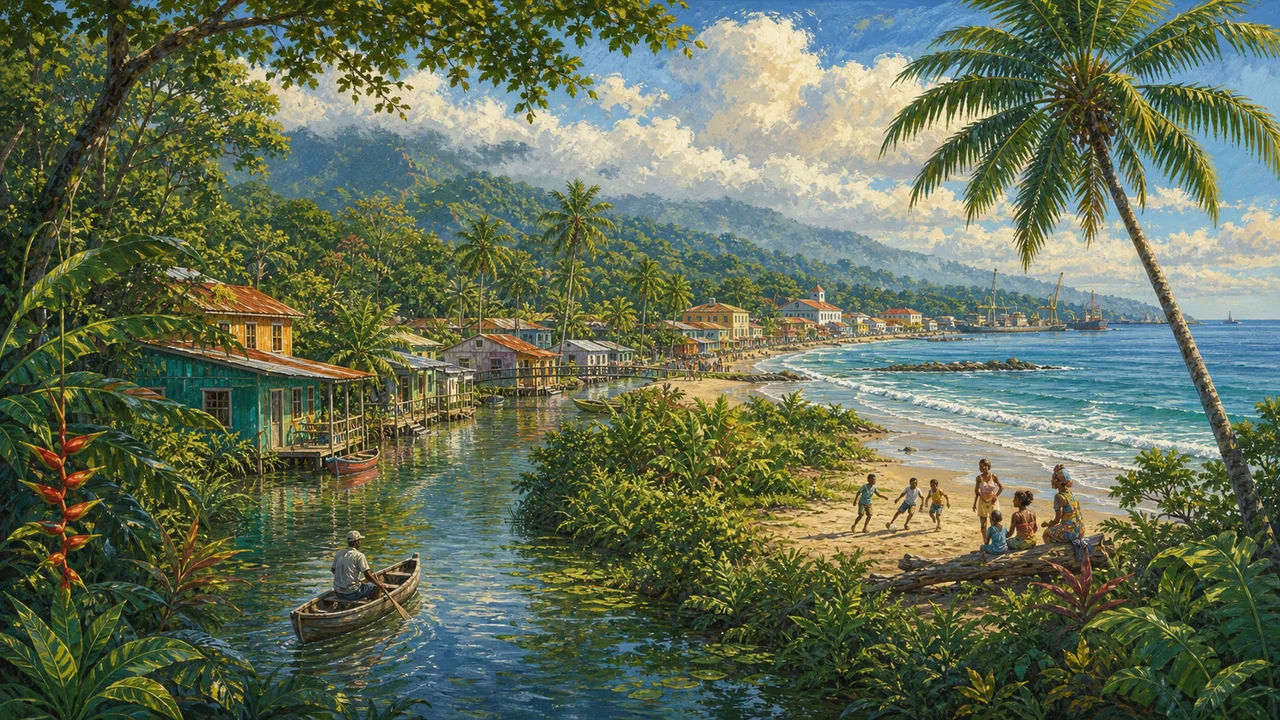 Limón province stretches along Costa Rica’s entire Caribbean coast, delivering a world utterly unlike the Pacific side — lush rainforest canals, coral reefs, Afro-Caribbean rhythms, and green turtle nesting beaches on the Caribbean coast of Costa Rica that rank among the most important in the Western Hemisphere. From the tangle of waterways around Tortuguero in the north to the surf-lapped sands of Manzanillo near the Panamanian border, Limón rewards every kind of traveler willing to trade the beaten tourist trail for something richer and more unexpected.
The road from San José winds through Braulio Carrillo National Park before dropping dramatically into humid lowlands — a ride that signals the Caribbean is near. The temperature rises, the canopy thickens, and by the time you reach the coast, you are in a different country within a country.
Tortuguero: Turtles and Canal Wilderness
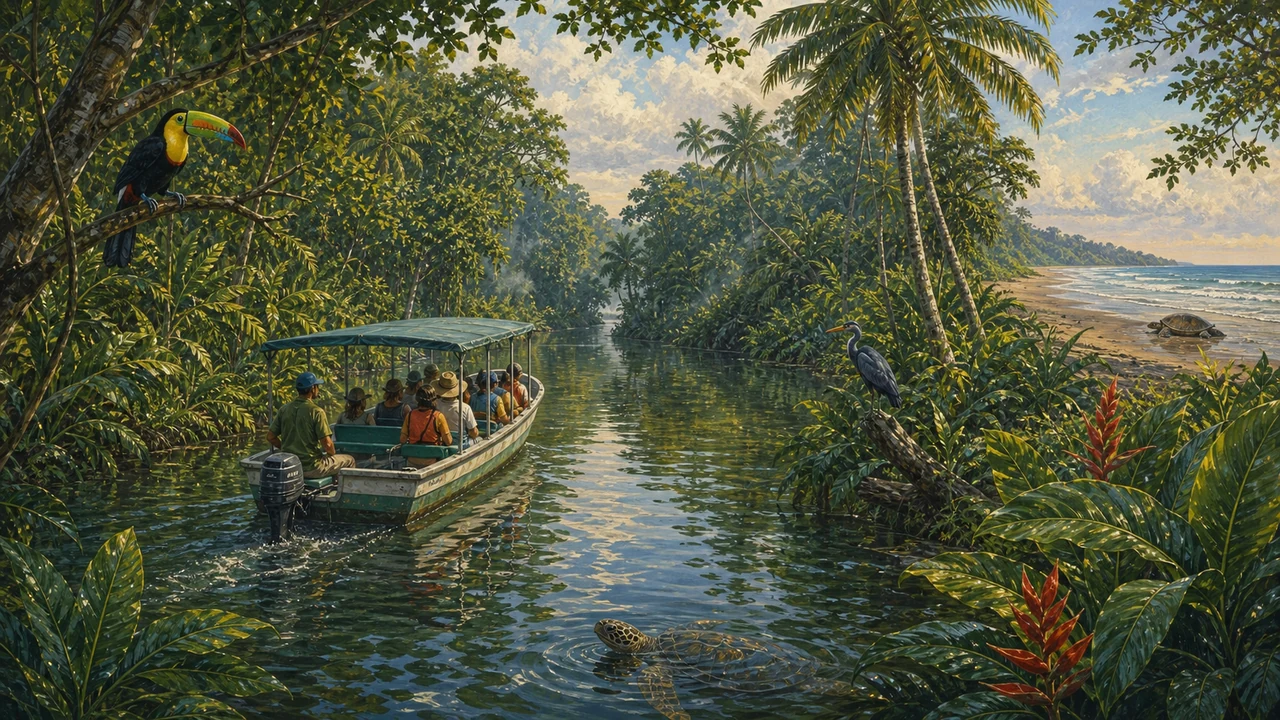 Tortuguero National Park anchors the northern Caribbean and is one of the most biodiverse wetland systems in Central America. Accessible only by boat or small plane — roads end well before the park — the journey itself is half the appeal. Motorized launches glide through narrow waterways flanked by towering palms and strangler figs, while river otters, caimans, manatees, three species of monkey, and hundreds of bird species go about their lives along the banks.
The park takes its name from the turtles (tortugas) that have nested here for millennia. Tortuguero National Park turtle nesting season draws wildlife enthusiasts from around the world: green turtles arrive in massive numbers from roughly July through October, hauling themselves ashore at night to lay clutches of eggs in the dark sand. Leatherback and hawksbill turtles nest at other times of year, making the beach productive across much of the calendar. Guided night tours, led by certified naturalist guides, are the only permitted way to witness nesting — a rule that protects the turtles and makes the experience all the more meaningful.
Beyond turtles, Tortuguero offers exceptional canal kayaking, sport fishing for tarpon and snook, and village life in the small community of Tortuguero, where there are no cars and the pace is unhurried. Lodges range from basic to quite comfortable, and multi-day packages are the most popular way to visit.
Puerto Limón: The Gateway Port
The city of Puerto Limón is Limón province’s capital and the country’s busiest Caribbean port. Cruise ships dock here regularly, and the city hums with commercial energy that feels distinct from Costa Rica’s interior cities. Christopher Columbus anchored nearby in 1502, and the area has been a crossroads of cultures ever since — Indigenous Huetar and Bribri peoples, African descendants brought during the colonial era and later the railroad era, Chinese merchants, and Jamaican workers who arrived in the nineteenth century to build the Atlantic railway.
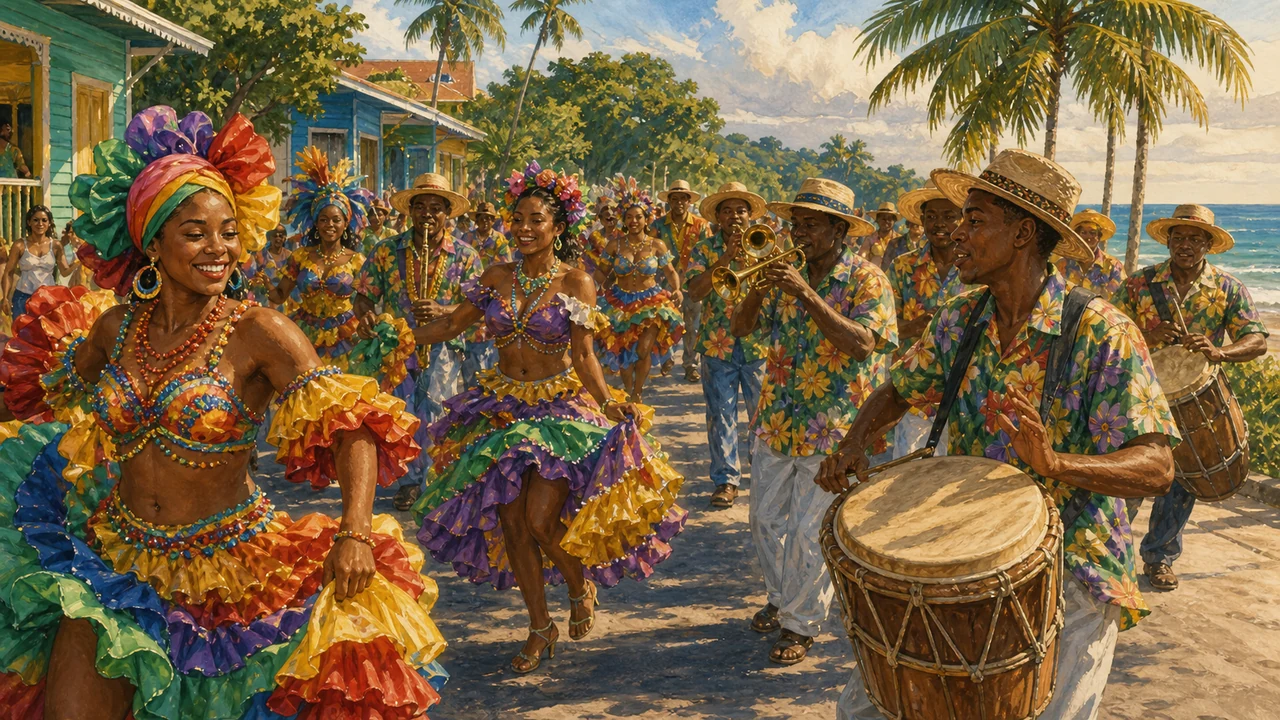
That multicultural layering is most visible during Limón Carnival in October, when the city erupts in calypso, reggae, soca, and cumbia. Floats, elaborate costumes, and street food stalls fill the avenues for days, making it one of Costa Rica’s most exhilarating festivals and a reason in itself to time a Caribbean visit for mid-October.
Cahuita: Coral Reefs and Laid-Back Charm
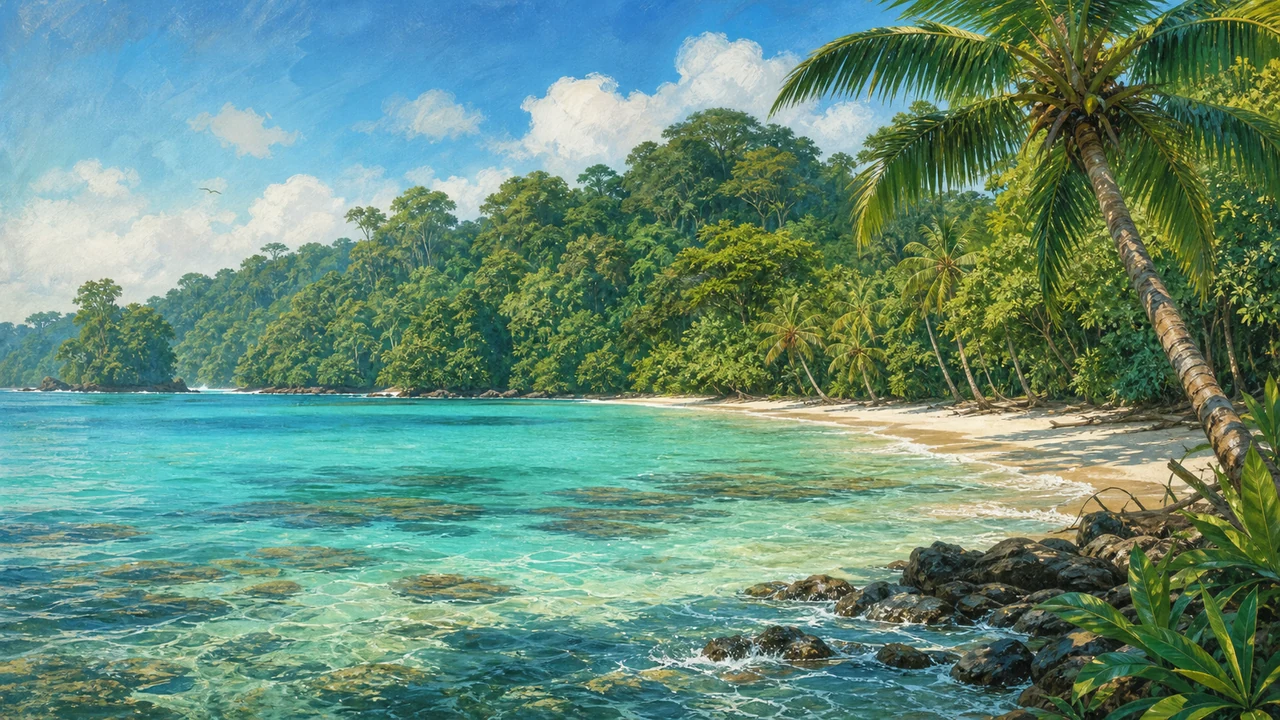 About an hour south of Limón, the village of Cahuita sets the tone for the southern Caribbean: wooden houses painted in bright colors, dirt paths lined with almond trees, and a collective exhale that tells you to slow down. Cahuita National Park protects one of Costa Rica’s most accessible coral reef systems — a submerged garden of brain corals, sea fans, and sponges teeming with parrotfish, angelfish, and the occasional nurse shark. Entry to the park on the Puerto Vargas side charges a small fee; the Cahuita town entrance operates on a voluntary donation system.
Snorkeling at Cahuita National Park’s coral reef is gentle enough for first-timers when conditions are calm, and the white-sand beach backed by coconut palms is picture-perfect for those who prefer to stay dry. Howler monkeys crash through the canopy overhead, and white-faced capuchins often descend to investigate beachgoers. The trail that runs the length of the park’s shoreline is a pleasant two-hour walk through coastal forest.
Puerto Viejo, Punta Uva, and Manzanillo
Continuing south, Puerto Viejo de Talamanca is the social hub of the southern Caribbean — a small town with an outsized personality. Reggae drifts from open-air bars, bicycles outnumber cars, and the streets mix surfers, yoga retreats, Bribri artisans selling cacao products, and long-term expats in a blend that somehow works. The main beach break here produces some reliable waves for intermediate surfers, while Salsa Brava — further south — is one of Costa Rica’s most powerful reef breaks and draws experienced surfers from around the world.
Beyond Puerto Viejo, the road becomes a narrow lane threading through cacao farms and private reserves to reach Punta Uva and Manzanillo’s secluded Caribbean beaches — arguably the most beautiful on this coast. Punta Uva’s curved bay, calm turquoise water, and overhanging almond trees resemble a postcard cliché, except they are real and relatively uncrowded. Manzanillo, at the end of the public road, sits at the edge of the Gandoca-Manzanillo National Wildlife Refuge.
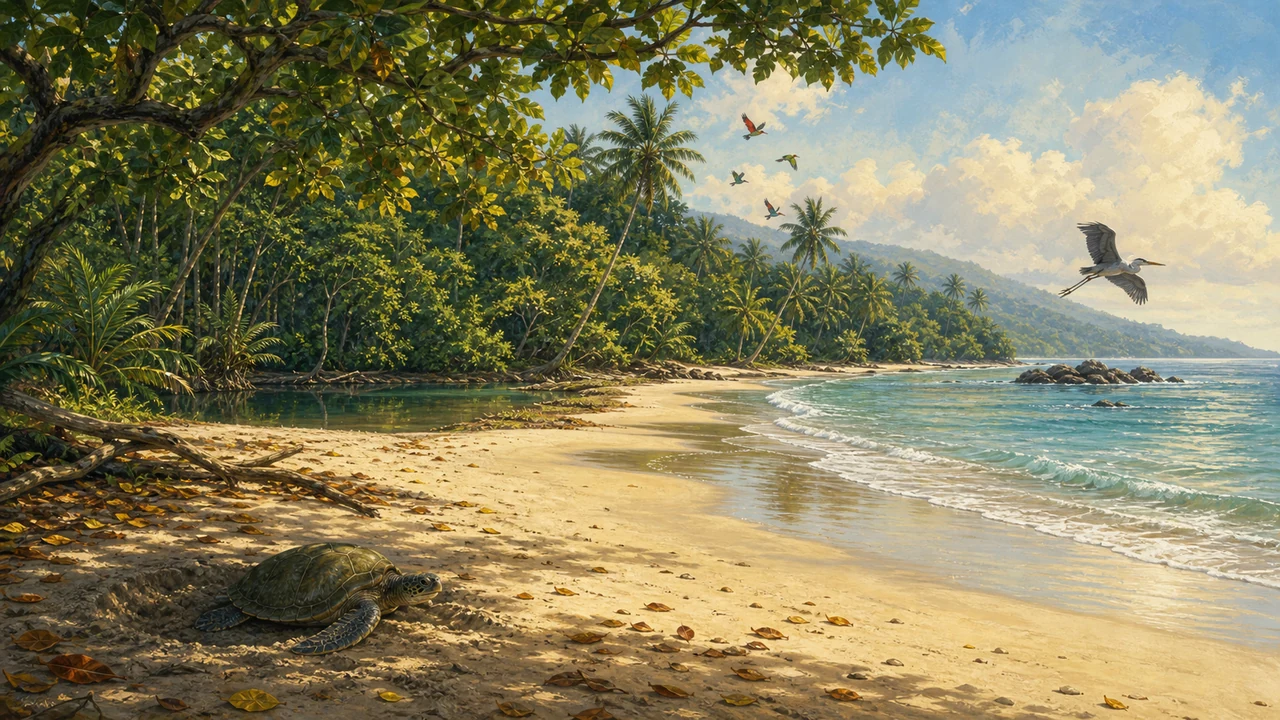 The Gandoca-Manzanillo refuge protects thousands of hectares of beach, coral reef, mangroves, and tropical forest almost at the Panama border. Four species of sea turtle nest here. Kayaking through the refuge’s mangrove channels in search of kingfishers, caimans, and river otters is a highlight for wildlife lovers. Dolphin sightings in the bay are also common.
Afro-Caribbean Culture and Bribri Heritage
What sets Limón apart from every other province is its living cultural mosaic. The Afro-Caribbean community, many descended from Jamaican workers brought to build the Atlantic railroad in the late nineteenth century, maintained distinct traditions for generations — calypso music, a patois blending English and Spanish, a distinct culinary tradition, and a deep sense of communal identity. That heritage now enriches the entire Caribbean coast.
Afro-Caribbean rice and beans cooked in coconut milk is the defining dish: slow-simmered together, fragrant with thyme and coconut, it is served alongside jerk chicken, rondon stew, and fried ripe plantains. This is not the rice and beans (gallo pinto) of the Central Valley — it is richer, sweeter, and unmistakably Caribbean. Visiting a local soda or attending a community event is the best way to experience it authentically.
The Bribri, one of Costa Rica’s largest Indigenous nations, maintain their traditions in the Talamanca highlands above Puerto Viejo. Cacao holds deep cultural significance for the Bribri — it is used in ceremony and daily life — and cacao farm tours with Bribri communities have become one of the most meaningful cultural experiences available in Costa Rica. Visitors learn to process cacao from pod to chocolate drink using ancestral methods, often with Indigenous guides on their own territory. Several community-run tour operators offer these immersive day visits.
Planning Your Visit to Limón
 The Caribbean coast operates on a different weather calendar than the Pacific. While the rest of Costa Rica bakes in the dry season (December through April), Limón receives rain year-round, with the relatively drier periods falling in September–October and February–March. That rain keeps the rainforest intensely green and the rivers full — which is exactly why it looks so extraordinary.
Getting around is straightforward. Buses from San José’s Gran Terminal del Caribe serve Limón city, Cahuita, and Puerto Viejo on regular schedules. Once on the coast, bicycles and taxis are the local norm in Puerto Viejo; the road from Cahuita to Manzanillo is paved and cyclable. For Tortuguero, plan boat transfers and consider booking a lodge package that includes transportation from San José.
For travelers thinking about the region longer term, Limón real estate has attracted growing interest from those drawn to the Caribbean lifestyle — beachfront land in Punta Uva and the hills above Puerto Viejo are particularly sought after.
Whether you come for green turtle watching in Tortuguero’s protected nesting beach, the rhythms of Limón Carnival, a kayak through mangrove channels, or simply to eat rice and beans cooked the right way, Limón province delivers a Costa Rica that surprises and stays with you. See our Costa Rica travel tips and ecotourism & nature guide for more ways to make the most of your Caribbean coast journey.
Frequently asked questions
When is the best time to visit Limón's Caribbean coast?
The Caribbean coast has a different rain pattern from the Pacific. September and October are typically drier and ideal for visiting. Tortuguero's green turtle nesting season peaks July through October, which is another reason to visit in that window.
How do I get to Tortuguero National Park?
Tortuguero is accessible only by boat or small plane — there are no roads. Most visitors take a bus or shuttle to Cariari or Moín, then board a boat through the canals. Day tours and multi-night lodge packages are widely available from San José.
Is Cahuita safe to snorkel for beginners?
Yes. The sheltered cove at Cahuita National Park has calm, clear water and one of Costa Rica's most accessible coral reef systems. It is suitable for beginner snorkelers, though currents vary seasonally — always check local conditions before entering.
What makes the food in Limón different from the rest of Costa Rica?
Limón's Afro-Caribbean heritage shapes its kitchen. Rice and beans are cooked in coconut milk rather than water, and dishes are seasoned with spices like thyme and Scotch bonnet peppers — distinct from the milder flavors common in the Central Valley.
What is Limón Carnival and when does it take place?
Limón Carnival (Carnaval de Limón) is one of Costa Rica's largest street festivals, traditionally held in mid-October around Columbus Day. It features calypso and reggae music, elaborate floats, costumed parades, and street food, drawing visitors from across the country.