Alajuela Province: Costa Rica's Volcanic Heart
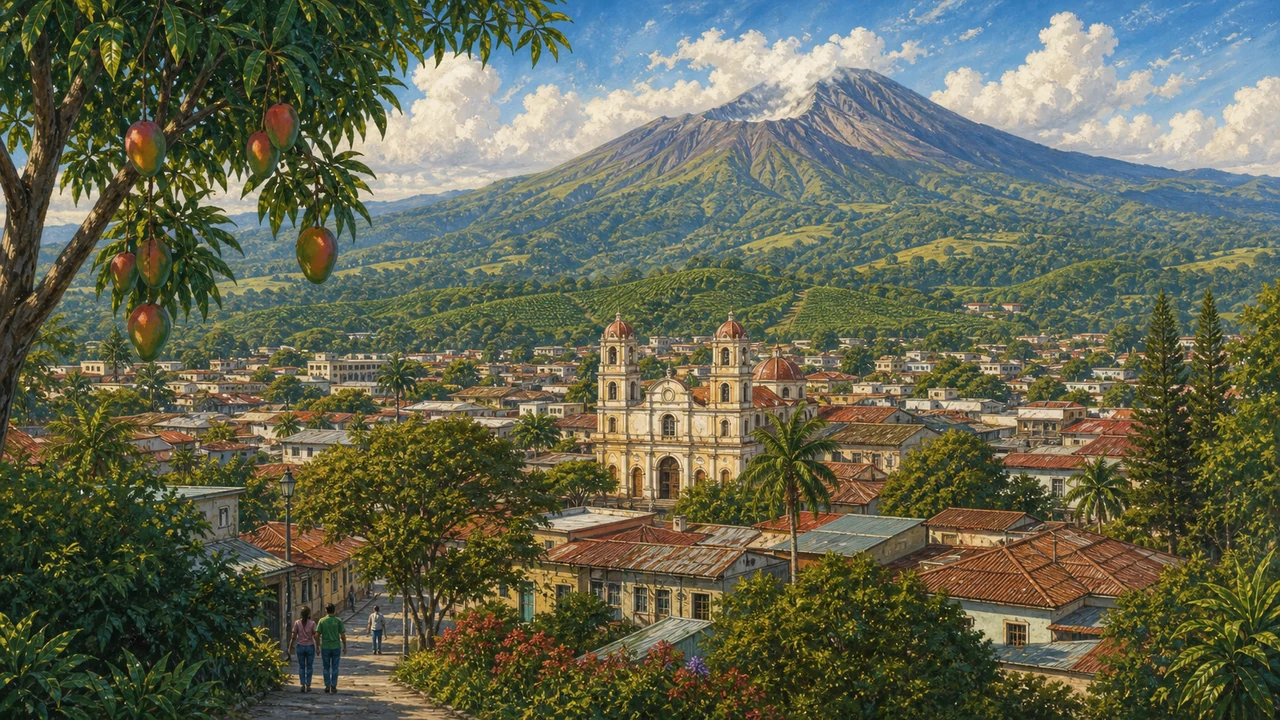 Alajuela province is Costa Rica’s gateway to adventure — the province where most international visitors first touch down, and one of the most rewarding destinations in the country in its own right. Stretching from the Central Valley highlands northward to the Nicaraguan border, it combines iconic volcanoes, colonial coffee towns, warm valleys, and a national hero’s legacy into a single compact province. Whether you arrive for a connecting day trip or linger for weeks, Alajuela rewards exploration at every level.
Juan Santamaría Airport: Your First Step in Costa Rica
For the vast majority of international travelers, Alajuela is where Costa Rica begins. Juan Santamaría International Airport (SJO), located just minutes from the provincial capital, is the country’s busiest and best-connected air hub, handling flights from North America, Europe, and beyond. See the full Juan Santamaría International Airport guide for terminal details, ground transportation, and tips for a smooth arrival.
The city of Alajuela itself sits at a pleasant elevation that keeps temperatures mild and comfortable year-round — noticeably cooler than San José’s coastal lowlands and yet accessible within minutes of the airport. Many travelers choose to spend their first or last night here rather than in the capital, enjoying the walkable parque central, local sodas, and the famous mango trees that earned the province its nickname: “The Land of Mangoes.”
Juan Santamaría: Costa Rica’s National Hero
 Alajuela gave Costa Rica its most celebrated national hero. Juan Santamaría was a teenage drummer boy from the city who volunteered during the Campaign of 1856, when the American filibuster William Walker threatened to dominate Central America. At the Battle of Rivas in present-day Nicaragua, Santamaría ran forward under fire to set the enemy’s fortified building ablaze, turning the tide of the battle. He lost his life in the act.
Costa Rica abolished its army in 1948, yet it honors Santamaría as proof that courage and civic duty — not military might — define the national character. April 11th is Juan Santamaría Day, a national holiday celebrated with particular pride in Alajuela. The provincial museum dedicated to him sits in the city center and is a worthwhile stop before or after your flight.
Arenal Volcano and La Fortuna
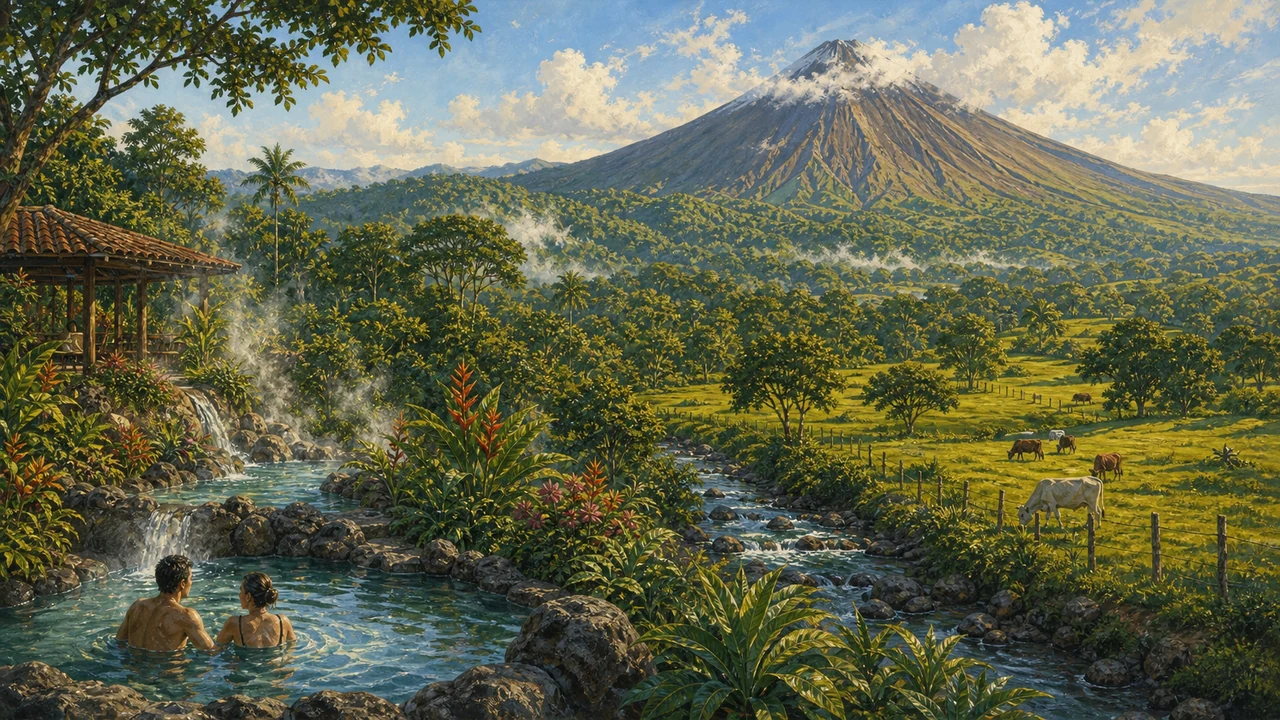 In the northern reaches of Alajuela province, Arenal Volcano rises in a near-perfect cone above the lush lowlands of the San Carlos canton — one of the most photogenic sights in all of Costa Rica’s volcanoes. The town of La Fortuna de San Carlos, just a few kilometers from the volcano’s base, has grown into one of the country’s top adventure hubs.
From La Fortuna you can:
- Soak in natural hot springs fed by geothermal heat from the volcano — the region has numerous options from rustic riverside pools to full-service resort spas.
- Zip-line over rainforest canopy and take hanging bridges through the cloud forest.
- Whitewater raft the Sarapiquí or Toro rivers on day trips.
- Kayak or take a boat tour of the broad Arenal Lake.
- Hike the lava fields and jungle trails of Arenal Volcano National Park.
The adventure activities in the Arenal region are extensive enough to fill a week. The adventure activities in the Arenal region page covers the full menu. Check Costa Rica travel tips for logistics on getting there from the airport.
Poás Volcano: A Crater You Can Actually See
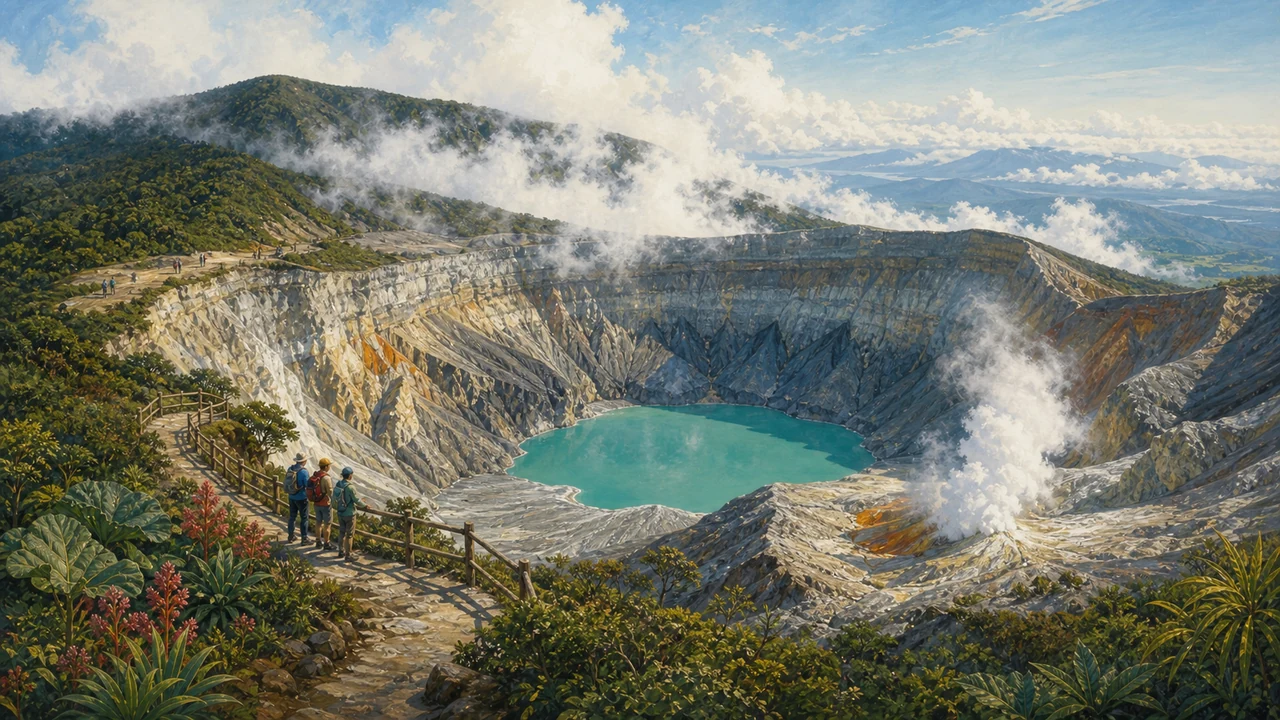 Closer to Alajuela city — roughly an hour’s drive up a scenic highland road — Poás Volcano is one of the most accessible active craters in the world. The main crater is among the largest of its kind, often filled with a turquoise sulfurous lake and plumes of steam that billow through the surrounding cloud forest.
Visiting Poás Volcano National Park requires advance reservations through the SINAC online system; timed entry keeps the experience uncrowded. The paved trail to the crater rim is short and manageable for most fitness levels, though conditions at the top can shift quickly — bring a layer and be prepared for cool, misty weather even on sunny lowland days. Nearby, the Laguna Botos (a dormant vent filled with cold water) offers another short hike through cloud-forest habitat.
The flanks of Poás are covered in strawberry farms, dairy operations, and botanical gardens, all benefiting from the rich volcanic soil — a reminder of how productive Alajuela’s highlands truly are.
Coffee Towns: Atenas, Grecia, Sarchí, and Zarcero
The western highlands of Alajuela province shelter a string of small towns beloved for their colonial churches, artisan traditions, and fertile coffee-growing valleys. All are easy day trips from Alajuela city or San José, and together they form one of Costa Rica’s most charming cultural circuits.
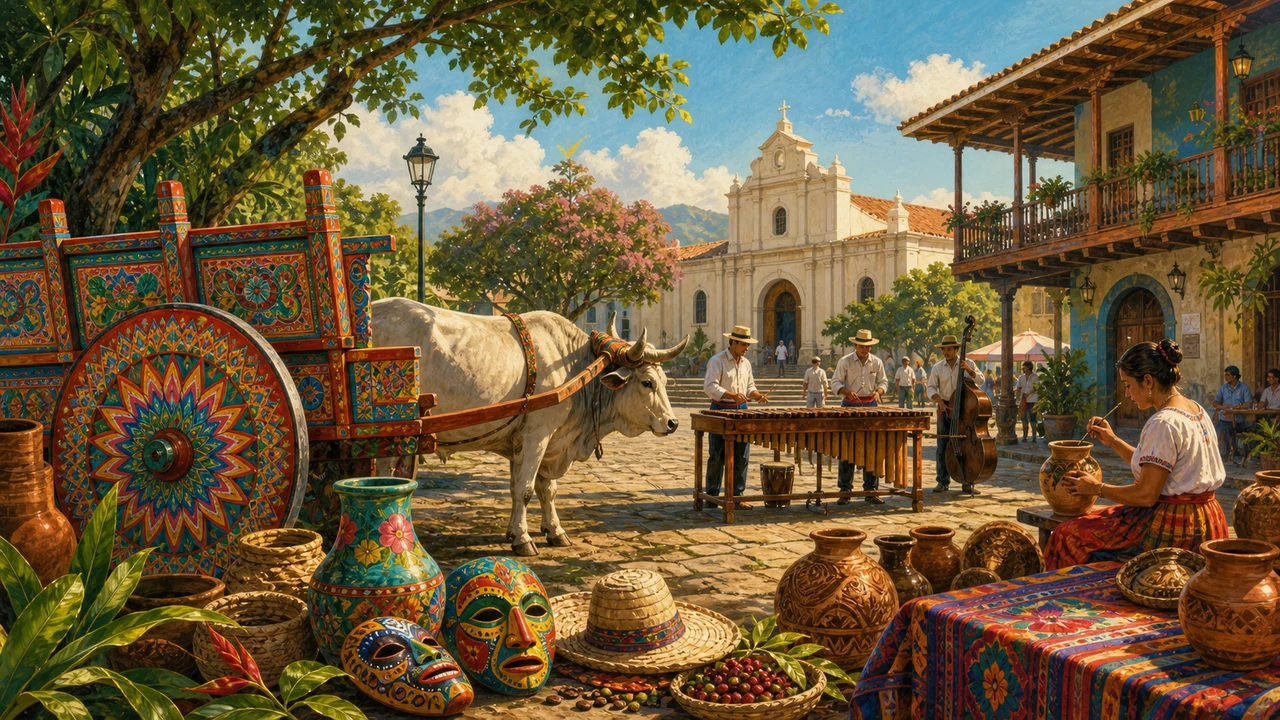
Exploring the artisan workshops of Sarchí is a highlight for many visitors — the town is the birthplace of the painted oxcart, Costa Rica’s national symbol of labor and craftsmanship. Workshops throughout the village sell hand-painted carts, furniture, and wooden crafts direct from the artisans. Grecia, a short drive away, is often cited as one of the most beautiful towns in the country, centered on its striking red metal church imported from Belgium in the 19th century.
Zarcero, higher still in the mountains, surprises visitors with a park fronting its church filled with fantastically shaped topiary — cypress hedges sculpted into animals, arches, and abstract forms by the same family for decades. Atenas, lower and warmer, is famous for having some of the most consistently pleasant weather in all of Central America and sits at the heart of productive mango and coffee country.
For the full story of Costa Rica’s coffee culture and how to visit working farms, see the Costa Rica coffee section.
Planning Your Visit to Alajuela
Alajuela province works well as the anchor of any Costa Rica itinerary. The provincial capital handles arrivals and departures with ease, and the strategic location — midway between the Pacific coast and the Caribbean lowlands — means you can reach virtually anywhere in the country in a half-day’s drive.
A few planning pointers:
- Dry season (December–April) brings the clearest skies and easiest road conditions in most of the province; green season (May–November) turns the highlands lush, keeps crowds thinner, and often costs less.
- The drive from the airport to La Fortuna traverses the mountains and can be slow on rainy evenings — plan daylight travel when possible.
- Poás Volcano access can be temporarily closed due to volcanic activity; always check current conditions through official park channels before heading up.
- Alajuela city is generally safe and walkable around the central park area; standard urban precautions apply, as they do throughout Costa Rica.
If you are thinking beyond tourism, Alajuela real estate is also covered on this site — the province attracts many expats drawn by the climate, airport convenience, and quality of life.
For a broader overview of the country’s provinces, ecotourism & nature experiences, and what makes the country unique, explore our why visit Costa Rica guide.
Frequently asked questions
Which airport serves Alajuela and the greater San José area?
Juan Santamaría International Airport (SJO) sits just outside Alajuela city and is Costa Rica's main international gateway. Most international flights arrive here, making Alajuela the first province most visitors set foot in.
Is Arenal Volcano in Alajuela province?
Yes. Arenal Volcano and the resort town of La Fortuna are both located in the northern sector of Alajuela province, within the Canton of San Carlos. The area is roughly a 2.5 to 3-hour drive from the capital.
Can you drive up to Poás Volcano?
You can drive or take a shuttle to the Poás Volcano National Park entrance, where a short paved trail leads to one of the world's largest accessible volcanic craters. Check current park-access conditions before visiting, as activity levels affect entry.
What are the best coffee towns to visit in Alajuela?
Atenas, Grecia, Sarchí, and Zarcero are all easy day trips from Alajuela city. Sarchí is famous for painted oxcarts and artisan workshops; Zarcero is known for its topiary gardens; Atenas and Grecia for fertile coffee and fruit valleys.
Who was Juan Santamaría and why is he important?
Juan Santamaría was a young Alajuelense drummer boy who became Costa Rica's national hero during the Battle of Rivas in 1856. He set fire to a building held by William Walker's filibuster forces, halting the invasion. His story is central to Costa Rican national identity.