Costa Rica Country Facts: Quick Reference for Visitors
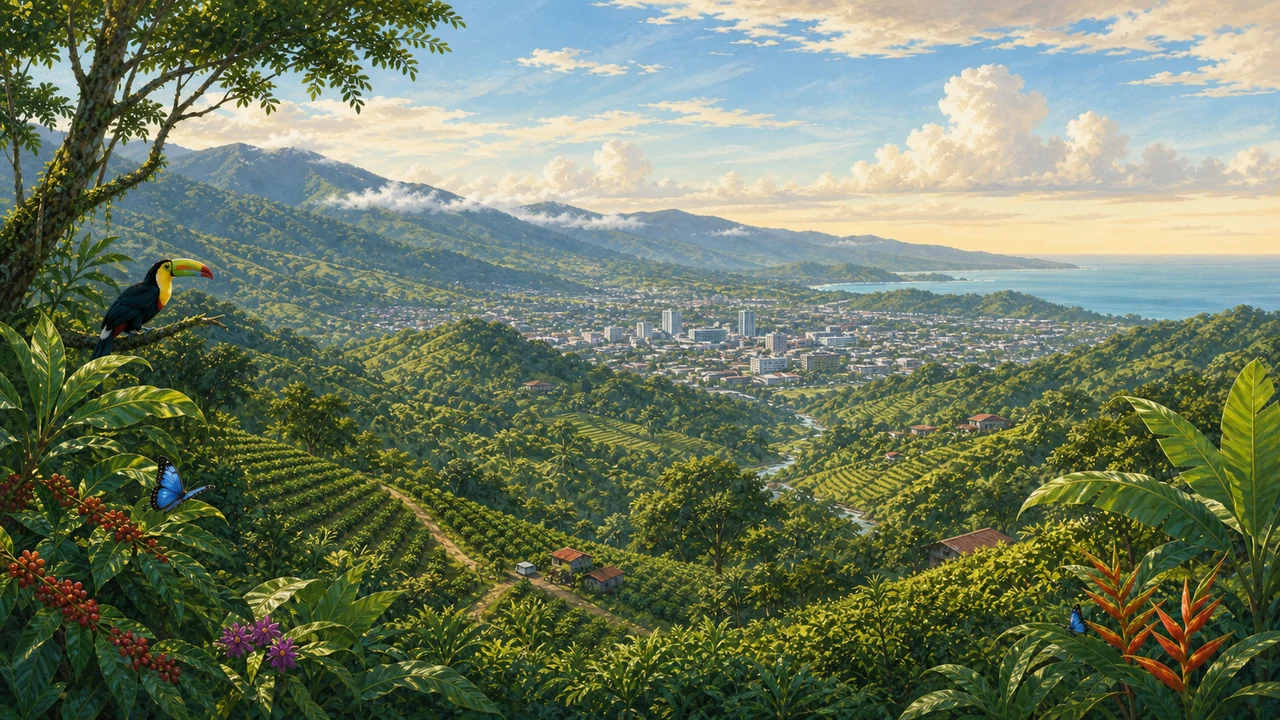 Costa Rica is a small Central American republic that punches well above its size — roughly 51,100 square kilometers of territory containing nearly 5% of the world’s biodiversity. Wedged between Nicaragua to the north and Panama to the south, it borders both the Pacific Ocean and the Caribbean Sea, giving it two distinct coastlines, wildly different climates, and an extraordinary range of landscapes. For visitors planning a trip, a quick grasp of Costa Rica’s essential country facts — location, size, government, language, money, and time — makes everything from airport arrivals to daily logistics much smoother.
At a Glance: The Quick-Reference Card
Here are the hard facts you will reach for most often before and during your trip:
| Detail | Information |
|---|---|
| Official name | República de Costa Rica |
| Capital | San José |
| Official language | Spanish |
| Area | 51,100 km² (~19,730 sq mi) |
| Population | Approximately 5.2 million |
| Government | Democratic republic |
| Currency | Costa Rican colón (CRC) |
| Time zone | UTC −6 (CST, no daylight saving) |
| Calling code | +506 |
| Internet domain | .cr |
| Independence | September 15, 1821 (from Spain) |
| Emergency number | 911 |
Costa Rica gained independence from Spain on September 15, 1821 — a date shared with several other Central American nations and celebrated annually as a national holiday. The country has been a stable, elected democracy ever since, with a president serving a single four-year term and a unicameral Legislative Assembly of 57 deputies.
Location and Geography
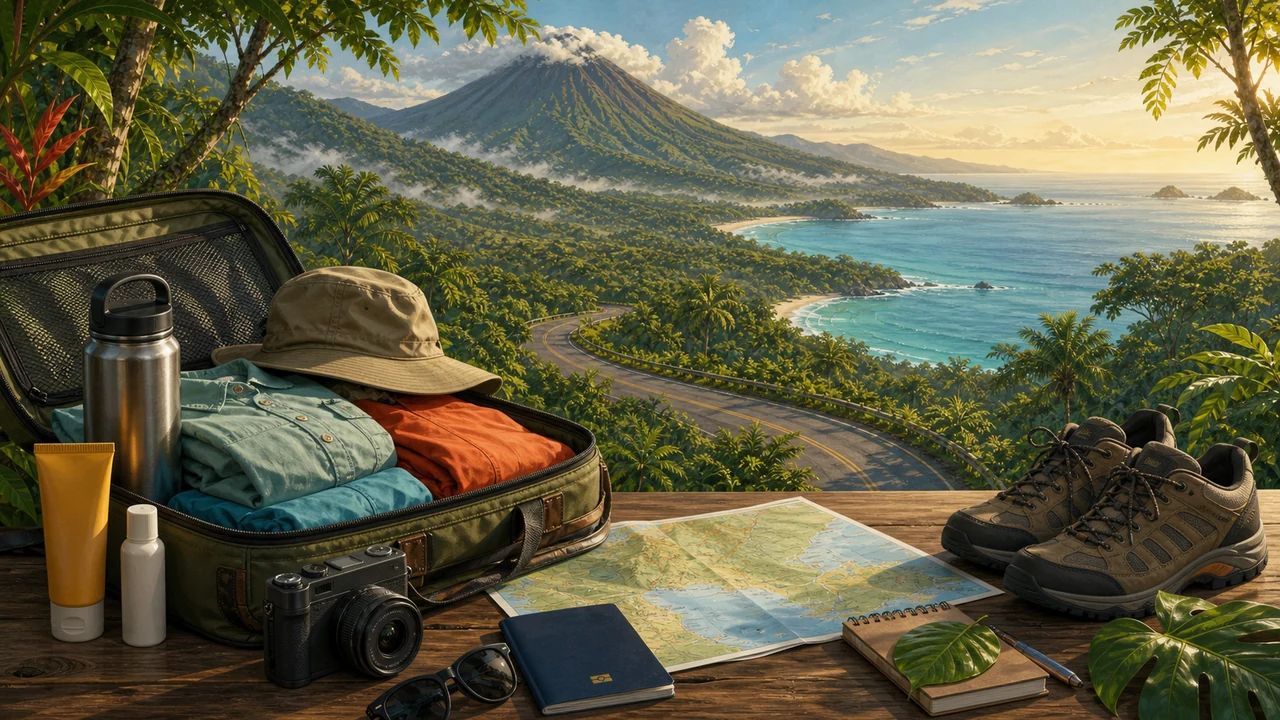 Costa Rica’s geographic position in Central America places it squarely in the tropics, between approximately 8° and 11° North latitude. Nicaragua borders it to the north; Panama borders it to the southeast. The Pacific coast stretches more than 1,000 km and is marked by the Nicoya and Osa peninsulas, sweeping gulf bays, and some of the country’s most famous beaches. The Caribbean coast is shorter but equally rich, fronting the warm waters that lap against Cahuita, Puerto Viejo, and Tortuguero National Park.
Running down the center of the country is the Cordillera Central and the Cordillera de Talamanca — a volcanic spine that creates the cool, fertile Central Valley where most of the population lives. Costa Rica’s volcanoes include several active peaks: Poás, Irazú, Turrialba, and Arenal are the best-known. The Talamanca range in the south rises to Chirripó, the highest point in the country at 3,821 meters (12,536 feet).
Capital: San José
San José is the heart of everything official — government ministries, international banks, embassies, and the country’s largest hospitals are all concentrated in or near the city. For travelers, San José is most often an arrival and departure point: Juan Santamaría International Airport (SJO) sits in nearby Alajuela, about 20 minutes from the city center in light traffic. The metro area spreads across the Central Valley, encompassing the neighboring cities of Alajuela, Heredia, and Cartago.
Those flying into Guanacaste bypass San José entirely, arriving instead at Daniel Oduber International Airport (LIR) in Liberia — a major convenience for visitors heading to the North Pacific beaches.
Government and Political System
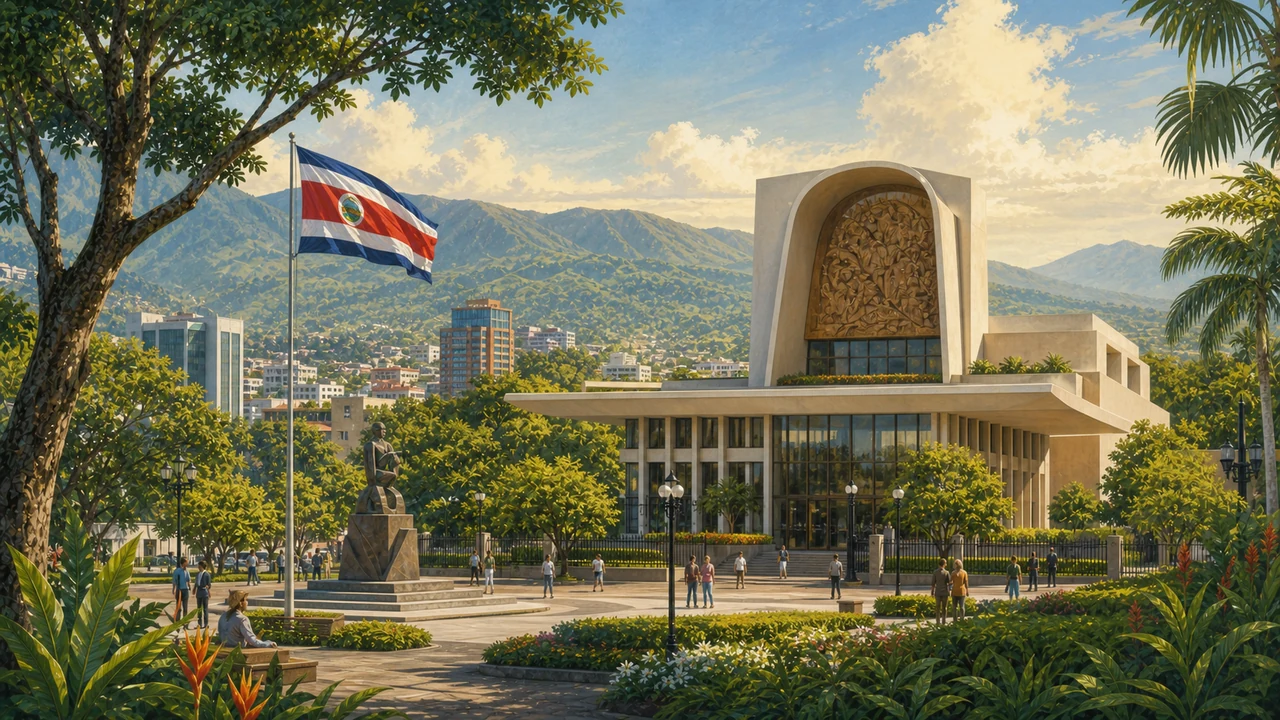 Costa Rica is a presidential democratic republic with three independent branches: executive, legislative, and judicial. The president is both head of state and head of government, elected by popular vote for a single four-year term (re-election is not permitted consecutively, though it is allowed after sitting out a term). The constitution prohibits the president from serving more than two terms total.
One of the country’s proudest distinctions: Costa Rica abolished its standing army in 1948, under President José Figueres Ferrer. The decision was written into the constitution the following year, and the army has never returned. The country redirected those resources into education and healthcare — a choice widely credited for Costa Rica’s high literacy rate and life expectancy relative to regional peers. The Nicoya Peninsula is recognized as one of the world’s Blue Zones, where residents regularly live past 100.
Costa Rica is widely regarded as the oldest continuous democracy in Latin America, with free elections held without interruption since 1949. Learn more in the about Costa Rica section.
Language, People, and Culture
Spanish is the official and dominant language, spoken with a notably neutral, clear accent that learners often find easy to follow. Ticos — the affectionate term Costa Ricans use for themselves — are generally warm, patient with visitors attempting Spanish, and proud of their national character, summed up in the phrase pura vida (“pure life”), which doubles as greeting, farewell, thank-you, and general expression of contentment.
The population is approximately 5.2 million, with the majority living in the Central Valley. The Caribbean coast has a distinct Afro-Caribbean community with deep Jamaican cultural roots, where English Creole is widely spoken alongside Spanish. Indigenous communities, including the Bribri and Cabécar, maintain traditional lands and cultures in the Talamanca mountains.
Currency and Money
The Costa Rican colón (CRC) is the official currency, named after Christopher Columbus (Cristóbal Colón in Spanish). US dollars are accepted virtually everywhere tourists go — hotels, tour operators, car rental agencies, and most restaurants in tourist zones quote prices in USD. However, local buses, markets, and smaller sodas (family-run restaurants) deal in colones.
ATMs dispensing both colones and US dollars are found in all major towns and at both international airports. Credit cards are widely accepted at mid-range and upscale establishments. Check the current exchange rate before traveling — it fluctuates, and carrying some local currency for smaller purchases is always practical. See Costa Rica travel tips for money-handling guidance.
Climate and Time Zone
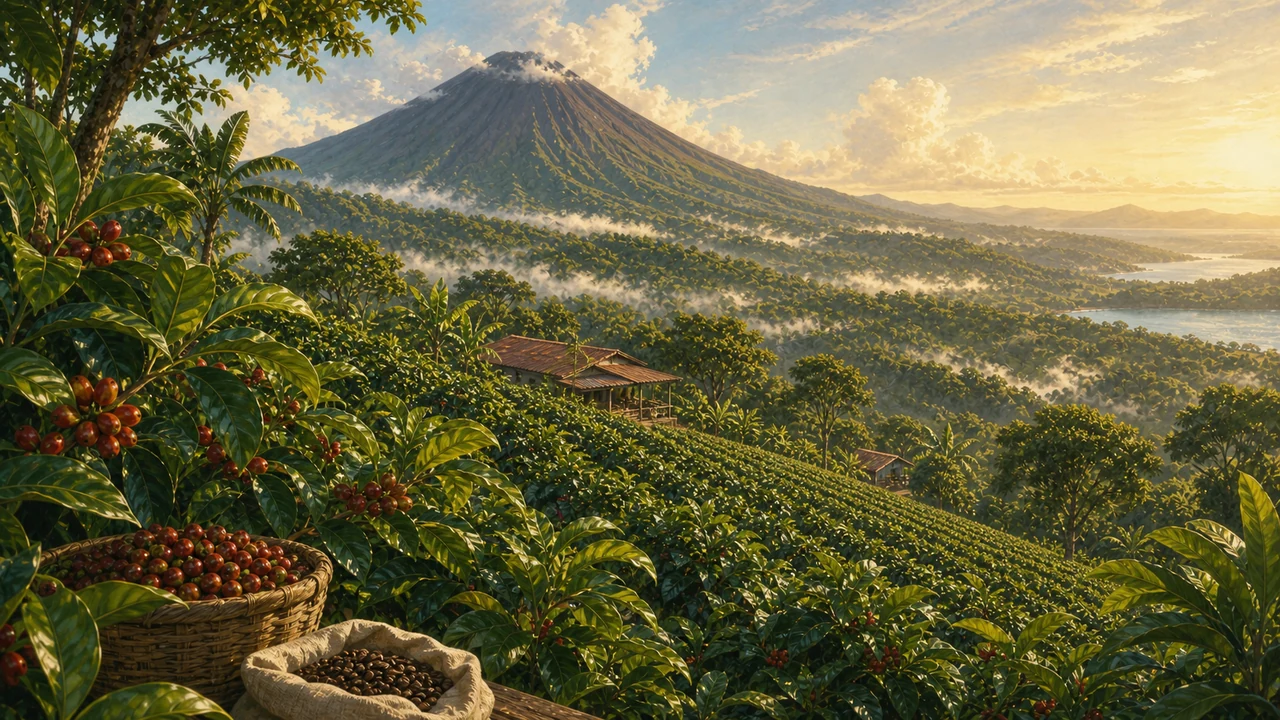 Costa Rica sits entirely in the tropics, but the country’s climate varies dramatically by altitude and coast rather than by traditional seasons. The country does not have summer and winter in the temperate sense; it has a dry season (roughly December through April) and a green/rainy season (May through November), with the Caribbean coast following a somewhat different, wetter pattern year-round.
The Central Valley at San José averages 22–24°C (72–75°F) year-round — famously mild. Coastal areas are hot and humid, often 30–35°C (86–95°F). The mountains can be genuinely cold, especially at night near Chirripó and the cloud forests of Monteverde.
Costa Rica does not observe daylight saving time. The country stays on UTC −6 (Central Standard Time) all year. During North American standard time periods, Costa Rica matches the US Central time zone; during North American daylight saving periods, it is one hour behind. This simplifies scheduling when coordinating with family back home.
Protected Areas and Natural Heritage
More than 25% of Costa Rica’s territory is protected as national parks, wildlife refuges, and biological reserves. The country holds approximately 5% of the world’s biodiversity in that relatively small area — one of the highest ratios on Earth. This is the foundation of Costa Rica’s global reputation for ecotourism and nature travel.
Why visit Costa Rica? For many travelers, the answer comes down to this combination: stable democracy, modern infrastructure, remarkable biodiversity, two coasts, no army, and a culture of hospitality that makes visitors feel genuinely welcome. It is a small country with an outsized personality.
Frequently asked questions
What is the capital of Costa Rica?
San José is the capital and largest city of Costa Rica. It sits in the Central Valley at roughly 1,170 meters (3,840 feet) above sea level and serves as the country's political, cultural, and commercial hub.
What currency is used in Costa Rica?
The official currency is the Costa Rican colón (CRC). US dollars are widely accepted at hotels, restaurants, and tourist businesses throughout the country, though paying in colones usually gives you a better effective rate at smaller establishments.
What language is spoken in Costa Rica?
Spanish is the official language. In tourist areas, English is spoken widely. The Caribbean coast has communities where English Creole is also spoken.
What time zone is Costa Rica in?
Costa Rica operates on Central Standard Time (CST), UTC −6, year-round. The country does not observe daylight saving time, so the offset relative to North American cities shifts by one hour depending on the time of year in those locations.
What is the calling code for Costa Rica?
Costa Rica's international dialing code is +506. Phone numbers in Costa Rica are eight digits long, with no area codes.