Cartago Province: Colonial Capital & Natural Wonders
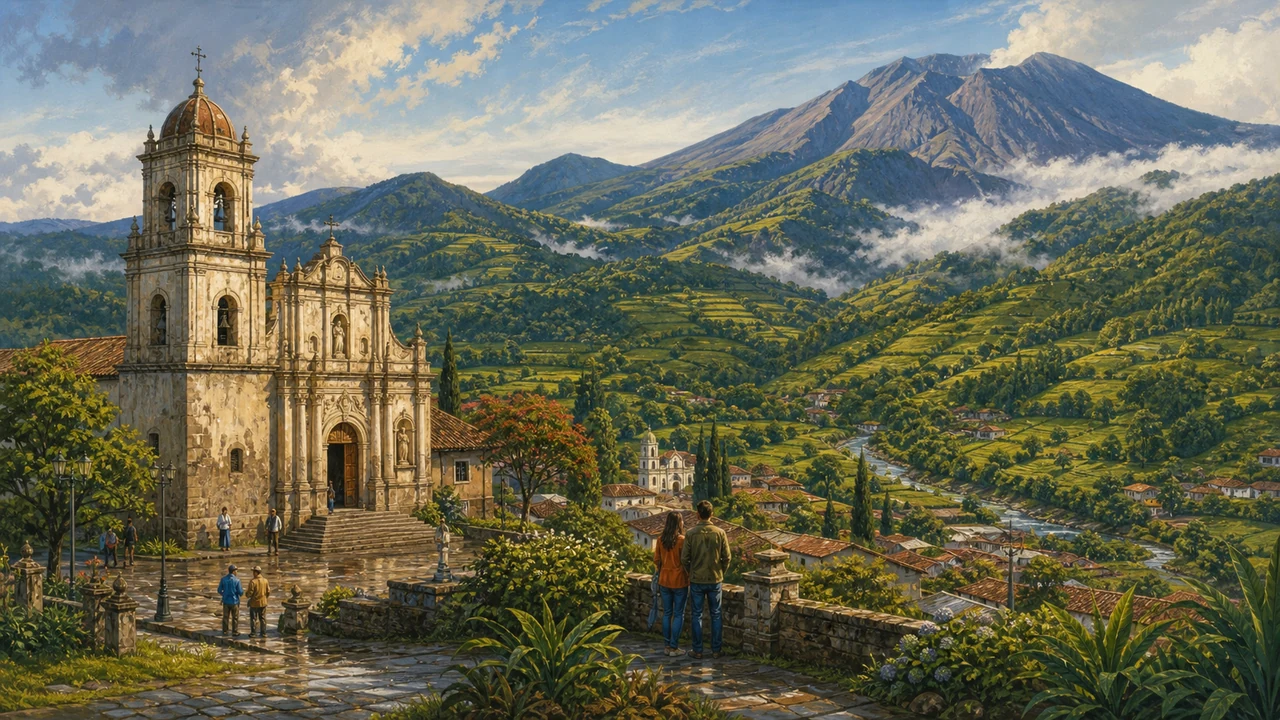 Cartago province is Costa Rica’s cradle of history — the colonial capital that shaped the nation for more than two centuries and a highland landscape of active volcanoes, sacred shrines, mist-covered valleys, and wild rivers. Compact yet varied, Cartago packs extraordinary diversity into a relatively small area southeast of San José, making it one of the most rewarding provinces for visitors who want history, nature, and adventure in a single itinerary.
The City of Cartago: Costa Rica’s Colonial Capital
Founded in 1563 by Juan Vásquez de Coronado, Cartago served as the capital of Costa Rica until 1823, when the seat of government shifted to San José. A series of devastating earthquakes erased most of the colonial architecture that once defined the city, leaving a townscape that is quieter and more provincial than the bustling capital just 25 km to the west.
The city’s most famous landmark is the Basílica de Los Ángeles pilgrimage to La Negrita, Costa Rica’s most important religious site. The basilica was built to honor a small stone image of the Virgin — known affectionately as La Negrita — said to have been discovered on the site in 1635. Every August 2nd, hundreds of thousands of Ticos make an overnight foot pilgrimage from San José to the basilica, a tradition of faith and national identity unlike anything else in Central America.
Near the city center you will find the ruins of the Santiago Apostol Parish, destroyed by the 1910 earthquake and never rebuilt. The roofless stone walls now enclose a peaceful public garden, an evocative reminder of Cartago’s long and turbulent history.
Irazú Volcano: Highest Active Volcano in Costa Rica
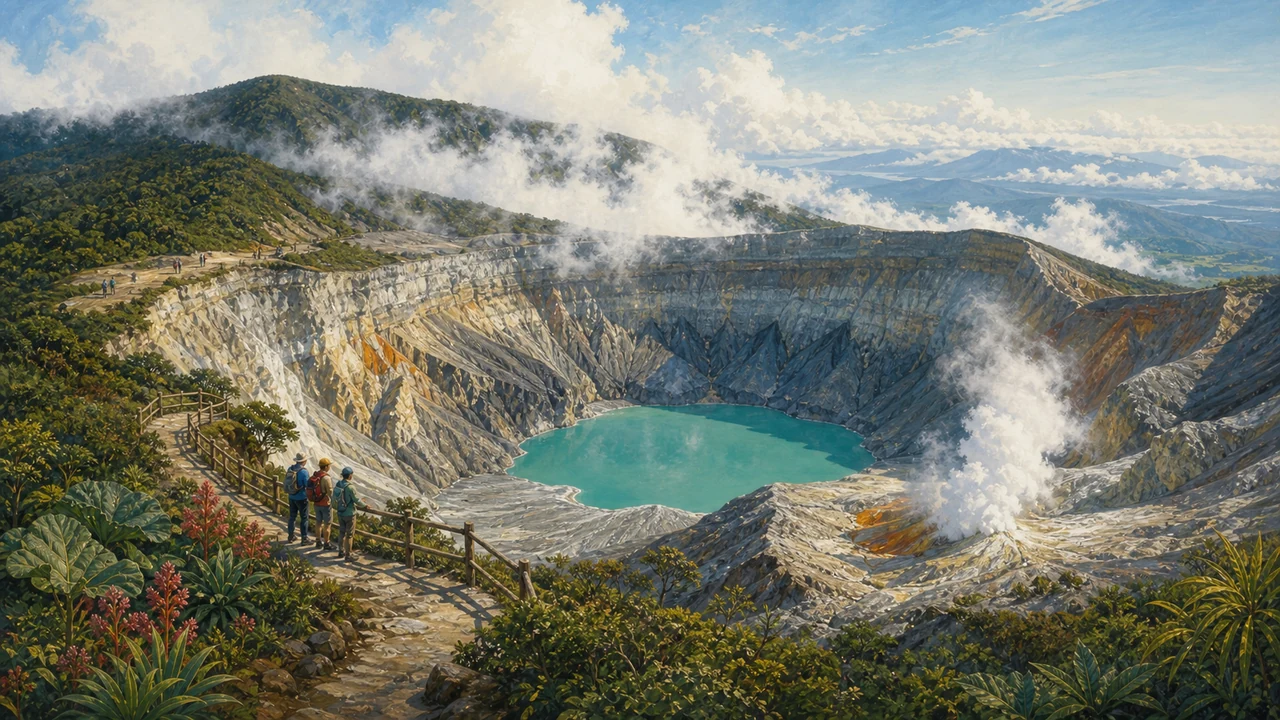 Rising to 3,432 meters above sea level, Irazú Volcano is the highest active volcano in Costa Rica and one of the most accessible in all of Central America. A paved road climbs almost to the summit, making it possible to drive up from Cartago city in under an hour. The crater zone features five craters, the largest of which holds a striking jade-green acidic lake that shifts color with temperature and light.
On exceptionally clear mornings — most common during the dry season — visitors standing at the crater rim can see both the Pacific Ocean and the Caribbean Sea simultaneously, a rare geographic spectacle. The surrounding national park protects cloud forest and paramo vegetation adapted to the cold, wind-swept conditions of the upper slopes.
Visiting Irazú Volcano National Park is best done in the morning before clouds typically build. The summit is cool year-round, so bring a jacket regardless of the season. For more on Costa Rica’s volcanoes, including the full network of peaks along the Central Volcanic Range, see the dedicated volcanoes section.
Orosi Valley and Lankester Gardens
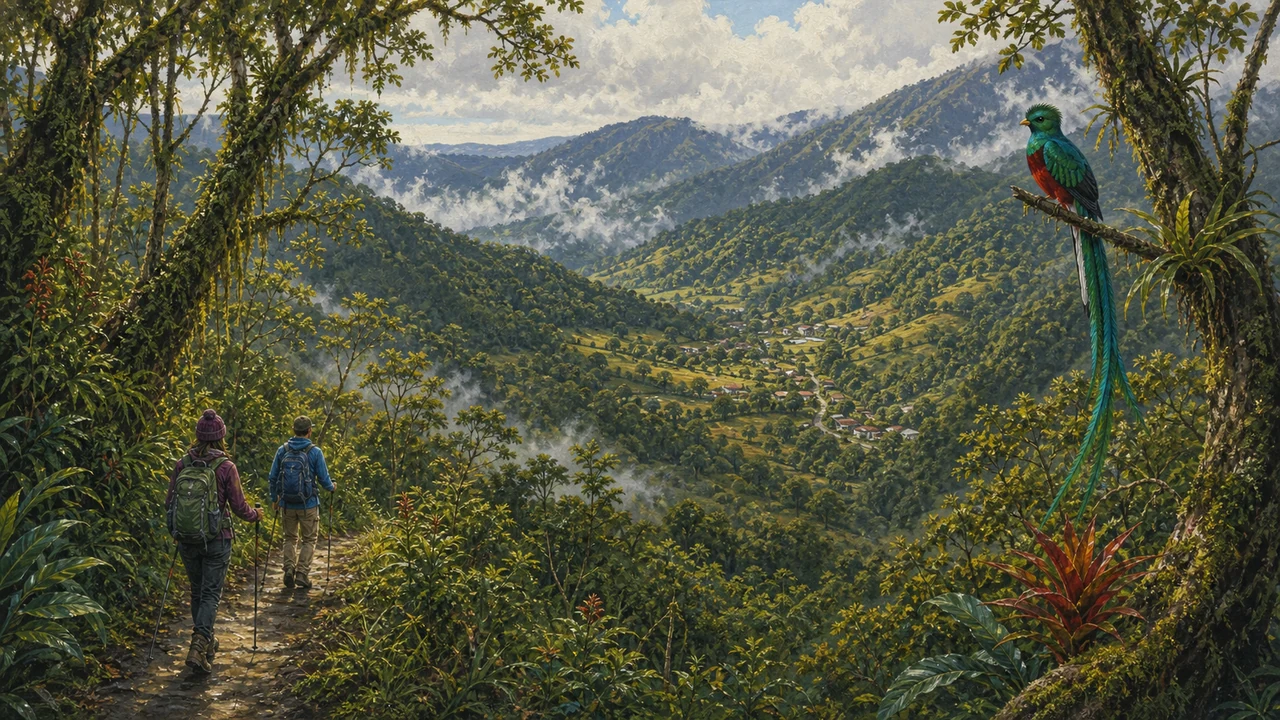 Roughly 30 km southeast of Cartago city, the Orosi Valley is one of the loveliest corners of the Central Valley — a patchwork of coffee and macadamia farms rolling down steep hillsides to the broad Reventazón River reservoir (Lake Cachí). The valley’s centerpiece is the Orosi Church, built around 1743 and one of the oldest colonial churches still in use in Central America. Its attached museum holds a small but significant collection of religious art and artifacts from the colonial period.
The valley also contains natural hot springs fed by geothermal activity linked to Irazú. A dip in the open-air pools after a volcano hike is a quintessential Cartago experience.
For plant lovers, Lankester Botanical Gardens — managed by the University of Costa Rica and located just outside the town of Paraíso — is one of the finest orchid collections in the Americas. More than 800 orchid species bloom across the grounds alongside heliconias, bromeliads, and towering trees. The best time to visit Lankester Gardens for orchid blooms is generally February through April when peak flowering occurs.
Turrialba: Whitewater Capital and Gateway to Adventure
 The town of Turrialba, in the eastern corner of Cartago province, sits at a lower and warmer elevation than the rest of the province and serves as the launch point for some of Costa Rica’s most celebrated adventure tourism.
The Pacuare River — which originates on the slopes of the Talamanca mountains and tumbles toward the Caribbean — is widely regarded as one of the top whitewater rafting rivers in Latin America, featuring Class III–IV rapids through deep jungle canyons with no roads in sight. Overnight multi-day rafting expeditions on the Pacuare are a bucket-list experience. The Reventazón River offers a range of difficulty levels and is ideal for those newer to whitewater. For more on Costa Rica activities and sports, including the full whitewater rafting options, the activities section covers all regions.
Near Turrialba, the CATIE Tropical Agricultural Research and Higher Education Center maintains extensive botanical grounds and experimental gardens open to visitors — an underrated stop for those interested in tropical agriculture, cacao, and biodiversity science.
Turrialba Volcano, northeast of the town, has been intermittently active in recent years with ash emissions; check current park status before planning a visit, as access can be restricted.
Guayabo National Monument: Ancient Voices
About 19 km north of Turrialba, the Guayabo National Monument protects the largest pre-Columbian archaeological site found in Costa Rica. Ancient cultures occupied this site from roughly 1000 BC to AD 1400, constructing an elaborate settlement with stone-paved roads, a gravity-fed aqueduct system that still functions today, circular mounds, plazas, and ceremonial structures.
Walking the forested trails of Guayabo offers a rare window into pre-Columbian life in Costa Rica — a civilization that built sophisticated infrastructure centuries before European arrival. The surrounding forest also rewards birdwatchers, with mixed flocks and a resident population of colorful species along the trails.
Planning Your Visit to Cartago Province
Cartago’s climate ranges from cool and occasionally misty near the volcano summits to warm and tropical in the lower Turrialba valley. The Central Valley portion of the province (Cartago city, Orosi, Paraíso) enjoys a pleasant temperate climate year-round, generally cooler than San José.
The province is easily reached from the capital — Cartago city is about a 45-minute drive from San José — making it well-suited to day trips or a short overnight. Accommodation options are growing, particularly in Turrialba, which has a well-developed tourism infrastructure around rafting and adventure activities.
Those considering a longer stay or investment in this culturally rich, geographically diverse region can explore Cartago real estate for property options ranging from highland farms to valley homes. For broader context on Costa Rica’s provinces and regions, including neighboring Heredia and Alajuela, the regional guides provide useful overviews.
For practical matters — entry requirements, getting around, safety — the Costa Rica travel tips page covers the essentials. Cartago rewards the curious traveler: it is simultaneously the country’s oldest chapter and one of its most dynamic natural playgrounds.
Frequently asked questions
What is the Basílica de Los Ángeles known for?
The Basílica de Los Ángeles in Cartago city is Costa Rica's most important Catholic shrine, home to the revered statue of La Negrita (Our Lady of the Angels). Each August 2nd, hundreds of thousands of pilgrims walk from across the country to the basilica in a tradition that has continued for centuries.
Is Irazú Volcano open to visitors?
Yes. Irazú Volcano National Park is open to day visitors and is one of the most accessible active volcanoes in Costa Rica. At 3,432 meters above sea level it is the highest active volcano in the country. On a clear day visitors can see both the Pacific and Caribbean coasts from the summit crater rim.
What is the Orosi Valley like for visitors?
The Orosi Valley is a scenic highland valley about 30 km southeast of Cartago city, known for its coffee farms, hot springs, the colonial-era Orosi Church (one of the oldest in Central America), and Lankester Gardens botanical reserve. It makes an excellent half-day or full-day trip.
What whitewater rafting rivers are near Turrialba?
Turrialba is the rafting capital of Costa Rica, with the Pacuare River and the Reventazón River both nearby. The Pacuare is considered one of the best whitewater rivers in the Americas, with Class III–IV rapids through pristine rainforest gorges.
Where is Guayabo National Monument and why is it important?
Guayabo National Monument is located about 19 km north of Turrialba in Cartago province. It is the largest pre-Columbian archaeological site discovered in Costa Rica, featuring ancient stone roads, aqueducts, plazas, and ceremonial mounds built by cultures that occupied the site from roughly 1000 BC to AD 1400.