Costa Rica People & Society: Ticos, Culture & Identity
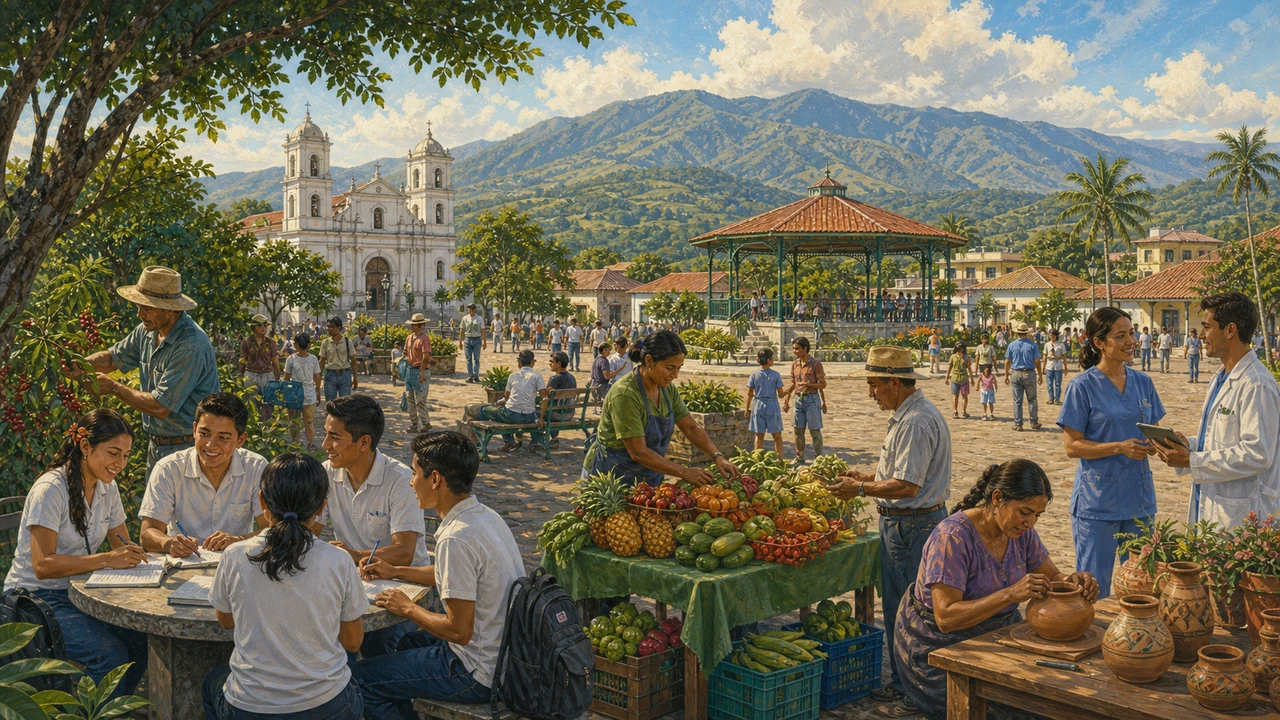 Costa Rica’s people — affectionately called Ticos — are the country’s most enduring attraction. Warm, peaceful, and quietly proud, they inhabit one of Latin America’s oldest and most stable democracies, and they will tell you so with a smile and the phrase that defines their worldview: pura vida. Understanding the Ticos and their society adds an entirely new dimension to any visit to this extraordinary country.
The Tico Spirit: Pura Vida and Democracy
Pura vida culture in everyday Costa Rican life is not a tourist slogan — it is a lived philosophy. The phrase crops up in conversation dozens of times a day: as a greeting, an agreement, a thank-you, a way of saying everything is fine even when it isn’t quite. It reflects a genuine disposition toward contentment, resilience, and communal goodwill that visitors notice immediately.
Costa Rica abolished its army in 1948 — a decision that remains a point of deep national pride. The budget once spent on a military has since flowed into education, healthcare, and public infrastructure, producing a quality of life that stands well above the Central American average. Costa Rica is recognized as the oldest continuous democracy in Latin America, and Ticos across all social classes share an attachment to civilian rule, free elections, and the rule of law. This democratic identity is a cornerstone of how Costa Ricans see themselves, and it shapes the remarkably relaxed social atmosphere that travelers find so refreshing.
Demographics and Population
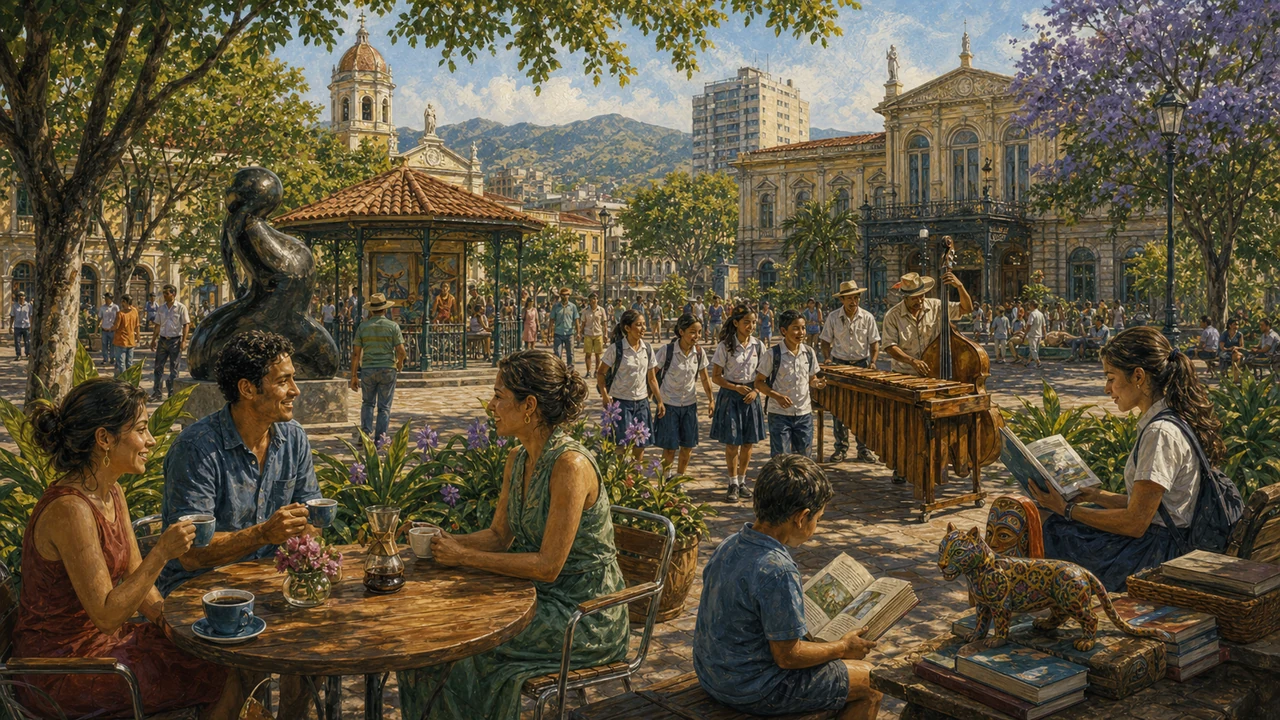 Costa Rica’s population is a mestizo-majority society, meaning most citizens descend from a blending of Spanish colonial settlers and pre-Columbian indigenous peoples. European ancestry — primarily Spanish — predominates in the Central Valley, where the capital San José and the provinces of Alajuela, Heredia, and Cartago are located.
The Caribbean coast, centered on Limón province, is home to a significant Afro-Costa Rican community whose ancestors arrived from Jamaica and other Caribbean islands during the nineteenth century, primarily to build the railway and work banana plantations. This community has enriched national culture with its own music, cuisine, English-Creole dialect, and religious traditions.
The ethnic and cultural diversity of Costa Rican society extends to Chinese-Costa Rican families (many descended from nineteenth-century laborers), a growing Nicaraguan immigrant community, and smaller European and North American expatriate populations, especially in the Central Valley and along the Pacific coast.
Explore the full picture in our section on Costa Rica Population & Ethnicities.
Indigenous Cultures: Ancient Roots, Living Traditions
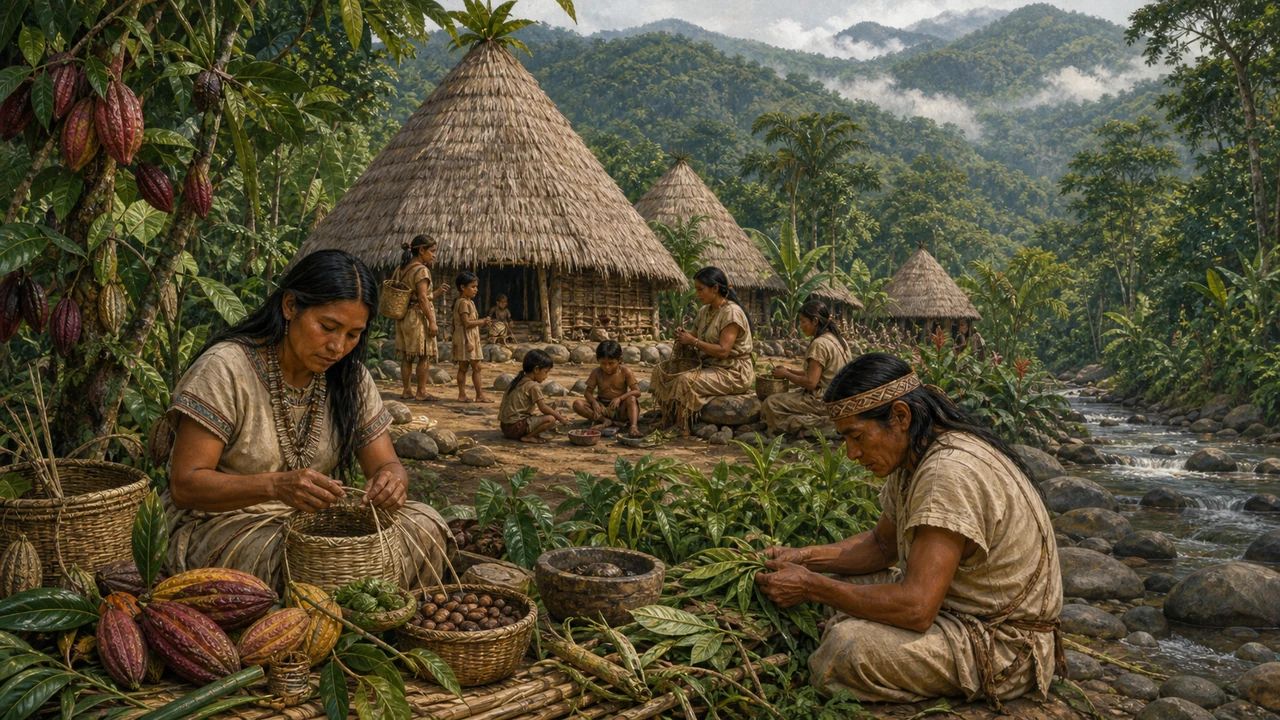 Long before Spanish colonizers arrived in the sixteenth century, the territory now called Costa Rica was home to diverse indigenous peoples with sophisticated cultures, trade networks, and ceremonial traditions. Today, several indigenous groups continue to maintain their identities, languages, and territorial reserves.
The Bribri and Cabécar communities of Costa Rica’s Talamanca highlands are among the largest and best-organized indigenous groups, maintaining matrilineal clan systems, traditional medicinal knowledge, and sacred ceremonial practices. The Boruca of the Southern Pacific are famous for their handcrafted wooden masks, used in the annual Fiesta de los Diablitos — a ritual that symbolizes indigenous resistance to colonial conquest. The Maleku of the northern lowlands and the Chorotega of Guanacaste round out a mosaic of pre-Columbian heritage that remains alive and meaningful.
Responsible cultural tourism now allows visitors to visit some indigenous communities, participate in craft workshops, and learn about traditional ecological knowledge. Dive deeper in our Costa Rica Indigenous Cultures section.
Language and Communication
Spanish is the official national language and is spoken throughout the country. Costa Rican Spanish as spoken by Ticos has a distinctive character: it tends to be clear, courteous, and at a moderate pace compared to some other Latin American varieties. A notable feature is the widespread use of the vos pronoun instead of tú, a form also common in Argentina and Uruguay.
English is the most widely spoken second language and is commonly used in tourist zones, major hotels, and among urban professionals. Along the Caribbean coast, an English-based Creole (sometimes called Mekatelyu or Limonese Creole) is part of daily life in Afro-Costa Rican communities. Several indigenous languages — including Bribri, Cabécar, and Maleku — are spoken within their respective communities, and preservation efforts are ongoing.
Learn more about the linguistic landscape in our Costa Rica Language section.
Religion and Spiritual Life
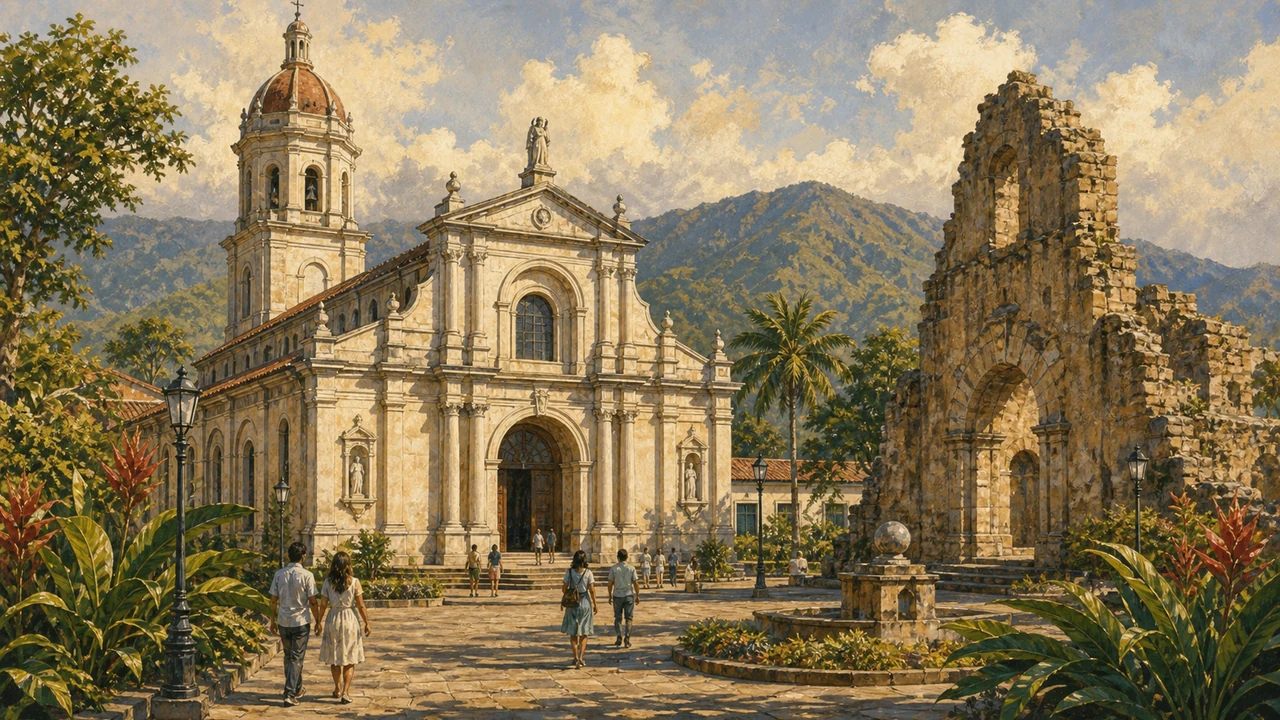 Roman Catholicism is the official state religion, and its influence shapes the national calendar, architecture, and many cultural traditions. Semana Santa (Holy Week) celebrations across Costa Rica are among the most deeply felt religious observances of the year — schools and many businesses close, and processions take place in towns and cities throughout the country.
Evangelical and Pentecostal Christianity have grown substantially in recent decades, particularly in working-class urban neighborhoods and rural areas. The country is constitutionally secular in practice, and freedom of worship is guaranteed. Smaller communities of Jehovah’s Witnesses, Mormons, Jews, and practitioners of indigenous spiritual traditions are also present.
The blending of Catholic tradition with folk beliefs — including veneration of the Virgen de los Ángeles, Costa Rica’s patron saint whose basilica stands in Cartago — gives popular Catholicism in Costa Rica a distinctive, deeply personal character.
Explore more in our Costa Rica Religion section.
Education: A National Priority
Costa Rica has long invested heavily in public education, and the results show. Literacy rates are among the highest in Central America, and the country maintains a robust public university system alongside numerous private institutions. Public education in Costa Rica has been free and compulsory since 1869 — one of the earliest such guarantees in the Americas — and education funding has traditionally been constitutionally protected.
The Universidad de Costa Rica (UCR), founded in 1940, is the country’s flagship public university and a center of research, arts, and professional training. Technical education through the INA (Instituto Nacional de Aprendizaje) and a network of regional colleges broadens access across the country.
This educated workforce and culture of learning have made Costa Rica an attractive base for technology companies, medical device manufacturers, and international organizations — and it underpins the country’s reputation as a destination for health tourism and specialized services.
See more in our Costa Rica Education section.
Identity, Icons, and National Pride
Costa Rican national identity is built on several pillars: peace, democracy, nature, and education. The traditional oxcart (carreta típica), colorfully hand-painted in geometric patterns, is one of the most recognized national symbols — a UNESCO-recognized cultural heritage of humanity. The Nicoya Peninsula Blue Zone, where residents routinely live past 100, speaks to the Tico emphasis on community, diet, and a measured pace of life.
Costa Rica has produced artists, writers, musicians, and athletes who have shaped national culture and earned international recognition. From Nobel Peace Prize laureate Óscar Arias Sánchez to celebrated painters, poets, and footballers, the country punches well above its weight in cultural output.
Discover the people who have shaped the nation in our sections on Costa Rica Identity and Costa Rica Figures & Icons.
Explore People & Society
This hub connects you to every dimension of Costa Rican social and cultural life:
- Costa Rica Identity — national character, values, and what makes Ticos unique
- Costa Rica Language — Spanish, Creole, indigenous languages, and communication tips
- Costa Rica Population & Ethnicities — demographics, mestizo heritage, Afro-Costa Rican culture, and more
- Costa Rica Indigenous Cultures — Bribri, Boruca, Cabécar, Maleku, Chorotega, and other ancestral communities
- Costa Rica Religion — Catholicism, Semana Santa, evangelicalism, and religious diversity
- Costa Rica Education — public schools, universities, and Costa Rica’s literacy legacy
- Costa Rica Figures & Icons — artists, leaders, athletes, and cultural heroes
For broader context on the country, visit Costa Rica General Information or start planning your trip with our travel tips.
Frequently asked questions
What does 'pura vida' mean in Costa Rica?
Pura vida literally translates to 'pure life,' but in Costa Rica it functions as a greeting, farewell, expression of gratitude, and all-around affirmation that life is good. You will hear it constantly and it captures the genuine optimism that characterizes Tico culture.
What language do Costa Ricans speak?
Spanish is the official language and is spoken by the vast majority of the population. English is widely understood in tourist areas, hotels, and among younger professionals. Indigenous communities maintain their own languages alongside Spanish.
What religion do most Costa Ricans practice?
Roman Catholicism is the official state religion and historically the most widely practiced faith. Evangelical Christianity has grown significantly in recent decades, and the country is generally tolerant of diverse beliefs.
Are Costa Ricans friendly to tourists?
Costa Ricans are widely regarded as among the friendliest people in Central America. The pura vida culture values warmth, hospitality, and helpfulness. Visitors are typically welcomed with genuine courtesy.
What are the indigenous cultures of Costa Rica?
Costa Rica is home to several indigenous groups including the Bribri, Cabécar, Boruca, Maleku, Ngäbe, Huetar, and Chorotega. Each group maintains distinct languages, traditions, and territorial reserves, primarily in the southern highlands and Caribbean lowlands.