Costa Rica Indigenous Cultures: Peoples, History & Travel
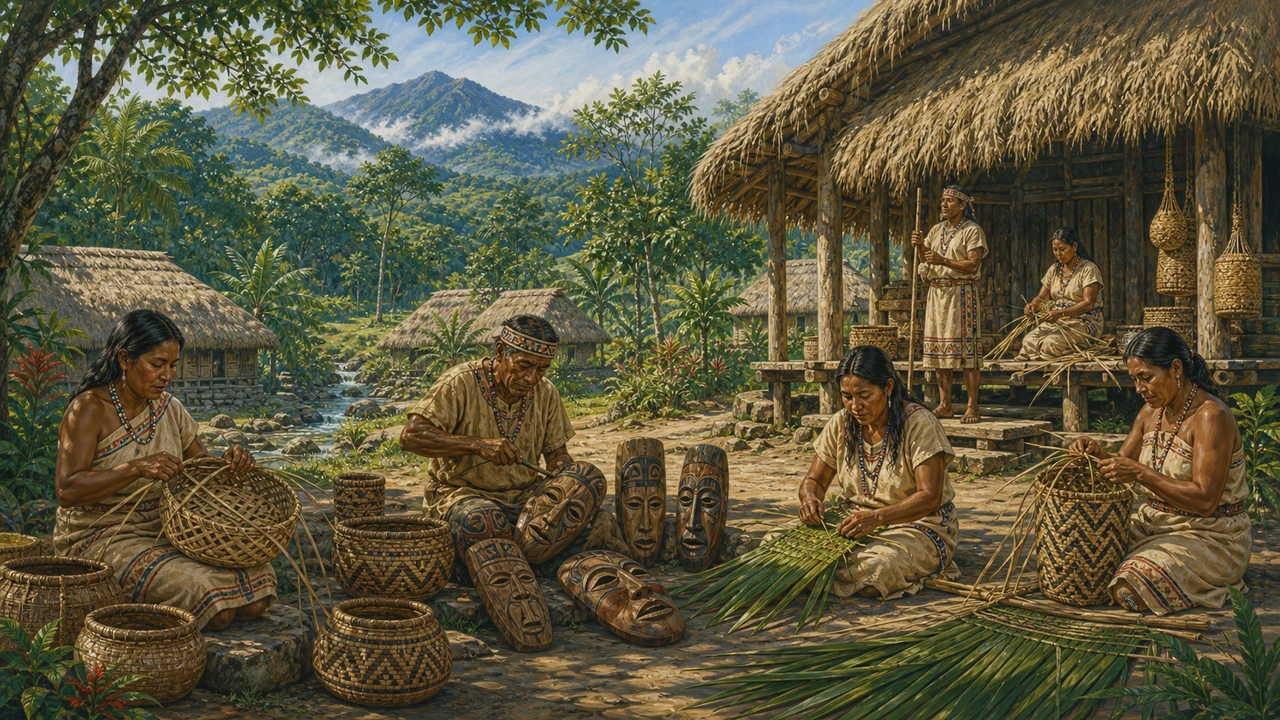
Costa Rica Indigenous cultures are not a footnote to the country’s history. They are living communities whose languages, territories, stories, foods, ceremonies, crafts, and ecological knowledge continue to shape Costa Rica today. Long before the country became known for beaches, national parks, coffee, and ecotourism, Indigenous peoples built trade networks across the isthmus, cultivated cacao and maize, produced ceramics, carved stone, worked gold and jade, and developed spiritual traditions rooted in mountains, rivers, forests, animals, and ancestors.
For travelers, learning about Costa Rica Indigenous cultures adds depth to the entire country. Place names such as Talamanca, Arenal, Poas, Barva, Nicoya, and Guanacaste carry older linguistic layers. The country’s best museums preserve pre-Columbian gold, jade, pottery, and stone spheres. The Caribbean and southern highlands are still home to Bribri and Cabecar communities whose knowledge of cacao, medicinal plants, and rainforest stewardship is central to responsible cultural tourism. Guanacaste’s famous ceramics carry Chorotega heritage, while Boruca masks from the southern Pacific have become some of Costa Rica’s most recognizable works of folk art.
This page is a hub for understanding the broader story. For a detailed profile of each people, continue to the guide to the Indigenous peoples of Costa Rica.
Indigenous Peoples of Costa Rica Today
Costa Rica officially recognizes eight living Indigenous peoples: Bribri, Cabecar, Boruca or Brunca, Maleku, Chorotega, Ngabe-Bugle, Huetar, and Terraba. Their territories are not arranged in a single region. Instead, they form a cultural map that stretches from the Caribbean foothills of Talamanca to the southern Pacific, from Guanacaste’s pottery villages to the northern lowlands and Central Valley.
The Bribri and Cabecar are strongly associated with Talamanca, one of the most biodiverse mountain and rainforest landscapes in Central America. Their territories overlap culturally and geographically with the conservation story told by La Amistad International Park, a vast protected area shared by Costa Rica and Panama. Bribri and Cabecar traditions preserve deep knowledge of cacao, medicinal plants, oral history, and forest relationships.
The Boruca, Brunca, Terraba, and Ngabe-Bugle communities are linked to the southern Pacific and borderlands, where Indigenous identity has endured despite colonial pressure, development conflicts, and language loss. In Guanacaste, Chorotega heritage remains especially visible through ceramics, foodways, regional music, and the identity of the Nicoya Peninsula. The Maleku of the northern lowlands and the Huetar communities near the Central Valley add further dimensions to the country’s Indigenous mosaic.
Together, these peoples remind visitors that Costa Rica is not culturally uniform. Its democratic, peaceful, and nature-focused national image sits on top of a much older landscape of distinct nations, languages, and territories.
History Before and After Contact
Before Spanish arrival, the land now called Costa Rica sat between two great cultural spheres. Northern regions such as Nicoya and Guanacaste connected with Mesoamerica, while the Caribbean and southern zones had stronger relationships with Chibchan-speaking peoples and the wider cultural networks of lower Central America and northern South America. That position made Costa Rica a bridge rather than an isolated corner.
Archaeology shows sophisticated societies with ceremonial centers, long-distance exchange, agriculture, goldwork, jade carving, stone sculpture, textiles, and complex spiritual life. The famous pre-Columbian stone spheres of the Diquis region, the jade artifacts preserved in San Jose, and the ceramics of Guanacaste are not simply museum pieces. They are evidence of societies with technology, aesthetics, organization, and worldview.
Spanish conquest brought disease, forced labor, missionization, displacement, and violence. Some communities were absorbed into the colonial order; others resisted from remote mountains and forests. Talamanca in particular remained difficult for colonial authorities to control, allowing Bribri and Cabecar traditions to survive with unusual continuity. That survival was not accidental. It was the result of geography, resistance, adaptation, and intergenerational memory.
Today, Indigenous communities face modern challenges: territorial rights, land recovery, language preservation, climate pressure, economic opportunity, and respectful representation. Travelers should understand that Indigenous culture is not a performance preserved for tourists. It is a living reality shaped by both pride and struggle.
Living Traditions: Cacao, Masks, Ceramics, and Language
Some of Costa Rica’s most memorable cultural experiences are rooted in Indigenous traditions. In Talamanca, Bribri community tours often center on cacao. Cacao is not just a crop; it has ceremonial, medicinal, economic, and culinary meaning. Visitors may learn how cacao is grown, fermented, toasted, ground, and prepared, while also hearing stories about its place in Bribri cosmology.
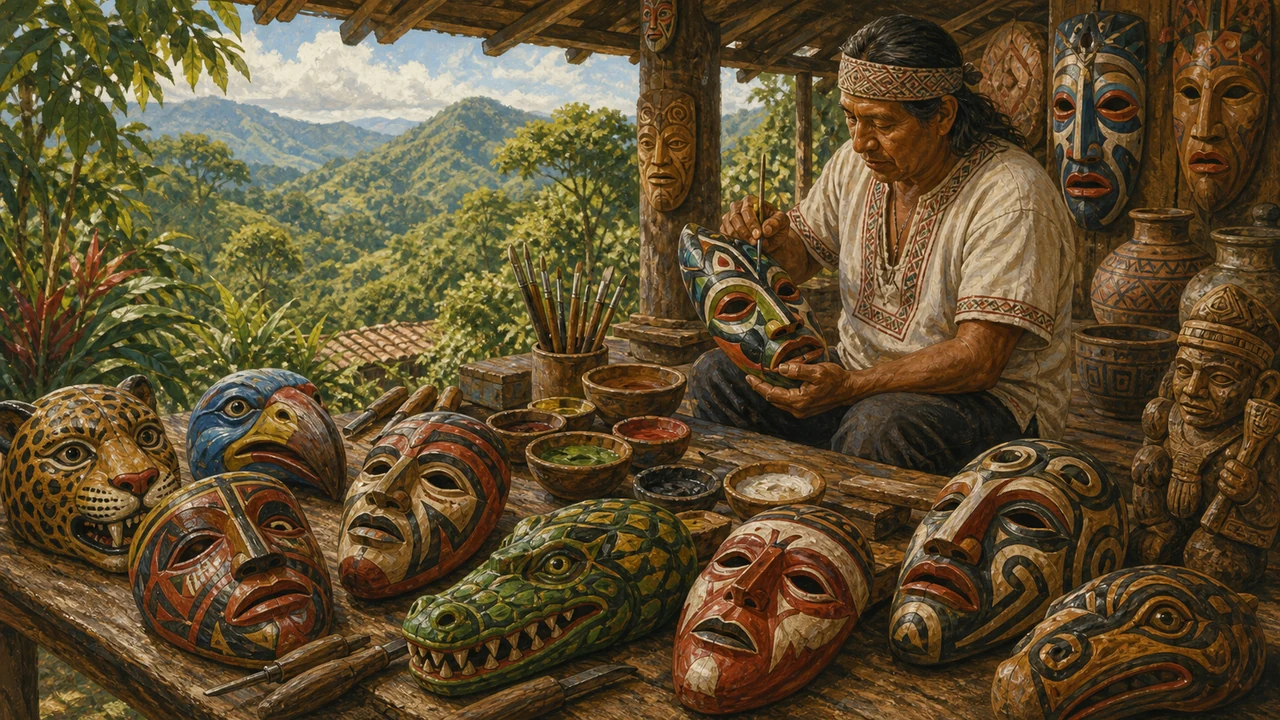
In the southern Pacific, Boruca mask carving is both art and identity. The masks used in the Fiesta de los Diablitos express Indigenous resistance to conquest through color, animal imagery, and dramatic form. Contemporary Boruca artists also create masks for collectors and visitors, turning a ceremonial tradition into a source of community income while preserving its symbolic power.
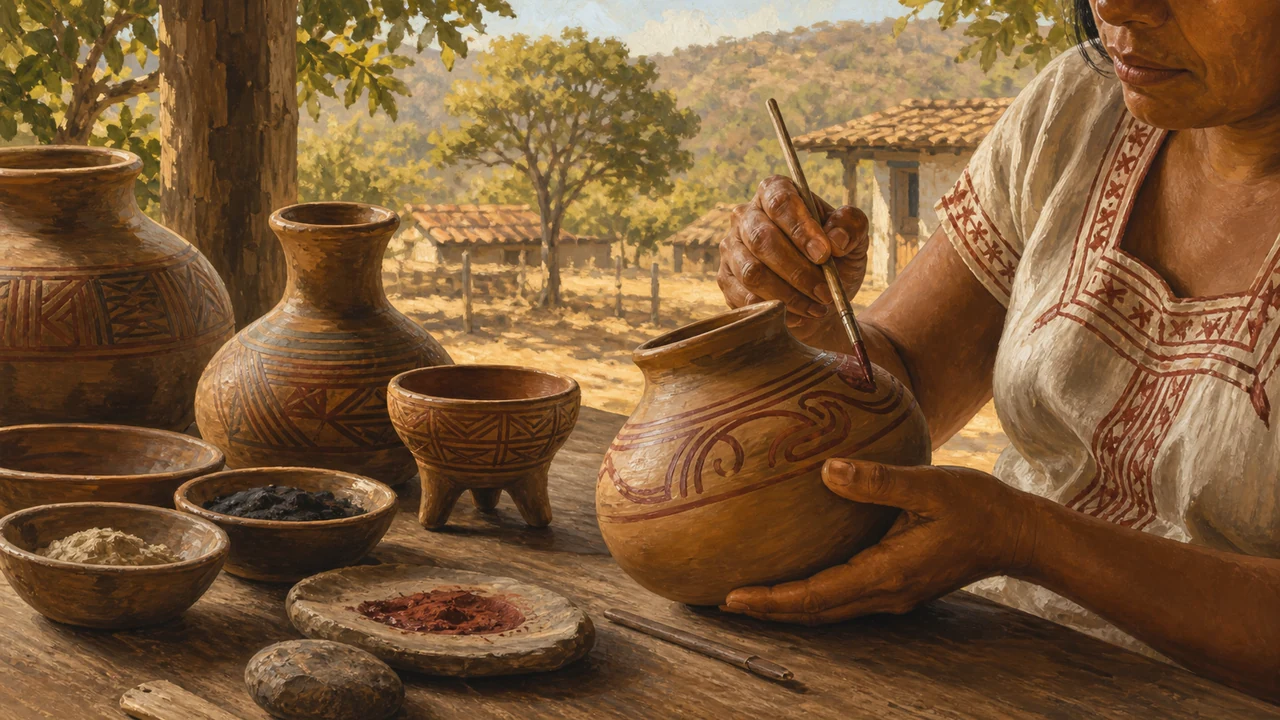
In Guanacaste, the village of Guaitil is one of the most accessible places to see Chorotega ceramic traditions. Artisans work with local clay, natural pigments, hand-coiling methods, and wood-fired techniques. A visit to Guaitil connects Indigenous heritage with the broader Costa Rica art and folklore story.
Language is another living tradition, though its situation varies by community. Bribri and Cabecar remain among the stronger Indigenous languages in Costa Rica, while other languages are endangered or undergoing revitalization. Even when language use has declined, identity can remain active through food, family memory, crafts, ritual, territory, and community organization.
Museums and Places to Learn
Travelers who begin in San Jose can build a respectful foundation before visiting communities. The Costa Rica Gold Museum, the Jade Museum, and the National Museum help visitors understand pre-Columbian artistry and the depth of Indigenous societies before colonization. These collections make the country’s cultural timeline visible: gold pendants, jade figures, ceramic vessels, metates, stone sculptures, and tools reveal a sophisticated world that still influences Costa Rican identity.
For a more living encounter, community-based tourism is the better path. The community-based rural tourism section includes regions where local hosts connect visitors with agriculture, forest knowledge, food, and craft. On the Caribbean side, rural tourism in Talamanca often overlaps with Bribri and Cabecar cultural experiences. In Guanacaste, pottery workshops and local food connect Chorotega heritage to everyday life.
Responsible Indigenous Tourism in Costa Rica
Responsible travel begins with humility. Indigenous territories are homes, not theme parks. Ceremonies, sacred places, family spaces, and political concerns may not be open to visitors, and that boundary deserves respect.
Book through community organizations whenever possible. Buy crafts directly from artisans. Ask before taking photos. Do not pressure people to explain sacred stories or private ceremonies. Learn enough context to understand what you are seeing, and be willing to spend money in ways that benefit the community rather than outside intermediaries.
Travelers should also avoid treating Indigenous culture as if it exists only in the past. A Boruca artist may use contemporary colors and still be working within a living tradition. A Bribri cacao tour may include ancestral knowledge and modern entrepreneurship at the same time. A young Indigenous guide may speak Spanish, use a smartphone, attend university, and still be deeply rooted in community identity. Culture survives by changing as well as by preserving.
Why It Matters
Costa Rica is often marketed as a nature destination, but nature and culture are deeply connected. Indigenous communities have long shaped the landscapes that visitors now experience as rainforest, cacao farms, ceramic villages, protected areas, and cultural routes. Understanding that connection makes travel more meaningful and more ethical.
To keep exploring the topic, read the full guide to the Indigenous peoples of Costa Rica, learn more about Costa Rica population and ethnicities, and explore how Indigenous heritage appears in Costa Rican identity and Indigenous art.
Related Costa Rica Culture Guides
- Indigenous Peoples of Costa Rica
- Costa Rica Population and Ethnicities
- Costa Rica Identity
- Indigenous Art of Costa Rica
- Guaitil: Chorotega Pottery Village
Frequently asked questions
What Indigenous cultures live in Costa Rica today?
Costa Rica recognizes eight living Indigenous peoples: Bribri, Cabecar, Boruca or Brunca, Maleku, Chorotega, Ngabe-Bugle, Huetar, and Terraba. Their communities are concentrated in Talamanca, the southern Pacific, Guanacaste, the northern lowlands, and parts of the Central Valley.
Where can travelers experience Indigenous culture in Costa Rica?
Respectful visitors can learn through community-led cacao tours in Talamanca, Boruca mask workshops in the southern Pacific, Chorotega pottery visits in Guaitil, Maleku cultural programs in the northern lowlands, and Indigenous-focused museums in San Jose.
What are the best-known Indigenous art traditions in Costa Rica?
Boruca carved masks, Chorotega ceramics from Guaitil, Bribri and Cabecar basketry, Maleku painted crafts, Ngabe woven bags, and pre-Columbian jade, gold, and stone traditions are among the best-known expressions of Indigenous heritage.
Can visitors enter Indigenous territories in Costa Rica?
Some communities welcome visitors through organized tourism programs, but entry should be coordinated through community organizations or local guides. Travelers should avoid entering restricted areas, photographing people or ceremonies without permission, or buying crafts through exploitative intermediaries.
Why are Costa Rica Indigenous cultures important for travel planning?
They add historical depth to Costa Rica travel. Beaches, volcanoes, national parks, cacao, ceramics, place names, oral traditions, and conservation landscapes all carry Indigenous influence, so understanding these cultures makes a trip more respectful and more meaningful.