Medical Tourism Costa Rica: Costs, Quality & How It Works
Medical tourism in Costa Rica draws tens of thousands of North American and European patients every year — people who combine internationally trained specialists, accredited private hospitals, and dramatically lower costs with one of the world’s most restorative natural environments.
 Whether you are researching dental implants, cosmetic surgery, bariatric treatment, LASIK, fertility care, or a wellness retreat, Costa Rica offers a compelling blend of medical quality and value that is difficult to match elsewhere in the hemisphere — and all within a few hours’ flight of major US and Canadian gateway cities. This guide covers why patients choose Costa Rica, realistic cost expectations, quality and safety standards, how the process works step by step, and links to every specialty vertical in our cluster.
Why Costa Rica for Medical Tourism?
Several factors have made Costa Rica one of Latin America’s top medical tourism destinations over the past two decades, attracting patients who might otherwise travel to Mexico, Thailand, or India.
Internationally trained specialists. Surgeons and physicians at leading private hospitals frequently hold dual board certifications and have completed residencies or fellowships at accredited institutions in North America or Europe. The Costa Rica Medical College (Colegio de Médicos y Cirujanos) maintains a public registry of licensed practitioners — patients are encouraged to verify credentials before booking.
Modern, accredited private hospitals. A cluster of private hospitals in and around San José operates to international standards, with multiple facilities holding accreditations from globally recognized bodies. These hospitals invest continuously in imaging technology, operating-room infrastructure, and infection-control protocols comparable to facilities in the United States or Western Europe.
Favorable cost structure. Labor costs, facility overhead, and malpractice insurance differ substantially from North America. Providers can charge significantly less while maintaining quality outcomes. This gap is especially pronounced for procedures that are rarely covered by insurance in patients’ home countries — dental implants, elective cosmetic surgery, and bariatric procedures among them.
Location and access. Juan Santamaría International Airport (SJO) in Alajuela serves dozens of North American cities with direct flights, placing Costa Rica within three to five hours of most US hubs. The country’s small size means patients can access excellent medical care and world-class natural destinations without long internal transfers.
Stability and safety. Costa Rica is the oldest continuous democracy in Latin America and abolished its military in 1948, directing that spending into education and healthcare instead. The result is a country with high literacy, a well-developed public health infrastructure, and a private medical sector that has grown to serve international patients.
Cost Savings: What to Expect
Cost is usually the primary driver of medical travel decisions, so it deserves an honest, careful treatment. The table below gives illustrative ranges — always request written, itemized quotes directly from your chosen provider, as actual prices vary by case complexity, facility, and current market conditions.
| Procedure | Typical US private-pay range | Typical Costa Rica range | Approximate savings |
|---|---|---|---|
| Single dental implant (implant + crown) | $3,000–$6,000 | $800–$1,800 | Often 50–70% |
| Full-arch implant restoration (All-on-4 / All-on-6) | $20,000–$45,000 | $6,000–$15,000 | Often 55–70% |
| Porcelain veneer (per tooth) | $1,000–$2,500 | $350–$700 | Often 50–65% |
| Breast augmentation | $8,000–$15,000 | $3,500–$6,500 | Often 45–60% |
| Rhinoplasty | $8,000–$16,000 | $4,000–$8,000 | Often 40–55% |
| Tummy tuck (abdominoplasty) | $10,000–$20,000 | $4,500–$9,000 | Often 45–60% |
| Gastric sleeve | $15,000–$30,000 | $6,000–$12,000 | Often 50–65% |
| LASIK (both eyes) | $3,000–$5,000 | $1,200–$2,500 | Often 40–55% |
| Knee replacement | $30,000–$60,000 | $12,000–$22,000 | Often 50–65% |
All figures are broad ranges for general planning purposes only. Verify current quotes with your provider. Travel, accommodation, and ancillary costs should be factored into your total budget.
Even after adding flights, accommodation, and incidentals, the total cost of a medical trip to Costa Rica often remains well below the equivalent home-country price — particularly for dental, cosmetic, and bariatric procedures.
Quality, Accreditation, and Safety
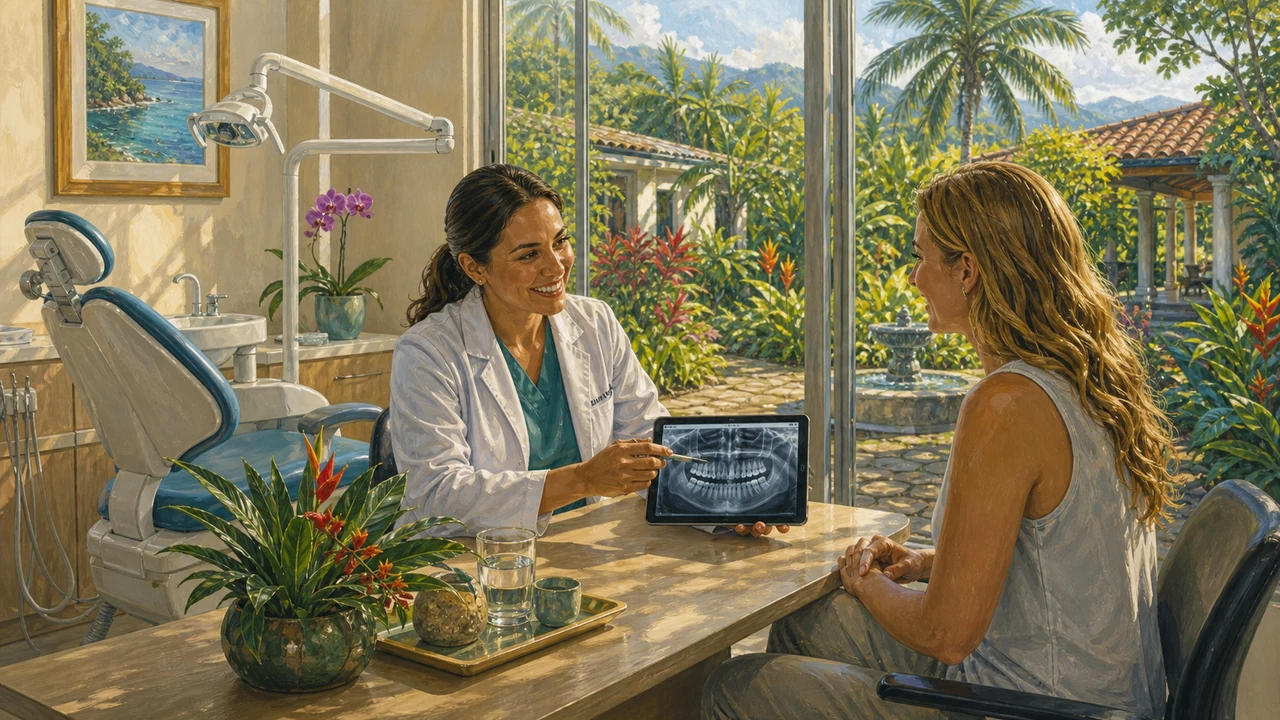 Quality and safety are the questions every prospective medical tourist should ask first — and the answers for Costa Rica’s leading private sector are genuinely reassuring.
International accreditation. Several private hospitals in the greater San José metropolitan area hold accreditation from internationally recognized bodies, including the Joint Commission International (JCI) — the same organization that accredits top US hospitals. Accreditation means the facility has been audited against global standards for patient safety, clinical outcomes, nursing care, and administrative practices.
Board certification. Ask your prospective surgeon for their board certification number and verify it with the Colegio de Médicos y Cirujanos. Reputable providers display credentials openly and welcome the question.
What to verify before booking:
- The surgeon’s board certification and specialty training
- The accreditation status of the surgical facility
- Anesthesiology qualifications (board-certified anesthesiologist, not just a technician)
- The hospital’s ICU capacity and emergency protocols
- A written, itemized quote that specifies surgeon fee, anesthesia, facility, medications, nursing, and follow-up visits
- What happens if you experience a complication after returning home — the provider’s protocol and your home physician’s plan
YMYL note: Medical decisions are deeply personal and involve real risk. This page describes what medical tourists generally experience; it is not medical advice. Always consult a licensed, board-certified provider for a personal evaluation, and coordinate with your home physician before and after any procedure.
How the Process Works: Step by Step
Step 1 — Research and shortlist providers. Use multiple sources: patient forums, medical tourism facilitators (who connect patients with vetted providers), and direct contact with clinic coordinators. Check accreditation status and ask for surgeon credentials.
Step 2 — Request a remote consultation and written quote. Most leading providers offer video consultations and will review your records, imaging, or photographs before you book flights. Get a full written quote with line-item pricing.
Step 3 — Coordinate with your home physician. Share your treatment plan, the facility’s details, and your surgeon’s contact information. Your home doctor will handle pre-operative clearance and post-return follow-up care — this coordination is not optional for complex procedures.
Step 4 — Plan your travel logistics. Book flights into SJO (Juan Santamaría) for the Central Valley hospital corridor. Arrange accommodation close to your facility for the immediate post-operative period. Read our Costa Rica travel tips for practical entry, currency, and transport guidance.
Step 5 — Pre-operative phase. Arrive a day or two before your procedure. Attend your in-person consultation, complete pre-operative labs or imaging, and confirm all informed-consent paperwork. Don’t rush this phase.
Step 6 — Procedure and immediate recovery. Follow your medical team’s instructions exactly. Most providers include immediate post-operative nursing, follow-up visits, and basic medications in the quoted price — confirm what is included in writing.
Step 7 — Extended recovery and clearance to fly. Follow your surgeon’s guidance on the minimum stay before flying. Use any cleared downtime productively — see the section below on combining treatment with vacation.
Step 8 — Home follow-up. Return to your home physician within the recommended window. Share all operative notes and discharge documentation.
Recovery + Vacation: Making the Most of Your Stay
 One of the features that genuinely distinguishes Costa Rica medical tourism recovery experiences from more purely clinical destinations is the ease with which patients weave rest, gentle activity, and extraordinary scenery into their recovery days.
- Post-dental recovery: A half-day at Arenal’s geothermal hot springs is gentle, deeply relaxing, and requires nothing more strenuous than floating. Many patients combine dental treatment with a few days around the Arenal corridor.
- Post-cosmetic recovery: Quiet ecolodges in the Central Valley highlands or cloud forests offer privacy, clean air, attentive hospitality, and zero crowds — ideal for the first week of healing.
- Post-bariatric recovery: The dietary transition post-surgery pairs well with Costa Rica’s fresh tropical produce and the nutritional programs many lodges offer.
- Wellness complement: Non-surgical visitors — arriving for yoga retreats, thermal therapy, or longevity programs in the Nicoya Peninsula Blue Zone — find Costa Rica’s natural environment does much of the healing work on its own.
Costa Rica’s national parks and ecotourism infrastructure make this seamless. The same country that hosts accredited hospitals near the capital also offers cloud forests, Pacific surf beaches, Caribbean villages, and active volcanoes within a few hours’ drive.
Specialty Verticals: Explore Your Procedure
Use the links below to go deeper into each medical specialty. Each vertical page covers procedure-specific costs, what to expect, provider selection tips, and logistics.
Dental Tourism
Costa Rica’s largest medical tourism segment — driven by the sharp price gap on implants, crowns, and full-arch restorations.
- Dental Tourism in Costa Rica — sub-pillar hub
- Dental Implants Cost in Costa Rica
- All-on-4 / Full-Mouth Dental Implants
- Dental Veneers in Costa Rica
- Dental Crowns and Bridges
Plastic and Cosmetic Surgery
Board-certified plastic surgeons perform the full range of aesthetic procedures with transparent package pricing.
- Plastic Surgery in Costa Rica — sub-pillar hub
- Breast Augmentation in Costa Rica
- Tummy Tuck in Costa Rica
- Liposuction in Costa Rica
- Mommy Makeover in Costa Rica
Bariatric Surgery
Gastric sleeve and bypass programs with pre-surgical evaluation and nutritional support included.
Eye Surgery and LASIK
Modern laser vision correction and refractive procedures at a fraction of North American prices.
Fertility and IVF
Accredited reproductive medicine centers serving international patients.
Wellness and Stem Cell Therapy
Regenerative medicine programs and evidence-based wellness retreats.
Orthopedic Surgery
Knee and hip replacement at internationally accredited facilities — a growing segment for patients on long home-country waiting lists.
Cross-Cutting Guides
 Planning a medical trip involves more than choosing a procedure. These guides cover the logistics and comparisons that cut across every specialty.
- Medical Tourism Cost Guide — detailed pricing methodology, what drives the savings gap, and how to budget your full trip
- Hospitals and Accreditation — JCI-accredited facilities, how to verify credentials, and what accreditation actually means
- Costa Rica vs. Mexico Medical Tourism — a neutral comparison of cost, quality, logistics, and risk factors
- Plan Your Medical Trip — full itinerary guide: pre-trip coordination, arrival, recovery, and return logistics
Related Resources on Tourism.co.cr
Planning your trip extends beyond the clinic. These pages from our broader site are relevant to every medical visitor:
- Traveling to Costa Rica — entry requirements, visas, and arrival logistics
- Costa Rica Travel Tips — practical advice on currency, transport, safety, and communication
- Is Costa Rica Safe? — honest safety overview for visitors
- Juan Santamaría Airport (SJO) — your primary arrival point for the hospital corridor
- San José — the capital city where most private hospitals are located
- Costa Rica Ecotourism and Nature — explore the recovery destinations that make Costa Rica uniquely therapeutic
Costa Rica’s national tourism brand has long included the phrase “here everything heals” — and for medical tourists, that turns out to be more than marketing copy. The combination of internationally trained specialists, accredited facilities, genuine cost savings, and one of the world’s most biologically rich natural environments makes this a destination worth serious consideration for anyone planning elective medical care.
Frequently asked questions
How much does medical treatment cost in Costa Rica compared to the US?
Patients commonly report savings of 40–70% versus typical private-pay US prices, though the exact figure depends on the procedure, provider, and your specific treatment plan. Dental implants, full-mouth restorations, cosmetic surgery, and bariatric procedures tend to show the largest savings gap. Always request written, itemized quotes and verify current pricing directly with your chosen provider.
Is medical tourism in Costa Rica safe?
Costa Rica has one of the strongest healthcare systems in Latin America. Leading private hospitals near San José hold international accreditations and invest in modern equipment and protocols. Specialists are board-certified and many have trained or completed fellowships abroad. As with any elective procedure anywhere, thorough due diligence — verifying credentials, reviewing patient outcomes, and coordinating with your home physician — is essential.
How long do I need to stay in Costa Rica for medical treatment?
It depends on the procedure. Many dental treatments and minor cosmetic procedures can be completed in one to two weeks. More involved surgeries — bariatric, orthopedic, or complex cosmetic cases — typically require a longer stay for post-operative monitoring before your surgeon clears you to fly. Always follow your provider's guidance on minimum recovery time before travel.
What are the most popular medical procedures for visitors to Costa Rica?
Dental work (implants, crowns, full-arch restorations, veneers) leads demand, followed by cosmetic and plastic surgery (breast procedures, rhinoplasty, tummy tuck, liposuction), bariatric surgery (gastric sleeve and bypass), LASIK and eye surgery, fertility treatments, and wellness programs. Orthopedic procedures such as knee and hip replacement are also growing segments.
Can I combine medical treatment with a Costa Rica vacation?
Yes, and most patients do. Costa Rica's compact geography puts Pacific beaches, cloud forests, volcanic hot springs, and Caribbean coast all within a few hours of the hospital corridor near San José. Many visitors schedule treatment early in their stay and use recovery days for gentle, restorative activities like thermal springs, nature lodges, or quiet beach towns.