Costa Rica vs Mexico Medical Tourism: Full Comparison
Costa Rica vs Mexico medical tourism is one of the most common comparisons North American patients make when researching elective surgery, dental work, or cosmetic procedures abroad. Both countries are legitimate, well-established destinations with trained specialists, internationally accredited facilities, and real cost savings — and both deserve a fair look before you decide.
 This page walks through the key decision factors side by side: cost, hospital quality and accreditation, travel logistics for North Americans, safety, language, and which procedures each destination does especially well. It closes with a practical framework for choosing the right fit for your situation. Neither destination is objectively “better” — the right answer depends on your procedure, your budget, your location, and your personal preferences.
For the full picture of what Costa Rica offers, see the Costa Rica medical tourism pillar, the cost guide, and the hospitals and accreditation page.
Side-by-Side Comparison
The table below summarizes the main factors most patients weigh. Figures are generalizations — individual experience will vary.
| Factor | Costa Rica | Mexico |
|---|---|---|
| Typical savings vs. US | Often 40–70% less (verify current quotes) | Often 40–70% less (verify current quotes) |
| JCI-accredited hospitals | Concentrated cluster near San José | Larger total number across multiple cities |
| Dental tourism strength | Strong; full-arch restorations, implants, cosmetic | Very strong; border cities draw large US volume |
| Cosmetic surgery strength | Strong; board-certified surgeons, post-op recovery environment | Strong; Monterrey, CDMX, Tijuana well-established |
| Bariatric surgery | Growing sector; accredited private hospitals | One of the world’s top bariatric destinations |
| Flight time from US | ~3–6 hrs nonstop from major gateways | 2–4 hrs from most US cities; border access for SW states |
| Direct flights | Good from Houston, Miami, Dallas, Atlanta, NYC | Excellent nationwide coverage |
| English availability | High in private medical facilities near San José | Variable; strong in major tourist/medical hubs |
| Safety profile | Consistently among safest in Latin America | Varies significantly by city and region |
| Recovery environment | Cloud forests, Pacific beaches, thermal hot springs | Varied — beach resorts, colonial cities, mountain areas |
| Country size / variety | Small, compact; easy to get around | Very large; destination options spread across many cities |
All cost ranges are approximate. Always request written, itemized quotes and verify accreditation directly with your chosen facility.
Cost: How the Two Destinations Compare
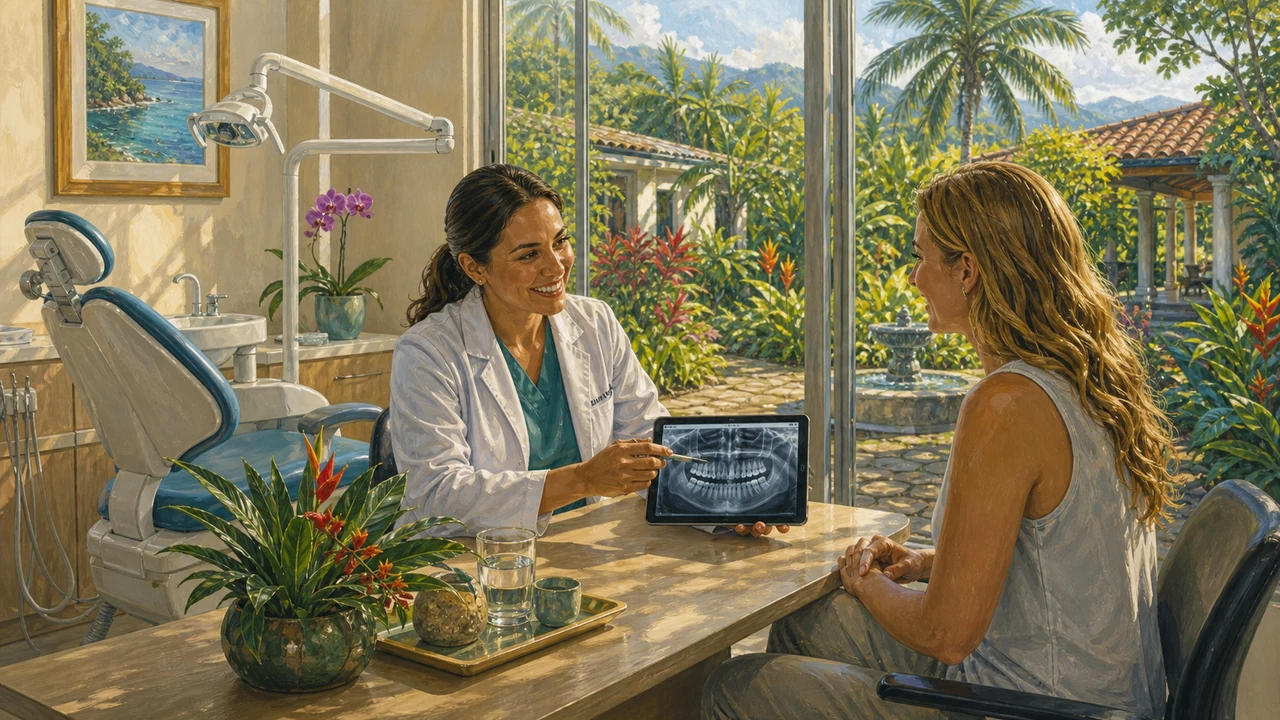 Cost savings on medical procedures abroad are the primary driver for most patients choosing either destination, and both countries deliver meaningfully on this front. As a general pattern, dental and cosmetic procedures in Costa Rica and Mexico both run well below typical US private-pay prices — often in the range of 50–70% less, though the gap varies by procedure and provider.
Neither country has a clear, universal price advantage over the other. Costs depend heavily on:
- The specific procedure and its complexity
- The city and facility (a JCI-accredited private hospital in either country commands a premium over an uncertified clinic)
- Whether the quote includes anesthesia, facility fees, follow-up care, and implant materials
For dental work, both countries are competitive. Mexico’s border cities have historically attracted high volume from US patients in neighboring states who drive across for same-day or multi-day treatments. Costa Rica draws patients who plan a dedicated medical trip, often combining treatment with a week or more of recovery tourism.
For cosmetic and plastic surgery, the all-in cost in both countries — including surgeon, anesthesia, hospital, and recovery accommodation — tends to be a fraction of comparable US pricing. Costa Rica’s medical tourism infrastructure has matured enough that many internationally trained surgeons operate out of accredited private hospitals rather than standalone clinics.
The bottom line: budget for both options by requesting itemized quotes, then compare total trip cost including flights, accommodation, and any repeat-visit requirements.
Quality and Accreditation
International accreditation is the most reliable quality signal available to a medical tourist — it means an independent body has audited the facility’s protocols, equipment, staffing, and outcomes. The two most widely recognized bodies are Joint Commission International (JCI) and the International Society for Quality in Health Care (ISQua).
Mexico has the larger absolute number of internationally accredited hospitals, reflecting its size. Major medical tourism corridors include Mexico City, Monterrey, Guadalajara, and certain border cities. Accreditation density and facility quality vary considerably across regions.
Costa Rica has a smaller but concentrated group of internationally accredited private hospitals clustered in and around the San José metropolitan area. This concentration means most medical tourists in Costa Rica interact with the same tier of facilities, which creates a more consistent baseline experience. Specialists at leading private hospitals are frequently board-certified through both Costa Rican and international bodies and many have completed training or fellowships at institutions in the United States or Europe.
 In both countries, accreditation is facility-specific — a hospital holding JCI certification is not an endorsement of every practitioner who works there. Patients should verify:
- The specific hospital or clinic’s current accreditation status
- The surgeon’s board certification and professional registration
- Whether the procedure will take place at the accredited facility or at a separate site
The hospitals and accreditation page covers the Costa Rica side of this in more detail.
Travel and Access for North Americans
For most US and Canadian travelers, Mexico wins on raw travel convenience. It has more airports, more direct routes from more US cities, and — for residents of border states — the option of driving across for short-duration dental visits. Flight times from major US hubs are generally shorter, and ticket prices are often lower.
Costa Rica is still highly accessible. Nonstop service operates from a wide range of gateway cities including Miami, Houston, Dallas–Fort Worth, Atlanta, New York, Los Angeles, Chicago, and several others. From the US East Coast or Southeast, travel time is comparable to flying to many Mexican medical hubs. Direct flights land at Juan Santamaría International Airport (SJO) near San José, which puts arriving patients close to the private hospital corridor.
Key logistics considerations:
- Visa requirements: Most US and Canadian passport holders enter both countries visa-free for tourism stays. Check current official requirements before booking.
- Transfer to care: In Costa Rica, the private hospitals near San José are typically 20–45 minutes from SJO. In Mexico, the distance from airport to facility varies widely by city.
- Return travel clearance: For any surgical procedure, your medical team will advise a minimum stay before flying. This applies equally in both countries; do not book a return flight before your surgeon clears you.
Safety
 Costa Rica is consistently rated one of the safest countries in Latin America for travelers. It has no standing military (the army was abolished in 1948), a stable democratic government, and crime levels in the San José area that, while requiring normal urban precautions, are markedly lower than many regional comparisons. Read more about safety in Costa Rica.
Mexico’s safety picture is more complex. It is a large and diverse country, and conditions vary dramatically between states and cities. Several Mexican cities that serve as medical tourism hubs — including areas of Monterrey and parts of Mexico City — have strong safety track records for international visitors. Other regions carry elevated risk. Patients planning a Mexico medical trip should research the specific city and neighborhood, consult current government travel advisories, and follow their hospital’s guidance on logistics and transportation.
Neither country is inherently unsafe for a medical traveler who does appropriate planning. The key is to research your specific destination city, arrange safe ground transportation, and avoid unfamiliar areas — advice that applies anywhere in the world.
Language
English proficiency in private Costa Rican medical facilities is generally high. Internationally trained surgeons and hospital coordinators at accredited private hospitals near San José typically speak English fluently, and many facilities have dedicated international patient services staff.
In Mexico, English availability in medical settings varies more by city and facility. Major hospitals in Monterrey, Mexico City, and Guadalajara that specifically cater to international patients tend to have strong English support. Border-city dental clinics serving US patients are also generally English-capable. Facilities in smaller cities or those primarily serving domestic patients may have more limited English coverage.
For either destination, it is reasonable to ask a facility directly about the English proficiency of the primary surgeon and care team, not just the front-desk or coordinator staff.
Dental and Cosmetic Surgery: Where Each Destination Excels
Dental tourism is the single largest procedure category in both countries for North American patients.
- Costa Rica has a strong reputation for complex restorative work — full-arch implant restorations (All-on-4, All-on-6), zirconia crowns and bridges, and cosmetic smile makeovers. Patients typically plan a 1–2 week stay and often combine treatment with beach or nature recovery time.
- Mexico draws enormous dental volume, particularly from border-state US residents who can drive across for single appointments or multi-day treatments. Tijuana, Los Algodones (“Molar City”), and Nuevo Laredo are among the most visited dental corridors.
Cosmetic and plastic surgery is a major category in both destinations.
- Costa Rica has well-established cosmetic surgery practices with surgeons who hold dual certifications and operate in accredited hospital settings. The recovery environment — quiet beach towns, nature lodges, thermal hot springs — is a genuine draw for patients who want a restorative experience after surgery.
- Mexico, particularly Monterrey and Mexico City, has a longer institutional track record in cosmetic surgery and a larger total number of practitioners. Patients who want maximum surgeon choice or who need complex multi-procedure cases may find more options in larger Mexican cities.
Recovery Environment
Both countries offer appealing recovery settings, though they differ in character.
Costa Rica’s recovery landscape is notably compact and diverse. Within a few hours of San José’s hospital corridor, patients can access Pacific coast beach towns, cloud forest lodges near Monteverde, volcanic hot springs in the Arenal region, and Caribbean-side retreats. The country’s reputation for nature and wellness aligns naturally with a post-surgery recovery mindset. The pura vida culture — relaxed, low-stress, focused on wellbeing — is a real quality-of-life factor for patients spending two to four weeks on the ground.
Mexico offers a wider variety of recovery environments given its size — colonial cities, resort towns like Los Cabos or the Riviera Maya, mountain retreats, and more. Patients who want beach recovery near a major surgical hub may find it easier in certain Mexican cities.
Which Is Right for You?
Neither Costa Rica nor Mexico is the universally correct choice — the best fit depends on your specific circumstances.
Consider Costa Rica if:
- Your procedure is dental, cosmetic, or bariatric and you want a dedicated 1–3 week medical-vacation trip
- You value a compact, easy-to-navigate country with a strong safety profile
- The recovery environment — nature, wellness, restorative quiet — matters to you
- You are flying from the US East Coast, Southeast, or Canada, where flight times are competitive
- You prefer a concentrated, well-established international hospital corridor
Consider Mexico if:
- You live in a border state and can drive across for shorter dental appointments
- You need a highly specialized procedure and want the widest possible surgeon selection
- You are flying from the Southwest or West Coast where Mexico routes are more direct and frequent
- You want flexibility across a wide range of cities and recovery environments
In either case:
- Verify facility accreditation and surgeon credentials independently
- Request written, itemized quotes
- Consult your home physician before and after any procedure
- Follow your surgeon’s guidance on minimum recovery time before flying
For more on planning a medical trip to Costa Rica, explore the medical tourism pillar, the cost guide, and the hospitals and accreditation overview. For destination context, why visit Costa Rica and our travel tips guide cover the broader travel experience.
Always consult a licensed, board-certified provider for a personal evaluation before making any medical travel decisions.
Frequently asked questions
Is Costa Rica or Mexico cheaper for medical tourism?
Both destinations offer significant savings over typical US prices — often in the range of 40–70% less. Costs vary considerably by procedure, city, and specific provider in both countries, so the best approach is to request itemized quotes from vetted clinics in each destination and compare directly. Neither country is universally cheaper across all procedures.
Which country has more JCI-accredited hospitals, Costa Rica or Mexico?
Mexico, as a much larger country, has a greater total number of JCI-accredited facilities. Costa Rica has a smaller number but a concentrated cluster of internationally accredited private hospitals near San José. Both countries have institutions that meet international standards; what matters most is verifying accreditation for the specific hospital where your procedure will take place.
How far is Costa Rica from the US compared to Mexico for medical travel?
Mexico has a geographic advantage for most US travelers, especially those near the border or major Southwest cities. Costa Rica is typically a 3–6 hour nonstop flight from major US gateway cities such as Houston, Miami, Dallas, and Atlanta. Both destinations are practical for North American patients; flight time and direct-route availability should factor into your planning.
Is Costa Rica safe for medical tourists compared to Mexico?
Costa Rica consistently ranks among the safest countries in Latin America and has no military. The San José metropolitan area, where most private hospitals are located, is a stable urban environment. Mexico is a large and varied country — safety conditions differ significantly by city and region. In both cases, researching the specific city you plan to visit is important.
Which is better for dental tourism, Costa Rica or Mexico?
Both are highly regarded dental tourism destinations for North Americans. Mexico's border cities draw large numbers of US patients for the ease of driving across; Costa Rica attracts patients who prefer a longer immersive trip combined with a vacation. Quality can be excellent in both; due diligence on credentials and materials used matters more than the destination itself.