Dental Veneers in Costa Rica: Costs, Types & What to Expect
Veneers in Costa Rica offer one of the most striking value propositions in dental tourism: the same porcelain or composite smile transformation that costs thousands per tooth at home often runs at a fraction of the price in San José — without sacrificing modern materials, skilled craftsmanship, or a comfortable patient experience.
Costa Rica has built a strong reputation for cosmetic dentistry for international patients, drawing North Americans and Europeans who combine high-quality dental care with a chance to enjoy the country’s scenery, climate, and culture. If you’ve been putting off your smile makeover because of the cost, this guide covers everything you need to make an informed decision.
For the broader context of dental care in Costa Rica, see the dental tourism sub-pillar and the medical tourism pillar.
Porcelain vs. Composite Veneers: Which Is Right for You?
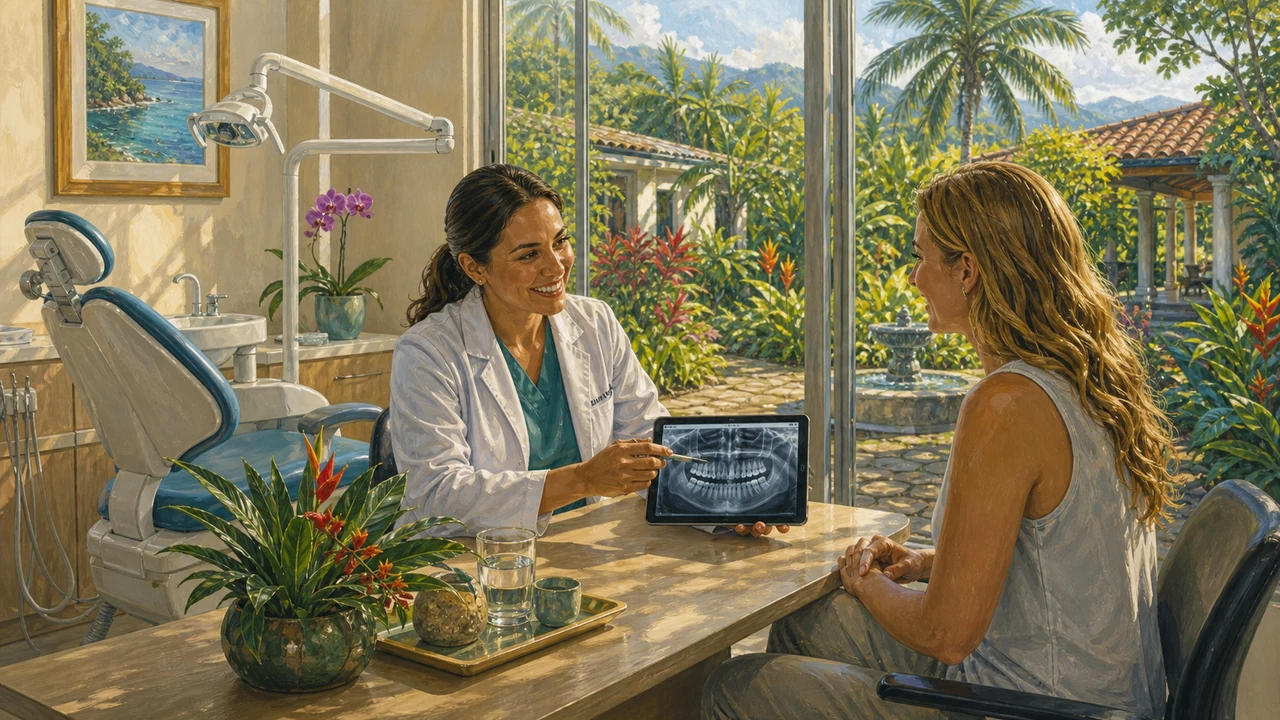
The term “veneer” covers two distinct procedures that differ in material, process, cost, and longevity. Understanding the difference is essential before you travel.
Porcelain veneers are thin ceramic shells custom-fabricated in a dental laboratory to precise specifications. The dentist removes a small amount of enamel from the front surface of each tooth, takes impressions, and sends them to the lab. You wear temporaries while the permanent veneers are made, then return for bonding. Because the ceramic mimics the light-reflecting properties of natural enamel, porcelain veneers produce a highly realistic result. They resist staining from coffee and wine and, with good oral hygiene and regular check-ups, can last 10–20 years or longer.
Composite veneers are applied in a single appointment using tooth-colored resin sculpted directly onto the tooth surface. Because the dentist builds up the material freehand and cures it with a special light, there is no lab wait and often no need to remove enamel — making them reversible in many cases. The trade-off: composite is more porous than ceramic, stains more readily, and typically requires replacement or touch-ups after 5–7 years. They are, however, considerably less expensive and easier to repair if chipped.
Neither type is universally better. A consultation with a licensed, board-certified cosmetic dentist is the only reliable way to determine which suits your teeth, bite, and goals.
Who Is a Candidate for Veneers?
Veneers are a cosmetic solution, not a restorative one. They work best for teeth that are:
- Discolored in ways that do not respond to whitening (intrinsic staining, tetracycline discoloration)
- Slightly chipped, worn, or misshapen
- Mildly uneven in size or spacing
- Otherwise healthy in structure and roots
Veneers are generally not appropriate if you have significant tooth decay, untreated gum disease, insufficient enamel, heavy clenching or grinding habits (bruxism), or severe misalignment that requires orthodontic treatment. A thorough dental exam — including X-rays — is mandatory before any veneer procedure, and reputable Costa Rican clinics catering to international patients will require this assessment before quoting a final price.
Cost Comparison: Veneers in Costa Rica vs. the US

The table below shows typical price ranges based on general market knowledge. Prices vary by clinic, dentist’s experience, lab quality, geographic location within Costa Rica, and case complexity. Always request written, itemized quotes from multiple providers and verify that the quote includes all appointments, temporaries, and any required X-rays.
| Procedure | Typical US Range (per tooth) | Typical Costa Rica Range (per tooth) | Approximate Savings |
|---|---|---|---|
| Porcelain / ceramic veneer | $1,000 – $2,500 | $350 – $650 | Often 50–70% less |
| E-max / lithium disilicate veneer | $1,200 – $2,800 | $400 – $700 | Often 50–70% less |
| Composite (direct) veneer | $250 – $1,500 | $100 – $300 | Often 50–70% less |
| Full-smile veneer set (8–10 teeth, porcelain) | $8,000 – $25,000+ | $3,000 – $6,500+ | Often 60–70% less |
Ranges are approximate and for general comparison only. Verify current quotes before booking travel.
Even after accounting for flights, accommodation, and incidental travel costs, many patients who are having multiple veneers placed find that the overall cost of a dental trip to Costa Rica remains substantially lower than treatment at home. The cost guide for medical tourism in Costa Rica covers how to budget a dental trip end to end.
The Veneers Process: What to Expect Step by Step
Cosmetic dental procedures in Costa Rica for international patients typically unfold across two visits, though logistics can vary by clinic and case.
Before You Travel
- Virtual consultation. Send high-resolution photos of your smile and recent dental X-rays to the clinic. A reputable provider will conduct a video call or written assessment, outline candidacy, recommend porcelain or composite based on your situation, and provide a written cost estimate.
- Confirm credentials. Verify that your dentist holds a degree from an accredited university and relevant specialty training in cosmetic or prosthodontic dentistry. Ask which dental laboratory fabricates the porcelain restorations and whether it operates inside or outside Costa Rica.
- Prepare your mouth. If the pre-trip assessment reveals cavities or gum disease, treat those issues before traveling — veneers cannot be placed on unhealthy teeth, and discovering a problem on arrival can delay or derail your trip.
- Book your flights. Juan Santamaría International Airport (SJO) in Alajuela, near San José, is the main gateway and is closest to the majority of internationally oriented dental clinics. See Costa Rica Airports for a full overview.
Trip One: Preparation and Temporaries

- Comprehensive exam and cleaning: X-rays, photos, and bite assessment confirm the treatment plan and final price.
- Tooth preparation: The dentist removes a thin layer of enamel (for porcelain) or prepares the surface (for composite). Local anesthesia is used and the experience should be comfortable.
- Impressions or digital scans: These are sent to the dental lab for fabrication of your custom porcelain restorations.
- Temporary veneers: You leave the appointment wearing temporaries that protect your prepared teeth and give you a preview of the final shape.
- Lab time: Quality porcelain veneers typically require 5–10 business days at the lab.
Trip Two: Bonding the Permanent Veneers
- The temporaries are removed, each tooth is cleaned and etched, and the permanent veneers are tried in for fit and color before bonding.
- The dentist bonds them with a specialized dental adhesive and cures the bond with a curing light.
- Minor adjustments to the bite and shape are made at this appointment.
- You leave with your completed smile; a follow-up appointment the next day is common to confirm comfort.
Composite veneers can be completed in a single visit, which makes them appealing for patients with limited time, though the extended stay allows a more relaxed itinerary and time to enjoy why visiting Costa Rica is so worthwhile.
Recovery and Combining Treatment with a Vacation
Veneers require minimal downtime compared to surgical dental procedures like dental implants or crowns and bridges. Most patients experience mild tooth sensitivity for a few days following preparation, and temporary veneers require some dietary caution (avoiding hard or sticky foods), but there is typically no recovery that confines you to the hotel.
This makes the gap between visits an ideal opportunity to explore San José and the Central Valley, take a day trip to a nearby volcano, visit a coffee plantation, or simply relax in one of the country’s world-class nature lodges. Costa Rica travel tips can help you plan the in-between days.
Keep the following in mind during your dental stay:
- Avoid extremely hard foods (ice, hard candy, crusty bread) with temporaries in place.
- Sensitivity to hot and cold is normal and usually subsides within a few days.
- Night guards are recommended if you grind your teeth — discuss this with your dentist before leaving.
- Book a follow-up with your home dentist for a check 6–12 months after the procedure.
Durability and Long-Term Care

Porcelain veneers are non-porous and resist staining well. With proper care, they routinely last 10–20 years before replacement becomes necessary. Key habits that extend their lifespan include brushing twice daily with a non-abrasive toothpaste, flossing daily, avoiding biting nails or opening packages with your teeth, wearing a night guard if you grind, and attending regular dental cleanings at home.
Composite veneers require more attentive care. They stain more readily from coffee, tea, red wine, and tobacco, and they are more susceptible to chipping. Plan for possible polishing or minor repairs every few years and replacement at around the 5–7 year mark.
In both cases, the investment you make in the underlying health of your gums and teeth — through diligent home care and professional cleanings — is what protects the cosmetic work you traveled to achieve.
Safety, Quality, and Choosing a Provider
Costa Rica’s private dental sector serving international patients has grown significantly over the past two decades. Many dentists have completed advanced training in the United States or Europe, work with modern CAD/CAM technology, and source high-quality ceramic materials from established international suppliers. The country’s internationally oriented dental clinics near San José often serve a high volume of dental tourists, giving dentists extensive practical experience with the specific procedures most requested by North American patients.
That said, quality varies, and not every clinic meets the same standard. When evaluating providers:
- Verify educational credentials and specialty training. A cosmetic or prosthodontic specialty and membership in professional associations signals commitment to the field.
- Ask about the dental laboratory. The best smile outcomes depend as much on the lab crafting the restorations as on the chair-side dentist. Ask where the lab is located and whether you can see examples of their ceramic work.
- Request a detailed written treatment plan and itemized quote covering every appointment, temporaries, the permanent restorations, and any additional X-rays or procedures.
- Read patient reviews on independent platforms and look for before-and-after photos relevant to your case.
- Ask about warranties. Many Costa Rican clinics serving international patients offer warranties on their work — understand what is covered and what you would need to do (and where) if a veneer chips or debonds within the coverage period.
- Never make a final booking based on price alone. The cost of redoing failed veneers, including a return trip, far exceeds any initial savings from an under-qualified provider.
The hospitals and accreditation guide explains the broader quality-assurance landscape for medical and dental care in Costa Rica.
This page is for general informational purposes only and does not constitute medical or dental advice. Consult a licensed, board-certified dental professional for a personal evaluation and to determine whether veneers are appropriate for your specific situation.
Frequently asked questions
How much do dental veneers cost in Costa Rica?
Porcelain veneers in Costa Rica typically range from around $350–$600 per tooth, compared to $1,000–$2,500 per tooth at many US dental practices. Composite veneers are less expensive still. Always request a written, itemized quote from the clinic before booking travel.
Is it safe to get veneers in Costa Rica?
Costa Rica has a well-established private dental sector serving international patients, with many dentists trained in the US or Europe and holding advanced specialty certifications. Clinics serving medical tourists often maintain international quality standards and modern equipment. Do your due diligence: verify credentials, read patient reviews, and consult a licensed, board-certified dentist for a personal evaluation.
How long do I need to stay in Costa Rica for veneers?
Most patients plan for at least two trips of several days each — one for preparation, impressions, and temporaries, and a second to receive and bond the permanent veneers. Some clinics can complete the process in a single extended stay of roughly 10–14 days using in-house dental labs. Discuss your timeline with the clinic before booking.
What is the difference between porcelain and composite veneers?
Porcelain veneers are thin ceramic shells custom-fabricated in a dental lab; they are highly natural-looking, stain-resistant, and durable — typically lasting 10–20 years with proper care. Composite veneers are applied chair-side using tooth-colored resin; they are less expensive and require less tooth reduction but are more prone to staining and typically last 5–7 years.
Do I need to do anything before traveling for veneers in Costa Rica?
Yes. Send X-rays and photos to the clinic for a virtual consultation and written cost estimate before you book flights. Confirm the dentist's credentials and the lab that fabricates the veneers. Schedule a cleaning and address any cavities or gum disease before arrival, as veneers cannot be placed on unhealthy teeth.