Costa Rica vs Thailand Medical Tourism: Full Comparison
Costa Rica vs Thailand medical tourism is one of the most common comparisons North American patients make when researching international healthcare options — and it is worth making carefully, because the two destinations look similar on paper but differ sharply on the factors that matter most for patients traveling from the US and Canada.
 Both countries offer internationally trained specialists, accredited private hospitals, significant cost savings versus home-country prices, and the ability to combine treatment with a memorable travel experience. Thailand is legitimately world-class — Bangkok’s leading hospitals are among the most internationally recognized in any developing country. But when the patient is flying from North America, the geography equation changes everything. This guide lays out the comparison across seven dimensions so you can make a decision based on your specific situation, not a generalized ranking.
This page describes what medical tourists generally experience in each country. It is not medical advice. Always consult a licensed, board-certified provider for a personal evaluation, and coordinate with your home physician before and after any procedure.
Travel Distance and Time: Costa Rica’s Decisive Advantage
For patients based in the United States or Canada, travel distance to Costa Rica versus Thailand is not a minor logistical detail — it is often the deciding factor.
Costa Rica: Direct flights from major US hubs (Miami, Houston, Atlanta, Los Angeles, New York, Dallas, Chicago, Toronto) reach Juan Santamaría International Airport (SJO) in approximately three to six hours. Costa Rica is in the Central Time Zone (UTC−6), placing it one to two hours behind most US cities. The time-zone shift is negligible. A patient on the East Coast who arrives Monday morning can be in consultation the same afternoon.
Thailand: From the US East Coast, total travel time to Bangkok typically runs 20–25 hours including connections. From the West Coast, the best-case routing via Tokyo or Seoul is around 18–20 hours. Thailand is UTC+7, which is 11–14 hours ahead of US time zones — a severe jet lag crossing that genuinely affects surgical readiness, pain perception, and recovery capacity. Most travel medicine specialists recommend at least one to two full rest days before any elective procedure after a journey of this length.
Why this matters for medical travel:
- Jet lag affects how the body responds to anesthesia and post-operative medication
- A three-to-five-hour return flight while recovering from surgery is dramatically more comfortable than 20+ hours in a pressurized cabin
- Follow-up appointments are more practical; same-day or next-day return is feasible from Costa Rica in a non-emergency
- Travel insurance, coordination with your home physician, and emergency return logistics are all simplified
For purely leisure-motivated travelers already in or near Southeast Asia, Thailand’s distance is not an obstacle. For North American patients traveling specifically for medical care, proximity to Costa Rica is a structural advantage that no amount of pricing or facility prestige fully offsets.
Cost Comparison
 Both countries offer significant savings versus typical US private-pay prices. Thailand’s absolute procedure fees are in a similar range to Costa Rica’s for most common treatments, and may be marginally lower for some categories. However, the total cost of a medical trip — flights, accommodation, extended stay for jet-lag adjustment, and ancillary expenses — shifts the comparison for North American patients.
The table below gives broad illustrative ranges. Verify current, itemized quotes directly with any provider you are seriously considering — prices vary by facility, case complexity, and current market conditions.
| Procedure | Typical US range | Costa Rica range | Thailand range | Notes |
|---|---|---|---|---|
| Single dental implant (implant + crown) | $3,000–$6,000 | $800–$1,800 | $900–$2,000 | Similar range; CR proximity advantage |
| Full-arch restoration (All-on-4 style) | $20,000–$45,000 | $6,000–$15,000 | $7,000–$16,000 | Comparable; total trip cost favors CR |
| Porcelain veneer (per tooth) | $1,000–$2,500 | $350–$700 | $300–$700 | Roughly equivalent |
| Breast augmentation | $8,000–$15,000 | $3,500–$6,500 | $3,000–$6,000 | Thailand may be slightly lower |
| Rhinoplasty | $8,000–$16,000 | $4,000–$8,000 | $3,500–$7,500 | Comparable |
| Tummy tuck (abdominoplasty) | $10,000–$20,000 | $4,500–$9,000 | $4,000–$8,500 | Comparable |
| Gastric sleeve | $15,000–$30,000 | $6,000–$12,000 | $8,000–$14,000 | CR may hold an edge |
| LASIK (both eyes) | $3,000–$5,000 | $1,200–$2,500 | $1,000–$2,200 | Thailand competitive on price |
| Knee replacement | $30,000–$60,000 | $12,000–$22,000 | $12,000–$20,000 | Both far below US; CR return easier |
All figures are broad ranges for planning purposes only. Figures exclude travel, accommodation, and ancillary costs. Verify current quotes. Savings percentages versus US prices vary by case.
Flight cost differential: Round-trip flights from major US cities to Costa Rica typically run $250–$600. Flights to Bangkok run $600–$1,500 or more. Add two to three extra accommodation nights for jet-lag adjustment in Thailand and the total-trip savings gap narrows or disappears for shorter procedures.
For longer, more complex treatments — multi-week dental reconstructions, combined surgical procedures, or extended rehabilitation — the per-procedure cost advantage can make the Thailand trip viable. For single procedures under two weeks, Costa Rica’s proximity makes the economics significantly more favorable for North American patients.
Quality and Accreditation
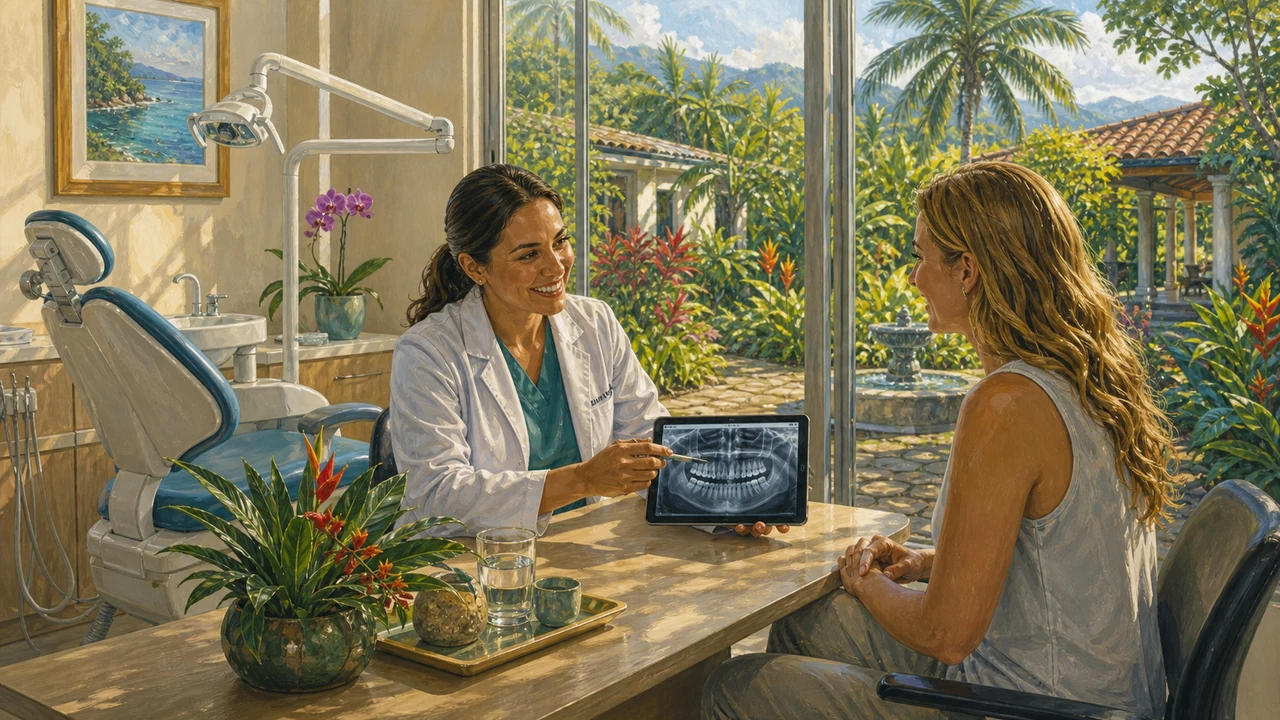 Both countries have genuine medical quality to offer at the leading private-hospital level, and both have lower-tier facilities that should be avoided. The key is verifying the specific facility and provider, not relying on national reputation alone.
Thailand: Bangkok’s top private hospitals are internationally famous for medical tourism and a number hold Joint Commission International (JCI) accreditation — the same standard applied to top US hospitals. Thailand has had decades of experience serving international patients, with multilingual staff, dedicated international patient services departments, and streamlined billing systems designed for overseas visitors.
Costa Rica: Leading private hospitals in and around San José also hold JCI accreditation and operate with comparable infrastructure. Specialists at these facilities frequently hold board certifications from or have trained at institutions in the United States or Europe. The Costa Rica Medical College (Colegio de Médicos y Cirujanos) maintains a public verification registry for licensed practitioners.
Verification checklist (applies to both countries):
- Confirm JCI or equivalent accreditation of the specific facility (not just “a hospital in Thailand”)
- Verify the surgeon’s board certification and specialty training
- Confirm a board-certified anesthesiologist (not a technician) will manage your case
- Review what is included in the quoted price — surgeon fee, facility, anesthesia, post-op visits, medications
- Ask what the complication protocol is and how follow-up is handled after you return home
For most common procedures, quality at a well-chosen accredited hospital in either country is genuinely comparable. The distinction is not quality in the abstract; it is the practical reality that coordinating a complication or follow-up care from 9,000 miles away is meaningfully harder than from four hours away.
Procedure Strengths by Country
Each destination has developed particular concentrations of expertise driven by historical patient flows and the types of procedures international visitors most commonly request.
Costa Rica’s strongest categories for international patients:
- Dental work — implants, full-arch restorations, veneers, crowns, and cosmetic dentistry. Costa Rica has built the deepest dental tourism infrastructure in the Western Hemisphere, with the most accessible logistics for North American patients. See our Dental Tourism in Costa Rica guide.
- Cosmetic and plastic surgery — the full range of aesthetic procedures with transparent package pricing and a strong track record with US and Canadian patients. Our Plastic Surgery in Costa Rica guide covers the field.
- Bariatric surgery — gastric sleeve and bypass programs with accredited facilities and established post-operative nutritional support.
- LASIK and refractive eye surgery — modern laser vision correction at significantly reduced cost.
- Fertility and IVF — accredited reproductive medicine centers with internationally trained specialists.
Thailand’s traditionally strong categories:
- High-volume cosmetic surgery, particularly facial procedures and gender-affirming surgeries — Bangkok has accumulated extraordinary volume and institutional experience in these areas
- Orthopedic procedures at large Bangkok hospitals with dedicated international patient programs
- Complex multi-specialty cases where the sheer size of leading Bangkok hospitals (some with over 2,500 beds) creates an internal referral ecosystem
- Wellness and traditional medicine programs that blend biomedical and Southeast Asian therapeutic traditions
For North American patients focusing on dental, bariatric, cosmetic, or LASIK procedures, Costa Rica’s combination of comparable quality, proximity, and established patient infrastructure makes it the more practical choice in most cases.
Recovery Environment
 Both destinations offer compelling environments for post-procedure recovery — they are just very different in character.
Costa Rica: The recovery environment is defined by extraordinary natural diversity within a small geography. Pacific surf beaches, cloud forest lodges, geothermal hot springs, Caribbean coast villages, and volcanic national parks are all accessible within a few hours of the hospital corridor near San José. The country is English-friendly, the food is fresh and gentle, and the pace — pura vida — is inherently restorative. The ecotourism infrastructure is world-class, with small-group lodges offering privacy, attentive hospitality, and zero crowds. Patients recovering from dental work frequently spend a few days near Arenal’s hot springs; post-surgical patients often retreat to a quiet Central Valley or cloud forest lodge.
Thailand: Bangkok itself is an overwhelming, fascinating city that is stimulating rather than restful in the immediate post-operative period — most patients move to a quieter resort environment (Chiang Mai, Koh Samui, Phuket) after discharge. Thailand’s culinary culture, Buddhist temple circuits, beach islands, and wellness retreats create a genuinely distinctive recovery backdrop. However, internal travel within Thailand adds logistics, and the overall sensory intensity of the country may not suit every recovering patient.
For patients who want gentle, nature-immersive recovery with minimal effort and maximum privacy, Costa Rica’s scale and accessibility are an advantage. For patients who want a longer adventure travel experience built around a multi-week treatment plan, Thailand’s greater variety and lower accommodation costs over extended stays can be compelling.
Time Zone and Communication
A practical dimension that is easy to overlook: ongoing communication with your medical team during treatment and after your return.
Costa Rica operates in Central Time (UTC−6, or UTC−5 during US daylight saving). Most US cities are within one to two hours of this zone, and Canada’s major cities within three. A question to your clinic coordinator at 10 AM in Miami reaches them at roughly the same time of their working day. Post-return follow-up calls or telemedicine check-ins are trivially easy to schedule during business hours for both sides.
Thailand operates at UTC+7 — a 11 to 14 hour difference from US time zones. A 10 AM call from New York City reaches Bangkok at 9 or 10 PM local time. Real-time communication requires one party to work outside normal hours. For multi-week ongoing treatment this is manageable with planning; for post-return follow-up communications, it adds friction.
This matters most if: your procedure requires phased treatment over multiple visits; you anticipate questions arising after returning home; or you want easy telemedicine access for post-operative monitoring.
Summary Comparison Table
| Factor | Costa Rica | Thailand |
|---|---|---|
| Flight time from US/Canada | 3–6 hours direct | 18–25 hours, usually connecting |
| Jet lag on arrival | Minimal (0–2 hrs) | Significant (11–14 hrs) |
| Return journey post-surgery | Short, manageable | Long, more physically demanding |
| Procedure cost vs US | Often 50–70% less | Often 50–70% less |
| Total trip cost for short procedures | Generally lower (shorter flight, fewer extra nights) | Higher due to flight + acclimatization stay |
| JCI-accredited hospitals | Yes (leading San José facilities) | Yes (leading Bangkok hospitals) |
| English availability | Good at private hospitals | Excellent at top Bangkok hospitals |
| Dental tourism infrastructure (for N. Americans) | Strongest in hemisphere | Strong, but less optimized for N. American logistics |
| Cosmetic surgery experience | Strong, well-developed | Very strong, especially Bangkok |
| Recovery environment | Nature-immersive, compact, gentle | City-intense then resort; greater variety |
| Time zone vs US/Canada | Same region; easy communication | 11–14 hrs difference; scheduling friction |
| Visa requirements for US/Canadians | 90-day tourist entry, no advance visa | 30–60 day visa-exempt tourist entry |
Which Is Right for You?
The honest answer depends less on which country is “better” in the abstract and more on your specific procedure, timeline, budget, and travel preferences.
Costa Rica is likely the better choice if:
- You are based in the United States or Canada and minimizing total travel burden matters to you
- Your procedure is dental work — Costa Rica has the deepest, most accessible dental tourism infrastructure in the Western Hemisphere for North American patients
- You are having bariatric, LASIK, fertility, or cosmetic surgery and want to minimize travel time during the recovery window
- You want easy, low-jet-lag communication with your medical team throughout the process
- You value a natural, restorative recovery environment with minimal internal logistics
Thailand may be a better fit if:
- You are already planning extended travel to Southeast Asia and want to combine a medical procedure with that trip
- You want a very long-duration stay (several weeks) and Thailand’s lower accommodation costs and greater variety become meaningful advantages
- You are seeking a procedure category where specific Bangkok hospitals have accumulated extraordinary volume and reputation — certain cosmetic surgeries and gender-affirming procedures in particular
- The overall Southeast Asia travel experience is a significant motivation in its own right
Neither destination represents a compromise on quality if you choose the right accredited facility and perform proper due diligence. The difference is logistics, proximity, and ecosystem fit for your specific situation.
For most North Americans planning a single procedure or a focused two-week medical trip, Costa Rica’s proximity advantage is a genuine and substantial benefit — one that affects everything from jet lag and surgical readiness to recovery comfort, follow-up logistics, and total trip cost.
Next steps: Medical Tourism in Costa Rica — Full Guide · Medical Tourism Cost Guide · Hospitals and Accreditation · Costa Rica vs. Mexico Medical Tourism · Plan Your Medical Trip
Frequently asked questions
Is Costa Rica or Thailand cheaper for medical tourism?
Both destinations offer substantial savings over typical US private-pay prices — often 50–70% depending on the procedure. Thailand's absolute procedure fees may be marginally lower for some treatments, but for North American patients the total trip cost (flights, accommodation, and time away) frequently narrows or reverses that gap. Always compare total out-of-pocket cost, not just the procedure quote.
How much longer does it take to travel to Thailand versus Costa Rica from the US?
From most US cities, Costa Rica is a three-to-six-hour direct flight, with no meaningful jet lag. Thailand typically requires 18–24 hours of total travel time, a 10–12 hour time-zone shift, and at least a day of acclimatization before any procedure. For procedures requiring post-operative follow-up appointments, the shorter return trip to Costa Rica also matters.
Are hospitals in Thailand JCI-accredited?
Yes — Thailand has a significant number of Joint Commission International (JCI)-accredited hospitals, particularly in Bangkok. Costa Rica's leading private hospitals in the San José area also hold JCI accreditation. Both countries maintain internationally recognized private medical sectors. Always verify the specific facility you are considering, not just the country's general reputation.
Which country is better for dental tourism — Costa Rica or Thailand?
Costa Rica is generally considered the stronger choice for North American dental tourists based on proximity, near-zero jet lag, and a well-established dental tourism infrastructure. Thailand is a credible alternative for travelers already in Southeast Asia or those combining treatment with regional travel, but the flight distance from North America significantly increases total trip cost and recovery complexity for dental work.
How long do I need to stay for medical treatment in Costa Rica vs Thailand?
Minimum clinical stay is similar for the same procedure in both countries. The key difference is recovery before flying: flying 18–24 hours after surgery or dental work carries more risk and discomfort than a three-to-five-hour flight. Your surgeon may require the same number of recovery days in both countries, but the return journey from Costa Rica is substantially easier on the body.