Dental Implants in Costa Rica: Costs, Quality & Process
Dental implants in Costa Rica attract thousands of patients from the United States, Canada, and Europe each year — primarily because the same high-quality titanium implants and porcelain crowns available at home can be obtained here at a fraction of the cost, without sacrificing clinical standards. Whether you need a single missing tooth replaced or a more complex full-arch restoration, Costa Rica has become a recognized destination for implant dentistry abroad, combining genuine savings with the opportunity to recover in a tropical setting.
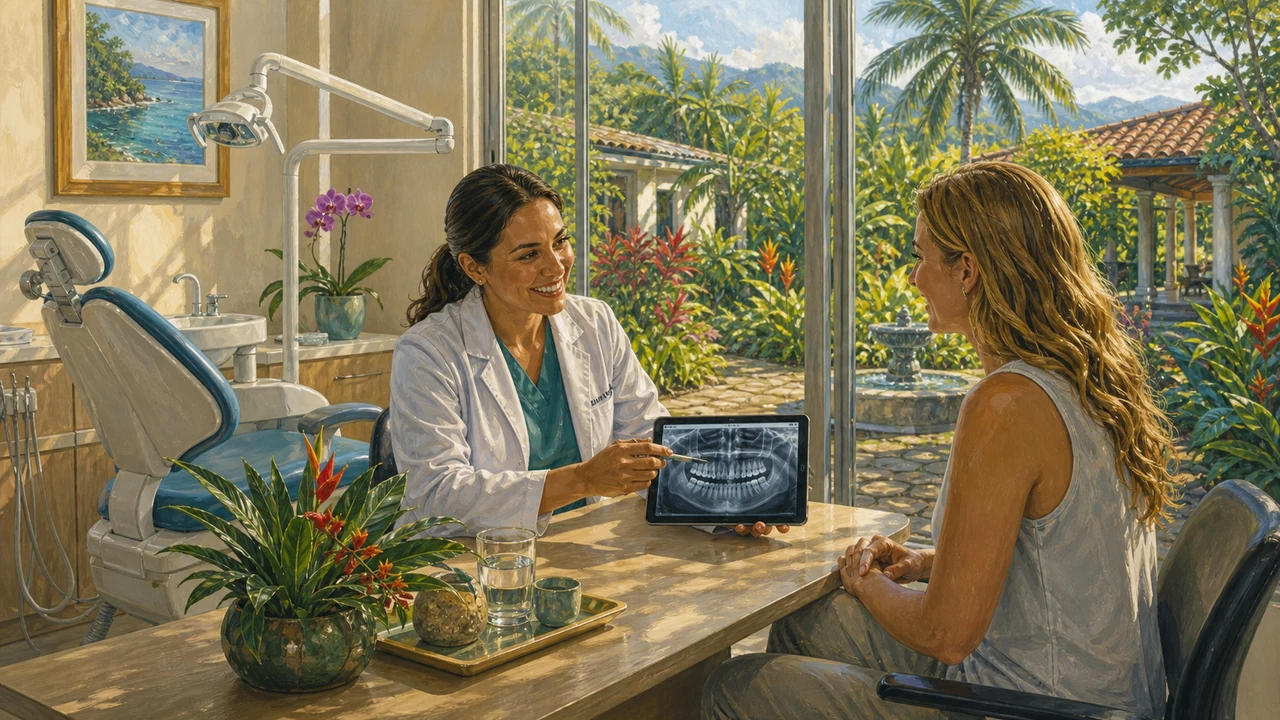
This page covers what dental implants are, the types of procedures available, how the treatment process works across one or two trips, what materials to expect, what the process costs compared to home, safety and quality considerations, recovery, and how to select a qualified provider. For the broader picture of dental care options, see our dental tourism in Costa Rica sub-pillar, or explore the full medical tourism in Costa Rica pillar.
What Are Dental Implants — and Who Needs Them?
A dental implant is a small titanium post that is surgically inserted into the jawbone to serve as an artificial tooth root. Once the post fuses with the bone (a process called osseointegration), an abutment and a custom-made crown are attached on top, creating a replacement tooth that looks, feels, and functions like a natural one.
Implants are typically recommended when:
- One or more teeth are missing due to decay, injury, or extraction
- A patient wants a permanent, stable alternative to removable dentures or bridges
- Sufficient bone density exists in the jaw to support the implant (or bone can be built up with a graft)
- The patient is in good overall health and does not smoke heavily
A single implant replaces one tooth. Multiple implants can anchor a bridge or support a partial denture, making them suitable for patients with several missing teeth. For those who have lost most or all of their teeth, full-arch solutions (sometimes called All-on-4 or All-on-6 procedures) use a small number of strategically placed implants to support an entire arch of teeth — see our All-on-4 and full-mouth dental implants spoke for that specific topic.
The Procedure: What to Expect Step by Step

A typical single-implant treatment follows these stages:
-
Initial consultation and imaging — A comprehensive exam, digital X-rays, and often a cone-beam CT scan assess bone volume and anatomy. Many clinics now offer virtual consultations before your trip, letting you submit records and receive a treatment plan and quote from home.
-
Extraction (if needed) — If a damaged tooth is still present, it must be removed. Some providers perform immediate implant placement in the same appointment; others recommend waiting for the socket to heal.
-
Implant placement — Under local anesthesia, the titanium post is inserted into the prepared site. The procedure takes roughly one to two hours per implant and is generally well tolerated. Most patients report mild soreness for a few days afterward, manageable with standard pain relief.
-
Osseointegration — The implant must fuse with the jawbone over a period of approximately three to six months. This healing phase is why most single-implant cases require two separate trips.
-
Abutment and crown placement — On the second visit, the provider attaches the abutment (a connector piece) and places the final custom crown. This appointment is usually brief.
-
Follow-up care — Your provider should supply written records of the implant brand and specifications, care instructions, and a contact for any concerns after you return home.
Number of trips: Most single implants require two trips spaced three to six months apart. If bone grafting is needed, the timeline may extend further. All-on-4 full-arch procedures are often completed in one visit of seven to fourteen days, with extractions, implant placement, and a temporary arch all performed in the same trip.
Cost Comparison: Dental Implants in Costa Rica vs. the United States
One of the strongest reasons patients choose Costa Rica for dental implant surgery abroad is the cost differential. The table below shows general price ranges; actual quotes vary by clinic, implant brand, crown material, and case complexity. Always request an itemized written quote that clearly lists the implant, abutment, crown, imaging, and any sedation or bone-graft fees separately.
Important: These ranges are for general orientation only. Verify current quotes directly with your chosen provider — prices change, and individual cases differ significantly.
| Procedure | Typical US Price Range | Typical Costa Rica Range | Approximate Savings |
|---|---|---|---|
| Single implant + crown | $3,000 – $5,000 | $800 – $1,800 | ~50–70% |
| Implant + bone graft + crown | $4,500 – $7,000 | $1,400 – $2,800 | ~50–65% |
| Implant-supported bridge (3 units) | $8,000 – $14,000 | $2,500 – $5,500 | ~55–70% |
| Full arch (All-on-4 style) | $20,000 – $35,000+ | $7,000 – $14,000 | ~55–65% |
Even after factoring in round-trip airfare and hotel for two trips, many patients report net savings of several thousand dollars for complex cases. Costa Rica’s proximity to the US and Canada (three to six hours by air from most major cities) keeps travel costs manageable compared to more distant destinations. Juan Santamaría International Airport (SJO) near San José is the main gateway, with direct flights from dozens of North American cities.
Implant Materials and Systems

The quality of a dental implant depends heavily on the brand and materials used. Internationally oriented Costa Rican dental clinics generally work with titanium implant systems from recognized global manufacturers — the same brands used in the United States and Europe. When requesting a quote, ask specifically:
- Which implant brand and model will be used?
- Is the crown zirconia (all-ceramic) or porcelain-fused-to-metal (PFM)?
- Are digital impressions used, or conventional molds?
- What is the warranty or guarantee policy on the crown?
Zirconia crowns are more expensive but offer superior aesthetics and biocompatibility. Porcelain-fused-to-metal crowns remain common and are durable, though the metal margin can show over time. Discuss your priorities with your provider to select the right material for your case.
For comparison: dental crowns and bridges in Costa Rica and porcelain veneers are also popular with international patients at significant savings.
Safety, Quality, and Accreditation
Costa Rica’s private dental sector is not regulated by the same bodies as US dentistry, but many clinics catering to international patients maintain high standards:
- Colegio de Cirujanos Dentistas de Costa Rica is the national licensing body; all practicing dentists must be registered members. You can verify a dentist’s credentials through this organization.
- Private clinics near San José and in the Central Valley area cluster tend to have English-speaking staff, digital imaging, and experience coordinating care with foreign patients.
- Some dental facilities operate within or adjacent to internationally accredited private hospitals, offering an added layer of quality infrastructure.
The honest risk framing: any surgical procedure carries inherent risks, including infection, implant failure, or nerve sensitivity. These risks exist anywhere in the world. Your due diligence — verifying credentials, reviewing patient testimonials, asking about complication protocols — is the most effective safeguard. Always consult a licensed, board-certified provider for a personal evaluation before proceeding.
Recovery: Combining Dental Treatment With a Vacation

One appeal of dental tourism in Costa Rica is that the recovery period maps naturally onto a vacation. After implant placement, most patients experience mild soreness for two to five days — the kind that a short course of pain relief manages easily. Soft foods are recommended for the first week.
This recovery window aligns well with lower-intensity Costa Rica activities — cultural tours of San José, coffee plantation visits, or a few quiet days in a mountain lodge. More physically demanding adventure activities are best saved for after the initial healing period.
If you plan to combine treatment with travel, discuss your itinerary with your dentist upfront. They can advise on what activities are appropriate during the healing window, and whether your planned travel days allow adequate recovery time before your return flight. Our plan your medical trip guide covers logistics in detail.
How to Choose a Dental Implant Provider in Costa Rica
The dental tourism market is competitive, and quality varies. Use this checklist when evaluating providers:
- Verify credentials. Confirm the treating dentist (oral surgeon or prosthodontist) is registered with the Colegio de Cirujanos Dentistas and has documented implant experience.
- Ask for a detailed treatment plan. A reputable clinic will review your records or imaging remotely and provide a step-by-step plan with itemized pricing before you commit.
- Confirm implant brand and crown material in writing. Generic “implants” and name-brand systems differ significantly in documented long-term success rates.
- Check English-language communication. International patients benefit from clinics with bilingual staff who can explain the treatment clearly and provide records in English.
- Understand the warranty and follow-up process. Ask what happens if a crown cracks or an implant fails after you return home. Some clinics work with dental professionals in your home country for follow-up care.
- Read independent patient reviews. Third-party forums and review platforms frequented by dental tourists offer real patient experiences that go beyond a clinic’s own marketing.
- Do not choose on price alone. The cheapest quote may reflect lower-grade materials, less experienced providers, or hidden fees. Compare value, not just price.
For general guidance on staying healthy and safe while traveling in Costa Rica, see our Costa Rica travel tips and health and safety advice pages.
This page provides general information for travelers researching dental tourism options. It does not constitute medical or dental advice. Consult a licensed, board-certified dental professional for a personal evaluation before making any treatment decisions.
Frequently asked questions
How much do dental implants cost in Costa Rica?
A single titanium implant with a porcelain crown in Costa Rica typically falls in a range well below comparable US or Canadian prices — commonly 50–70% less. Costs vary by clinic, implant brand, and the complexity of the case, so always request itemized written quotes before committing.
Is it safe to get dental implants in Costa Rica?
Costa Rica has a well-established dental tourism industry. Many private dental clinics near San José operate to international standards and use the same major implant systems found in the US and Europe. Verify that your provider is licensed, ask about the implant brand and materials, and confirm that any follow-up care is arranged before you travel.
How many trips to Costa Rica do I need for dental implants?
A standard single implant typically requires two trips: one for extraction (if needed) and implant placement, and a second visit — usually three to six months later — for the abutment and final crown. All-on-4 and similar full-arch procedures may be completed in a single extended trip of one to two weeks. Your dentist will outline the timeline during your consultation.
What implant materials are used in Costa Rica?
Most internationally oriented Costa Rican dental clinics use titanium implants from recognized global brands, paired with zirconia or porcelain-fused-to-metal crowns. Ask your provider to specify the implant system and crown material in writing so you can compare quotes on equal footing.
How do I choose a dental implant provider in Costa Rica?
Look for a board-certified oral surgeon or prosthodontist with verifiable credentials and experience with international patients. Request before-and-after documentation, ask which implant brand they use, confirm English-speaking staff and bilingual records, and get a detailed treatment plan and itemized quote in writing before booking travel.