Dental Crowns & Bridges in Costa Rica: Costs & Care
Dental crowns and bridges in Costa Rica attract thousands of North American patients every year, drawn by a combination of highly trained dentists, modern materials, and costs that are often 50–70% less than comparable work back home — without any compromise on quality. Whether you need to restore a cracked tooth with a single crown or replace a missing tooth with a bridge, Costa Rica’s private dental sector has the infrastructure, the technology, and the clinical experience to deliver excellent outcomes.
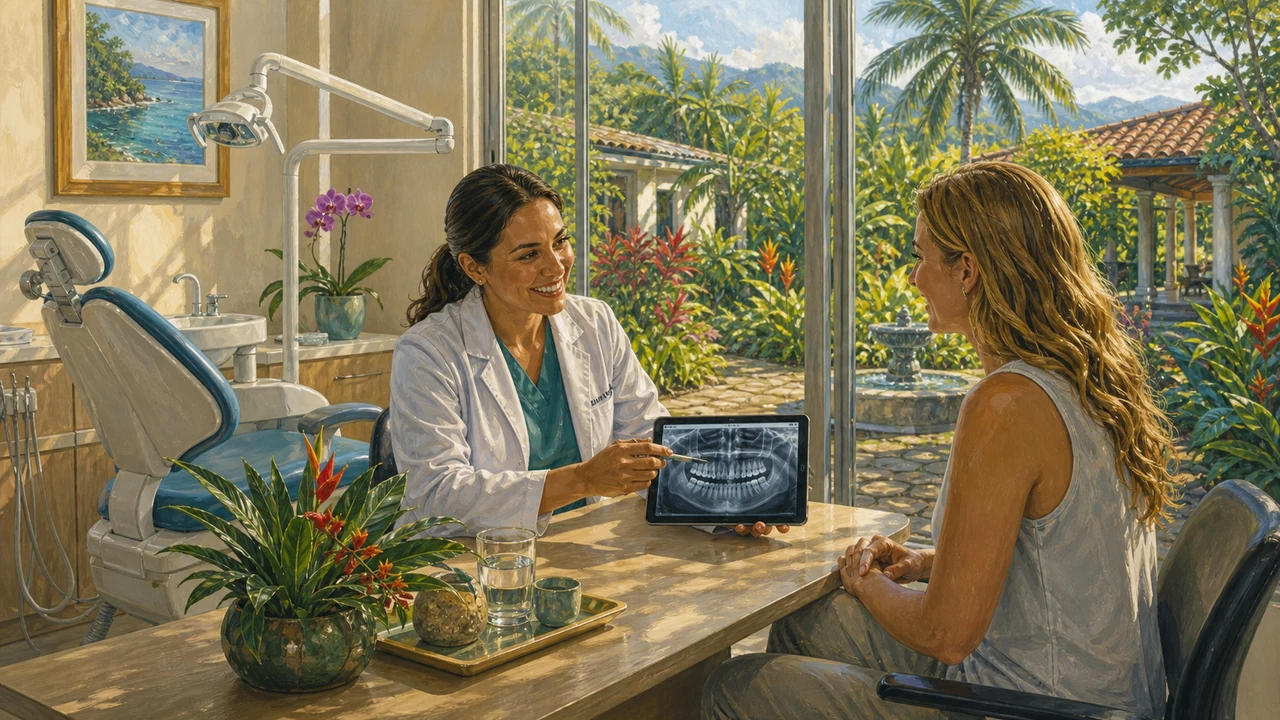
This guide explains what crowns and bridges are, which materials are available, who makes a good candidate, how the process typically unfolds across a Costa Rica trip, what costs to expect, and how to evaluate quality and safety before you book. For a broader look at the specialty, see our dental tourism in Costa Rica sub-pillar and the medical tourism Costa Rica pillar for cross-cutting cost and safety guidance.
Crowns vs. Bridges — What Is the Difference?
A dental crown is a full-coverage cap placed over a single tooth. Dentists recommend crowns when a tooth is cracked, heavily decayed, weakened after a root canal, or cosmetically unsatisfactory and not a good candidate for veneers. The crown encases the entire visible portion of the tooth above the gum line, restoring its shape, strength, and appearance.
A dental bridge spans a gap left by one or more missing teeth. It consists of two crowns — placed on the natural teeth (or implants) on either side of the gap — and one or more artificial teeth called pontics suspended between them. A traditional bridge is cemented permanently in place and requires no surgical component, making it a faster and less expensive option than dental implants. The trade-off is that healthy neighboring teeth must be prepared (shaved down) to accept the anchor crowns.
Knowing which option suits you requires a clinical exam and imaging; your Costa Rica provider will evaluate bone volume, adjacent tooth health, and bite forces before recommending a plan.
Crown Materials: Porcelain, Zirconia, and More
Material choice affects aesthetics, durability, cost, and how many appointments are needed. The main options available at quality Costa Rica clinics include:

- Porcelain-fused-to-metal (PFM). A ceramic layer over a metal substructure. Long the workhorse of restorative dentistry — strong, widely available, and the most affordable option. A faint metal line can appear at the gum line over time as gums recede.
- All-ceramic / lithium disilicate (e.g., e.max). No metal core; excellent light transmission that closely mimics natural enamel. Popular for front teeth where aesthetics are paramount. Strong enough for most premolar and molar situations.
- Full-contour zirconia. Milled from a single block of zirconium oxide ceramic. Extremely durable — well suited for back teeth under heavy chew loads and for patients who grind. Modern monolithic zirconia is also cosmetically competitive for anterior teeth. Zirconia crowns in Costa Rica are increasingly the default recommendation at better clinics.
- PFZ (porcelain-fused-to-zirconia). Combines a zirconia core with a porcelain facing for superior aesthetics, though the porcelain layer can chip over time.
The best material for you depends on the tooth’s location, your bite, aesthetic priorities, and budget. Discuss all options — and what warranty each carries — with your provider.
Who Is a Good Candidate?
Most adults with structurally compromised teeth, completed root canals, or a single missing tooth (with healthy adjacent teeth) are reasonable candidates for crowns or bridges. Factors that affect candidacy include:
- Bone and gum health. Active periodontal disease should be treated before placing any restorations.
- Adjacent tooth integrity. A bridge requires that the anchor teeth be strong enough to support the span.
- Bruxism. Heavy grinding increases stress on restorations; your provider may recommend a night guard alongside treatment.
- Overall systemic health. Certain medications and conditions (e.g., uncontrolled diabetes, bisphosphonate use) can affect healing and treatment planning.
Always have a current set of X-rays and, ideally, a CBCT scan if you are planning a bridge — many Costa Rica clinics can provide digital imaging on-site at the first appointment.
The Process: What Happens Across Your Trip

Before you travel: Share X-rays and photos with your prospective provider via email. Reputable clinics offer a complimentary pre-travel consultation so you arrive with a written treatment plan and cost estimate in hand. Confirm the lab turnaround time — it determines how long you need to stay.
Visit 1 (Day 1–2): The dentist takes impressions or digital scans, prepares the tooth by removing a thin layer of enamel (or more if decay is present), and places a temporary crown or bridge. The impressions go to the in-house or partner dental laboratory.
Lab phase (Days 3–8, typically): CAD/CAM-capable clinics can cut same-day or next-day restorations from a digital scan. Traditional lab work on a complex multi-unit bridge generally takes five to seven business days. This interval is ideal for exploring Costa Rica — the Central Valley, Arenal Volcano, beaches, or coffee country are all reachable from San José.
Visit 2 (Day 8–12, typically): The permanent restoration is tried in, adjusted, and cemented. Minor occlusal adjustments are normal; a well-run clinic will schedule a brief follow-up check before you fly home.
Plan for 10–14 days as a safe window for a straightforward case. Complex multi-unit bridges or cases involving preparatory extractions may need additional time. Confirm your exact timeline with your provider.
Cost Comparison: US vs. Costa Rica
Prices vary by material, clinic reputation, and case complexity. The ranges below are broad guides — verify current quotes in writing before making any travel or financial decisions.
| Procedure | Typical US Price Range | Typical Costa Rica Range | Approximate Savings |
|---|---|---|---|
| PFM crown (single) | $1,000–$1,700 | $250–$500 | ~60–75% |
| All-ceramic / e.max crown | $1,200–$2,000 | $350–$650 | ~60–70% |
| Full-contour zirconia crown | $1,300–$2,200 | $400–$750 | ~60–70% |
| 3-unit porcelain bridge | $3,500–$6,000 | $900–$1,800 | ~60–70% |
| 3-unit zirconia bridge | $4,000–$7,000 | $1,100–$2,200 | ~60–70% |
Ranges compiled from publicly reported patient experiences and industry data; individual quotes will differ. Always request itemized estimates directly from your provider. Savings estimates are relative to the upper end of US out-of-pocket costs and do not account for travel expenses.
Even after factoring in round-trip airfare to San José (SJO) and accommodation for 10–14 days, most patients treating several crowns or a multi-unit bridge report significant net savings. Patients flying into Liberia (LIR) for Guanacaste will typically travel two to three hours to reach the major dental clinics in the Central Valley.
Durability and Aftercare

With proper care, high-quality crowns and bridges are durable long-term restorations. Zirconia and lithium disilicate restorations have shown strong clinical longevity in peer-reviewed literature; PFM remains proven over decades of use. The main variables are:
- Oral hygiene. Plaque accumulation at crown margins and under bridge pontics can lead to gum disease and secondary decay. Floss threaders and water flossers are essential for bridge maintenance.
- Bite forces. Night grinding shortens the lifespan of any restoration. A well-fitted night guard protects your investment.
- Follow-up care at home. Share your treatment records and X-rays with your dentist back home. Schedule a check-up within six months of returning; your local dentist can monitor fit, margins, and gum health.
- Warranties. Ask your Costa Rica provider about their warranty policy. Many established clinics offer a one- to five-year warranty on lab defects and will redo a restoration if it fails within the covered period.
Quality, Safety, and Choosing a Provider
Costa Rica’s private dental sector operates under licensing standards enforced by the Colegio de Cirujanos Dentistas de Costa Rica. Many practitioners completed specialty training in the US, Spain, or Mexico, and leading clinics use the same CAD/CAM systems, digital X-ray platforms, and major-brand ceramic materials used in North American and European practices.
Key questions to ask any prospective provider:
- Board certification and specialty training (prosthodontics is the specialty most relevant to crowns and bridges)
- Whether the laboratory is in-house or outsourced, and typical turnaround
- Material brands used (named brands such as Ivoclar, Dentsply, or equivalent signal quality commitment)
- Patient reviews from verifiable sources and the ability to speak with past patients
- Written warranty terms and what recourse exists if you return home and need an adjustment
- Full itemized written estimate before any commitment
For broader guidance on evaluating accreditation and hospital-level care, see our hospitals and accreditation guide and the medical tourism cost guide. You can also review our travel tips for practical logistics on getting around San José and the Central Valley during your stay.
Combining Dental Work with a Costa Rica Vacation
One of the most appealing aspects of dental tourism in Costa Rica is the country itself. Between appointments — especially during the five-to-seven-day lab phase — patients have easy access to national parks, Pacific beaches, cloud forests, and world-class ecotourism and nature experiences. The country’s stable democracy, low crime in tourist zones (see our safety tips), and English-speaking medical staff make the logistics comparatively straightforward for North American visitors.
Recovery after crown or bridge preparation is generally mild — a day of sensitivity is common, but most patients feel comfortable the following day. Strenuous adventure activities are generally fine during the lab phase; your dentist will advise on any individual restrictions.
If you are also considering other procedures, see our sibling spokes: dental veneers in Costa Rica and dental implants in Costa Rica, or explore the dental tourism overview for a full picture of what Costa Rica’s dental sector offers.
Consult a licensed, board-certified dental professional for a personal evaluation before making any treatment decisions. The information on this page is educational and does not constitute medical or dental advice.
Frequently asked questions
How much do dental crowns cost in Costa Rica?
Prices vary by material, clinic, and the complexity of your case, but dental crowns in Costa Rica are commonly priced at a fraction of typical US rates — often 50–70% less. Porcelain-fused-to-metal crowns tend to be the most affordable, while full zirconia crowns sit at the higher end of the local range. Always request a written quote from a licensed provider before booking travel.
Are dental crowns and bridges in Costa Rica safe and high quality?
Costa Rica has a well-established private dental sector serving international patients. Many practitioners hold board certifications, trained abroad, and use the same major-brand materials (zirconia, CAD/CAM-milled porcelain) used in the US and Europe. Ask any prospective provider about their credentials, laboratory relationships, and warranty terms before proceeding.
How long will I need to stay in Costa Rica for crowns or a bridge?
A straightforward single crown typically requires two visits spanning one to two weeks — the first for preparation and a temporary, the second for seating the permanent restoration. A multi-unit bridge may add a few days. Your provider will give you a treatment timeline specific to your case.
What is the difference between a crown and a bridge?
A crown caps a single tooth that is damaged, weakened, or has had a root canal. A bridge uses two crowns on neighboring teeth (called abutments) to anchor an artificial tooth (pontic) that fills the gap left by a missing tooth. Dental implants are a separate solution that replace the root itself and do not rely on adjacent teeth.
Can I combine dental work with sightseeing in Costa Rica?
Absolutely. San José's private dental clinics are convenient to the airport and the Central Valley. Between appointments, patients commonly visit Arenal Volcano, Manuel Antonio, or the coffee regions. Your recovery period after a bridge preparation is generally mild — ask your provider which activities are fine to enjoy between visits.