Dental Tourism in Costa Rica: Costs, Care & How It Works
Dental tourism in Costa Rica has made the country one of the most-requested destinations in the Western Hemisphere for patients seeking high-quality dental care at significantly lower prices than they would pay at home. Every year, thousands of people from the United States, Canada, and Europe fly to Costa Rica for implants, veneers, crowns, bridges, and full-mouth reconstructions — completing treatment in modern, internationally equipped clinics, then spending recovery days exploring one of Central America’s most beautiful destinations.
This guide covers everything you need to know: why Costa Rica works for dental travel, what procedures are available, realistic cost comparisons, how to evaluate quality and safety, how to plan your trip, and how to make the most of your time here. For the broader context of medical travel, see the Costa Rica medical tourism pillar.
Why Costa Rica for Dental Care?
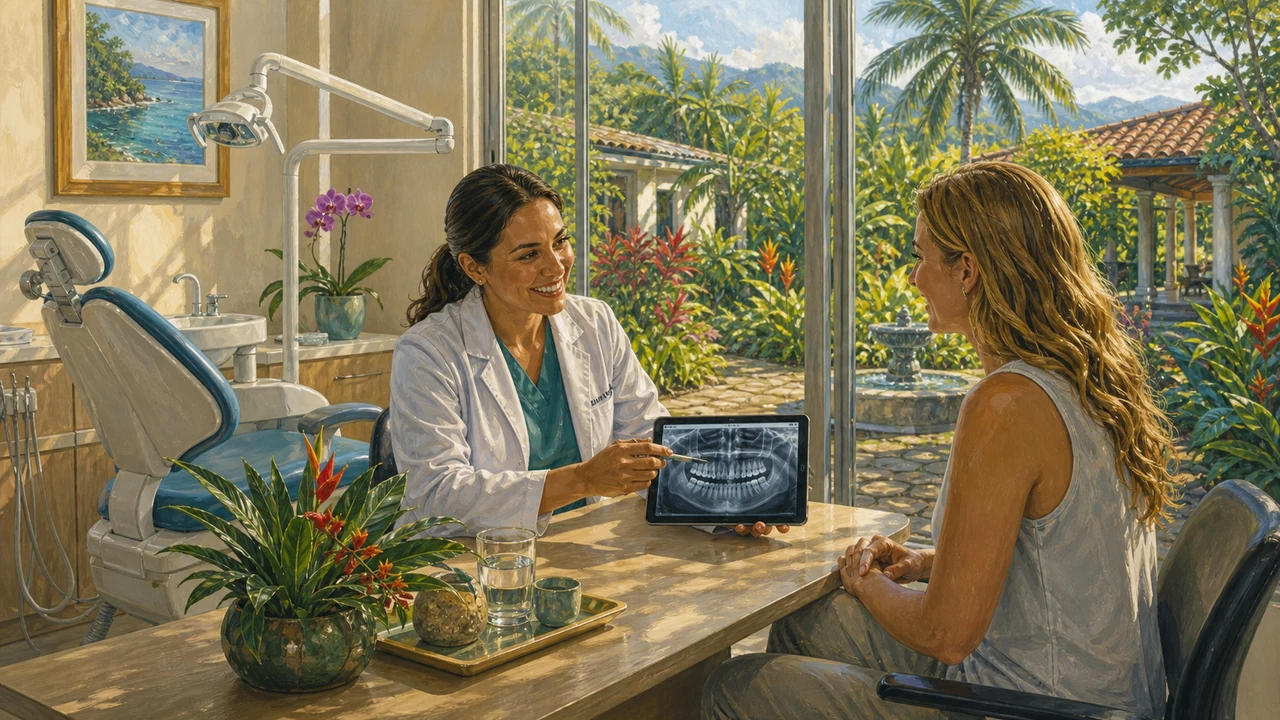 Dental treatment in the United States and Canada is among the most expensive in the world, and most insurance plans cover only routine preventive care — leaving restorative and cosmetic procedures largely out-of-pocket. When a single implant, a set of veneers, or a full-mouth reconstruction runs into the thousands or tens of thousands of dollars at home, the economics of a dental trip abroad become very compelling very quickly.
Costa Rica offers internationally sourced materials and modern equipment at prices that reflect a meaningfully lower cost of living and clinical overhead. Patients consistently report saving enough on treatment to more than cover the cost of flights and accommodation, with money left over — making the trip self-financing in a way that medical travel to some other destinations cannot always match.
Beyond price, Costa Rica earns its reputation as a dental travel destination through practical convenience: San José and its surrounding suburbs are home to most internationally oriented dental practices, both major international airports have direct connections to major North American hubs, and the country’s infrastructure for tourism — hotels, transportation, restaurants — is well developed. Getting here is straightforward, and the country is genuinely enjoyable to be in during recovery.
Treatments Available to International Patients
Costa Rican dental clinics serving international patients offer the full range of modern restorative and cosmetic dentistry:
- Dental implants — single-tooth titanium fixtures with ceramic crowns, the same implant systems used in the US and Europe. See our dedicated guide to dental implants in Costa Rica.
- All-on-4 and full-mouth implant restorations — for patients needing comprehensive reconstruction, where four strategically placed implants support a full arch of fixed teeth. Our All-on-4 full-mouth guide covers this in detail.
- Porcelain veneers — thin ceramic facings that correct chips, discoloration, gaps, and minor alignment issues in one or two visits. More detail in our veneers Costa Rica guide.
- Porcelain crowns and bridges — restore damaged or missing teeth with natural-looking, durable results. See the crowns and bridges guide.
- Teeth whitening — professional-grade whitening often bundled with other cosmetic procedures.
- Orthodontics — traditional braces or clear aligner treatment, typically for patients willing to coordinate care across multiple visits or with remote check-ins.
- Root canal treatment and extractions — common preparatory procedures often completed in the same trip before placing a crown or implant.
- Periodontal treatment — deep cleaning, gum therapy, and bone grafting where needed to prepare the mouth for restorative work.
Because many procedures require multiple appointments over several days, clinics experienced in international patients are skilled at building efficient itineraries that minimize waiting time between appointments.
Cost Comparison: What to Expect
 The table below shows typical price ranges based on general market data. These are ranges only — actual quotes vary by clinic, complexity, materials chosen, and any preparatory work required. Always request a detailed, itemized written quote from the clinic before booking flights. Verify that quoted materials (implant brand, crown type, veneer grade) are the same before comparing prices across providers.
| Procedure | Typical US Range | Typical Costa Rica Range | Approximate Savings |
|---|---|---|---|
| Single dental implant (implant + crown) | $3,000–$6,000 | $900–$1,800 | Often 60–70% |
| Porcelain crown (per tooth) | $1,200–$2,000 | $350–$700 | Often 55–65% |
| Porcelain veneer (per tooth) | $1,000–$2,500 | $350–$650 | Often 55–70% |
| All-on-4 full arch (one arch) | $20,000–$35,000 | $7,000–$15,000 | Often 50–65% |
| Root canal (molar) | $1,000–$1,800 | $300–$600 | Often 60–70% |
| Teeth whitening (professional) | $500–$1,200 | $150–$350 | Often 60–70% |
Ranges are illustrative. Verify current quotes directly with providers — prices change and vary significantly by clinic and case complexity.
Even after adding round-trip flights (typically $300–$700 from the US East or West Coast, depending on timing) and a week of accommodation, most patients with moderate to significant dental needs come out substantially ahead. Patients with extensive work — multiple implants, full-mouth reconstruction — often see savings large enough to make the decision financially obvious.
Quality, Accreditation, and Safety
A common question from first-time dental tourists is whether lower prices mean lower quality. At reputable internationally oriented clinics, the answer is no. Several factors support that confidence:
Training and credentials. Costa Rican dentists complete rigorous university programs — typically five to six years at accredited institutions — and many pursue postgraduate specialization or residencies abroad. Dentists working regularly with international patients frequently hold memberships in professional organizations such as the International Congress of Oral Implantologists (ICOI) or the Academy of Osseointegration, and some are certified by US or European specialty boards.
Materials. Reputable clinics use the same major-brand implant systems, ceramic materials, and digital fabrication equipment that top practices in the US use. When requesting a quote, ask specifically which implant system and crown material will be used — a quality clinic will answer readily and in writing.
Technology. Digital radiography (cone-beam CT scanning for implant planning), CAD/CAM same-day crown milling, and digital smile design are standard at practices serving international patients. These are not compromised substitutes — they are the same tools used in modern practices worldwide.
Sterilization and infection control. Costa Rica has received recognition from international health bodies for its dental infection-control standards, which is a meaningful data point when considering invasive procedures far from home.
As with any medical decision abroad, due diligence matters. Look for clinics with documented international patient experience, verifiable credentials, and recent reviews from patients in your home country. Consult a licensed, board-certified provider for a personal evaluation of your specific case before committing.
The Visit: Process and Timelines
 Understanding the typical visit flow helps you plan realistically.
Before you travel. Most clinics offer a free or low-cost remote consultation. Send recent X-rays or a panoramic scan (your dentist at home can provide this, or some clinics arrange it locally), a list of the work you need, and photos if relevant. A reputable clinic will respond with a detailed treatment plan and itemized cost estimate. Get quotes from two or three clinics and compare not just prices but the materials specified and the credentials of the treating dentist.
On arrival. Your first appointment is typically a clinical exam, updated X-rays if needed, and a treatment planning confirmation. Many clinics have in-house coordinators who help international patients with scheduling, transportation, and accommodation recommendations.
During treatment. Workflows are optimized for patients with limited time. Multiple procedures are often sequenced efficiently — for example, preparing teeth for crowns and sending them to the in-house or nearby lab, with final placement a day or two later.
Timeline by procedure type.
- Cosmetic work (veneers, crowns on healthy teeth): typically three to five working days for planning, preparation, fabrication, and final placement.
- Single implants: placement takes one visit; osseointegration (bone bonding) takes three to six months before the final crown is placed. Most patients make two shorter trips: one for placement, one for the crown.
- All-on-4 full-mouth reconstruction: often completed in a single trip of five to ten days, since temporary fixed teeth are placed the same day as implants; final prosthetics follow months later.
- Combination trips: patients needing multiple procedures (implants plus crowns plus whitening, for example) work with the clinic to sequence everything efficiently within one or two trips.
After you return home. Keep all documentation — treatment records, X-rays, materials specifications, warranty information — and plan a follow-up check with your regular dentist. Good Costa Rican clinics provide comprehensive documentation and are reachable by email or video call for post-treatment questions.
Recovery and Vacation — Making the Most of Your Trip
 One of the real pleasures of dental tourism in Costa Rica is that the recovery period need not feel like medical downtime. The country is compact enough that you can be soaking in volcanic hot springs in the Central Valley, watching wildlife in a cloud forest reserve, or relaxing on a quiet Pacific beach within two to three hours of San José — without pushing the limits of what your dentist recommends.
Post-procedure restrictions after most dental work are manageable: avoid very hard or crunchy foods for a few days, protect fresh extractions from heat and suction, and follow your dentist’s specific aftercare instructions. Within those parameters, there is no reason not to enjoy everything the country offers. Many patients deliberately schedule their most intensive treatment days at the start of the trip, then use the final days for leisure once healing is underway.
Costa Rica is also a practical place to recover because the tourism infrastructure is well developed. Good accommodation at a range of price points, reliable domestic transportation, and a well-established base of bilingual guides and tour operators make it easy to plan a meaningful trip around your appointment schedule. For travel planning, our Costa Rica travel tips and why visit Costa Rica pages cover the essentials.
How to Choose a Dental Provider
The abundance of clinics marketing to international patients means quality varies. Here is a practical checklist:
- Verify credentials independently. Ask for the dentist’s degree, specialty credentials, and affiliations with professional bodies. Cross-check memberships with the issuing organizations where possible.
- Request written, itemized quotes. A specific quote lists the implant brand, crown material, and every procedure with its own line-item price — not a single lump figure.
- Look for real patient reviews. Google Business reviews, Patients Beyond Borders listings, and patient forums for dental tourism provide genuine recent feedback. Be appropriately skeptical of only-positive testimonials that appear on the clinic’s own website.
- Assess communication quality. How a clinic responds to your initial inquiry — promptly, thoroughly, in clear English — is predictive of how it will communicate during treatment.
- Understand the warranty. Reputable clinics stand behind their work with documented warranties and clear processes for addressing any issues.
- Do not choose on price alone. The lowest quote is not always the best value. Prioritize credentials, materials, and communication quality alongside cost.
Always consult a licensed, board-certified dentist for a personal evaluation of your specific situation before making any treatment decisions or travel commitments.
Explore the dental sub-pillar: Dental Implants in Costa Rica · All-on-4 & Full Mouth · Veneers · Crowns & Bridges
For the complete picture of medical travel here, return to the Costa Rica medical tourism hub.
Frequently asked questions
How much does dental work cost in Costa Rica compared to the US?
Patients from the US and Canada routinely report savings of roughly 50–70% on common procedures such as implants, crowns, and veneers — often enough to cover flights and accommodation. Costs vary by procedure complexity and clinic; always request an itemized quote with specific materials listed before booking.
Is dental care in Costa Rica safe?
Yes, at reputable internationally oriented clinics. Costa Rican dentists complete rigorous university programs and many hold credentials from or completed training in the US, Canada, or Europe. Modern clinics use the same materials and sterilization protocols as those in North America. Do your due diligence: verify credentials, read recent patient reviews, and confirm what international standards the clinic follows.
How long do I need to stay in Costa Rica for dental work?
It depends on the procedures. Cosmetic work such as veneers or crowns on healthy teeth can often be completed in three to five days. Dental implants follow a biological healing timeline — implant placement and final crown fitting are typically separated by several months, so many implant patients make two separate trips rather than one extended stay.
Do I need to speak Spanish to see a dentist in Costa Rica?
Not at most dental tourism clinics. Practices serving international patients typically have English-speaking dentists — many trained abroad — and bilingual support staff throughout the consultation, treatment, and aftercare process.
Can I combine dental treatment with a vacation in Costa Rica?
Absolutely. The country is small enough that you can be relaxing on a Pacific beach, soaking in volcanic hot springs, or exploring a cloud-forest reserve within a couple of hours of San José, where most internationally oriented dental clinics are located. Many patients deliberately schedule treatment early in their trip and use recovery days to enjoy the country.