Puntarenas Province: Costa Rica's Pacific Coast Guide
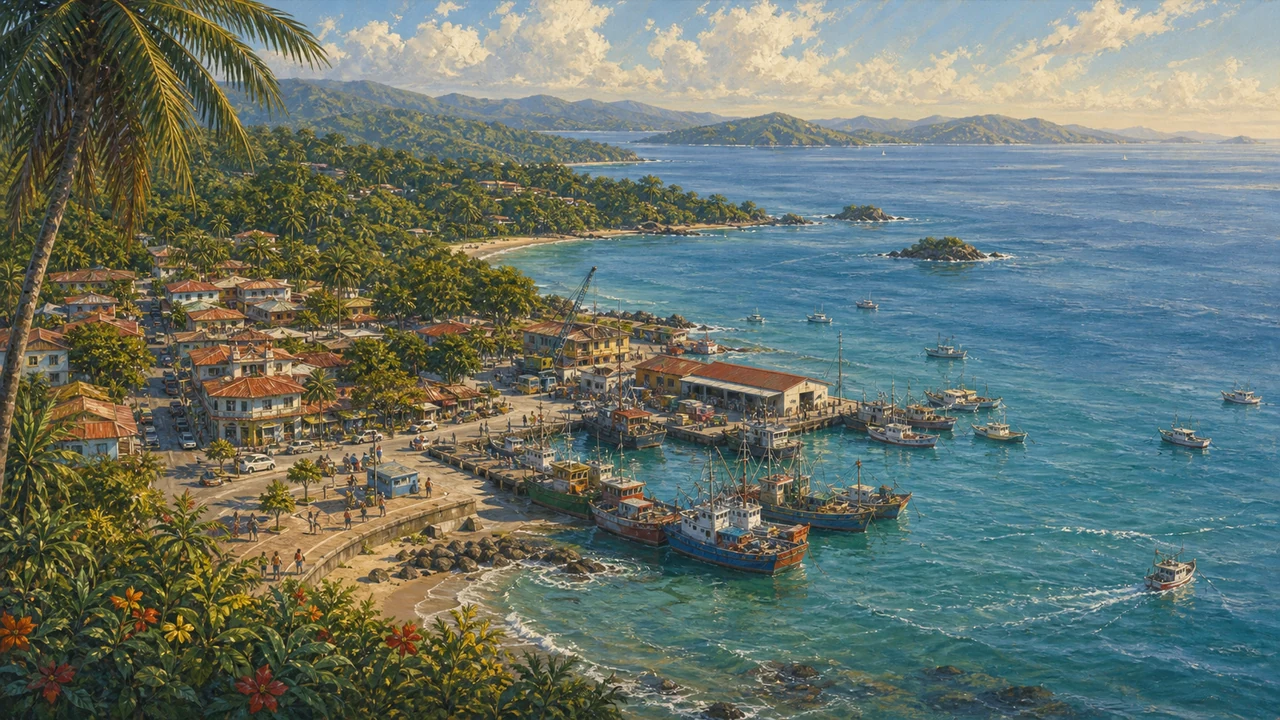 Puntarenas is Costa Rica’s largest province and its most diverse Pacific playground, stretching from the mangrove-fringed gulf near the port city all the way south to the Panamanian border. Few destinations in Central America pack this much variety into a single region — surf towns, cloud forests, whale sanctuaries, and some of the most biologically rich rainforest on Earth all share this one coastal province.
Whether you are planning a week of beach-hopping along the Central Pacific, a wildlife immersion on the Osa Peninsula, or a misty morning searching for resplendent quetzals above Monteverde, Puntarenas province delivers. Explore Costa Rica’s beaches, dive into ecotourism and nature, or browse the full range of activities and sports the country has to offer.
Jacó: The Central Pacific’s Surf Capital
Jacó is the first major beach town south of San José, sitting about 1.5 hours from the capital along the Costanera Sur highway. Its long dark-sand beach faces consistent Pacific swells, making it a magnet for surfers of all levels. The town itself is lively and walkable, with restaurants, surf shops, and a buzzing nightlife scene concentrated along the main strip.
Just south of Jacó, Hermosa Beach offers some of the most powerful beach-break surf in Costa Rica, regularly attracting professional surfers and hosting international competitions. Playa Herradura, just north of Jacó, anchors a deep-water marina and is home to the Los Sueños resort community — a hub for sport fishing charters targeting marlin, sailfish, and roosterfish.
A short detour inland from Jacó brings you to Carara National Park, a transitional forest that bridges the dry tropics of the north and the humid rainforest of the south. Carara is one of the best places in Costa Rica to spot scarlet macaws in the wild, particularly at dawn and dusk when flocks cross the Tárcoles River.
Manuel Antonio: Small Park, Enormous Appeal
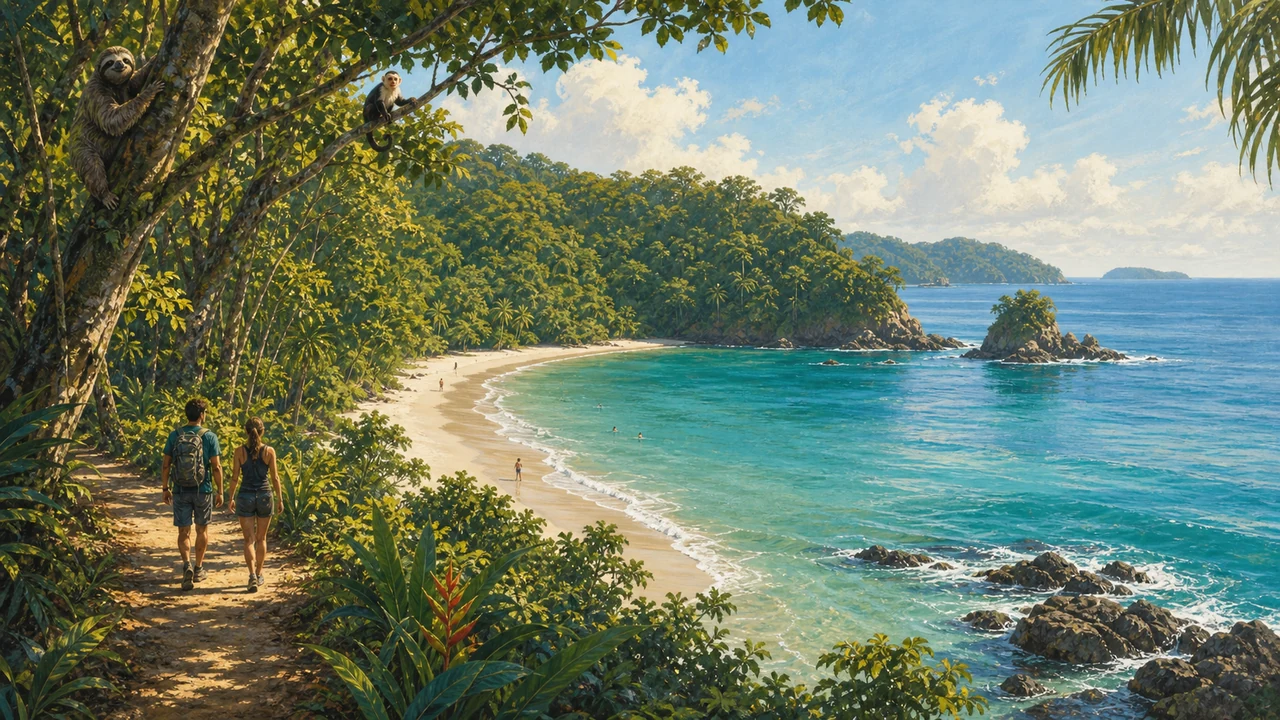 Manuel Antonio National Park is consistently ranked among the most visited parks in Costa Rica — and with good reason. Though it is one of the country’s smallest protected areas, it packs white-sand beaches, calm Pacific coves, and lush primary rainforest into a compact, walkable space. Four main trails wind through the park, each rewarding visitors with sightings of white-faced capuchin monkeys, three-toed sloths, agoutis, and over 100 mammal and bird species.
The squirrel monkey — one of Costa Rica’s most endangered primates — finds sanctuary here, making Manuel Antonio one of the last places in the country to see this species. Entrance to the park is limited daily, so advance reservations online are strongly recommended.
The town of Quepos, just a few minutes from the park entrance, serves as the main service hub — restaurants, banks, tour operators, and accommodations spread along the hillside and coast. The scenic drive between Quepos and Manuel Antonio follows a ridge overlooking the Pacific, dotted with boutique hotels and jungle lodges.
Dominical, Uvita, and Marino Ballena
Continuing south along the Costanera, the landscape opens into a quieter, more laid-back stretch of the South Pacific. Dominical is a small village with a reputation for strong surf and a relaxed backpacker atmosphere. Uvita, just south, is the gateway to Marino Ballena National Park — a marine protected area named for the humpback whales that gather offshore.
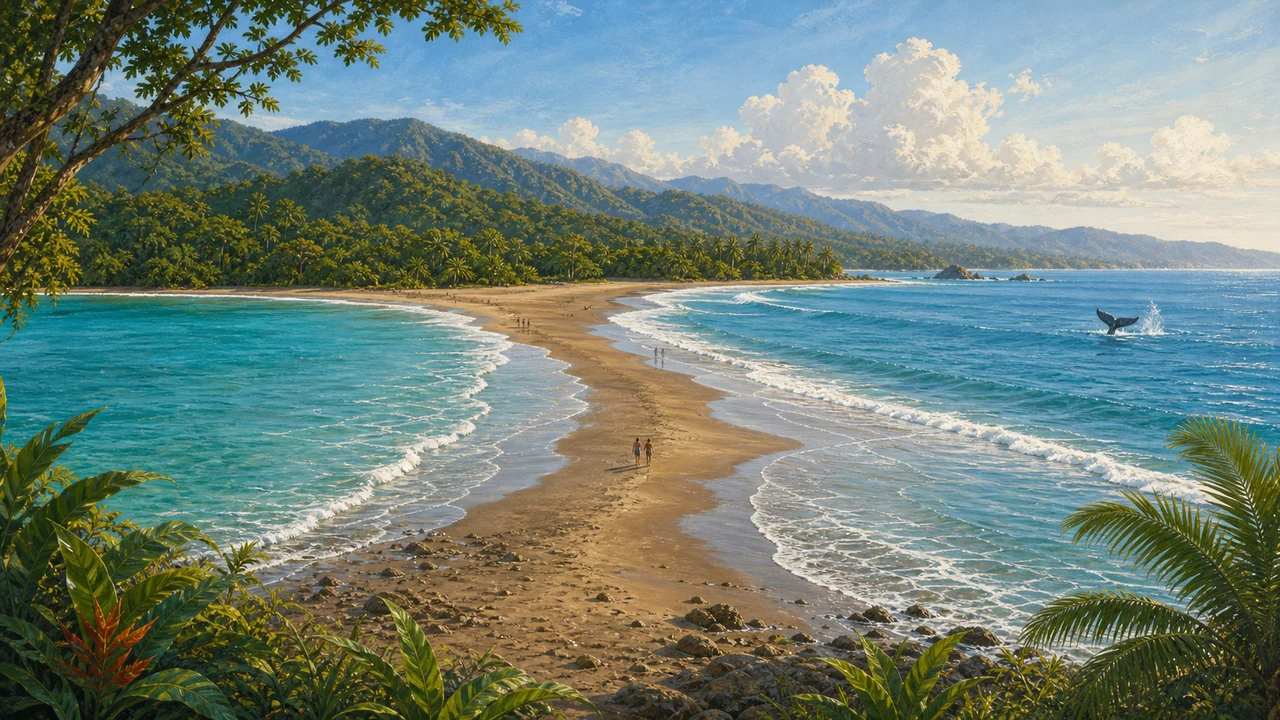 The park’s most iconic feature is Punta Uvita, a sandbar that extends into the sea in the shape of a whale’s tail — a shape visible from the air and best appreciated at low tide on foot. Humpback whale watching at Marino Ballena is among the finest wildlife encounters in Central America, with whales present during two annual migration windows: roughly July through October (Southern Hemisphere population) and December through April (Northern Hemisphere). Dolphins, sea turtles, and a remarkable diversity of marine life share these protected waters.
The surrounding area — sometimes called the Whale Coast — has grown in recent years into a destination for yoga retreats, eco-lodges, and culinary tourism, with a growing cluster of excellent restaurants and small-scale accommodations between Dominical and Ojochal.
Osa Peninsula and Corcovado: Wild Costa Rica
The Osa Peninsula juts into the Pacific at the southern end of Puntarenas province, cradling Corcovado National Park — widely described by biologists as one of the most biologically intense places on the planet. Corcovado protects a vast expanse of lowland primary rainforest, swamps, rivers, and coastline that supports tapirs, Baird’s tapirs, white-lipped peccaries, all four of Costa Rica’s monkey species, giant anteaters, and the largest population of scarlet macaws in the country.
Visiting Corcovado National Park requires a licensed guide, and access to certain sectors is capped daily to protect the ecosystem. Entry points include La Leona (accessible from Carate, reachable by 4WD), San Pedrillo (accessible by boat from Drake Bay), and Los Patos (the inland route). Drake Bay on the park’s northern edge is a popular base — a remote village accessible by small plane or boat that offers sport fishing, diving at Caño Island, and boat tours along the coast.
Puerto Jiménez, on the eastern side of the Osa, is the main town and the practical hub for organizing Corcovado expeditions, gear rentals, and onward transport. The peninsula’s remoteness is both its challenge and its great appeal — this is one of the few corners of Costa Rica where you can still feel genuinely off the beaten path.
Monteverde: Cloud Forest Above the Pacific
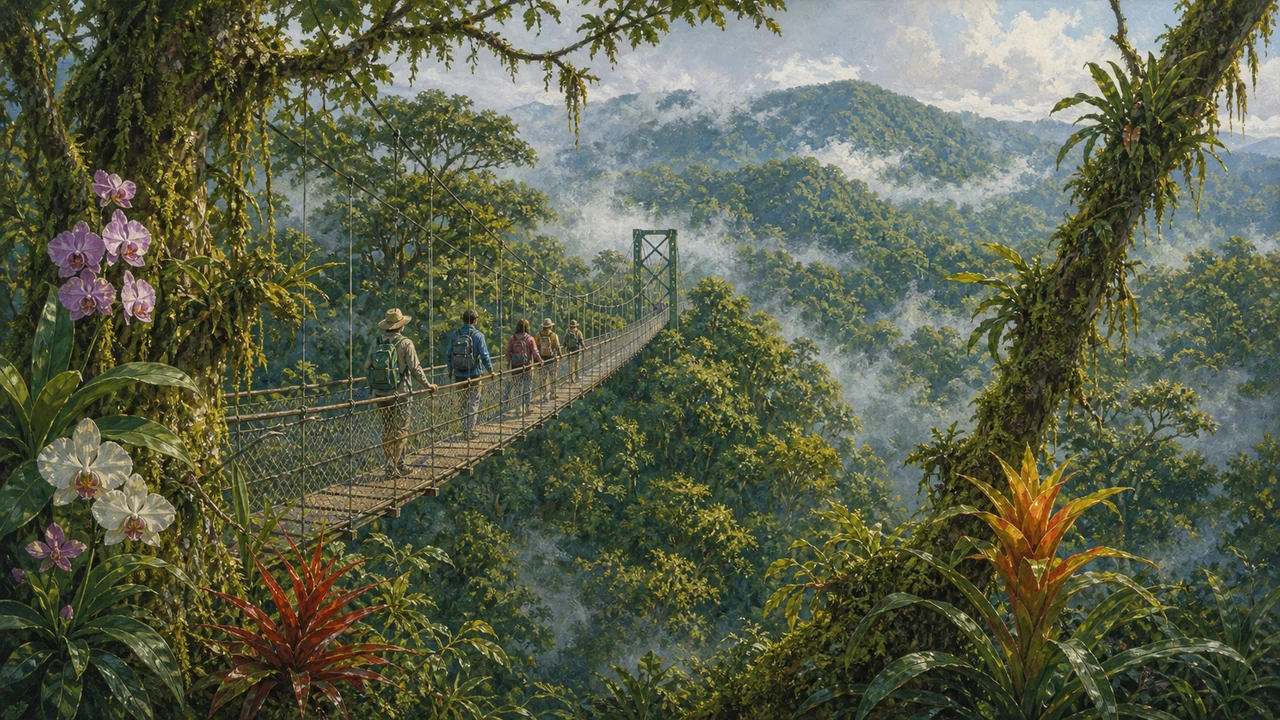 Although Monteverde sits inland above the Gulf of Nicoya rather than on the coast, it falls within Puntarenas province and is one of the country’s most visited destinations. The Monteverde Cloud Forest Biological Reserve and the adjacent Santa Elena Reserve protect a remarkable highland ecosystem draped in mist, epiphytes, and hanging mosses. The resplendent quetzal — Costa Rica’s most celebrated bird — breeds here and is reliably spotted from February through April.
Monteverde pioneered sustainable tourism in Costa Rica, and the community of Quaker farmers who settled here in the 1950s helped establish the reserve. Today the area offers zipline tours, hanging bridges through the canopy, guided night walks, cheese factories, and a range of accommodations from rustic lodges to comfortable boutique hotels. The roads to Monteverde are unpaved for the final stretch — a 4WD vehicle or shuttle is advisable, and many travelers combine Monteverde with a visit to the Arenal Volcano region via a lake crossing.
Nicoya Peninsula and Tambor
The western edge of Puntarenas province includes the southern Nicoya Peninsula, accessible by ferry from the port city of Puntarenas. Tambor and the surrounding beaches of the Nicoya Gulf’s inner coast are notably calmer than the open Pacific — sheltered waters make them popular for families and those seeking quieter beach stays. The area blends fishing villages and small resorts in a less-developed setting than Jacó or Manuel Antonio.
The Port City and Gulf of Nicoya
The city of Puntarenas sits on a narrow peninsula extending into the Gulf of Nicoya and served for much of Costa Rica’s history as the country’s primary Pacific port. Today it remains a working port and cruise-ship stop. The malecón (boardfront promenade) offers views across the gulf, local seafood restaurants, and a glimpse of everyday Tico life. The annual Puntarenas Carnival held each summer is one of the province’s most spirited festivals.
The car and passenger ferry from Puntarenas city provides the fastest route to Paquera and Naranjo on the Nicoya Peninsula, cutting what would otherwise be a long inland drive.
Planning Your Visit to Puntarenas Province
Puntarenas province rewards visitors who plan beyond a single stop. A typical itinerary might combine a few days in Jacó for surf and Carara, then south to Manuel Antonio for wildlife and beaches, continuing to Uvita for whale watching, and finishing on the Osa Peninsula or looping back north via Monteverde. Internal flights (from San José to Quepos or Puerto Jiménez) save significant driving time on the longer legs.
For those considering longer-term stays, Puntarenas real estate offers options ranging from oceanfront condos in Jacó to jungle retreats on the Osa. Read our Costa Rica travel tips before you go, and check the national parks section for reservation and entry details for Corcovado and Manuel Antonio.
Frequently asked questions
What is Puntarenas province known for?
Puntarenas is Costa Rica's largest province and the gateway to the Pacific coast. It encompasses world-famous destinations including Manuel Antonio National Park, the Osa Peninsula and Corcovado, the Monteverde cloud forest, and the beach towns of Jacó and Dominical. The port city of Puntarenas also receives cruise ships year-round.
How do I get to Manuel Antonio from San José?
Manuel Antonio is roughly a 3-hour drive south from San José along the Costanera Sur highway. Shared shuttles and private transfers are widely available, and domestic flights connect San José to Quepos (the nearest town) in under 30 minutes.
When is the best time to visit Puntarenas province?
The dry season (December through April) offers the most reliable sunshine across the Central and South Pacific. However, the South Pacific — including Corcovado and the Osa Peninsula — can receive rain year-round, and the forest is at its most lush during the rainy months. Whale-watching at Marino Ballena peaks during humpback migration seasons in July–October and December–April.
Do I need a guide to visit Corcovado National Park?
Yes — Costa Rica requires all visitors to Corcovado to enter with a licensed guide. This protects both the ecosystem and visitors, as the park's trails traverse remote primary rainforest. Book in advance, especially during peak season, since daily visitor numbers are capped.
Is there a car ferry from Puntarenas city to the Nicoya Peninsula?
Yes. A vehicle and passenger ferry runs from the port of Puntarenas city across the Gulf of Nicoya to Paquera and Naranjo, providing the most direct route to the Nicoya Peninsula and beaches like Tambor. Check current schedules locally, as departure times vary by season.