Puntarenas Real Estate: Pacific Coast Property Guide
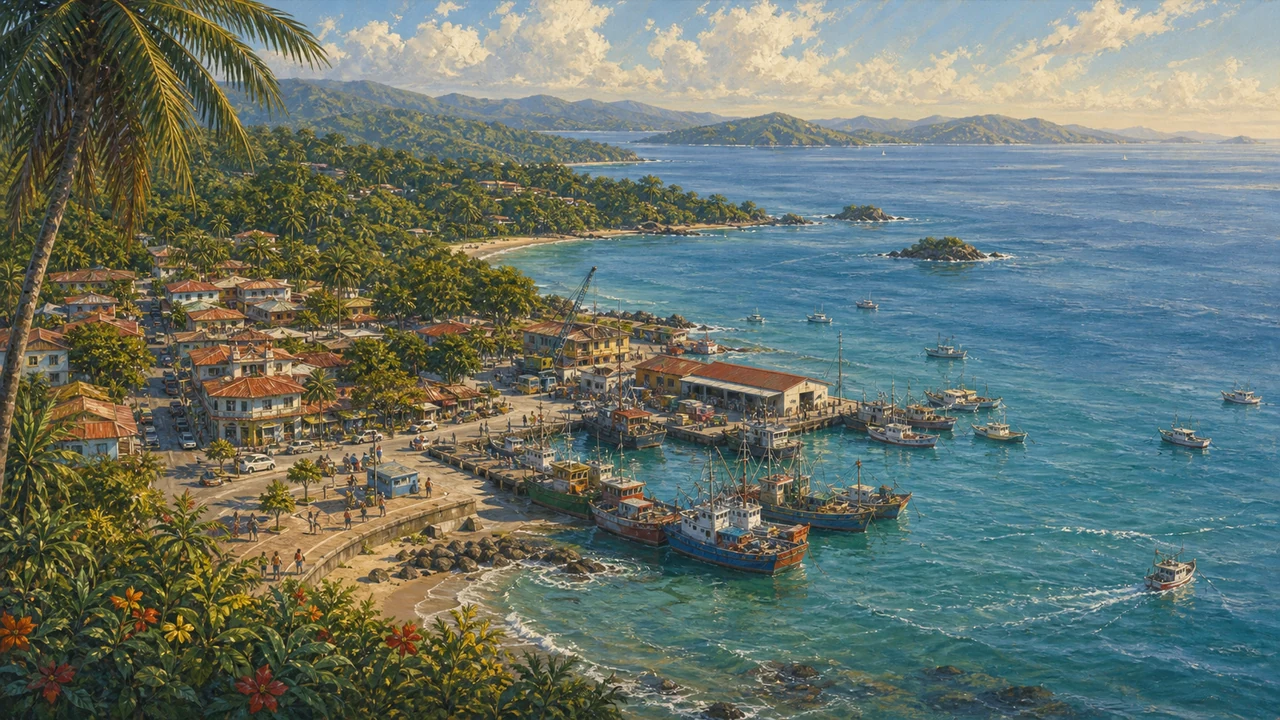 Puntarenas real estate encompasses one of the most geographically varied property markets in all of Latin America — a province-wide arc of Pacific coastline stretching from the surf condos of Jacó, just 90 minutes from San José, south through the rainforest cliffs of Manuel Antonio, the whale-watching bays of Uvita, and all the way to the wild, biodiverse Osa Peninsula. Whether you are searching for a high-occupancy vacation rental, an ocean-view retirement home, a working farm, or a remote eco-lodge, this single province holds the full spectrum. It is also one of the most foreigner-friendly markets in the country, with titled property widely available and a well-established network of bilingual attorneys, agents, and property managers to support international buyers.
Why buy real estate in Puntarenas
Puntarenas is Costa Rica’s largest province and the one that best captures the country’s reputation for nature, adventure, and the pura vida lifestyle — which is precisely why it draws so many international buyers:
Diversity of options. No other province stretches from a marina resort community (Los Sueños in Herradura) to one of the last great tropical wilderness areas on Earth (Corcovado National Park on the Osa Peninsula). Buyers with wildly different goals — cash-flow rentals, conservation stewardship, luxury retirement — can all find what they need within the same province.
Tourism-driven demand. The Central and South Pacific is one of the most visited regions in Costa Rica, with Manuel Antonio National Park among the top-attended parks in the country and Jacó functioning as the country’s most accessible beach escape from the capital. That visitor flow supports strong vacation-rental occupancy and provides a natural exit market when owners want to sell.
Nature and lifestyle. The province is home to Costa Rica’s most celebrated beaches, world-class surfing, marlin and tuna sport fishing out of Los Sueños and Quepos marinas, year-round whale sightings in Marino Ballena National Park, and cloud-forest hikes in Monteverde — also within Puntarenas province. For buyers who want to live inside this landscape rather than just visit it, Puntarenas delivers.
Accessible entry points. The market has enough inventory depth that buyers at multiple price points — from modest surf-town condos to multi-million-dollar villa compounds — can find competitive options without being squeezed into a single tier.
Location, climate and lifestyle
Puntarenas province lines virtually the entire Central and South Pacific coast of Costa Rica and extends inland to include the Tilarán mountain range and the famous cloud forests of Monteverde. Its northern edge sits roughly 90 minutes from San José via the well-maintained Route 27 (the Costanera highway access to Jacó), while its southern tip at the Osa Peninsula is a full four to five hours by road or a short domestic flight.
Climate across the province follows a classic tropical wet-dry pattern on the coast: a dry season from approximately December through April marked by intense sunshine and offshore breezes, followed by a green season (May–November) when afternoon rains cool the landscape and keep vegetation lush. The Osa Peninsula receives significantly more rainfall than the northern coast — it is one of the wettest inhabited places in the Americas — which sustains its extraordinary biodiversity but shapes the lifestyle accordingly.
Lifestyle varies enormously by submarket. Jacó offers nightlife, international restaurants, surf schools, and the social energy of an established expat community with a new wave of remote workers. Manuel Antonio is calmer and more family-oriented, with boutique hotels, wildlife sightings from your porch, and quiet forest walks. Uvita and Dominical attract a wellness and sustainability crowd. The Osa Peninsula is for those who genuinely want to live inside Costa Rica’s ecotourism and nature experience — Corcovado is widely cited as one of the most biologically intense places on Earth, with jaguars, tapirs, scarlet macaws, and four species of sea turtles within park boundaries.
Where to buy: top areas in Puntarenas
 Jacó is the most urbanized beach town on the Central Pacific coast and the easiest entry point for first-time buyers. It is the closest major Pacific beach to San José — roughly 110 kilometers via the Route 27 expressway — which makes it a weekend and holiday magnet for the capital’s residents and a practical base for buyers who want both beach life and city access. The market here is condo-heavy: mid-rise and high-rise residential buildings line the main boulevard, and preconstruction inventory is a regular feature. Rental demand is strong and year-round, anchored by surf tourism, weekend escapes, and a growing digital-nomad community.
Herradura and Los Sueños sit just north of Jacó and represent the province’s most resort-polished micro-market. The Los Sueños Resort and Marina is the flagship development — a gated community with a championship golf course, full-service marina, and a concentration of condominium towers and private residences that appeal to sport-fishing enthusiasts and buyers who want a turn-key luxury product with on-site management. Properties here carry a premium, and the marina setting is a genuine lifestyle differentiator for boat owners.
Manuel Antonio and Quepos together form the province’s prestige coastal market. Manuel Antonio National Park — where the rainforest meets a series of white-sand beaches — is one of the most visited parks in Costa Rica and creates a setting unlike anywhere else in the country: monkeys, sloths, and parrots visible from private terraces that overlook the Pacific. The real estate here trends toward ocean-view villas, boutique hotel properties, and hillside homes designed to capture the panoramic scenery. Quepos, the working town adjacent to the park, adds a practical downtown with banks, hospitals, supermarkets, and a sport-fishing marina. This combination of amenities and scenery makes Manuel Antonio consistently one of the highest-demand vacation-rental markets in Costa Rica.
Dominical and Uvita lie along the southern stretch of the Costanera and have emerged as a quieter, more nature-focused alternative to Jacó. Dominical is a surf town with a laid-back character; Uvita anchors Marino Ballena National Park, famous for the “Whale’s Tail” — a natural sandbar formation that appears at low tide — and the humpback whale populations that congregate in the bay. The buyer profile here tends toward wellness-oriented expats, retirees, and sustainability-focused investors. Land parcels with river frontage, farm-to-table properties, and smaller eco-developments are the dominant property types.
Ojochal is a small village between Uvita and Palmar that has earned a disproportionate reputation as a culinary destination — with restaurants representing a dozen nationalities in a tiny community. For real estate buyers, it means a tight-knit expat enclave with a high quality of life, jungle lots, and ocean-view homes at prices that still undercut Manuel Antonio.
The Osa Peninsula is the wildest and most remote corner of the province. Corcovado National Park occupies a large portion of the peninsula, and the surrounding communities — Drake Bay, Puerto Jiménez, Bahía Sierpe — are built around eco-tourism. Property here is off-grid by necessity for many parcels: solar panels, rainwater collection, and satellite internet replace municipal infrastructure. The buyer for Osa property is typically mission-driven — an eco-lodge operator, a conservation organization, or an individual who wants to own a piece of one of the planet’s last intact lowland tropical forests.
Monteverde, although inland and at cloud-forest elevation, falls within Puntarenas province. Its property market is distinct from the coastal towns — cooler temperatures, misty forest views, and a tight community built around ecotourism, coffee, and dairy farming. It offers a genuine alternative for buyers who want the nature lifestyle without heat or humidity.
Types of property available
The range of property types in Puntarenas province is wider than in almost any other region of Costa Rica:
- Beachfront and ocean-view condos — most concentrated in Jacó, Herradura, and Manuel Antonio; the most liquid segment of the market.
- Ocean-view villas and single-family homes — hillside properties above the coast, often with private pools and panoramic Pacific views; strong in Manuel Antonio and Uvita.
- Surf town lots and homes — Jacó, Dominical, and smaller break communities; entry-level to mid-market.
- Marina and resort residences — Los Sueños is the primary example; managed, amenity-rich, and tied to the sport-fishing economy.
- Eco-lodges and tourism properties — throughout the southern zone and Osa; income-producing if well-managed.
- Jungle and forest parcels — Osa Peninsula and southern zone; off-grid, conservation, or development potential.
- Farms (fincas) — working agricultural land, often with teak, cacao, African palm, or cattle; common in the southern interior.
The beachfront Maritime Zone rules apply throughout the province: the first 50 meters from the high-tide line are public land, and the next 150 meters are typically municipal concession rather than titled property. Any coastal purchase should be reviewed by an independent attorney to confirm whether the parcel is titled or concession — the distinction matters significantly for financing, resale, and long-term security. For a full overview of how the buying process works, see the main Costa Rica Real Estate guide.
Investment and rental potential
Puntarenas province is one of the most active vacation-rental markets in Central America, driven by the concentration of national parks, surf spots, and sport-fishing destinations that generate consistent international visitor arrivals.
Jacó produces steady occupancy across all twelve months because its proximity to San José means weekenders supplement the tourist flow. Condos in managed buildings with pools and short-term rental programs are the easiest product to operate remotely.
Manuel Antonio commands the highest nightly rates in the province for upper-tier properties, supported by the park’s international brand recognition and a visitor mix heavily weighted toward North American and European travelers who spend more per stay. Hillside villas with Pacific views and private pools consistently achieve occupancy rates that justify premium acquisition costs.
Uvita and Dominical have a more defined high season tied to the dry months and the whale-watching calendar (humpbacks congregate in Marino Ballena from July to November and again December to April, which actually extends the appeal into the green season). The market here is growing but still developing, which means investors entering now face less competition than in Jacó or Manuel Antonio.
The Osa Peninsula supports a smaller volume of higher-priced stays, with eco-lodges and off-grid retreats targeting conservation tourism rather than mass-market rentals. Returns are less predictable and demand genuine hospitality management, but the right property in the right location can command extraordinary nightly rates from travelers seeking an authentic wilderness experience.
Across the province, properties within easy reach of a national park, a surf break, or a marina consistently outperform those further from these anchors. Strong property management — bilingual staff, professional photography, active listing presence — is the single variable most within an investor’s control after the purchase decision itself.
Getting there and infrastructure
From San José to Jacó: Route 27 (the Costanera Oeste expressway) connects San José to Jacó in roughly 90 minutes under normal traffic — one of the most improved highways in the country, with tolls. Jacó has a small domestic airstrip used by charter flights.
From Jacó south to Uvita: The Costanera Sur highway (Route 34) runs the length of the Central and South Pacific coast and has been substantially improved in recent years, putting Dominical about 2.5 hours from San José and Uvita about 3 hours.
The Osa Peninsula: The nearest domestic airport is at Palmar Sur, served by Sansa and other charter operators from San José (about 45 minutes by air). Drake Bay also has a small airstrip. Road access to the peninsula requires the ferry from Sierpe to Drake Bay or the land route through Chacarita and Puerto Jiménez. The infrastructure limitations are real and should factor into any investment calculation.
Monteverde: Reached via a combination of paved and unpaved mountain road from the Pan-American Highway; driving time from San José is roughly 2.5 to 3 hours depending on the route.
Utilities and services: Jacó, Manuel Antonio, and Quepos are fully served communities with 24-hour electricity, municipal water, high-speed internet, and adequate cell coverage. The southern zone (Uvita, Ojochal) is well-served but somewhat less urban. The Osa Peninsula is the outlier — power reliability, water systems, and internet access vary by exact location, and many properties operate on solar and rainwater systems by choice or necessity.
Healthcare infrastructure is centered on the public (CCSS) system, with private clinics in Jacó and Quepos serving the Pacific Coast. Serious medical needs typically route to San José, which is a practical consideration for full-time residents in the southern zone.
Puntarenas province rewards buyers who take the time to understand its geography. The province stretches across dramatically different landscapes — from the surf-town energy of Jacó to the cathedral silence of Corcovado — and matching the right community to your goals matters more here than in a more homogeneous market. The infrastructure, community, and property types that define Jacó are a world away from those of the Osa Peninsula, even though both carry the same provincial address. Visit multiple communities, work with an agent who knows the specific submarket you are targeting, and retain an independent attorney for due diligence before any commitment.
Frequently asked questions
Is Puntarenas a good place to buy real estate in Costa Rica?
Puntarenas province is one of the most diverse real-estate markets in Costa Rica, ranging from highly developed beach towns like Jacó — with strong short-term rental demand — to remote, off-grid jungle parcels on the Osa Peninsula. There is something for nearly every budget and lifestyle goal, making it consistently popular with both investors and lifestyle buyers.
Can foreigners buy beachfront property in Puntarenas?
Foreigners have the same property rights as Costa Rican citizens for titled land anywhere in the province. Beachfront in the 200-meter Maritime Terrestrial Zone is a different matter: the first 50 meters are public land and cannot be owned by anyone, while the next 150 meters are typically concession (leasehold) land administered by the local municipality. Always confirm whether a coastal parcel is titled or concession before purchasing.
What is the difference between Jacó and Manuel Antonio real estate?
Jacó is the closest major Pacific beach town to San José — it is more urban, surf-driven, and oriented toward short-term rentals and condos, with consistent year-round demand. Manuel Antonio is quieter and more upscale, surrounded by national park and cloud-forest terrain, with high demand for ocean-view homes and vacation villas. Property values in Manuel Antonio tend to run higher per square meter, while Jacó offers more entry-level condo inventory.
What types of property are available on the Osa Peninsula?
The Osa Peninsula is one of the most remote parts of Puntarenas and is home to Corcovado National Park, often described as one of the most biologically intense places on Earth. Property types here lean toward eco-lodges, off-grid jungle parcels, organic farms (fincas), and small sustainable retreats. Full solar, rainwater collection, and satellite internet are common in this area. It attracts conservation-minded buyers and eco-tourism operators rather than the condo market.
How strong are vacation rental returns in Puntarenas province?
Rental performance varies significantly by submarket. Jacó and Herradura benefit from proximity to San José and a steady surf-and-resort crowd year-round. Manuel Antonio commands premium nightly rates due to national-park access and high international brand recognition. Uvita and Dominical draw whale-watching and nature tourists in a shorter high season. The Osa Peninsula supports smaller, higher-priced eco-lodge stays. In every submarket, properties within walking distance of the beach or a national park consistently outperform those further inland.