Costa Rica National Theater — Teatro Nacional San José
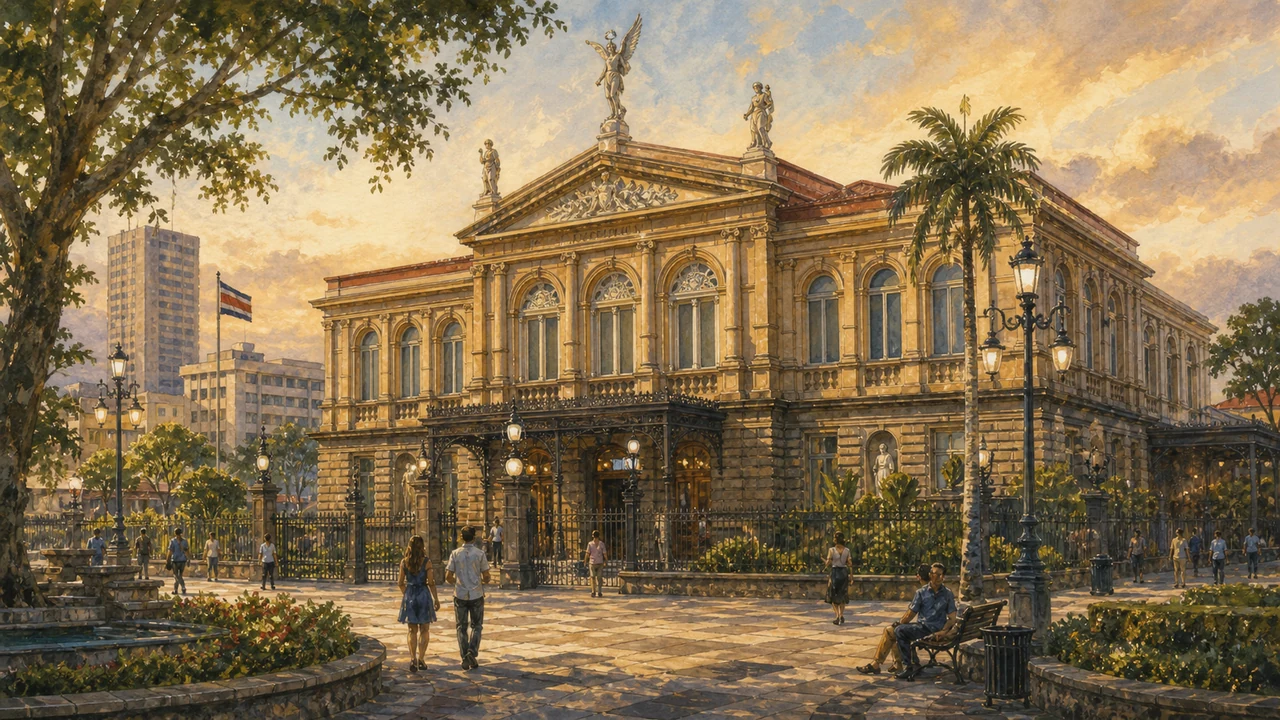 The Costa Rica National Theater — Teatro Nacional — stands in the heart of San José as the country’s most beloved and celebrated building. Opened in 1897, this neoclassical masterpiece was paid for by the collective effort of an entire nation and remains, more than a century later, the cultural soul of Costa Rica.
The Coffee Origins: How a Nation Built Its Stage
The story of the Teatro Nacional begins with Costa Rica’s coffee boom of the late 19th century. By 1890, the country was prosperous but lacked a proper venue for the performing arts — a gap made painfully obvious when a visiting European opera company had to decline a San José engagement because no suitable theater existed.
Costa Rica’s coffee growers voluntarily taxed themselves — levying a fee on every bag of exported coffee — to finance the construction of a world-class theater. This initial tax was abolished after three years, having covered only about five percent of the estimated construction cost. To raise the remaining funds, the government established in 1893 a public levy of one cent on every kilogram of imported goods. Importers passed the cost to consumers, making the theater quite literally a community-funded project.
That shared sacrifice became a source of enduring national pride. Teachers, merchants, students, housewives, artisans, workers, and the original coffee growers — all Costa Ricans had contributed. From the moment President Rafael Iglesias attended the inaugural performance, Ticos felt a personal stake in this extraordinary building.
Neoclassical Architecture: Europe in the Tropics
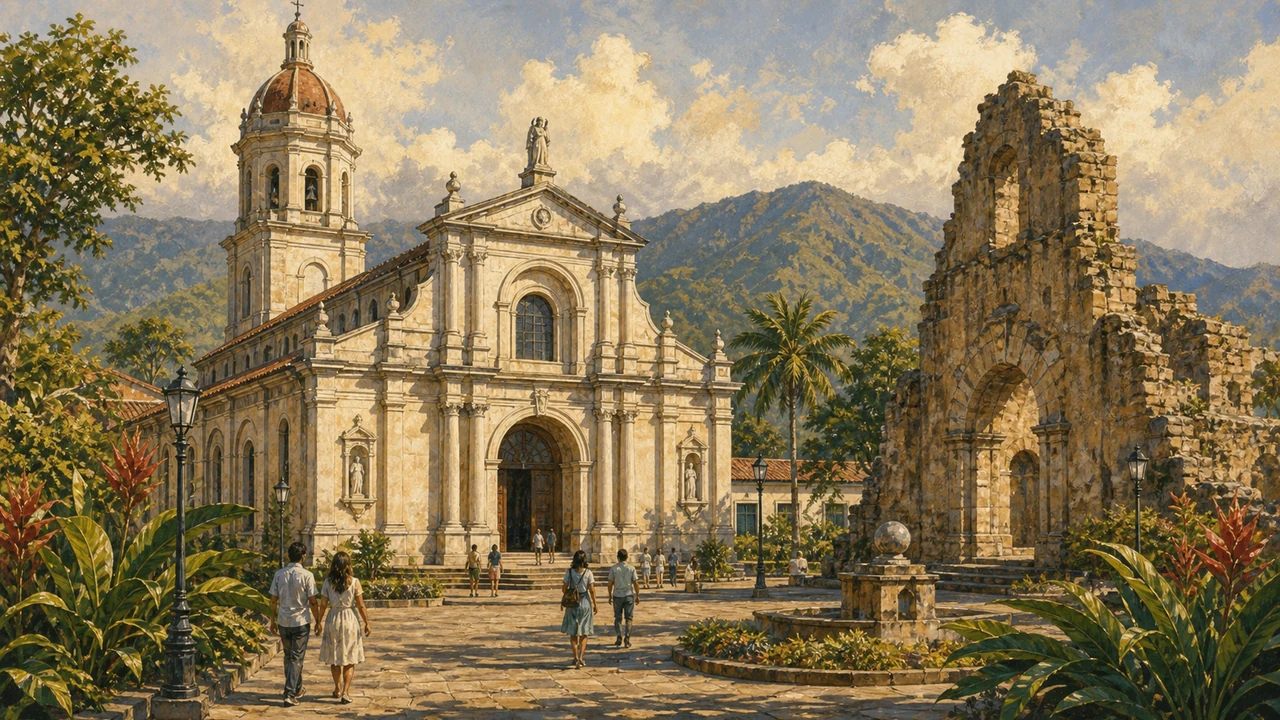 The neoclassical architecture of the Teatro Nacional reflects the cultural aspirations of a confident, coffee-wealthy republic. Belgian architects designed the building and supervised construction; painters and decorators were brought in from France and Italy; the steel structural framework, ornamentation, and Italian marble for the interior floors and columns were all shipped from Europe.
The result is a building that would not look out of place in Vienna or Paris, yet stands on a tropical plaza steps from active volcanoes and rainforest. The exterior features a symmetrical neoclassical facade with Corinthian columns, allegorical statues representing Comedy, Music, and Fame, and an imposing central pediment. The grand interior foyer glows with gilded detail, sweeping staircases, and polished marble.
The theater was declared a national monument in 1965, cementing its legal protection as an irreplaceable piece of Costa Rican heritage.
The Alegoría: Costa Rica’s Most Famous Painting
No visit to the Teatro Nacional is complete without pausing beneath its celebrated ceiling fresco “Alegoría del Café y el Banano” (Allegory of Coffee and Banana). Executed by Italian artist Aleardo Villa, the large-scale mural depicts idealized harvest scenes — workers gathering coffee berries and loading banana bunches — that celebrate the agricultural wealth that built the nation.
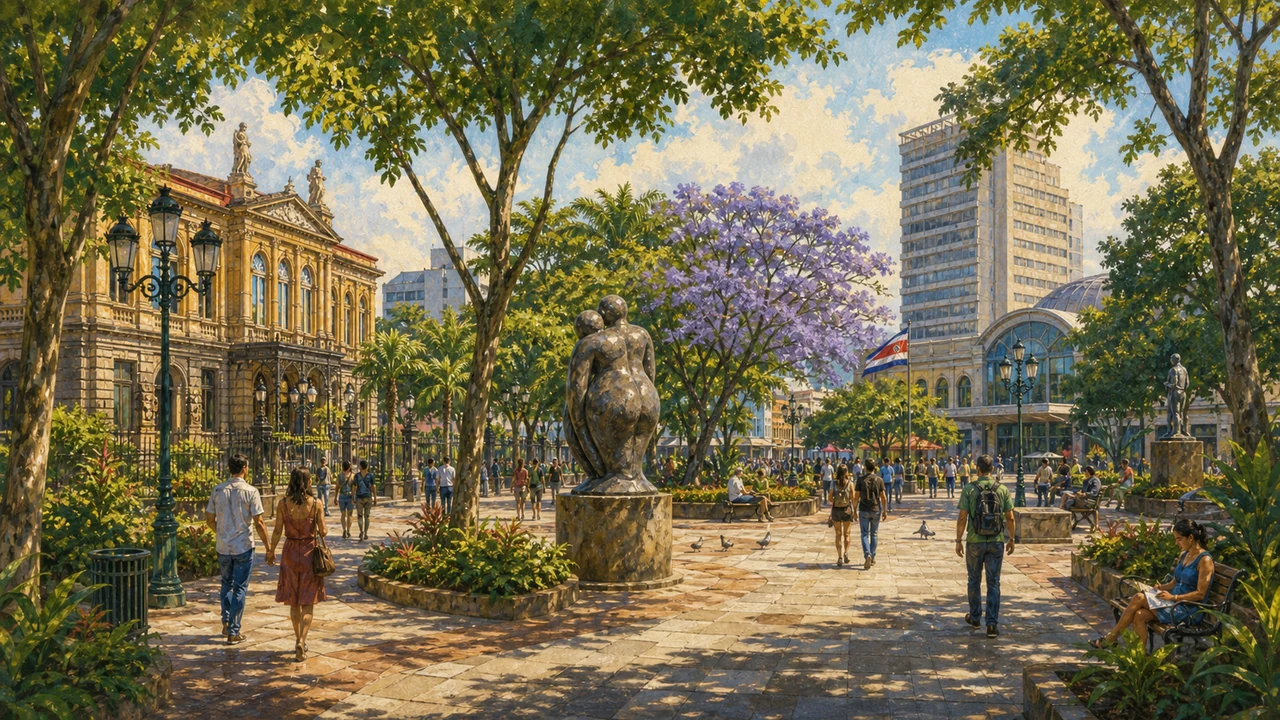 The Alegoría has been reproduced on everything from currency notes to postcards and is instantly recognizable to anyone who has spent time in Costa Rica. Look closely and you will notice a small anachronism embedded in the scene: a fruit seller who appears to be wearing modern shoes rather than the sandals appropriate to the period — a detail that has delighted art historians for generations.
Beyond the ceiling, the theater’s interior is a gallery of 19th-century European craftsmanship: painted medallions, gilded reliefs, ornate box seating, and a stage framed by richly decorated proscenium archwork.
Surviving Disaster: The 1991 Earthquake and Restoration
In April 1991, a powerful earthquake struck Costa Rica’s Caribbean coast and sent shockwaves across the country. The Teatro Nacional suffered significant structural damage, and there were genuine fears that the beloved landmark might have to be demolished.
The public response was overwhelming. Nationwide fundraising campaigns collected contributions from citizens, and both domestic and international corporations donated to the restoration effort. The earthquake restoration of the Teatro Nacional became its own chapter in the building’s legacy — a second act of collective national will to preserve what the first generation had built together.
The theater was painstakingly restored to its original splendor. Artisans replicated damaged decorative elements, structural reinforcements were added discreetly, and the building emerged from the restoration ready for another century of performances.
Visiting the Teatro Nacional Today
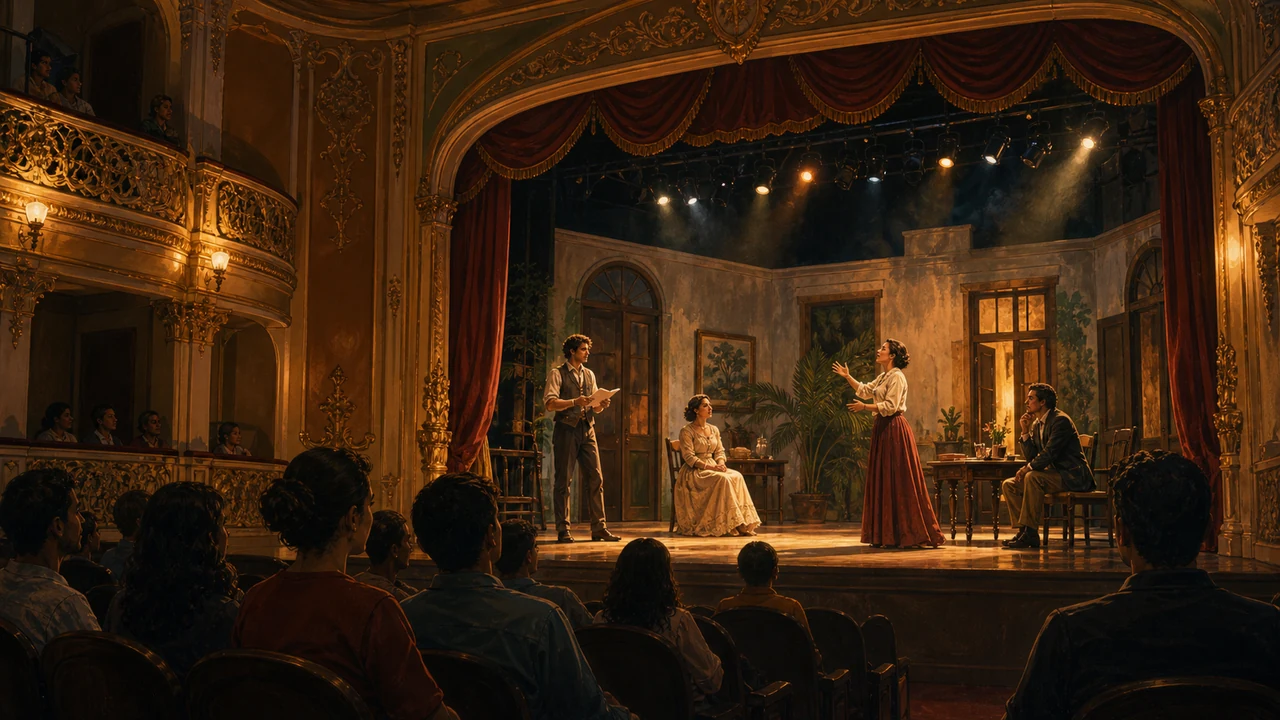 The Teatro Nacional sits on the Plaza de la Cultura in central San José, directly adjacent to the Museo de Arte Costarricense and the Jade Museum complex. It is the natural centerpiece of any cultural walking tour of the capital.
Guided tours of the Teatro Nacional run regularly during the day and are one of the most rewarding one-hour experiences in San José. Guides lead visitors through the main auditorium, the grand marble foyer, backstage areas, and the building’s history. An elegant café on the ground floor — one of the most atmospheric coffee spots in the city — is a fine place to linger before or after a tour.
Evening performances cover a wide range of programming: opera, orchestral concerts, ballet, chamber music, and theatrical productions. The National Symphony Orchestra (Orquesta Sinfónica Nacional), one of Latin America’s oldest, performs here regularly. Ticket prices are accessible by any international standard; check the official Teatro Nacional website for the current schedule and to book in advance.
A few practical notes for visitors:
- The theater is located in downtown San José; standard Costa Rica travel tips about city-center awareness apply.
- Dress for evening performances is smart casual; formal wear is welcome but not required.
- Photography is generally permitted in public areas and the foyer; flash photography during performances is not allowed.
- The Plaza de la Cultura surrounding the theater is a lively public square — a good spot to people-watch before a show.
Legacy: Costa Rica’s Cultural Crown Jewel
The Teatro Nacional is more than an architectural landmark or a performance venue — it is a statement about what Costa Rica chose to be. In an era when many nations spent their export wealth on military hardware and political monuments, Costa Rica’s coffee growers and citizens built an opera house open to all. That decision still defines the national character.
Visitors who arrive in Costa Rica primarily for ecotourism and nature or the country’s famous national parks often find the Teatro Nacional to be the unexpected highlight of their time in San José. An hour inside its gilded halls, beneath the Alegoría fresco, alongside Ticos who treat this building as genuinely sacred — it reframes everything you thought you knew about Central America.
If you are planning a trip to Costa Rica, an evening at the Teatro Nacional belongs on your itinerary.
Frequently asked questions
When was the Costa Rica National Theater built?
The Teatro Nacional was inaugurated on October 21, 1897, with a performance of the opera Faust by a French company. Construction began after coffee growers voluntarily agreed to finance it in 1890, with funding later broadened to include a public dockage tax on imported goods.
How was the National Theater funded?
Costa Rica's prosperous coffee growers initially proposed a self-imposed tax on each bag of exported coffee. When that tax was abolished, a broader public levy — one cent per kilogram of imported goods — was introduced in 1893. The project became a true national effort, with teachers, merchants, students, and workers all contributing.
What is the famous ceiling painting inside the National Theater?
The most celebrated artwork inside the Teatro Nacional is the large allegorical ceiling mural known as 'Alegoría del Café y el Banano' (Allegory of Coffee and Banana). Painted by Italian artist Aleardo Villa, it depicts the harvest of Costa Rica's two most iconic export crops and has become one of the most reproduced images in the country.
Can you visit the National Theater as a tourist?
Yes. The Teatro Nacional is open to visitors for guided tours, which cover the main hall, the grand foyer, the stage, and the building's rich artistic details. Evening performances — opera, symphony, ballet, and theater — are regularly scheduled. Check the official website or the box office for current programming and tour times.
Where is the National Theater located in San José?
The Teatro Nacional sits on the Plaza de la Cultura in the heart of downtown San José, directly across from the Museo de Arte Costarricense's nearby spaces and steps from the Catedral Metropolitana. It is easily reached on foot from major hotels and bus terminals in the city center.