Zip-Line Canopy Tours in Costa Rica: Fly Like an Eagle
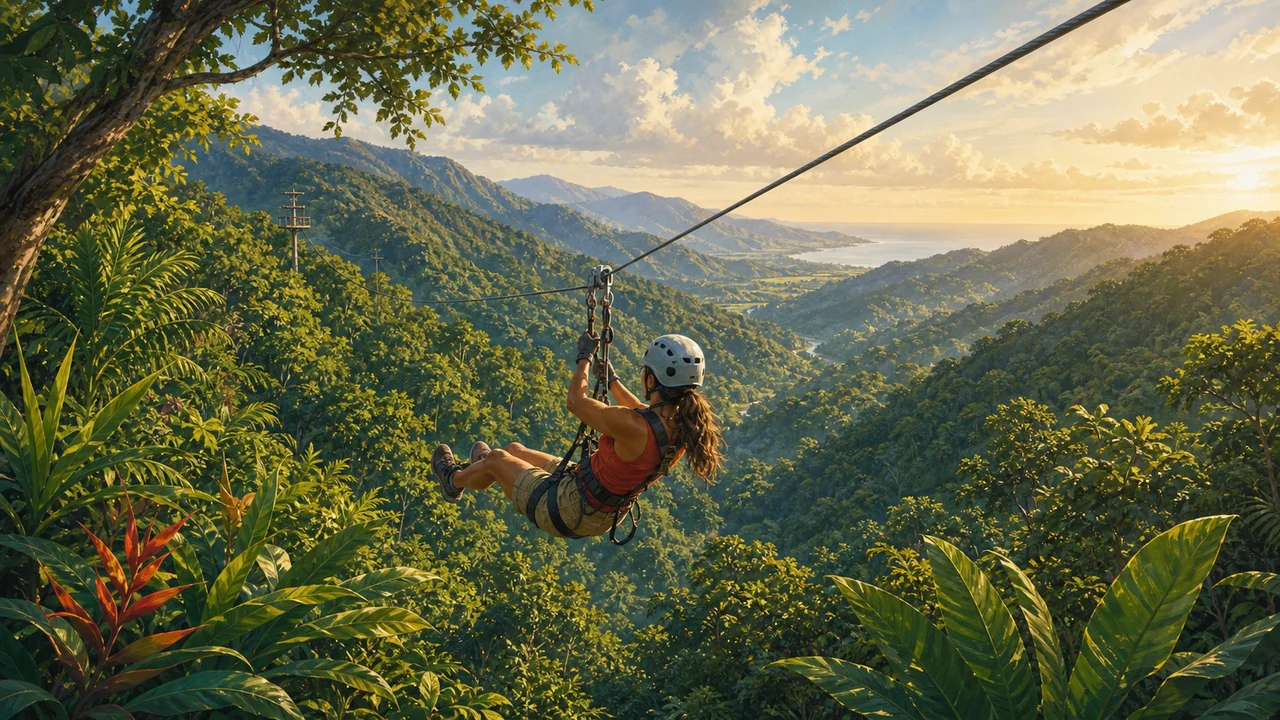 Ziplining in Costa Rica offers something no other country quite matches — the chance to fly above one of the most biodiverse ecosystems on Earth, with howler monkeys in the canopy below and volcanic peaks on the horizon. Zip-line canopy tours in Costa Rica have evolved from a scientific access system invented by biologists into one of the country’s signature adventures, drawing thrill-seekers and nature lovers alike across dozens of world-class courses.
The sensation is hard to describe until you’ve felt it. You clip onto a steel cable, step off a wooden platform perched in the treetops, and for the next 30 to 60 seconds you are a bird — soaring silently over rivers, ravines, and a sea of green that stretches to the horizon. Then you land, catch your breath, and immediately want to do it again.
How a Zip-Line Canopy Tour Works
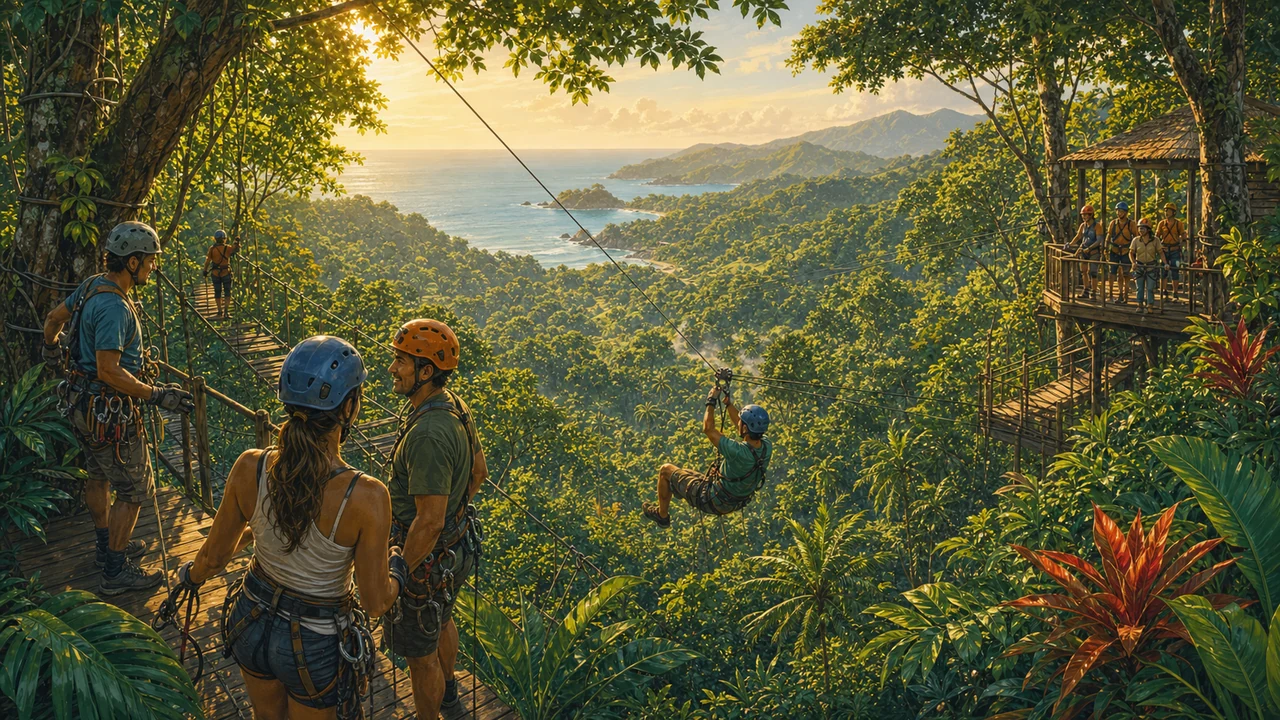
A typical canopy tour links a series of platforms — anywhere from five to twenty — built into or between tall trees. You travel from platform to platform via steel cables, guided by certified local guides who clip and unclip your harness at each station and coach you on braking technique.
 Most tours begin with a safety briefing and a fitting session for harness, helmet, and gloves. Modern courses use dual-cable redundancy systems — if one component fails, a backup keeps you secure. Braking is controlled either by dragging a gloved hand against the cable (the traditional method) or via automatic braking devices on newer systems.
Between platforms you may cross hanging suspension bridges, rappel down a waterfall face, or ride a Tarzan swing — a freefall arc that combines bungee-style drop with a pendulum swing. Some operators also offer a horizontal “Superman” position, where you ride face-down with arms extended for that genuine eagle-in-flight experience. Heights range from a comfortable 15 meters above the forest floor to jaw-dropping runs that cross entire river canyons at 80 meters or more.
Top Regions for Ziplining in Costa Rica
Monteverde Cloud Forest
Touring the tree canopy is where Monteverde earned its global reputation, and rightfully so. The cloud forest here sits at over 1,400 meters elevation, blanketed in mist for much of the year. Zip-lining in the Monteverde cloud forest is a genuinely otherworldly experience — you glide between ancient strangler figs and dripping epiphytes, occasionally bursting through wisps of cloud, with the Gulf of Nicoya glittering far below on clear days. Several operators run courses here, with cable lengths ranging from short intro runs to one of the longest cables in Central America. The area around Monteverde also pairs naturally with night tours, hanging bridges walks, and wildlife observation — ideal for a multi-day stay.
Arenal Volcano Region
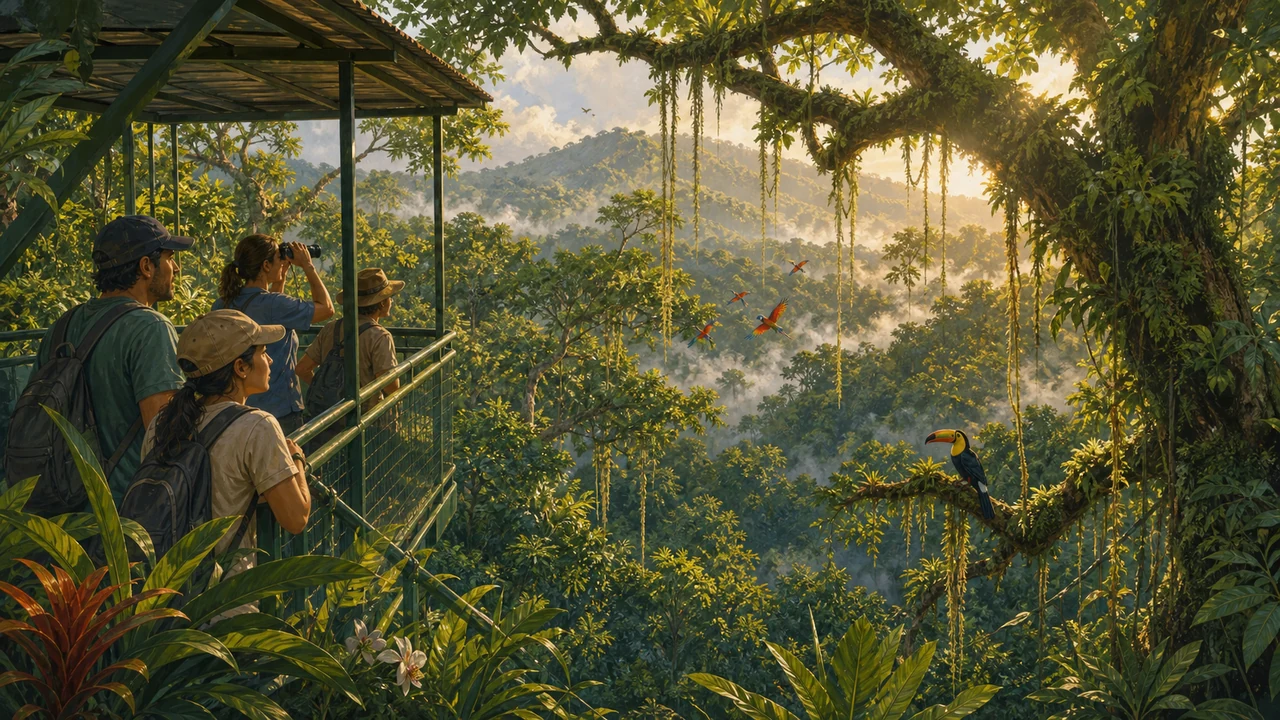
 La Fortuna and the adventure activities in the Arenal region form Costa Rica’s undisputed adventure capital. Ziplining near Arenal Volcano delivers a unique visual reward: on clear mornings you ride high above the rainforest with the perfect cone of an active volcano dominating the skyline. Arenal courses tend to sit in lush lowland rainforest rather than cloud forest, giving you a different ecological experience — look for toucans, red-eyed tree frogs, and sloths during platform breaks. The region’s concentration of activities (white-water rafting, hot springs, canyoning, and kayaking) makes it easy to pair canopy tours with a full adventure itinerary.
Guanacaste
Guanacaste adventure operators run canopy courses through dry tropical forest and across river valleys in Costa Rica’s sun-drenched northwest province. The dry season here (December–April) offers reliably clear skies, and the combination of zip-line tours in Guanacaste’s tropical dry forest with a Pacific beach afternoon makes for an unforgettable day. Several all-inclusive resorts in the Papagayo Peninsula area offer on-property or nearby canopy access, making it the most convenient option for travelers flying in through Daniel Oduber International Airport in Liberia.
Turubari Tropical Park (Central Pacific)
One standout experience worth noting lies in Turrubares, Alajuela — Turubari Tropical Park, about 90 minutes from San José. The park’s “sensational cable” crosses the Tarcoles River canyon at 80 meters above the gorge floor. You travel lying face-down — the full Superman position — across a cable stretching roughly one kilometer, at speeds that turn the canyon into a blur of silver water and green walls. It’s a single-cable experience rather than a multi-platform tour, but for sheer heart-pounding spectacle it ranks among the most memorable in the country.
Safety: What to Know Before You Go
 Canopy tour safety in Costa Rica has improved dramatically as the industry has matured. That said, not all operators maintain the same standards, so a few checks are worth making before you book:
- Certifications. Look for operators certified by the Instituto Costarricense de Turismo (ICT) or recognized international bodies. A reputable company will display its credentials.
- Equipment inspection. Ask when cables and harnesses were last inspected. Professional operations follow a rigorous maintenance calendar.
- Guide-to-guest ratio. Smaller groups receive better supervision. Ideal ratios keep one guide at the departure platform and one at the arrival end.
- Weight and age limits. Respect them — they exist for structural engineering reasons, not arbitrary rules.
- What to wear. Closed-toe shoes, comfortable athletic clothing, and hair tied back. Leave loose jewelry behind. Sunscreen is fine but avoid moisturizers on your hands (grip matters).
For general safety guidance while traveling in Costa Rica, see the Costa Rica safety tips page.
Who Is Ziplining For?
Almost everyone. Zip-line canopy tours are suitable for families, solo travelers, honeymooners, and corporate groups — operators design experiences across a wide spectrum of intensity. If you have young children, many beginner-friendly courses offer shorter, lower cables that are just as exciting without the extreme height. For adrenaline veterans, longer cables, Superman positions, and Tarzan swings provide an extra edge.
The only firm requirements are meeting the operator’s age and weight guidelines and being reasonably comfortable with heights. If standing on a platform 30 meters up gives you pause, most guides are trained to ease first-timers in gently — and the vast majority of nervous first-timers step off that platform grinning for the rest of the day.
Planning Your Canopy Tour
Most tour operators can be booked directly or through your hotel concierge. Prices vary by region and package length; longer multi-platform tours with extras (rappelling, suspension bridges, Tarzan swing) naturally cost more. Many operators include transport from local hotels in the package price — confirm this when booking.
Consider pairing your canopy tour with related activities and sports in the same region to maximize your time. Arenal pairs brilliantly with white-water rafting and hot springs; Monteverde combines naturally with cloud forest hikes; Guanacaste links to beaches and sailing. Costa Rica’s compact geography means you can often fit two or three adventures into a single day.
For broader trip planning, the Costa Rica travel tips page covers logistics from arrival to packing. And if ziplining has whetted your appetite for height, explore rappelling in Costa Rica or rock climbing as natural next steps in your adventure journey.
Frequently asked questions
Are zip-line canopy tours in Costa Rica safe?
Reputable operators follow strict safety protocols: certified guides, dual-cable systems, helmets, harnesses, and gloves are all standard. Choose operators with recognized safety certifications and ask about their inspection schedule before you clip in.
What is the best region for ziplining in Costa Rica?
Monteverde Cloud Forest is the most iconic destination, with platforms rising above a misty green canopy. Arenal offers dramatic volcano views during your flight. Guanacaste provides dry-season sunshine and rolling landscapes. Each region delivers a distinctly different experience.
How long does a typical canopy tour last?
Most multi-platform zip-line tours run two to three hours, including safety briefings and hiking between platforms. Longer combo packages pairing canopy with rappelling, suspension bridges, or aerial trams can fill most of a day.
Who can do a zip-line canopy tour in Costa Rica?
Most operators set a minimum age of around six to eight years and a maximum weight limit (typically 250–280 lbs / 113–127 kg). Physically fit adults of all skill levels can participate — no prior experience is required.
When is the best time of year to go ziplining in Costa Rica?
The dry season (December through April) offers the clearest skies and easiest trail conditions. However, operators run tours year-round, and the misty green canopy during the rainy season (May–November) has its own spectacular quality.