Costa Rica's Southern Pacific Coast: Nature Guide
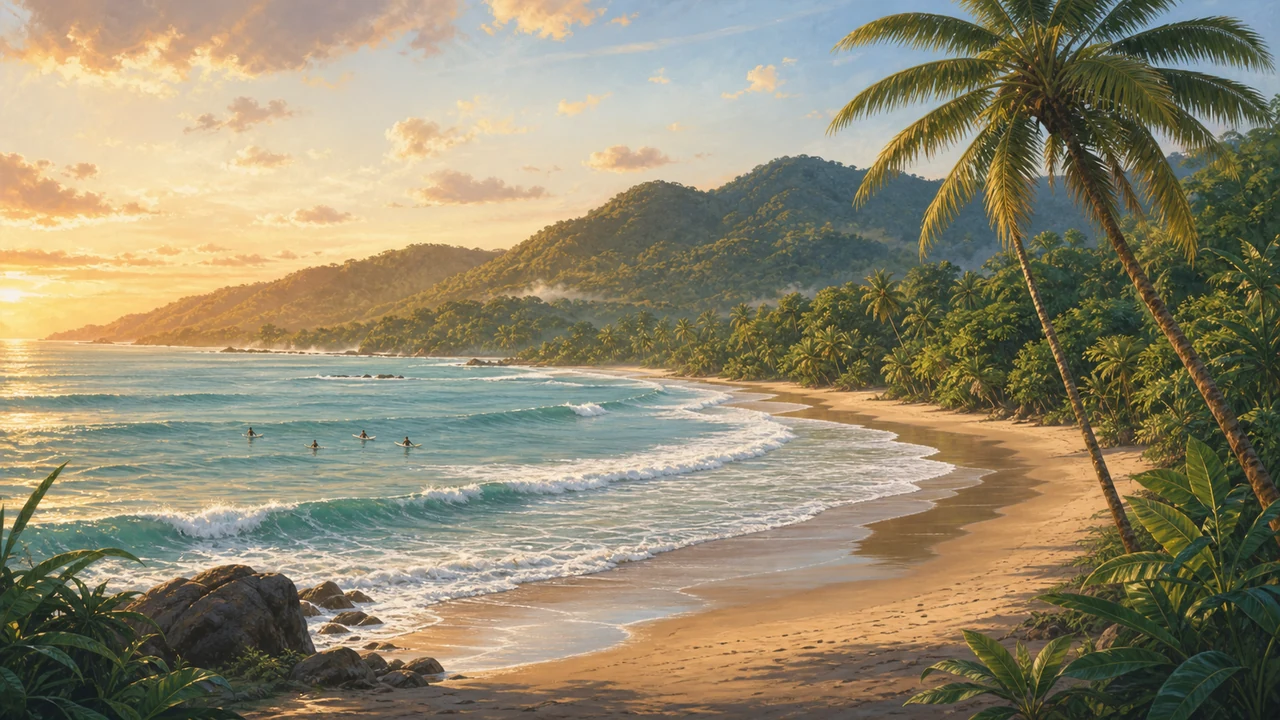 Costa Rica’s Southern Pacific Coast packs an astonishing range of natural wonders into one connected stretch of territory — from world-class surf breaks at Dominical to whale-filled waters at Marino Ballena and some of the most biodiverse rainforest on Earth at Corcovado. This region has developed a model of conservation-led tourism that keeps its ecosystems intact while offering visitors an experience found nowhere else on the planet.
Whether you come to ride waves, watch humpback whales breach from a small boat, walk beneath 200-year-old rainforest giants, or simply slow down beside the Pacific, the Southern Pacific Coast delivers on every front.
Dominical: Surf Village and Coastal Gateway
Dominical anchors the northern end of this coastal corridor. Its dark-sand beach is celebrated among surfers as one of the best surf beaches on Costa Rica’s Pacific coast, with powerful beach breaks that draw longboarders and shortboarders alike. The town itself is a relaxed, unpretentious village that has resisted the over-development that has transformed some other beach destinations — a deliberate choice by local communities that has preserved both the natural setting and the laid-back atmosphere.
Beyond surfing, the coastline around Dominical hides natural tidal pools where the sea fills rocky basins at low tide, creating calm, sun-warmed water perfect for a quiet swim. Forested hills rise directly behind the beach, laced with trails and waterfalls. The area functions as an ideal base for day trips south toward Marino Ballena or further into the Osa Peninsula. Visit the Costa Rica beaches section to explore other stretches of Pacific coastline.
Marino Ballena National Park: The Whale’s Tail
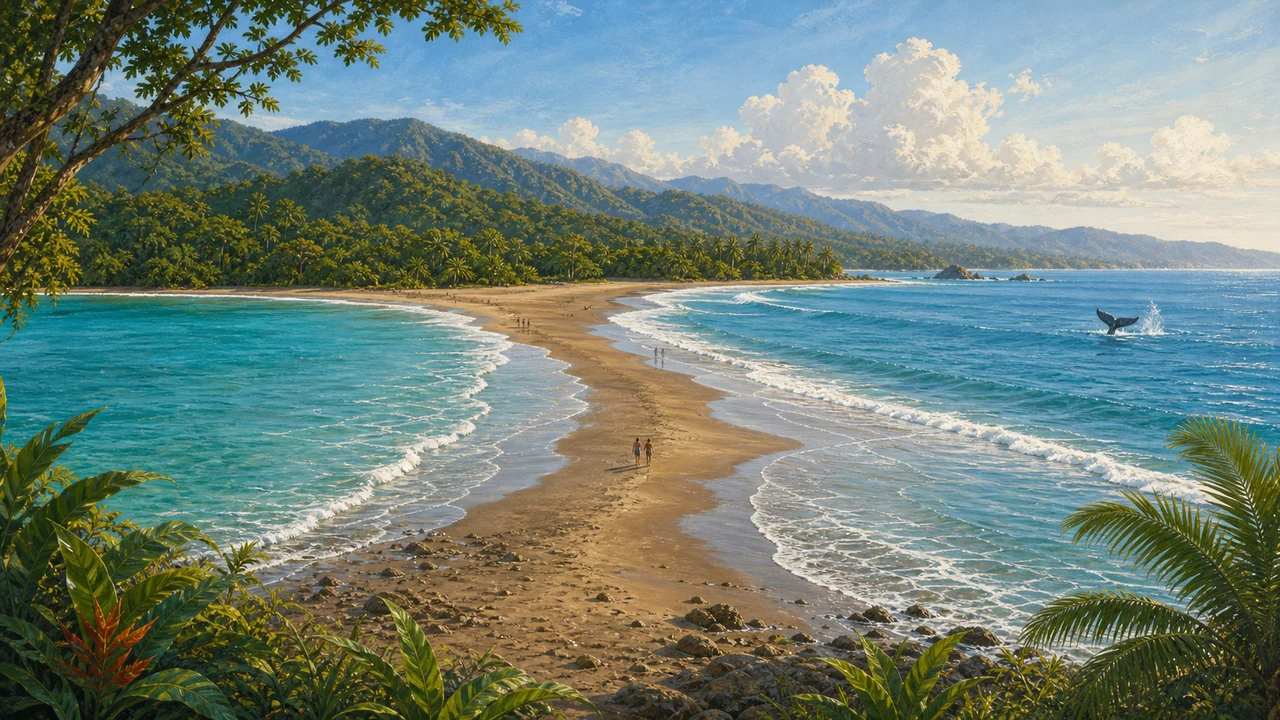 Named for the humpback whales that gather in its waters, Marino Ballena National Park is one of the most visually striking marine protected areas in Central America. At its heart is a narrow tombolo — a sandbar — that juts into the Pacific and, when viewed from above, forms the unmistakable outline of a whale’s tail on the ocean floor. At low tide you can walk out along this natural formation and stand surrounded by the sea on three sides.
The park encompasses both coastal reef and open ocean habitat. It is one of the few sites on Earth where humpback whales from two separate hemispheres share the same waters — populations from both the North Pacific and the South Pacific migrate here to breed and calve at different times of year, giving the Southern Pacific Coast an unusually long whale-watching season. Bottlenose dolphins, spinner dolphins, and rays are common year-round.
Underwater, the park’s coral and rocky reefs shelter an impressive diversity of fish and invertebrates, making snorkeling and scuba diving rewarding for those willing to explore below the surface. Hawksbill and olive ridley sea turtles also nest on the park’s beaches.
Learn more about the country’s extraordinary system of protected wild spaces at Costa Rica national parks.
Corcovado National Park: A Biodiversity Crown Jewel
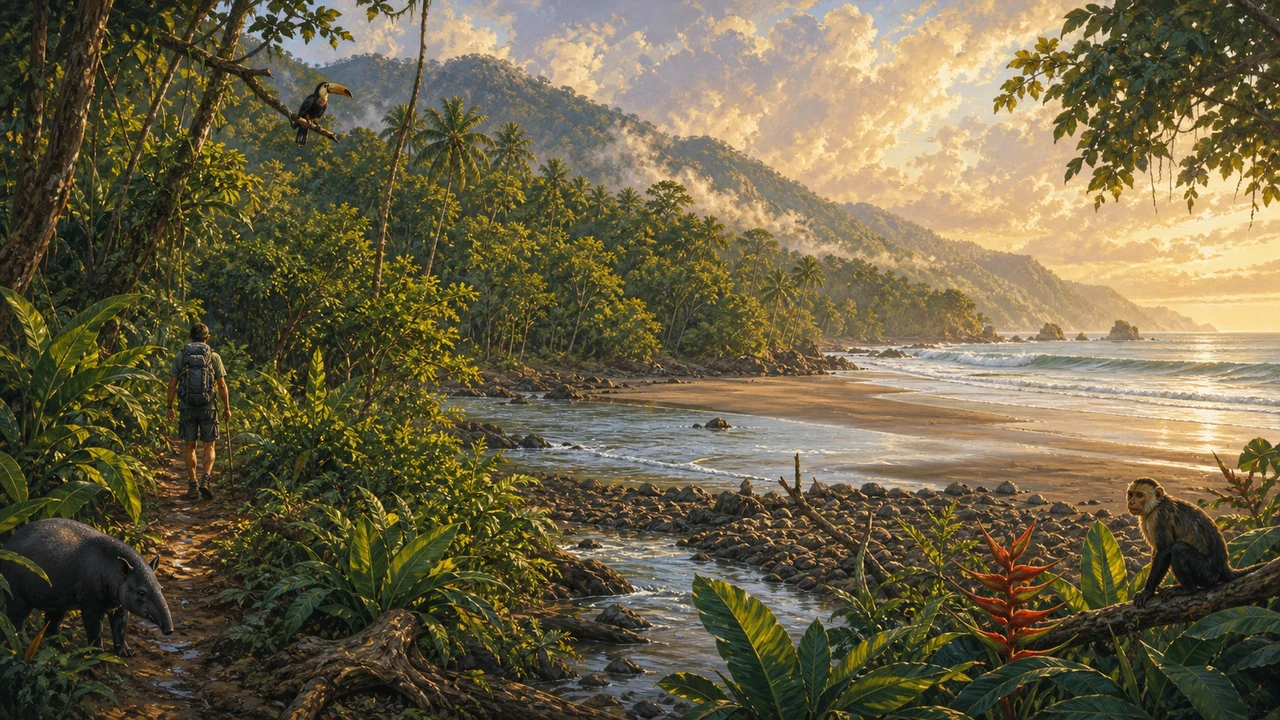 At the southern tip of the Osa Peninsula, Corcovado National Park stands in a category of its own. Occupying the largest expanse of lowland Pacific rainforest in Central America, Corcovado has been widely cited as one of the most biologically intense places on Earth. Its forests shelter jaguars, pumas, ocelots, Baird’s tapirs, giant anteaters, and all four of Costa Rica’s monkey species — white-faced capuchins, howler monkeys, spider monkeys, and the rare Central American squirrel monkey found in very few locations worldwide.
For birders, the park is extraordinary. Scarlet macaws fly in noisy flocks above the canopy. Harpy eagles, though rare, have been recorded here. Toucans, motmots, and dozens of tanager species fill the trees. Birdwatching in Corcovado National Park is consistently ranked among the top experiences in all of Latin America.
Entry to Corcovado is managed and requires booking with a licensed guide — a measure that protects the ecosystem while ensuring every visitor receives a meaningful, informed experience. The trails range from half-day coastal walks to multi-day backcountry routes that take you deep into primary forest far from any road.
Adventures Across the Region
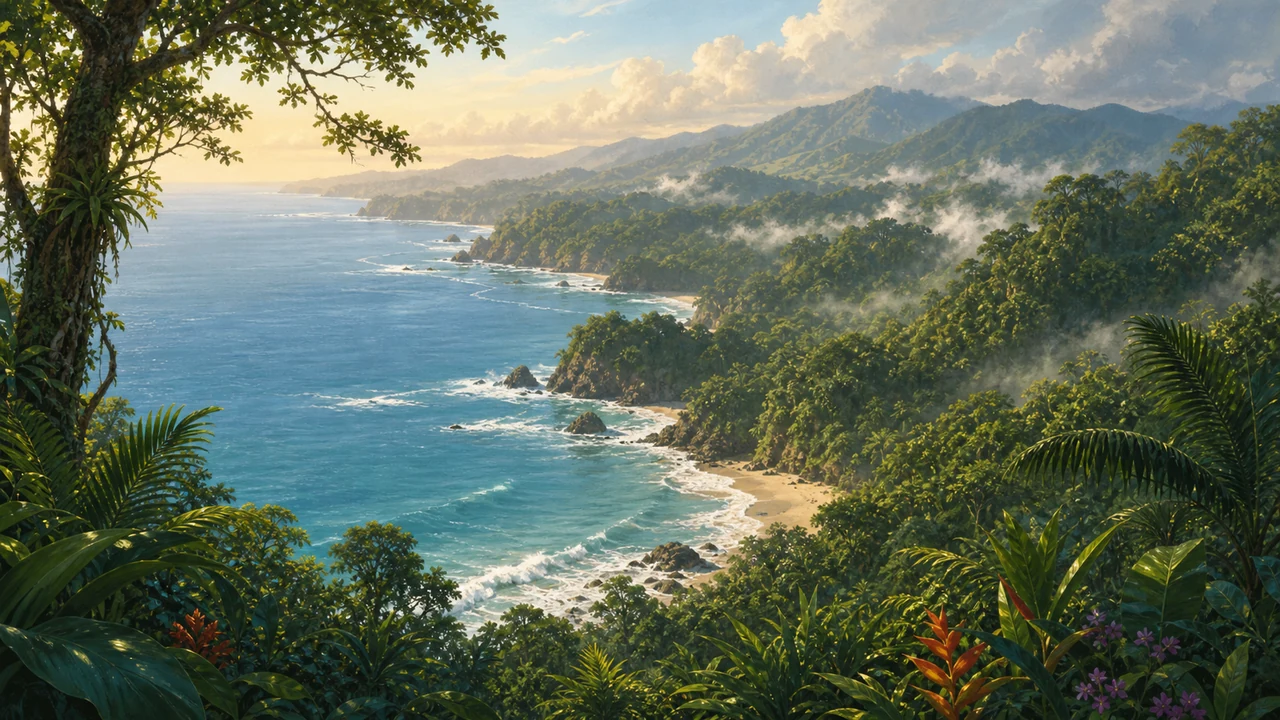 The Southern Pacific region supports an unusually broad menu of outdoor activities, all set against a backdrop of intact natural landscape.
- Surfing — Dominical and several nearby breaks offer conditions for all levels; longer stretches south toward Uvita are quieter and less crowded.
- Whale and dolphin watching — boat tours from Uvita and Drake Bay are the best way to get close to marine mammals in the Marino Ballena area.
- Diving and snorkeling — reefs around Caño Island, just offshore from the Osa Peninsula, offer some of the clearest water and richest marine life in the country. Caño Island Biological Reserve is a popular day trip from Drake Bay.
- Kayaking and rafting — rivers flowing from the Talamanca mountains to the Pacific provide class-rated whitewater in a pristine jungle setting.
- Canopy tours and waterfall hikes — the forested hills around Dominical and the Osa are threaded with zip-line courses and waterfall trails, offering a look at the mid-level forest canopy from above.
Explore the full range of activities & sports available throughout Costa Rica.
Conservation and Responsible Travel
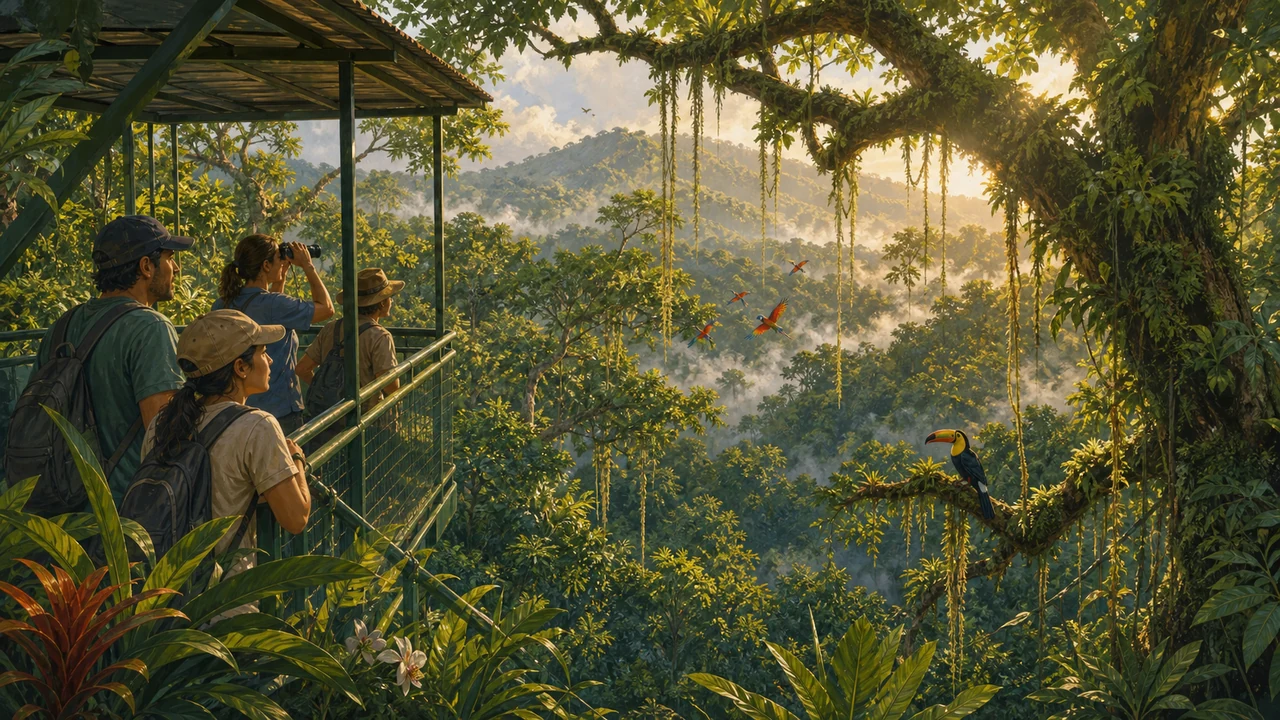 What makes the Southern Pacific Coast genuinely different from most tourist destinations is the deliberate effort — by communities, businesses, and government agencies — to link economic development with environmental stewardship. Private biological corridors connect national parks and wildlife refuges, allowing species to move through the landscape rather than becoming trapped in isolated patches. Many local lodges operate under Costa Rica’s Certification for Sustainable Tourism (CST) program, which sets measurable standards for environmental and social responsibility.
This philosophy of sustainable ecotourism on the Osa Peninsula is not simply marketing: the forests here are standing largely because local communities concluded that intact nature is more valuable over the long term than cleared land. Travelers who choose locally operated tours and certified accommodations directly support that calculation.
For an introduction to Costa Rica’s broader approach to ecotourism & nature, and for practical information before your trip, see the Costa Rica travel tips guide. The country protects more than 25% of its land in national parks and reserves — one of the highest rates of any nation on Earth — and the Southern Pacific Coast sits at the heart of that commitment.
Frequently asked questions
What is special about Marino Ballena National Park?
Marino Ballena protects a remarkable sandbar shaped like a whale's tail that extends into the Pacific — visible at low tide. The park is also a critical breeding and calving ground for humpback whales, which arrive from both hemispheres, making it one of the only places on Earth with two humpback seasons per year.
Is Dominical beach good for swimming?
Dominical is primarily a surf beach with strong rip currents, so it is best suited to experienced swimmers and surfers. Calmer tidal pools near the shore offer a safer option for relaxing in the water. Always observe posted flags and ask locals about current conditions.
How do I get to Corcovado National Park?
Most visitors fly from San José or Liberia into Puerto Jiménez or Palmar Sur, then travel overland or by boat to park entrances. Entry requires booking in advance through an authorized guide, as independent access is restricted to protect the park's extraordinary ecosystem.
When is the best time to see humpback whales in Costa Rica?
The Southern Pacific Coast enjoys two whale-watching seasons: roughly July through October (Southern Hemisphere humpbacks) and December through April (Northern Hemisphere humpbacks). The Marino Ballena area is one of the top spots in the country for both seasons.
What wildlife can I expect to see in the Osa Peninsula and Corcovado?
Corcovado and the surrounding Osa Peninsula host all four of Costa Rica's monkey species, Baird's tapirs, jaguars, pumas, giant anteaters, scarlet macaws, and hundreds of bird species. The park protects roughly 2.5% of the world's biodiversity within a single protected area.