Rappelling in Costa Rica: Waterfalls & Canyons Guide
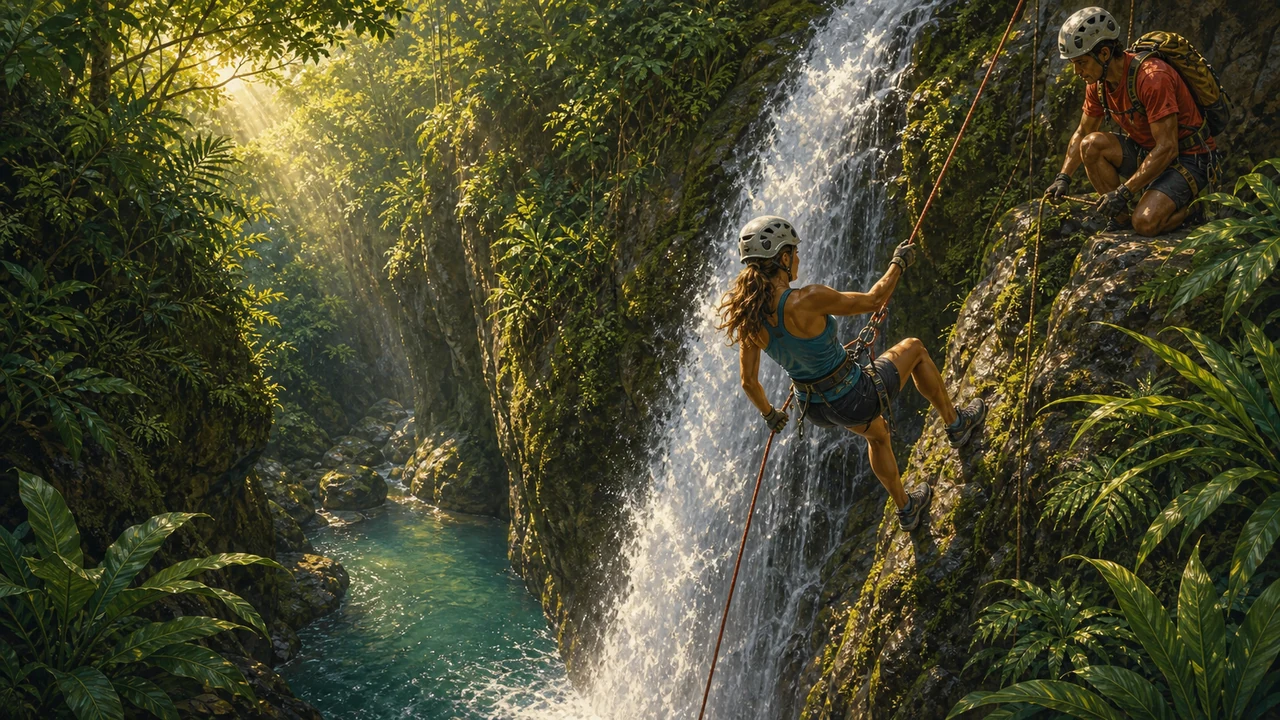 Rappelling in Costa Rica puts you face-to-face with some of the country’s most spectacular scenery — thundering waterfalls, shadowed gorges, and towering volcanic cliffs — all from the end of a rope. Whether you inch your way down a mossy cascade or drop free-fall into a cloud-forest canyon, the experience reframes Costa Rica’s wild landscapes from the inside out.
Unlike many adventure pursuits that demand years of training, rappelling is accessible to almost anyone willing to follow a guide’s instructions. Operators across the country have rigged permanent anchor systems at waterfalls, canyon lips, and even the trunks of old-growth trees on steel platforms — so visitors with zero prior experience can descend safely alongside seasoned adventurers.
What Rappelling and Canyoning Actually Involve
Rappelling (called rappel or rapel locally, sometimes abseiling) means controlling your descent down a rope attached to a fixed anchor above. You lean back against your harness, feed rope through a friction device, and lower yourself at your own pace — fast for the adrenaline rush, slow if you want to linger and take in the view.
Waterfall rappelling in Costa Rica takes this a step further: you descend directly through the curtain of a waterfall, with the water pounding your helmet and the mist rising around you. Many operators offer routes where you pass behind the falls through a hidden alcove — one of those moments that never makes it into the brochure photos because no photo does it justice.
Canyoning Río Negro at Rincón de la Vieja Volcano goes further still. A full canyoning (or canyoneering) trip chains several rappels together with hiking, river scrambles, natural rock slides, and jumping into pools — turning a single descent into a several-hour canyon traverse. It is the most immersive way to experience Costa Rica’s volcanic river systems.
Top Locations for Rappelling in Costa Rica
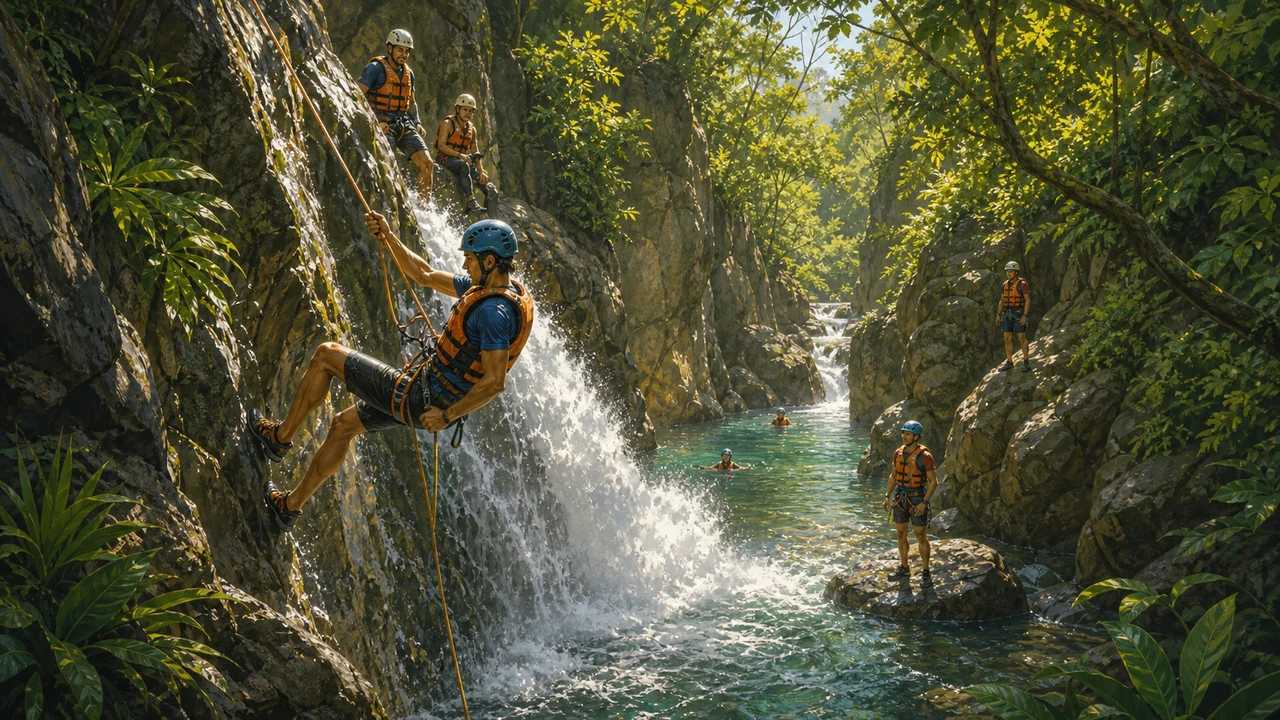 Costa Rica’s geography — a spine of active volcanoes flanked by river valleys that drop sharply toward both coasts — creates ideal natural conditions for the sport. These are the standout regions:
Arenal Volcano Region
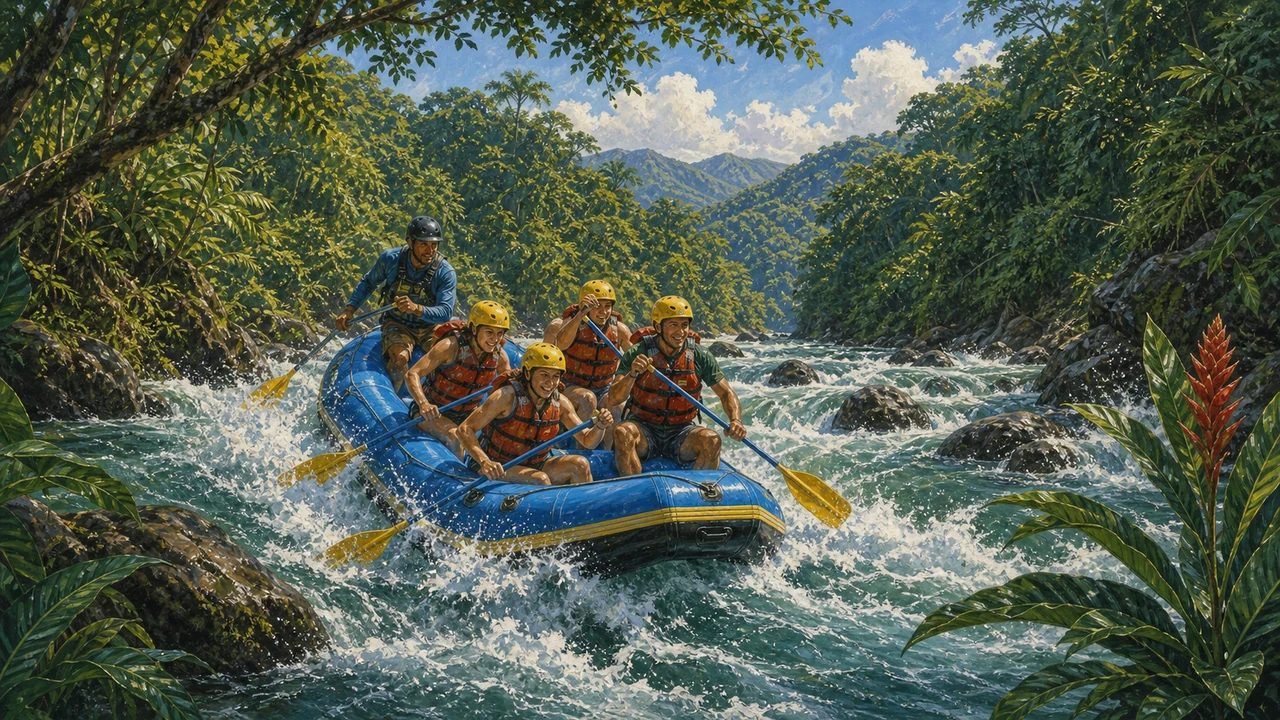
The Arenal area in northern Costa Rica is the country’s adventure capital, and rappelling near Arenal Volcano is among its most popular offerings. Operators run routes along waterfalls fed by the volcanic highlands, with the cone of Arenal framing the view on clear days. The adventure activities in the Arenal region hub connects rappelling with whitewater rafting, zip-lining, and hot springs — making it easy to build a multi-day itinerary without moving lodgings.
Rincón de la Vieja, Guanacaste
In the northwest, Rincón de la Vieja Volcano anchors one of the country’s most rewarding canyoning zones. The Río Negro canyon carves through geothermally active terrain, passing fumaroles, mud pots, and dense dry-tropical forest on its way to the lowlands. Canyoning in the Rincón de la Vieja sector typically involves five to eight rappels of varying height, several natural water slides, and deep-pool swims. Because Guanacaste has a pronounced dry season, this region is especially popular from December through April when canyon water levels are more predictable.
Turrialba and the Central Valley
 The canyons at the foot of Turrialba Volcano in the Central Valley offer multi-drop waterfall rappelling near Turrialba on routes fed by year-round rainfall from the Caribbean slopes. The dense cloud forest here means the descents stay green and atmospheric even during the dry months. This region is within easy reach of San José, making it a practical choice for travelers based in the capital.
Southern Pacific Coast
Operators near Parrita and the southern Pacific coast have developed lower-altitude routes ideal for families and first-timers. The jungle canopy drops into river gorges just minutes from beach hotels, giving this region a convenient stop-and-do-something feel alongside surfing and wildlife watching.
Skill Levels and Who Can Participate
Most beginner-friendly waterfall rappelling tours require only that participants be reasonably fit and free of significant fear of heights. Upper age and weight limits vary by operator; check before booking.
Intermediate and advanced routes — particularly full canyoning circuits — demand better physical fitness, comfort in water, and a willingness to commit to a full-day outing. Guides will brief you thoroughly regardless of level, covering harness fitting, brake-hand technique, how to read the rope, and communication signals with the team above.
Children are welcome on many entry-level routes, typically from around eight years old, though this depends on the operator and specific site.
Safety Essentials
 Costa Rica has a well-developed adventure-tourism industry, and certified rappelling operators in Costa Rica are regulated by the Costa Rican Tourism Institute (ICT). When booking, look for:
- ICT-licensed guides with first-aid certification
- Equipment inspected and replaced on a published schedule
- A backup belay system (a second rope managed by the guide) on all descents
- Group sizes small enough for the guide to attend to each participant
Never rappel with an unlicensed outfit or at an unsupervised site. The anchors, ropes, and friction devices used in this sport must be rated for the load and inspected regularly — conditions that informal operators cannot guarantee.
Read the site’s Costa Rica safety tips before any adventure activity, and check the general Costa Rica travel tips for practical logistics.
Combining Rappelling with Other Adventures
Rappelling pairs naturally with the broader range of adventure activities in Costa Rica. Operators in the Arenal and Guanacaste regions routinely offer combination packages that bundle rappelling with zip-lining, whitewater rafting, horseback riding, or hot-spring soaks — all within the same day.
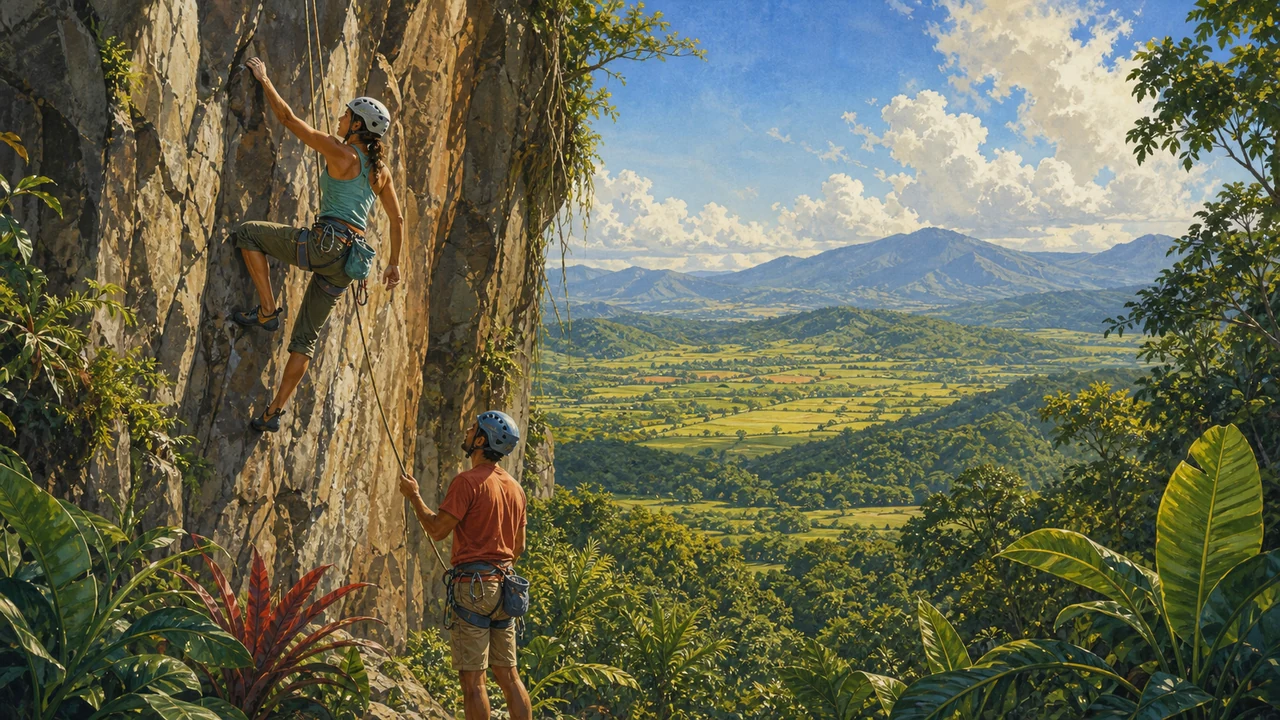
If the descent itself appeals to you but you want to go vertical rather than down, rock climbing in Costa Rica uses many of the same natural formations and skill sets. The waterfall climbing and rappelling adventure page covers hybrid tours that incorporate both directions of travel on the same route.
For visitors who want a broader look at what the country offers, the Costa Rica ecotourism and nature hub and the activities and sports index are good starting points for planning.
Planning Your Rappelling Trip
Tours are available year-round, though individual operators sometimes close routes during periods of very high water after heavy rain. Book at least a day in advance during peak season (December–April and July–August). Most full canyoning circuits run half a day to a full day; single-waterfall rappelling tours can be completed in two to three hours.
Transport from your hotel is included with most Arenal and Guanacaste operators. Central Valley routes near Turrialba are close enough to San José that you can often arrange your own transfer.
Arrive early, eat a light breakfast, and leave expensive jewelry at the hotel. Everything else — the canyon, the waterfall, the rope, and the view from halfway down — will be provided.
Frequently asked questions
Do I need prior experience to go rappelling in Costa Rica?
No prior experience is required for most introductory tours. Reputable operators brief beginners thoroughly and guide them through every step. Harder multi-drop canyoning routes are better suited to those with some previous rappelling or canyoning background.
What is the difference between rappelling and canyoning in Costa Rica?
Rappelling (also called abseiling) simply means descending a rope down a cliff or waterfall. Canyoning combines rappelling with hiking, swimming, and scrambling through a river canyon — so it is a more complete multi-element adventure that typically lasts several hours.
What should I wear and bring for a rappelling or canyoning tour?
Operators supply helmets, harnesses, and ropes. Wear clothes and shoes you don't mind getting soaked, bring a dry bag for your phone and valuables, apply reef-safe sunscreen before you arrive, and stay well-hydrated — Costa Rica's heat and humidity are intense even inside a canyon.
Is rappelling in Costa Rica safe?
Yes, when booked through licensed operators who use certified guides and well-maintained equipment. Always check that the company is registered with the Costa Rican Tourism Institute (ICT) and ask about their safety record and equipment inspection schedule.
What is the best time of year for rappelling and canyoning in Costa Rica?
Rappelling is possible year-round. Waterfalls are most dramatic during and just after the May–November rainy season. The December–April dry season offers easier logistics and calmer river levels, making it a safer choice for first-timers.