Kayaking in Costa Rica: Rivers, Lakes & Beyond
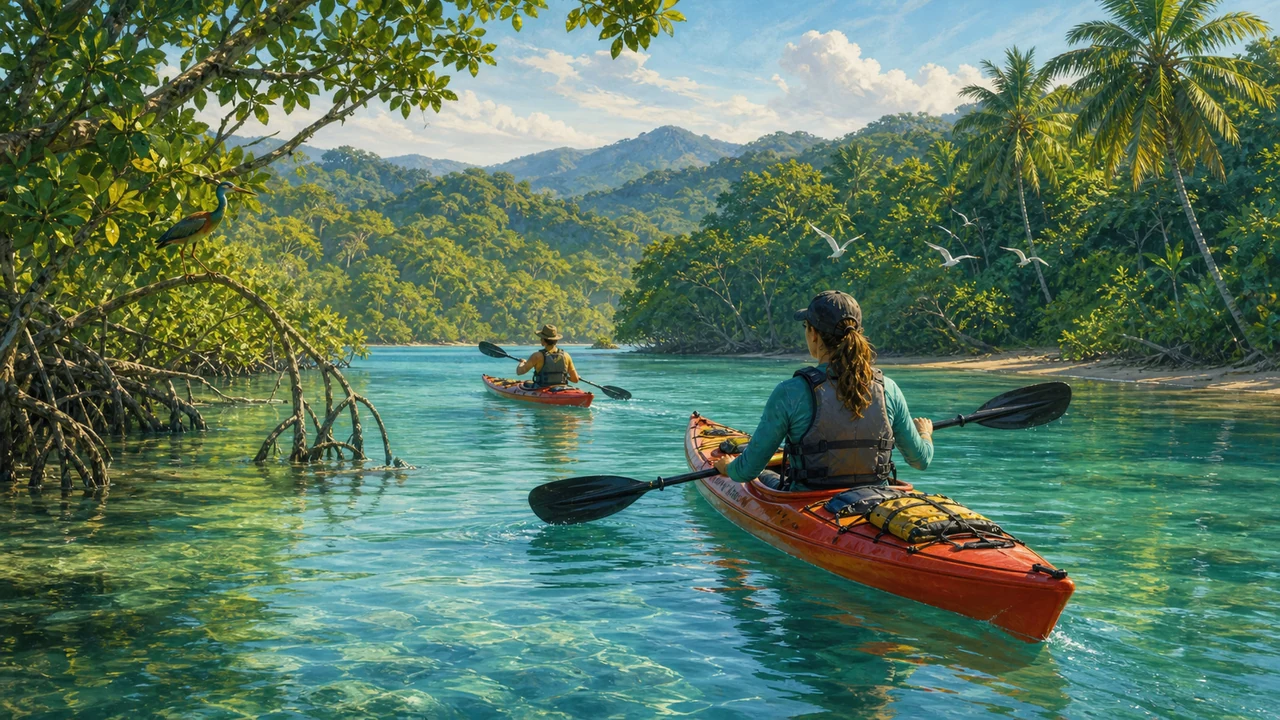 Kayaking in Costa Rica puts you directly in the country’s living landscape — tracing jungle rivers, gliding across volcanic lakes, and drifting through mangrove estuaries thick with wildlife. Whether you are a first-time paddler looking for a peaceful morning on still water or an experienced kayaker chasing a technical river run, Costa Rica’s geography delivers an extraordinary range of options within a remarkably small country.
The distinction that most visitors overlook is how different the kayaking disciplines are here. Sea kayaking in Costa Rica is its own world of coastal exploration, but inland river and lake paddling offer equally compelling experiences — denser wildlife encounters, volcanic scenery, and calmer conditions that suit beginners and families.
River Kayaking: From Calm Floats to Technical Rapids
 Costa Rica is crisscrossed by rivers fed by year-round rainfall and volcanic highlands, making river kayaking on Costa Rica’s jungle waterways one of the country’s premier paddling experiences. Conditions range from easy flatwater floats accessible to anyone to demanding Class IV–V runs for expert kayakers.
The Caribbean slopes hold some of the country’s most paddled rivers. The Pacuare and Reventazón are celebrated names — the Pacuare in particular carves through pristine primary rainforest, and while it is best known as a white-water rafting destination, experienced kayakers often run it as well. Shared itineraries are common: a guided company runs rafts and kayaks side by side.
On gentler stretches, even beginners can handle a sit-on-top kayak on slow-moving rivers. These tours combine paddling with wildlife spotting — caimans, kingfishers, basilisk lizards, and river otters are regular sightings. Operators on the Caribbean coast around Tortuguero and Cahuita often pair canal kayaking with visits to Tortuguero National Park or Cahuita National Park.
What to expect on a guided river kayak tour:
- Half-day or full-day formats; equipment provided
- Sit-on-top kayaks for flatwater; closed-deck kayaks for technical whitewater
- A safety briefing and basic paddle instruction before launch
- Naturalist guides who know where wildlife concentrates
Lake Arenal Kayaking: Volcano Views and Calm Water
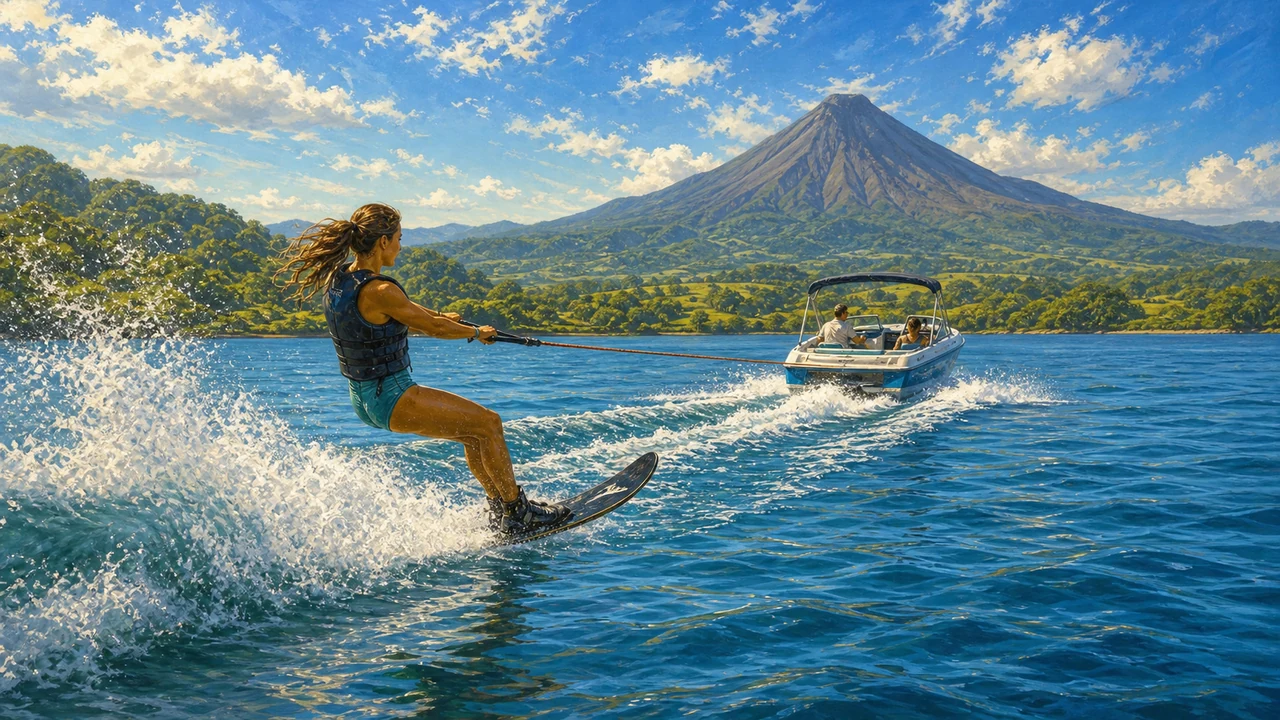 Kayaking on Lake Arenal with Arenal Volcano views is arguably the most scenic inland paddling experience in Central America. The lake — Costa Rica’s largest — sits at roughly 550 meters elevation in the northern lowlands, and on clear mornings the volcano’s cone rises dramatically above the shoreline. Howler monkeys call from the trees, herons patrol the shallows, and kingfishers dart across the surface.
The eastern end of the lake, near the town of La Fortuna, offers the calmest conditions for paddling and the closest views of the volcano. Most adventure activities in the Arenal region can be bundled with a morning kayak excursion, making it easy to combine a paddle with a zip-line, thermal springs visit, or waterfall hike.
A key practical note: Lake Arenal is also one of Costa Rica’s top windsurfing and kitesurfing destinations, particularly at the windier western end near Tilarán. Kayakers should stick to morning windows before the trade winds build — afternoons can bring choppy conditions that are challenging even for intermediate paddlers.
Tips for Lake Arenal kayaking:
- Launch by 7–8 a.m. for glass-smooth water and best volcano views
- Rental kayaks and guided tours are available near La Fortuna and Nuevo Arenal
- The 2–3 hour morning paddle covers enough water to see the volcano from multiple angles
- Bring waterproof gear for your camera — unexpected squalls can pass through quickly
Estuary and Mangrove Kayaking
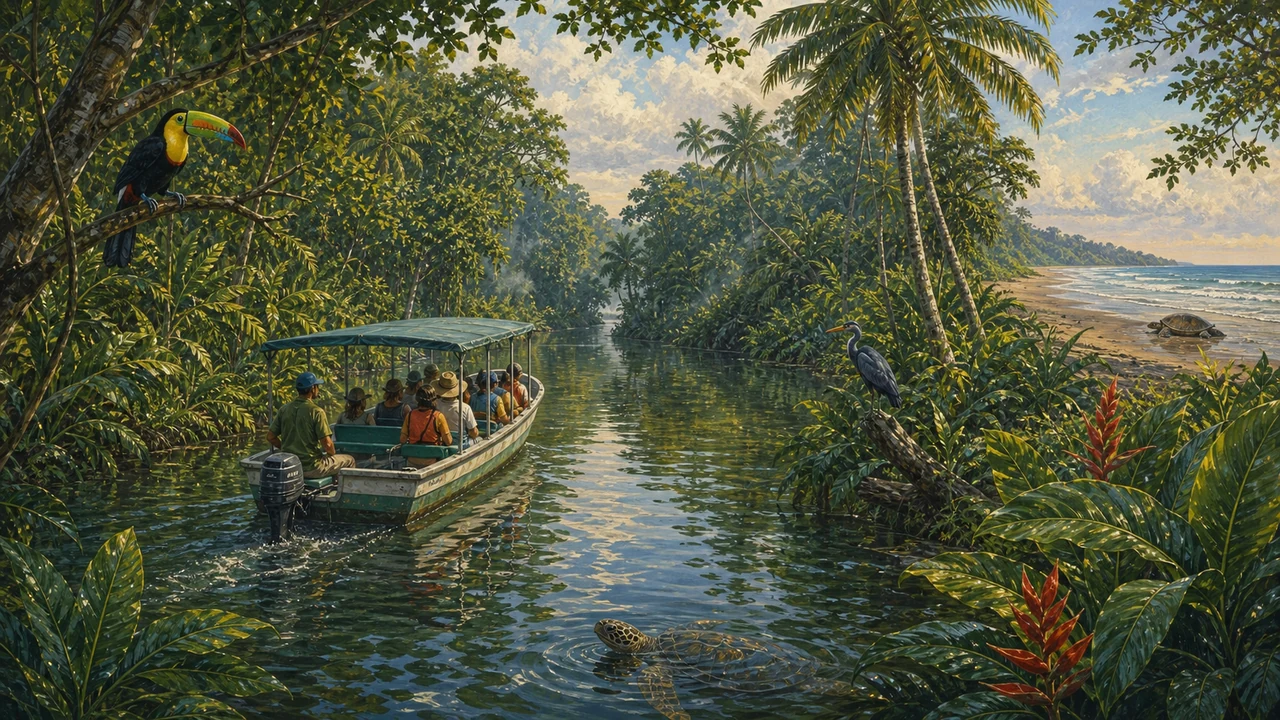 Some of Costa Rica’s most rewarding paddling happens at the transition zones between river and sea — the brackish estuaries and mangrove channels where the two ecosystems meet. These sheltered waterways are calm regardless of ocean conditions, making them ideal for beginner-friendly kayaking through Costa Rica’s mangroves.
The Tortuguero canals on the Caribbean coast are a standout. Paddling a kayak through those narrow channels — with sloths overhead, crocodiles at the waterline, and toucans cutting across the canopy — is a wildlife encounter few other activities can match. Similar experiences are available in the Osa Peninsula around Corcovado, along the Gulf of Nicoya, and in the mangroves surrounding the Nicoya Peninsula.
Compared to open sea kayaking, estuary paddling requires almost no technical skill. Currents are negligible, you’re sheltered from wind and swell, and most rental operators can put you in a kayak with a five-minute briefing. For families, this is often the best introduction to kayaking in the country.
River vs. Lake vs. Sea: Choosing the Right Experience
The three paddling environments in Costa Rica each suit different traveler profiles:
| Experience | Best for | Skill level | Key locations |
|---|---|---|---|
| River kayaking (flatwater) | Wildlife immersion, calm paddling | Beginner–Intermediate | Caribbean slope rivers, Pacific foothills |
| River kayaking (whitewater) | Adrenaline, rapids, scenery | Intermediate–Advanced | Pacuare, Reventazón, General rivers |
| Lake kayaking | Scenic views, morning calm | Beginner | Lake Arenal, Laguna de Arenal |
| Estuary/mangrove | Wildlife, families, slow pace | Beginner | Tortuguero, Osa, Gulf of Nicoya |
| Sea kayaking | Coastal exploration, dolphins, remote beaches | Intermediate | Pacific and Caribbean coasts |
For sea-specific paddling — coastal crossings, spotting dolphins and manta rays, accessing beaches unreachable by road — the sea kayaking in Costa Rica page covers those experiences in detail.
Seasons and Practical Planning
The best season for kayaking in Costa Rica depends on which region and type you choose:
- Dry season (December–April): Best for Pacific coast-adjacent rivers and Lake Arenal mornings; calmer overall conditions
- Green season (May–November): Rivers run higher and faster — exciting for whitewater, but some gentle float routes become pushy; the Caribbean coast has its own dry spells in September–October
- Year-round: Estuary and mangrove paddling is good in any season, as these environments are naturally sheltered
Physical fitness is not a major barrier to entry. Sit-on-top kayaks are highly stable and forgiving of beginner mistakes. Children as young as six or seven can typically join flatwater tours in tandem kayaks. For whitewater, most operators set a minimum age and require prior paddling experience — ask specifically when booking.
What to bring on any kayaking trip: a rash guard or quick-dry shirt, water shoes (not flip-flops), reef-safe sunscreen, a dry bag for valuables, and a change of clothes — getting wet is practically guaranteed and entirely worth it.
Getting Started
Most kayaking operators in Costa Rica provide all equipment: paddle, life jacket (PFD), and the kayak itself. Dedicated kayak tours are widely available; many are also bundled into multi-activity day packages offered by Costa Rica activities & sports operators and adventure lodges.
For first-time visitors, booking a guided tour adds a naturalist dimension that turns a paddle into a wildlife class. For experienced paddlers seeking independent exploration, kayak rentals are available at most lake and coastal bases. Check with your lodge or local operator for current conditions before heading out, especially during the rainy season when rivers can change character quickly.
Kayaking sits naturally alongside Costa Rica’s broader adventure calendar. It pairs well with trekking in Costa Rica, rappelling, and canopy tours — all activities where the real reward is the country’s extraordinary ecotourism and nature that wraps around every stroke of the paddle.
Frequently asked questions
Do I need kayaking experience to paddle in Costa Rica?
Not for most beginner-friendly tours. Sit-on-top kayaks are very stable, and guided trips on calm estuaries, Lake Arenal, or slow river stretches are suitable for first-timers, including families with older children. Intermediate white-water runs require prior paddling experience.
What is the best time of year for kayaking in Costa Rica?
The dry season (December through April) brings calmer Pacific coastal waters and clearer rivers, making it ideal for most paddlers. Lake Arenal kayaking is good year-round but early mornings are calmest before afternoon winds pick up. Caribbean-slope rivers can be paddled in any season.
How does river kayaking differ from sea kayaking in Costa Rica?
River kayaking focuses on navigating current, rapids, and jungle scenery; sea kayaking involves longer open-water crossings and coastal exploration. River kayaks are shorter and more maneuverable; sea kayaks are longer for tracking in open water. Both are offered by local operators, often at the same base.
Can I combine kayaking with other adventure activities?
Yes — many operators in the Arenal region bundle kayaking on Lake Arenal with white-water rafting, zip-lining, or hiking. The Caribbean coast combines river and estuary paddling with wildlife-watching and snorkeling excursions.
Is Lake Arenal good for kayaking?
Lake Arenal is one of Costa Rica's best inland paddling destinations. The volcano backdrop, resident kingfishers, herons, and howler monkeys on the shoreline make it memorable. Mornings are calmest; afternoon winds can make paddling challenging, especially in the windier western end.