Costa Rica Canopy Tours: Ziplines, Bridges & Aerial Trams
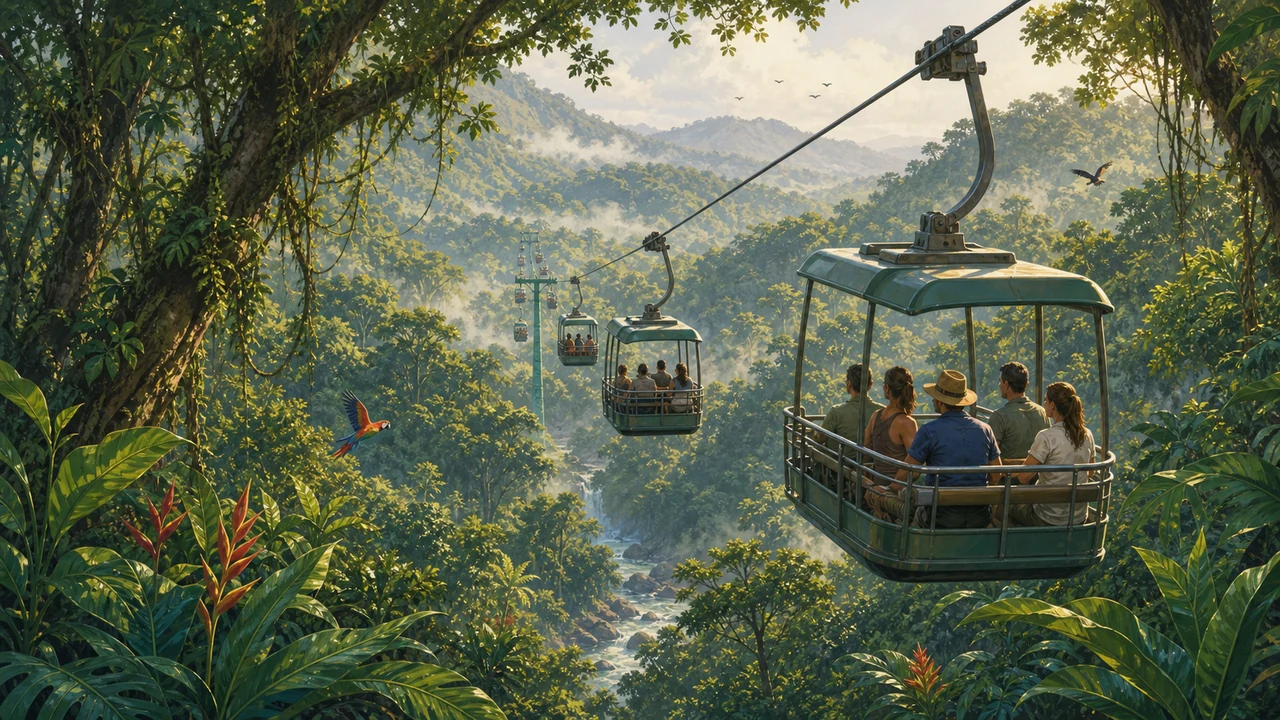 Costa Rica canopy tours put you inside the rainforest rather than beneath it, lifting you into a world of orchids, howler monkeys, and iridescent hummingbirds that most visitors never see. Whether you glide across a zipline Costa Rica rainforest circuit, step cautiously across swaying hanging bridges, or drift through the treetops in a gondola, this is the country’s most iconic adventure experience — and one that Costa Rica effectively invented for the world.
The country protects more than 25% of its territory and shelters roughly 5% of global biodiversity. That concentration of life is what makes canopy tours in Costa Rica so spectacular: you are not just riding a wire, you are passing through one of the most species-rich ecosystems on the planet.
How Canopy Tourism Began in Costa Rica
The aerial-tram concept was pioneered in Costa Rica, originally as a scientific platform for biologists studying the rainforest canopy — layers that were almost completely inaccessible from the ground. Researchers needed a way to observe the upper strata without disturbing them. The gondola system they developed near Braulio Carrillo National Park later opened to the public and became the template for canopy tourism worldwide.
Zipline tours followed, inspired by the same desire to put visitors eye-level with the canopy rather than looking up at it. Monteverde became the natural home for these tours: its cloud-forest setting, dramatic elevation, and existing ecotourism infrastructure made it the ideal laboratory for the zipline experience. Today operators across the country offer everything from gentle introductory lines to multi-kilometer circuits with dozens of platforms.
Understanding the Rainforest Canopy
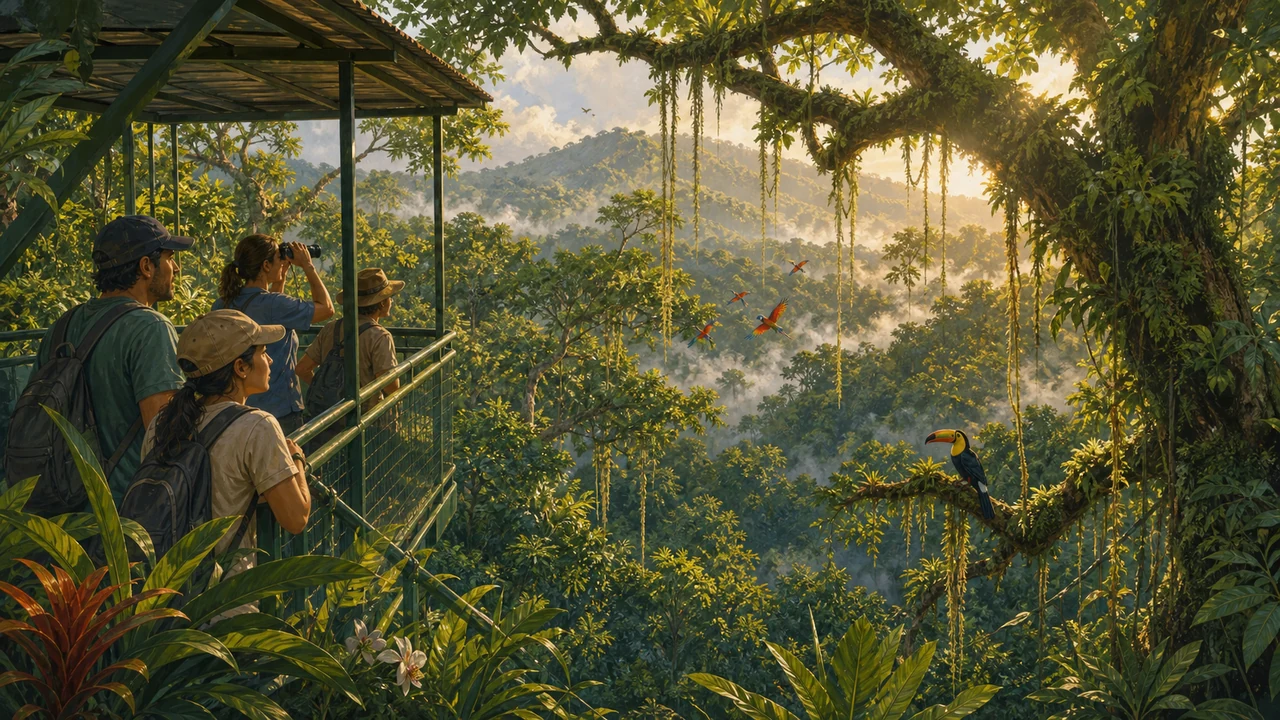 The rainforest is not a single environment but a stack of distinct vertical layers, each with its own light, temperature, humidity, and inhabitants.
- Forest floor (0–3 m): Deep shade, high humidity, fallen leaves, and root systems. Home to leaf-cutter ants, bullet ants, and ground-dwelling amphibians including the famous poison dart frogs.
- Understory (3–8 m): Filtered light. Ferns, shade-tolerant palms, and the juvenile forms of canopy trees compete here. Snakes, lizards, and many bird species inhabit this zone.
- Sub-canopy (8–20 m): A transitional layer where climbing vines and aerial roots reach between levels. Monkeys range through here regularly.
- Canopy (20–45 m): The forest’s powerhouse — where most photosynthesis happens and most animals feed. Toucans, macaws, sloths, and a vast insect community live in the leafy ceiling created by the tallest trees.
- Emergent layer (45 m+): The crowns of the tallest trees protrude above the canopy, exposed to full sun and strong winds. Harpy eagles nest here where they exist.
On an aerial tram, the gondola threads through every layer on a single ride. A zipline circuit typically launches from the canopy level and lets you soar above the forest floor on a Costa Rica zipline between platform to platform, giving you the canopy perspective in motion.
Three Ways to Tour the Canopy
Aerial Trams
Gondola-style trams move slowly and silently through the forest on a cable system, making them ideal for wildlife observation. The Rainforest Aerial Tram near the edge of Braulio Carrillo is the original and most celebrated, offering a 2.6-kilometer ride through primary old-growth rainforest. The pace allows passengers to spot cicadas singing from the bark, sloths anchored to cecropia branches, and aerial roots descending like ropes from the upper canopy toward the soil below.
The experience is meditative rather than adrenaline-fueled — which is exactly why it appeals to families, older travelers, and anyone who wants to absorb the forest rather than speed past it. For a broader picture of this type of immersive experience, see the Costa Rica ecotourism & nature section.
Ziplines
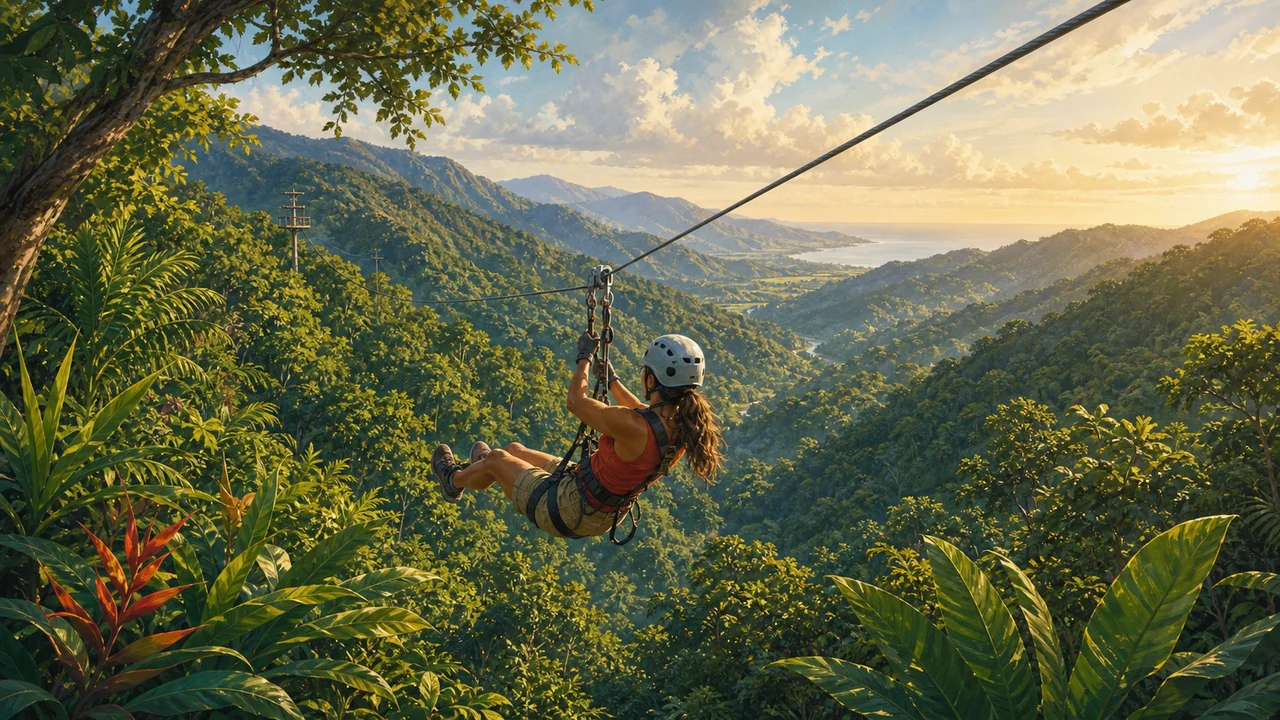 Ziplines transformed canopy touring into an adrenaline activity. A typical circuit runs eight to sixteen platforms, each connected by a cable. Guides harness you in, check the equipment, and give the signal — and you launch into open air above the canopy, often reaching speeds of 60–80 km/h on the longer lines.
Sky Adventures operates one of Costa Rica’s best-known multi-format parks, offering both ziplines and hanging bridges in a single visit. Their Arenal park delivers views of Arenal Volcano across the lake while you fly between platforms — a combination that is hard to match anywhere in the world.
Monteverde is widely regarded as the spiritual home of the Costa Rican zipline. The cloud-forest setting adds fog, cooler temperatures, and a slightly eerie beauty to the ride. Several competing operators have grown up in the area, giving visitors a range of price points and circuit lengths. The page on flying like an eagle goes deeper into what to expect from a high-adrenaline flight through the canopy.
Hanging Bridges
Suspension bridges strung between canopy-level platforms let you walk slowly through the treetops at eye level with birds and bromeliads. The experience combines the altitude of a zipline with the pace of a nature walk. Several operations in Monteverde and the Arenal region specialize in guided hanging-bridge tours, pairing the walk with a naturalist who can identify the species around you.
Hanging bridge walks in Monteverde Cloud Forest are popular with families because they require no special fitness level, no harness orientation, and allow extended photography stops. Children who might hesitate on a zipline often find the bridges more accessible — and equally memorable.
Top Destinations for Canopy Tours
Monteverde and Santa Elena remain the gold standard for canopy tours in Monteverde Costa Rica. The cloud forest’s biodiversity and dramatic setting are unmatched. Monteverde is home to the resplendent quetzal and hundreds of other bird species — making it a destination that rewards slow exploration as much as speed.
Arenal Volcano area: The combination of adventure activities in the Arenal region, hot springs, and lake views makes La Fortuna / Arenal one of the most complete adventure destinations in the country. Multiple canopy operators compete here, keeping standards high.
Braulio Carrillo / Caribbean slope: The aerial tram near San José is accessible as a half-day excursion from the capital, making it the most convenient canopy experience for travelers with limited time.
Manuel Antonio area: Operators near the famous national park run zipline circuits through secondary rainforest with Pacific Ocean views — a different feel from the highland cloud forest but equally rewarding.
Safety on Canopy Tours
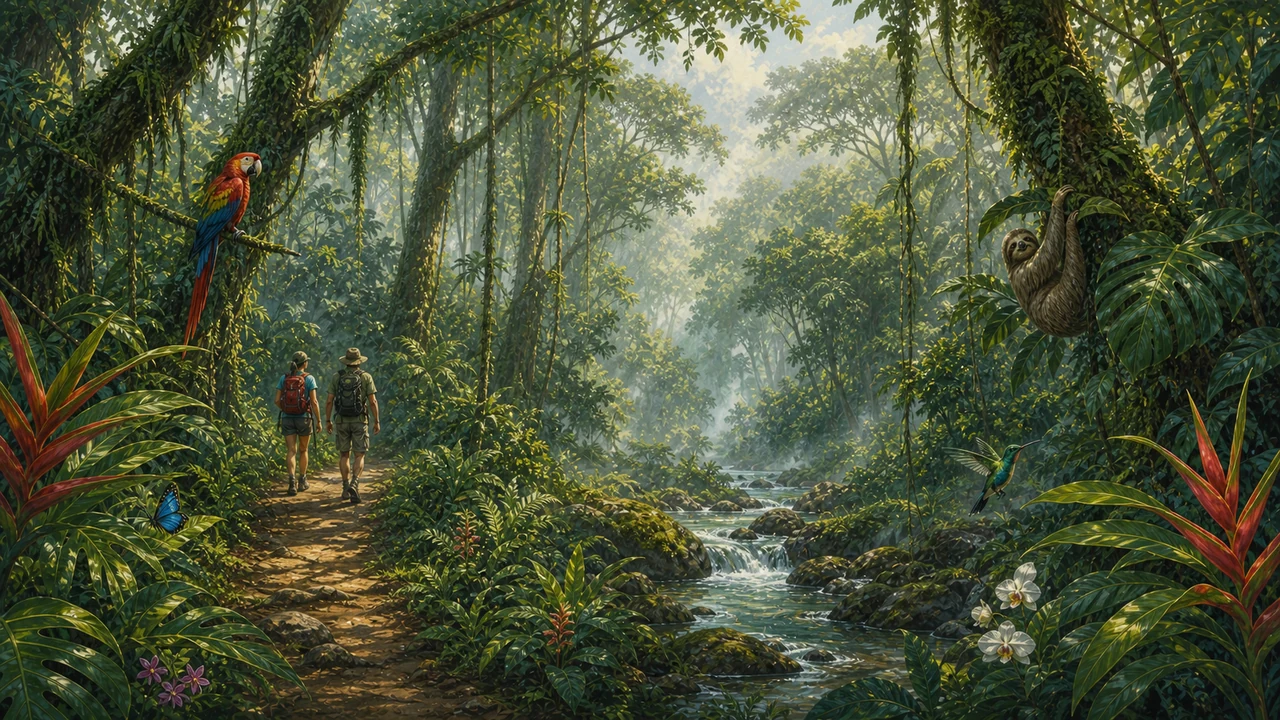 Costa Rica’s canopy industry is well-regulated, and serious accidents are rare when travelers choose properly licensed operators. The Costa Rican Tourism Board (ICT) certifies operators and inspects equipment regularly. A few practices separate the good operators from the rest:
- Certified guides: Look for guides who speak your language, demonstrate harness fitting personally, and stay with the group throughout.
- Equipment inspection: Carabiners, trolleys, and cables should look well-maintained. Do not hesitate to ask when the equipment was last inspected.
- Weight limits: Reputable operators enforce minimum and maximum weight restrictions for safety reasons. Check in advance if you have concerns.
- Weather awareness: Cloud forest and rainforest operations can be suspended in severe weather. Operators may reschedule rather than run in lightning conditions — this is good practice, not an inconvenience.
For general safety information for visitors, the Costa Rica safety tips page is a useful reference.
Planning Your Canopy Experience
Most canopy tours last two to three hours including safety briefing and transfers between platforms. Book directly with a licensed operator or through your hotel — many hotels in Monteverde and Arenal have desk partnerships with local operators and can handle logistics.
Canopy tours fit naturally into a broader Costa Rica activities & sports itinerary. Combine a morning zipline or tram ride with afternoon whitewater rafting or an evening hot-springs soak for a full-day adventure program that showcases the country’s extraordinary range.
For travelers building a complete itinerary, the Costa Rica travel tips page covers transport, accommodation, and logistics that will help you get the most from every day.
Frequently asked questions
What is a canopy tour in Costa Rica?
A canopy tour lets you explore the upper layers of the rainforest — from around 10 to 60 meters above the ground — using ziplines, hanging bridges, or gondola-style aerial trams. Costa Rica pioneered these experiences and remains the world's top destination for canopy adventures.
Where are the best canopy tours in Costa Rica?
Monteverde Cloud Forest is the most famous location, with both ziplines and extensive hanging-bridge networks. The Rainforest Aerial Tram near Braulio Carrillo National Park offers a serene gondola ride into primary rainforest. The Arenal region and Manuel Antonio also have excellent canopy operations.
Are zipline canopy tours safe in Costa Rica?
Reputable operators are licensed and inspected by the Costa Rican Tourism Board (ICT). Always choose an operator who provides full safety briefings, well-maintained harnesses, and certified guides. Follow all instructions, and do not skip any safety steps.
What wildlife can I see on a canopy tour?
Common sightings include howler and white-faced monkeys, two- and three-toed sloths, toucans, scarlet macaws, poison dart frogs, and a dazzling variety of insects and epiphytic orchids — all from a unique aerial perspective.
What should I wear on a canopy or zipline tour?
Wear closed-toe shoes (required by most operators), light but long-sleeved clothing for sun and insect protection, and nothing loose that could catch in the equipment. Leave large jewelry and backpacks behind; operators usually provide lockers.