Guanacaste Adventure Guide: Thrills from Volcano to Coast
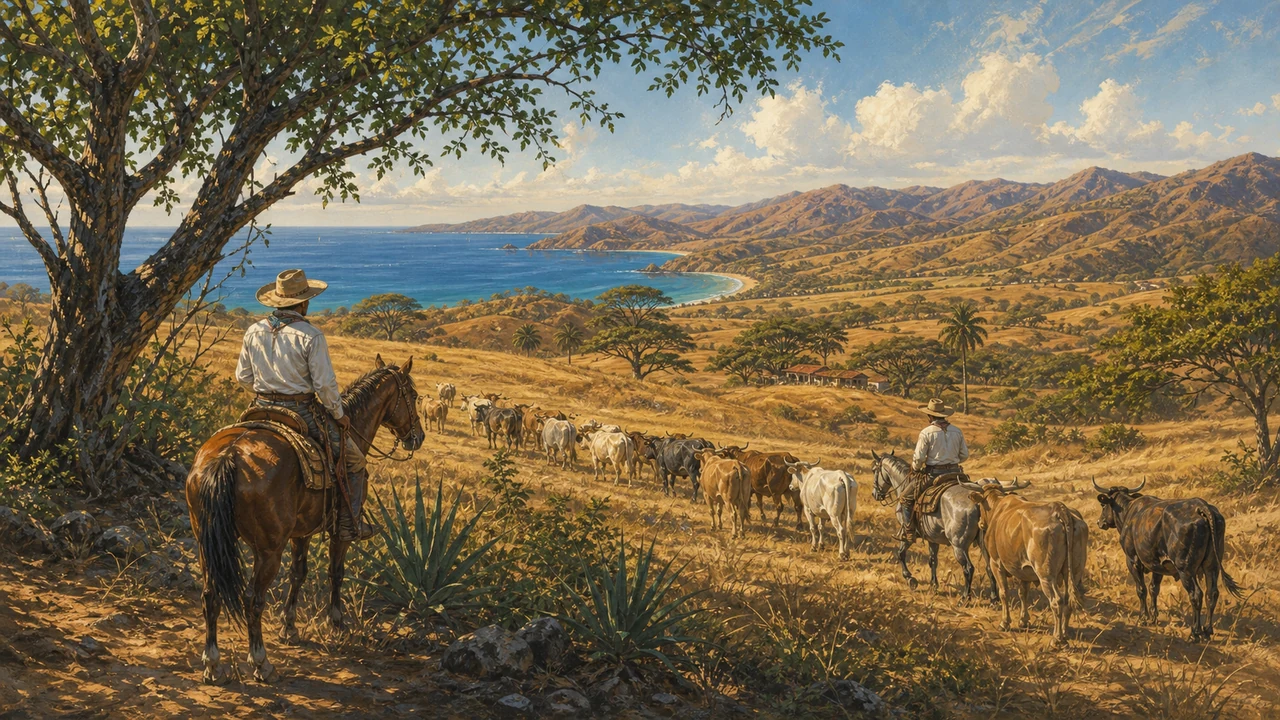 Guanacaste is Costa Rica’s premier adventure destination, where volcanic highlands, dry tropical forest, and a Pacific coastline studded with world-class surf breaks converge in a single province. Whether you’re descending into a volcanic canyon on ropes, crashing through jungle on an ATV, or dropping a sail into the warm blue waters of the Gulf of Papagayo, the northwest corner of Costa Rica delivers a full-spectrum adventure experience that few regions in the world can match.
Most visitors fly directly into Daniel Oduber International Airport (LIR) in Liberia, placing the best of Guanacaste within an hour’s drive. That convenience, combined with the sheer variety of activities on offer, has made this province a destination in its own right rather than just a beach stopover.
Canyoning and Tubing at Rincón de la Vieja
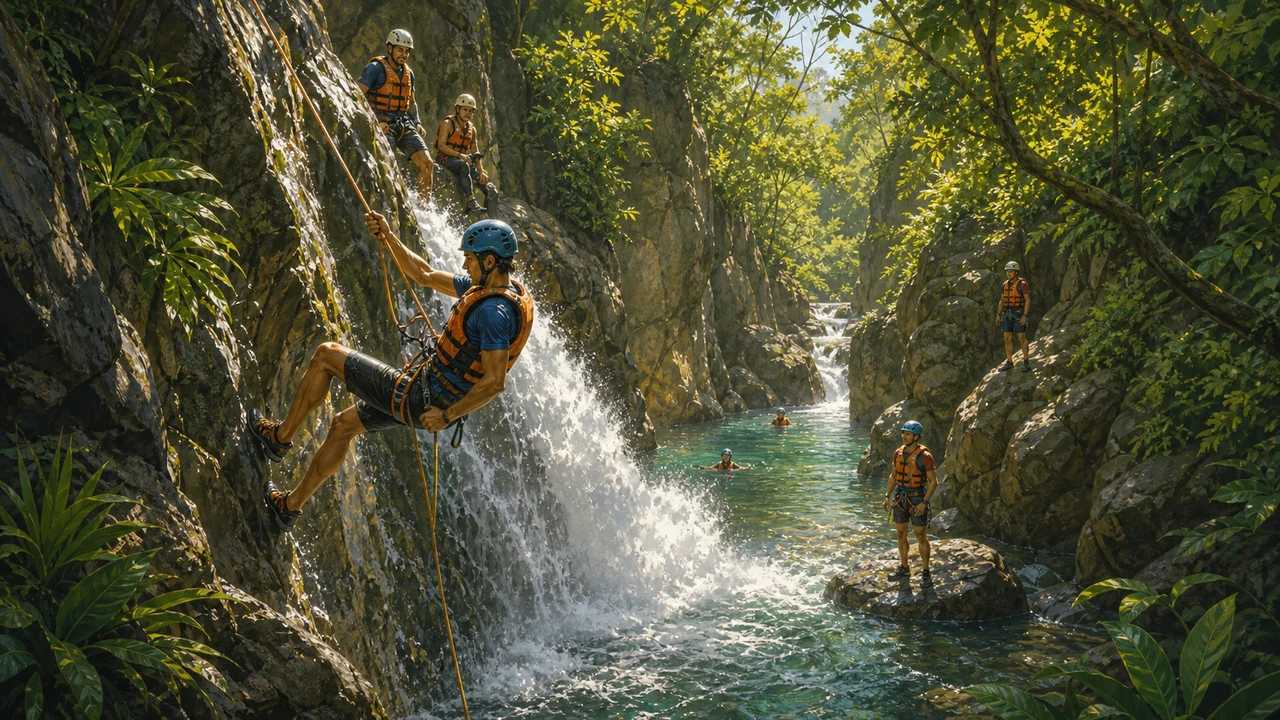 The volcanic massif of Rincón de la Vieja — part of the Guanacaste volcanic range — is the engine that powers much of the province’s inland adventure scene. Rivers cutting through its flanks have carved deep canyons into ancient lava, creating some of the most dramatic natural playgrounds in Central America.
Canyoning on the Río Negro at Rincón de la Vieja is the signature experience. Guides lower you vertically into the canyon via ropes, threading past plunge pools and volcanic rock formations carved by millennia of rushing water. The experience combines rappelling, scrambling, and swimming — an adrenaline sequence that builds naturally as you descend deeper into the gorge. See the dedicated Canyoning Río Negro at Rincón de la Vieja page for a full breakdown.
River tubing offers a slightly mellower but still exciting alternative — you float downstream through the canyon on an inflatable tube, reading currents and bouncing through natural water slides. It’s suitable for a wider age range and gives you a chance to appreciate the canyon’s geology at eye level.
Hacienda Guachipelín, a working cattle ranch on the slopes of the volcano, has developed one of the most comprehensive multi-adventure day packages in Costa Rica. In a single day you can combine canyoning, tubing, a zipline, horseback riding, and a hot spring soak — a format that has made it a benchmark for adventure tourism in the region.
Ziplining Through the Dry Forest Canopy
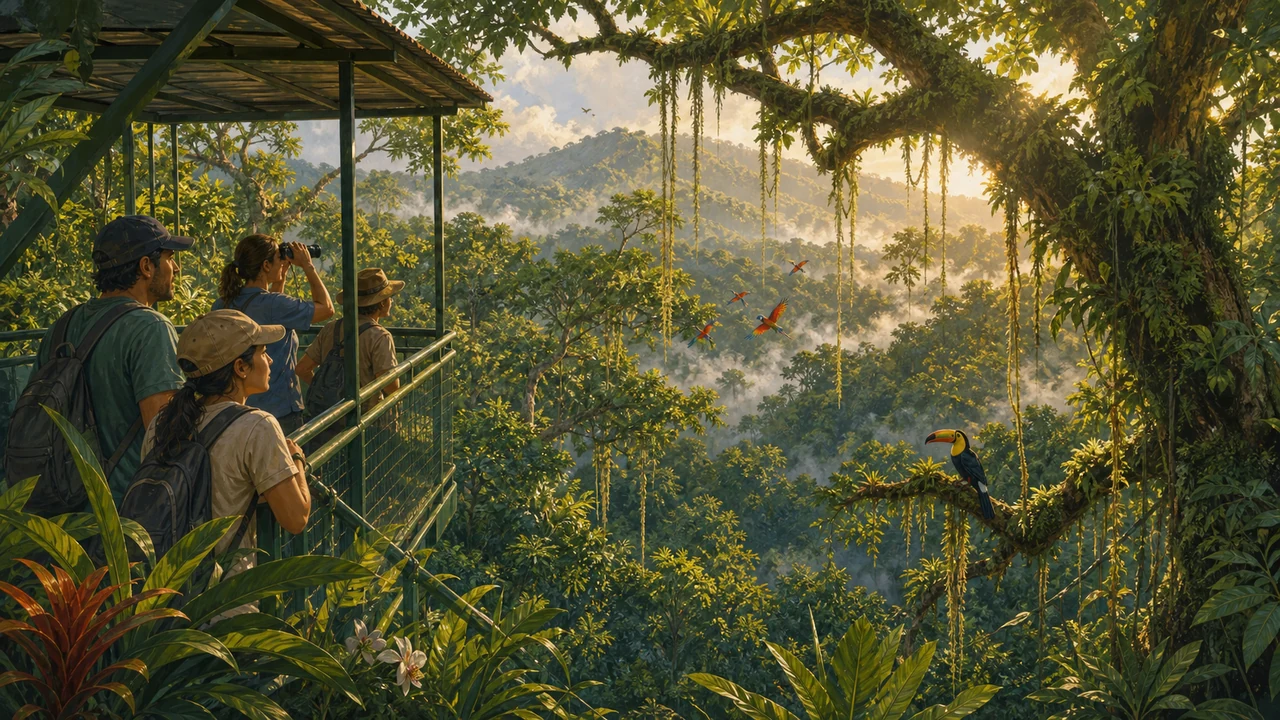 Guanacaste’s dry tropical forest has a character all its own: deciduous trees that shed their leaves in the dry season, revealing skeletal canopies and brilliant flowering bromeliads, then burst into dense green in the rains. Ziplining above this shifting landscape is a different experience from the cloud-forest ziplines in Monteverde — brighter, more expansive, with long sight lines to the Pacific coast on clear days.
Several operators along the Rincón de la Vieja corridor run multi-cable zipline circuits ranging from introductory lines suitable for children to long, fast runs exceeding 400 meters. Ziplining over volcanic terrain in Guanacaste consistently ranks among the best canopy experiences in the country, partly because the dry-forest backdrop feels so distinctly “Guanacastecan.”
For comparison with other regions, see the adventure activities in the Arenal region, where cloud forest canopy tours offer a very different atmosphere.
ATV and Horseback Riding: The Hacienda Experience
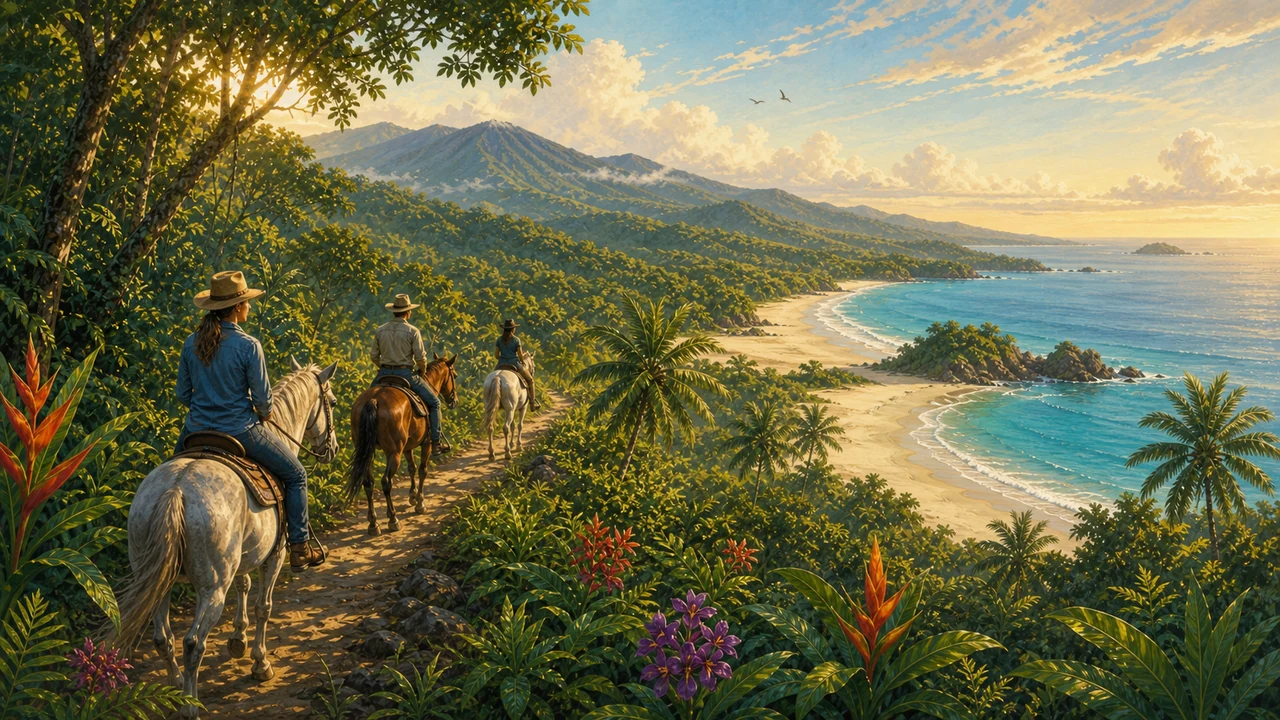 Guanacaste’s identity is rooted in sabanero (cowboy) culture — the province is the heartland of Costa Rica’s cattle ranching tradition, and that heritage infuses its adventure tourism in the most authentic way. Horseback riding in Costa Rica reaches its most atmospheric form here, where guided rides cross open savannahs, wind through dry forest, and trace river valleys with volcanic peaks in the background.
Traditional ranching fincas such as Hacienda Guachipelín and La Chócara in Liberia welcome visitors into the daily rhythms of hacienda life. You can watch cattle-handling demonstrations, learn about the agricultural heritage of the region, and experience classic Guanacastecan hospitality — the region is known for its warmth and its fiesta spirit. At La Chócara’s Fiesta Brava events, evenings fill with bull riding, rodeo games, traditional music, dance, and the kind of typical Costa Rican food you won’t find in a hotel restaurant.
ATV tours layer a modern thrill onto the same landscape. ATV riding through Guanacaste’s volcanic backcountry takes you along dirt tracks that cross rivers, climb ridgelines, and pass through terrain inaccessible by conventional vehicle. Most circuits run two to three hours and can be booked independently or as part of a hacienda multi-activity package.
Sailing and Snorkeling in the Gulf of Papagayo
The Gulf of Papagayo, sheltered by the Santa Elena Peninsula in the north, offers some of the calmest and most beautiful sailing waters on Costa Rica’s Pacific coast. Sailing in the Papagayo Gulf is a classic Guanacaste activity — catamaran day trips depart from marinas near Playa del Coco and Ocotal, typically running north to snorkeling spots at Isla Bat, Isla Catalina, or the rocky outcrops of Playa Blanca and Virador.
Catamaran snorkeling tours in the Gulf of Papagayo combine open-water sailing with stops at protected bays where coral and volcanic rock formations shelter parrotfish, pufferfish, moray eels, and seasonal manta rays. The water clarity in the Gulf is generally excellent from December through April, with visibility often exceeding 15 meters at the better snorkeling sites.
For divers, the same departure points serve as the gateway to some of Costa Rica’s best Pacific dive sites — Costa Rica diving in Guanacaste regularly turns up bull sharks and large pelagics at the Catalina Islands.
Surfing Guanacaste’s Famous Breaks
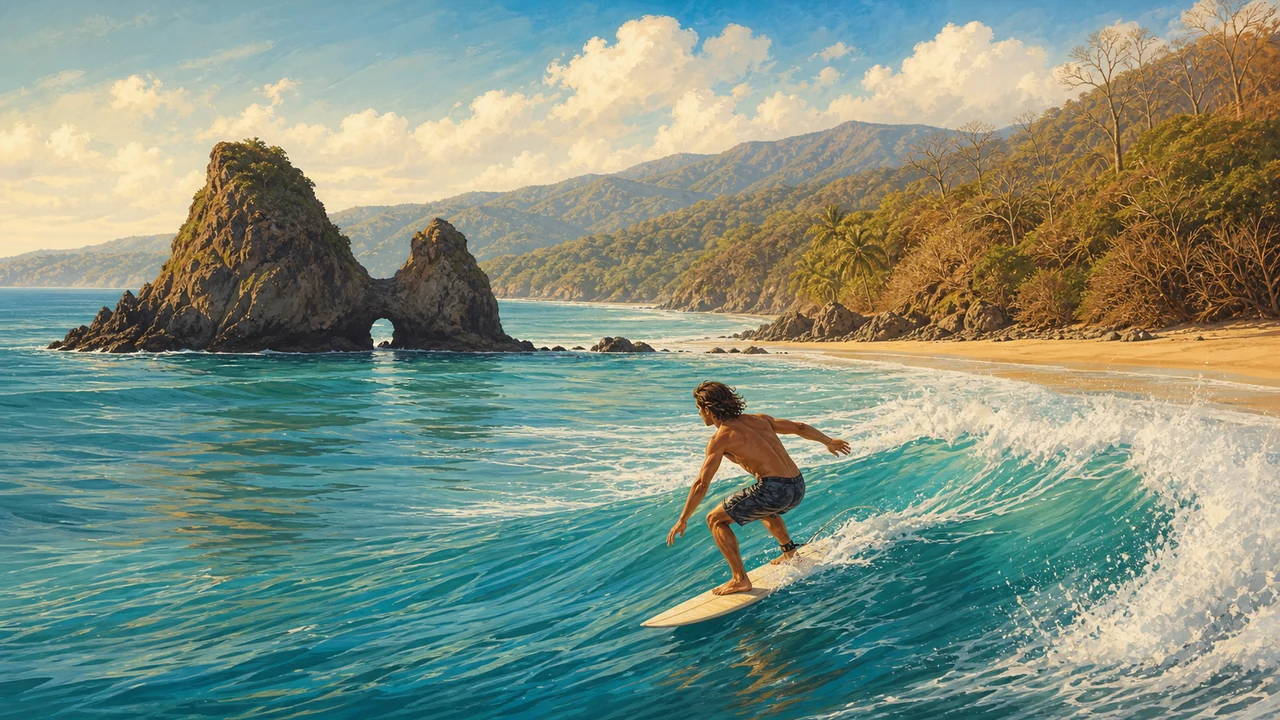 Guanacaste anchors the northern end of Costa Rica’s surf circuit, and its breaks are among the most talked-about in the country. The coastline from Playa Grande south through Tamarindo, Avellanas, and Nosara strings together a series of point breaks, beach breaks, and reef setups that work across a wide range of swell directions and sizes.
Witches Rock and Ollie’s Point at Santa Rosa are the legendary names — powerful, hollow beach breaks inside Santa Rosa National Park that are accessible only by boat or four-wheel drive. The remoteness keeps crowds manageable and the experience raw. Both breaks are best for intermediate-to-advanced surfers and are typically reached via boat tours from Playa del Coco.
Tamarindo is the most accessible surf hub in the province and a good base for surfing in Costa Rica at the beginner-to-intermediate level, with a long beach break, multiple surf schools, and board rentals steps from the sand.
The offshore North Pacific beaches of Guanacaste include dozens of further options suited to every experience level — from mellow breaks ideal for a first lesson to fast hollow walls that challenge experienced tube riders.
Planning Your Guanacaste Adventure Trip
Guanacaste’s adventure calendar is broadly year-round, but the season shapes the experience. The dry season (December–April) is the most popular: sunny skies, calm seas for sailing and snorkeling, and reliable winds for kite surfing along the coast. The green season (May–November) keeps rivers running high for canyoning and tubing, reduces crowds significantly, and brings dramatic afternoon light and lush scenery to ATV and horseback riding tours.
Most adventure operators run half-day and full-day packages that can be mixed and matched. Many of the best haciendas bundle multiple activities — canyoning, horseback, zipline, and hot springs — into a single day that represents excellent value and minimises logistics. Book in advance during the December–April high season, when the most popular time slots fill quickly.
Read the Costa Rica travel tips for practical guidance on getting around, what to pack, and staying safe on adventure activities. For a broader overview of what the country offers beyond Guanacaste, explore Costa Rica activities and sports and ecotourism and nature.
Frequently asked questions
What is the best adventure activity at Rincón de la Vieja?
Canyoning and river tubing in the Río Negro canyon are the standout experiences. Hacienda Guachipelín, located on the volcano's slopes, offers guided descents through waterfalls and volcanic rock formations that are unlike anything else in Costa Rica.
When is the best time for adventure activities in Guanacaste?
The dry season (December through April) offers the most reliable conditions for ziplining, ATV tours, and sailing. The green season (May–November) keeps rivers full for canyoning and tubing, and the landscape is lush — though brief afternoon rains are common.
Can beginners do the canyoning tours near Rincón de la Vieja?
Yes. Most operators at Hacienda Guachipelín and similar ranches offer canyoning routes graded for different fitness levels. Guides provide all safety equipment and briefings; no prior climbing experience is required.
Where can I surf in Guanacaste?
Guanacaste has some of Costa Rica's most consistent surf breaks. Witches Rock and Ollie's Point (accessible from Playa del Coco or Tamarindo by boat) are legendary for experienced surfers, while Tamarindo and Playa Grande offer gentler waves suitable for beginners.
Is sailing in Papagayo Gulf suitable for families?
Absolutely. Catamaran day trips in the Gulf of Papagayo are among the most family-friendly activities in the region. Most tours include snorkeling stops at sheltered bays, a hot meal on board, and open-bar service for adults.