Indigenous Peoples of Costa Rica: Cultures & Traditions
Costa Rica is home to eight living Indigenous peoples whose cultures, languages, and territories have shaped this land for thousands of years. Far from relics of the past, these communities maintain living traditions — from rainforest medicine and ceremonial mask-making to pre-Columbian ceramic arts — and many welcome visitors through community-based tourism programs designed to share their heritage on their own terms.
The Bribri — Keepers of the Talamanca Forest
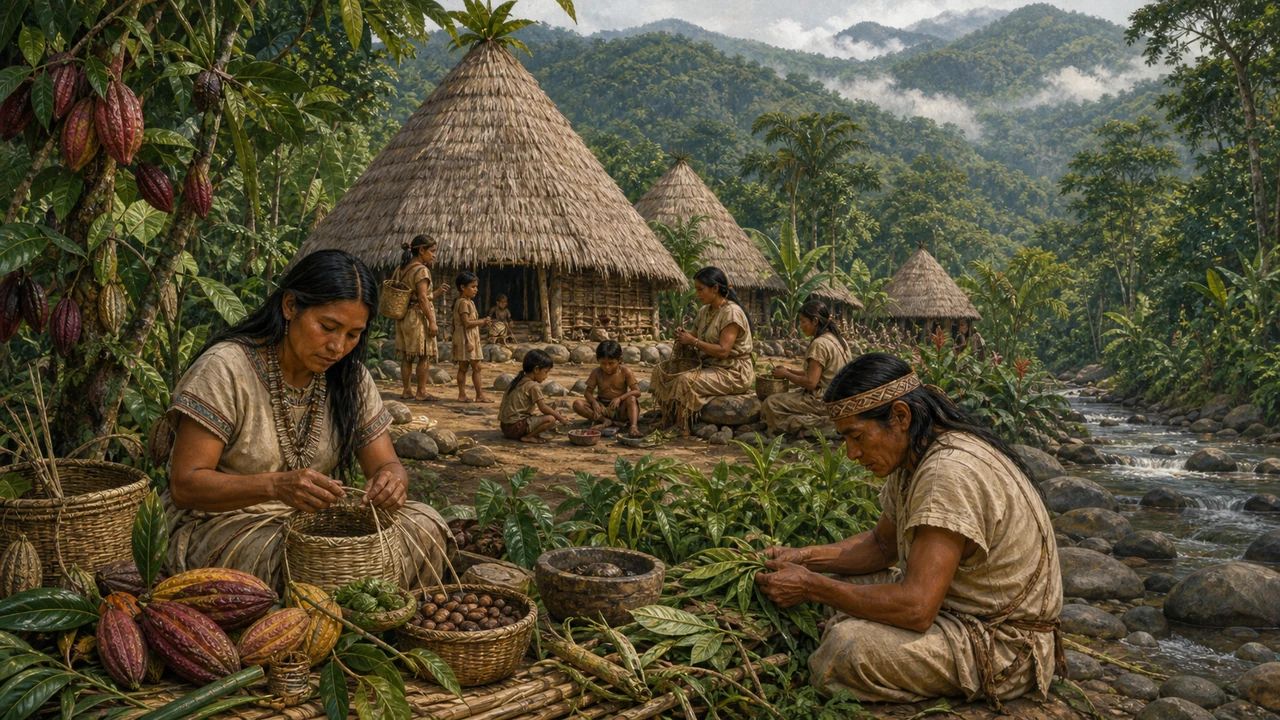
The Bribri are the largest Indigenous group in Costa Rica, with a population of roughly 12,000 people living across the Canton of Talamanca in Limón Province and the Canton of Buenos Aires in Puntarenas. Their territory stretches into the Talamanca mountain range and its Caribbean slopes — one of the most biodiverse regions on earth, bordering La Amistad International Park.
Bribri society is organized along matrilineal clans, each with specific ceremonial roles. The language belongs to the Chibchan family and is still spoken by an estimated 75% of the ethnic population, making it one of the healthiest Indigenous languages in Central America. Dialects include Salitre-Cabagra and Amubre-Katsi. Community-based tours in the Talamanca valleys — typically centered on cacao farming, traditional medicine, and forest walks — offer an authentic window into Bribri daily life and ancestral knowledge.
The Cabécar — Mountain People of the Cloud Forest
The Cabécar (also spelled Cabécar or Cabecar) are the second-largest Indigenous group and among the most linguistically intact. Over 80% of the roughly 9,000–10,000 Cabécar speak their language as a first language, with many communities in the high Chirripó and Telire valleys remaining largely monolingual. The Cabécar language is closely related to Bribri but mutually unintelligible.
Their territory covers remote highland areas around Turrialba, the Chirripó massif, and the Talamanca range — accessed only by mountain trail in many zones. Because of this geographic isolation, Cabécar culture has remained relatively intact. Cabécar traditional cosmology and shamanic healing practices are still actively observed, and visits to their communities require advance coordination with community organizations.
The Boruca/Brunca — Living Traditions in the Southern Pacific
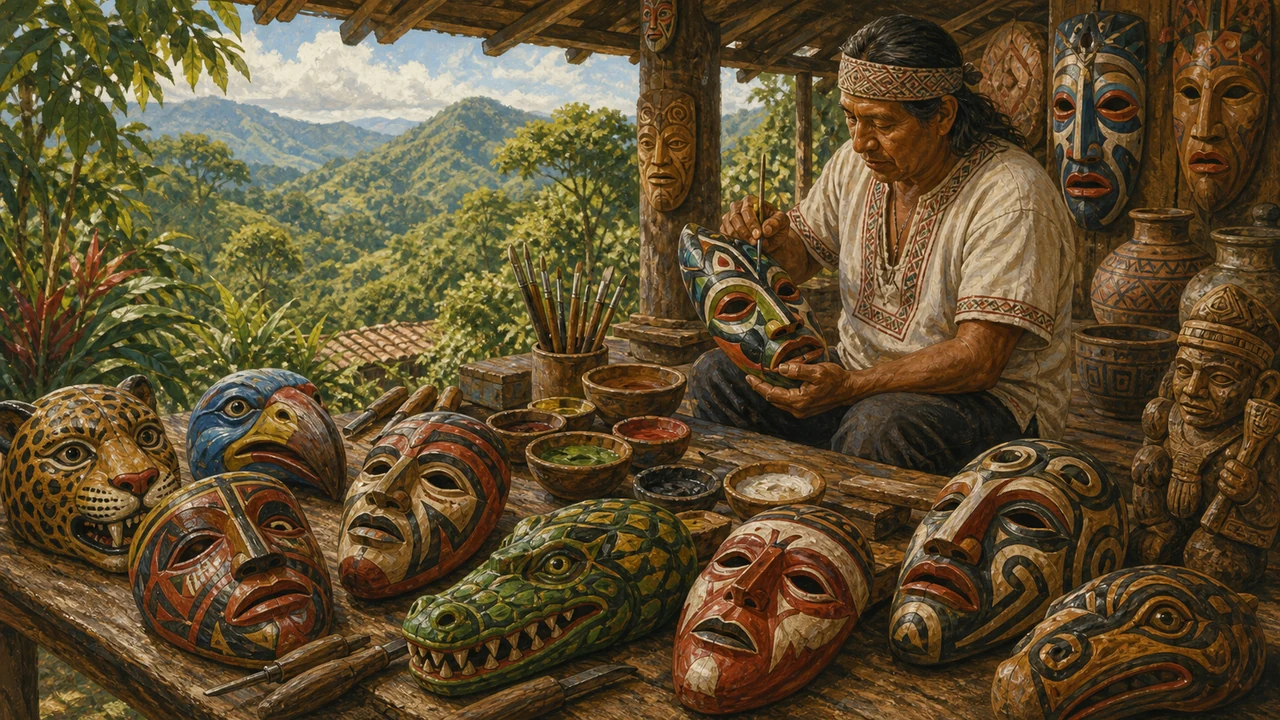
The Boruca (also called Brunca or Brunka) live in the southern Pacific canton of Buenos Aires, Puntarenas. While the Boruca language has only a small number of fluent speakers remaining — making linguistic revitalization an ongoing community effort — Boruca culture is vibrantly alive through art and ceremony.
The community is internationally renowned for two traditions:
- Fiesta de los Diablitos: An annual multi-day ceremony held between December 31 and January 2 in the village of Boruca, in which masked figures (diablitos) re-enact the resistance of Indigenous peoples against the Spanish conquistadors. The bull is defeated on the final day, symbolizing cultural survival. This is one of the most powerful living ceremonies in all of Costa Rica.
- Handcarved balsa-wood masks: Intricately painted and carved, these masks are both ceremonial objects and celebrated artworks. Boruca artisans sell them directly from the village — buying at the source ensures fair compensation and supports community livelihoods.
The village of Boruca is accessible by road from San Isidro de El General and welcomes visitors, especially during festival season.
The Maleku — Voices from the Northern Lowlands
The Maleku (also known by the older name Guatuso) are a small but resilient people of the Northern Lowlands, inhabiting three palenques (community settlements) near the town of Guatuso in Alajuela Province. Their population is estimated at approximately 1,000–1,200 people, with around 70% retaining some command of the Maleku language, which belongs to the Chibchan family.
Traditional Maleku subsistence centered on riverine agriculture — tubers, bananas, and cacao — alongside hunting and fishing in the lowland forests. Today the community is engaged in Maleku cultural tourism and language preservation, including programs that share traditional storytelling, music, and ritual with respectful visitors through guided community visits.
The Chorotega — Ancient Potters of Guanacaste
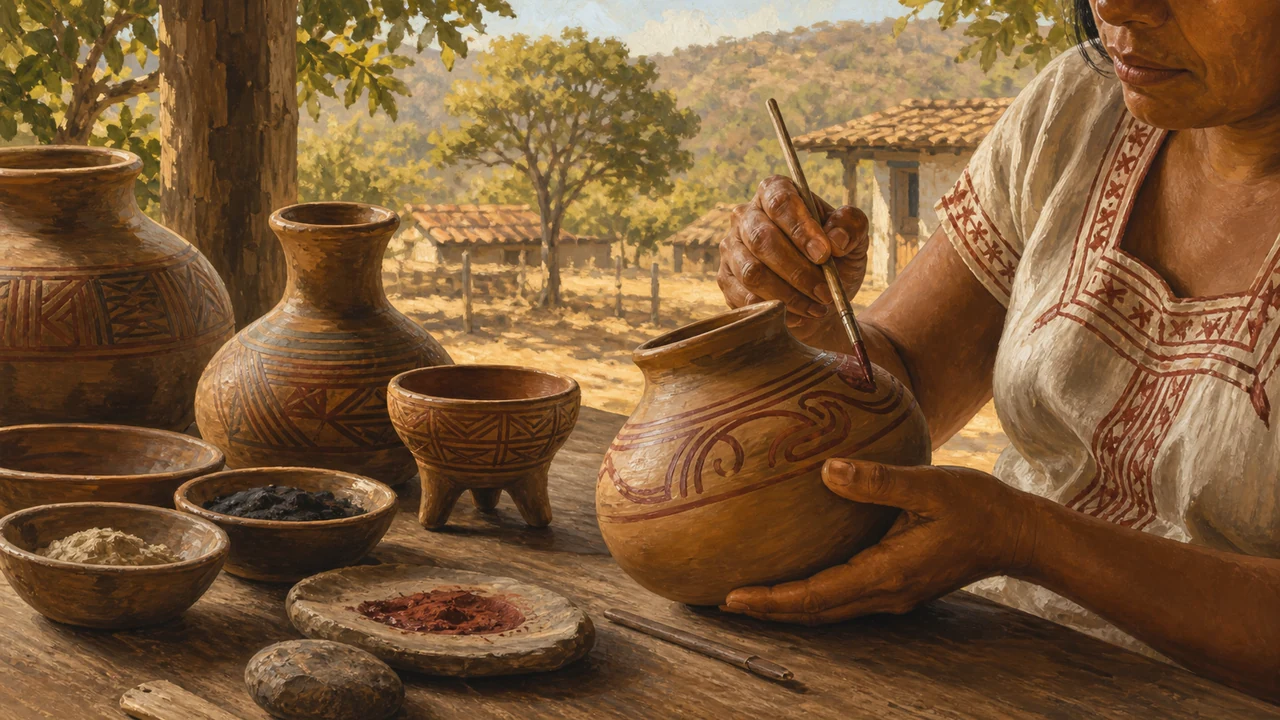
The Chorotega were the dominant people of the Guanacaste region before and during early colonial contact, originating from Mesoamerica and bringing with them a sophisticated tradition of ceramics, agriculture, and trade. The Chorotega language became extinct by the end of the 18th century, but Chorotega ethnic identity and, crucially, their ceramic art have survived.
The village of Guaitil in the Santa Cruz canton of Guanacaste is the living center of Chorotega pre-Columbian pottery traditions. Artisans here use ancient techniques — hand-coiling, natural pigments from local minerals, and wood-fired kilns — to produce distinctive red-and-black pottery featuring pre-Columbian motifs. Visiting Guaitil is one of the most accessible and rewarding Indigenous cultural experiences in Guanacaste, and direct purchases from potters provide meaningful income for families.
The Ngäbe-Buglé — A Transborder People
The Ngäbe-Buglé (also written Ngöbe-Buglé) are the largest Indigenous group in Panama, with a significant community that spans into Costa Rica’s southern Pacific zone, particularly around the Conte Burica and Abrojos-Montezuma territories in Puntarenas. In Costa Rica, the Ngäbe-Buglé population numbers in the thousands, with many families living as migrant agricultural workers during coffee and pineapple harvest seasons.
The Ngäbere language is one of the Chibchan family and remains widely spoken. Ngäbe-Buglé woven bags (chácara or kra) — made from plant fibers in geometric patterns — are one of the community’s most distinctive cultural products and can sometimes be found at craft markets in the southern zone.
The Huetar — Ancient People of the Central Valley
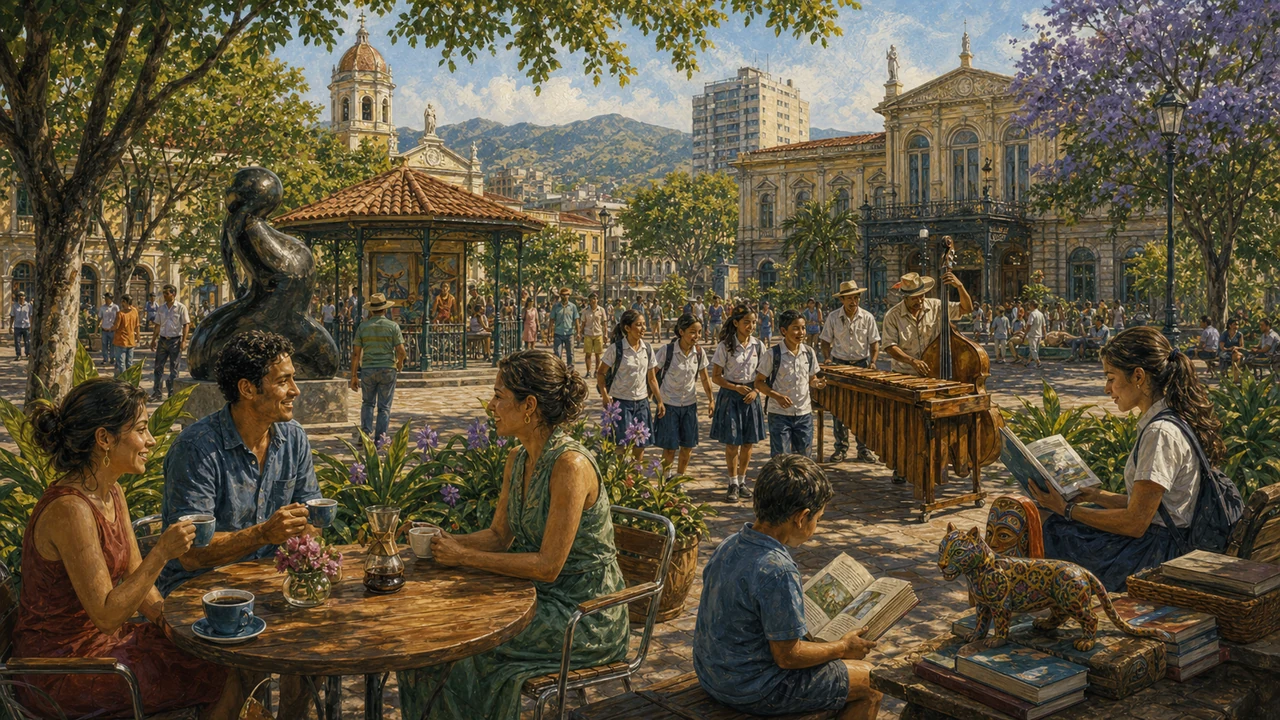
The Huetar were the primary inhabitants of Costa Rica’s Central Valley at the time of Spanish colonization. Two small recognized territories remain today — Quitirrisí in the canton of Mora (San José) and Zapatón in Puriscalá — with a combined population of several thousand people with Huetar ancestry. The Huetar language has no remaining native speakers, but community identity and cultural revival efforts are ongoing.
Huetar artisans are known for basketry and traditional weaving. Because their territories lie close to the Greater Metropolitan Area, the Quitirrisí community has developed accessible Indigenous artisan markets near San José that visitors can reach on a half-day excursion from the capital.
The Térraba — Guardians of the Diquis
The Térraba (also known as Teribe, Naso Tjër Di, or Broran in some linguistic classifications) occupy a territory in the Buenos Aires canton of Puntarenas, in the same southern Pacific zone as the Boruca. They are a relatively small community whose language, related to the Teribe language of Panama, is critically endangered. Cultural revitalization programs are active, with community leaders working to document and teach the language to younger generations.
The Térraba territory sits near the area of the proposed Diquis hydroelectric project, and the community has been vocal in asserting its rights under Costa Rica’s Indigenous territory laws. Their situation reflects broader challenges facing many Costa Rican Indigenous peoples in balancing development pressures with territorial sovereignty.
Visiting Indigenous Communities Responsibly
Costa Rica’s ecotourism & nature ethos extends into Indigenous community tourism. A few principles make the difference between a meaningful visit and a harmful one:
- Book through community organizations. Look for tours organized directly by the community, not outside operators who may not share revenue fairly.
- Ask before photographing. People and ceremonies are not attractions — always request permission before taking photos.
- Buy directly from artisans. Whether it’s a Boruca mask, a Maleku basket, or Chorotega pottery, buying at the source supports families and keeps traditions economically viable.
- Respect restricted areas. Some ceremonies and sites are not open to outsiders. Respect these boundaries without question.
- Learn a word or two. Even a basic greeting in Bribri or Maleku is received warmly and signals genuine respect.
For broader context on sustainable and respectful travel in Costa Rica, see the Costa Rica travel tips guide and the ecotourism & nature section, which includes community-based rural tourism programs where Indigenous communities are often active partners.
Frequently asked questions
How many Indigenous peoples live in Costa Rica today?
Costa Rica officially recognizes eight Indigenous peoples: Bribri, Cabécar, Boruca/Brunca, Maleku, Chorotega, Ngäbe-Buglé, Huetar, and Térraba. Together they number roughly 100,000 people and hold 24 recognized Indigenous territories across the country.
What is the Fiesta de los Diablitos?
The Fiesta de los Diablitos is an annual Boruca/Brunca ceremony held in late December and early January in the village of Boruca, Puntarenas. Participants wear handcarved wooden masks and costumes representing demons (diablitos) who symbolically battle a bull representing the Spanish conquistadors. The multi-day festival is one of Costa Rica's most vibrant living traditions and is open to respectful visitors.
Can visitors enter Indigenous territories in Costa Rica?
Yes, but visits should always be arranged through community-organized tourism programs or a local guide affiliated with the community. Entering territories without permission is disrespectful and, in some cases, restricted by law. Responsible tourism channels ensure your visit directly benefits the community.
Where can I buy authentic Boruca and Chorotega crafts?
Authentic Boruca balsa-wood masks are sold directly in the village of Boruca (Buenos Aires canton, Puntarenas). Chorotega ceramics are best sourced in Guaitil, a craft village in Guanacaste where artisans continue pre-Columbian pottery traditions. Buying directly from artisans ensures fair compensation.
Which Indigenous language has the most speakers in Costa Rica?
Bribri is the most widely spoken Indigenous language in Costa Rica, with an estimated 10,000–12,000 speakers concentrated in the Talamanca region of Limón province. Cabécar, spoken in remote mountain territories, also has a significant speaker community and a high rate of monolingualism.