Juan Santamaría Day: Costa Rica's National Hero
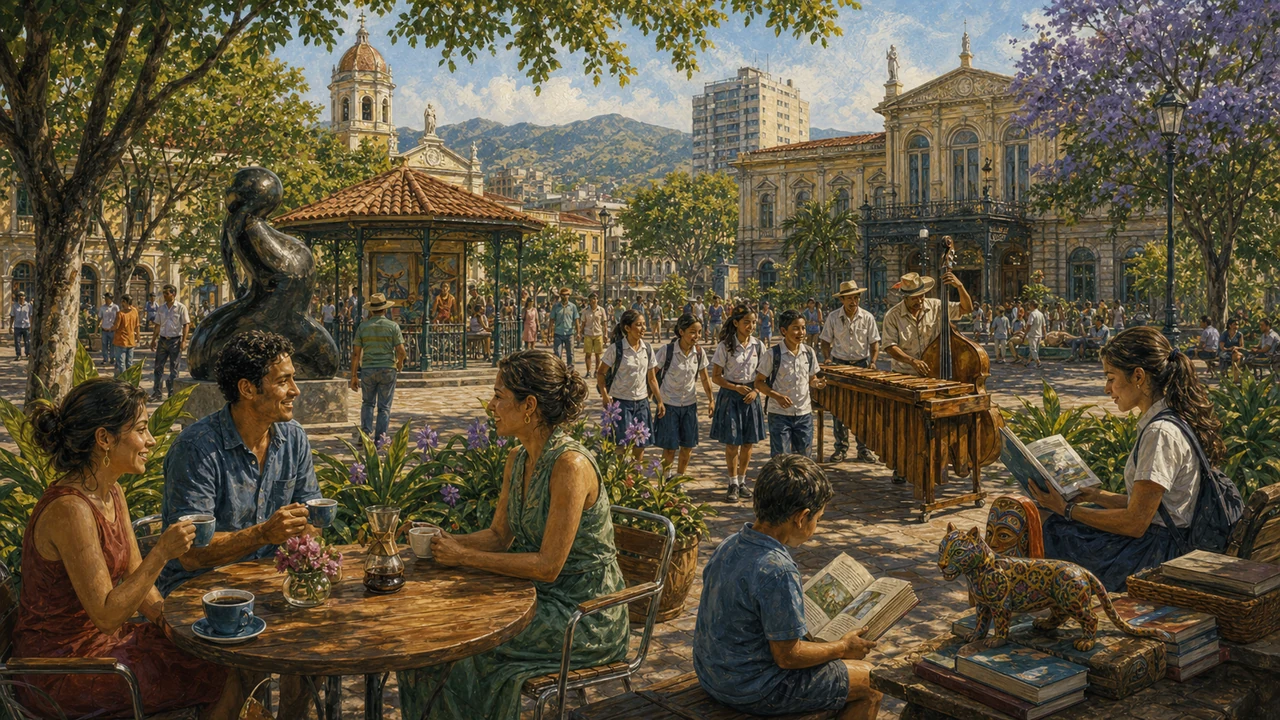 April 11 — Juan Santamaría Day — is one of the most meaningful dates on Costa Rica’s calendar, honoring a young volunteer from Alajuela whose act of courage in 1856 helped secure Central America’s freedom from a foreign filibuster army. It is a national public holiday celebrated with parades, torch processions, and civic pride, above all in Alajuela, the city that claims Santamaría as its own.
The Filibuster Threat: William Walker in Central America
In the mid-1850s, William Walker — a Tennessee-born soldier of fortune, lawyer, and physician — launched a series of private military expeditions aimed at seizing territory in Central America and annexing it to a new federation aligned with the slaveholding states of the American South. Walker and his filibusters were not a government force; they were a private army motivated by land, power, and ideology.
Walker eventually installed himself as president of Nicaragua in 1856, and from that base he set his sights on the entire isthmus. Costa Rica’s president Juan Rafael Mora Porras, the young republic’s second head of state, learned of the plan through Costa Rica’s envoy in Washington and immediately took action. He called on Costa Ricans to volunteer for a citizen army that would march north to confront the threat.
Among those who answered the call was a humble young man from Alajuela named Juan Santamaría — widely described in Costa Rican tradition as a drummer boy.
The March North and the First Victory at Santa Rosa
 President Mora and his brother-in-law, General José María Cañas, led the volunteer force on a two-week march through Guanacaste toward Nicaragua. The journey was grueling: by the time they reached the frontier, the force had shrunk to roughly 2,500 men armed with machetes, farm tools, and a handful of old rifles. They were outnumbered in firepower but not in determination.
On March 20, 1856, the Costa Rican army met a detachment of Walker’s freebooters at the historic Casona on the Santa Rosa National Park ranch in Guanacaste. The battle lasted only around fourteen minutes before Walker’s men fled back across the border into Nicaragua. It was a decisive early victory, but the campaign was far from over.
April 11, 1856 — The Battle of Rivas
The Battle of Rivas on April 11, 1856 is the defining event in Costa Rica’s national memory. Around 2,000 Costa Rican soldiers pursued Walker’s army across the border to the town of Rivas, Nicaragua, where Walker had fortified a building known as the Mesón de Guerra. Nicaraguan freedom fighters joined the Costa Rican force along the way, making this a true allied effort across Central America.
The fighting at Rivas was brutal. Costa Rican losses were severe — accounts suggest nearly half the force was killed or wounded in the assault on the fortified position. General Cañas, unable to dislodge Walker’s men by direct assault, ordered volunteers to set fire to the stronghold and smoke the enemy out.
Two volunteers stepped forward for what amounted to a suicide mission. One was Juan Santamaría. He ran forward under heavy fire carrying a torch and set the Mesón de Guerra alight. Walker’s troops were forced to retreat. Santamaría was mortally wounded and died that day, aged around fifteen or sixteen. He became Costa Rica’s most celebrated national hero.
Walker eventually surrendered to the U.S. Navy later that year and was executed in Honduras in 1860, ending his ambitions in the region for good.
Why the Story Still Resonates
 Juan Santamaría’s legacy as a symbol of ordinary courage cuts to the heart of how Costa Ricans see themselves. He was not a general or a nobleman — he was a poor, young volunteer who chose to act when it mattered. That image of the common citizen defending freedom has endured for 170 years.
The story also connects to broader themes in Costa Rican identity. The abolition of the army in 1948 — Costa Rica famously became one of the few countries in the world without a standing military — is often read alongside the 1856 campaign: a nation that once rallied its citizens to defend itself no longer needs a permanent army because its peace is built on different foundations. The national flag and national anthem both carry echoes of this civic tradition.
Celebrations in Alajuela and Across the Country
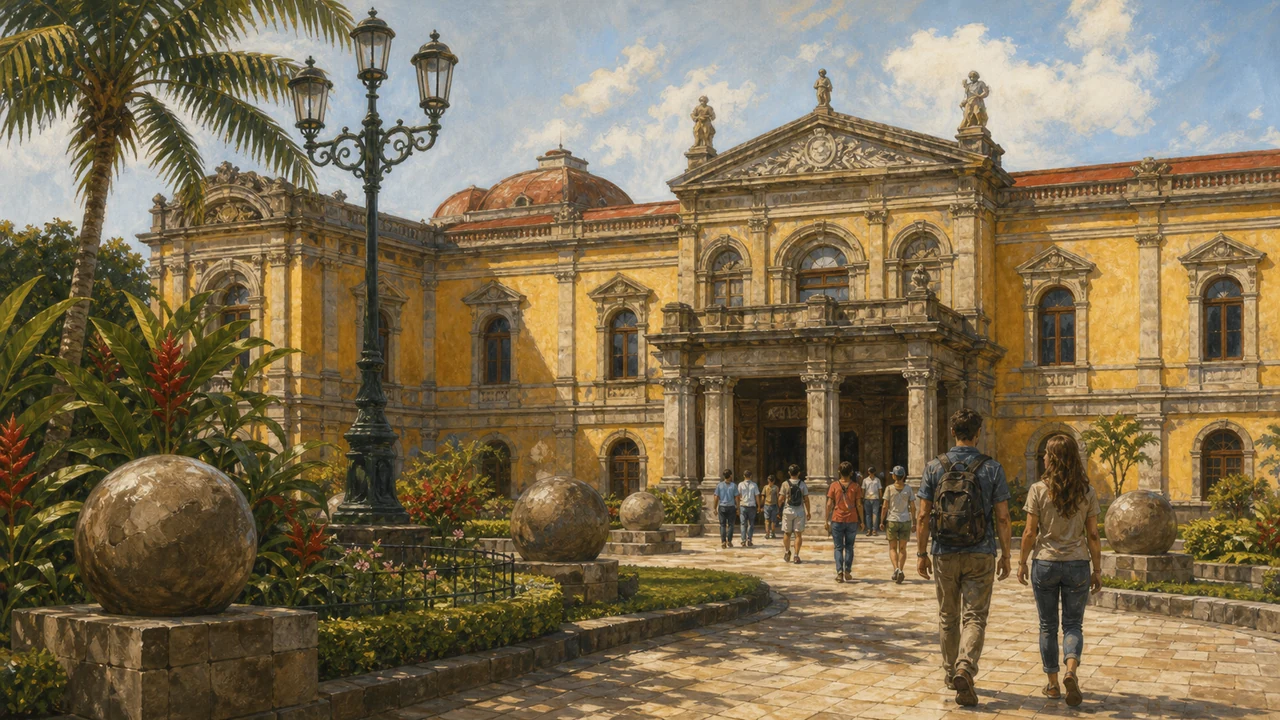
April 11 is a national public holiday, and the heart of the celebrations is Alajuela. The city holds the country’s largest Juan Santamaría Day parades, with military bands, student processions, civic groups, and government dignitaries marching through the streets. The Juan Santamaría Museum (Museo Histórico Cultural Juan Santamaría), located in a former jail building in central Alajuela, opens its doors for special exhibitions and welcomes visitors year-round.
Torch processions are a particular highlight: in the days leading up to April 11, participants carry lit torches through Alajuela in tribute to the torch Santamaría used to set fire to the Rivas stronghold. Evening concerts, folk dance performances, and school presentations round out a festive week.
Throughout the rest of Costa Rica, government offices, schools, and most banks close for the holiday. Families use the day for outings and reflection. The date also falls near Semana Santa (Holy Week), making late March and early April a culturally rich stretch of the calendar.
Juan Santamaría International Airport
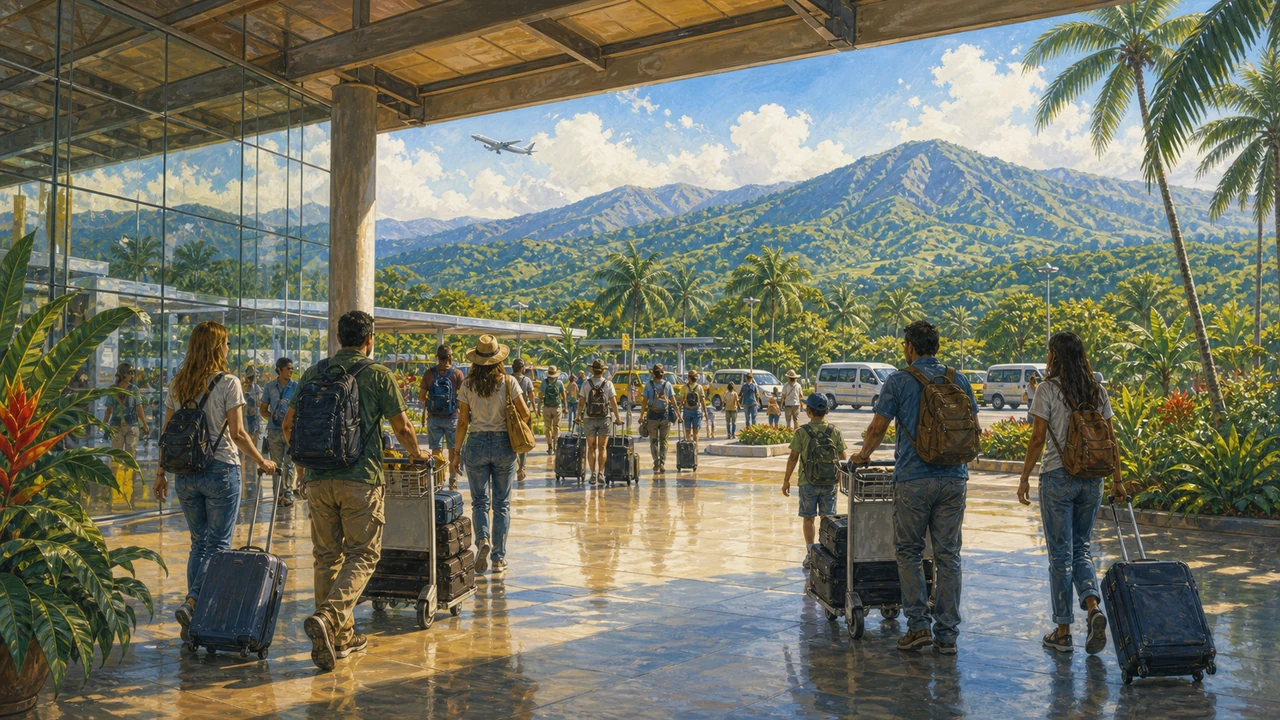 The most visible tribute to the national hero is Juan Santamaría International Airport (SJO), located in Alajuela, roughly 20 kilometers northwest of downtown San José. It is Costa Rica’s primary international gateway, handling the vast majority of international arrivals and departures.
The airport’s location in Alajuela — Santamaría’s hometown — makes the naming especially fitting. Travelers flying into SJO land, symbolically, in the city of the national hero. The airport connects Costa Rica to destinations across North America, Europe, and Latin America, and serves as the starting point for most visitors exploring the country’s ecotourism, beaches, and volcanoes.
For trip planning purposes: the Daniel Oduber International Airport (LIR) in Liberia serves Guanacaste and the North Pacific, and is a convenient alternative if your destination is that region. See the full guide to Costa Rica airports for more.
Visiting Alajuela Around April 11
If your travel to Costa Rica coincides with early April, spending time in Alajuela gives you a front-row seat to one of the country’s most heartfelt national celebrations. The city is easy to reach from San José — it sits right next to the international airport — and offers a more relaxed atmosphere than the capital while still being close to major attractions.
The Juan Santamaría Museum is open throughout the year and provides excellent context for understanding the 1856 National War against William Walker’s filibuster forces and Costa Rica’s broader history. Admission is free or low-cost. The surrounding Alajuela province also serves as a gateway to Poás Volcano and other Central Valley attractions.
Check Costa Rica travel tips before you go, and confirm local schedules for the April 11 events closer to your visit — parade routes and times can vary year to year.
Frequently asked questions
When is Juan Santamaría Day celebrated?
Juan Santamaría Day falls on April 11 each year and is a national public holiday in Costa Rica. Alajuela, Santamaría's hometown, hosts the largest commemorations, including parades, torch processions, and cultural events.
Who was Juan Santamaría?
Juan Santamaría was a young volunteer soldier — traditionally described as a drummer boy — from Alajuela who died on April 11, 1856, during the Battle of Rivas in Nicaragua. He torched the enemy stronghold, enabling Costa Rican forces to repel the filibuster army of William Walker, and is revered as Costa Rica's national hero.
What was the Battle of Rivas and why does it matter?
The Battle of Rivas took place on April 11, 1856, in the Nicaraguan town of Rivas. Costa Rican and allied troops confronted William Walker's filibuster army, which sought to dominate Central America. The battle marked a turning point in the Central American National War, ultimately ending Walker's ambitions in the region.
Is Juan Santamaría International Airport named after this hero?
Yes. Juan Santamaría International Airport (IATA: SJO), located in Alajuela just northwest of San José, bears his name as a lasting tribute. It is Costa Rica's main international gateway and one of the busiest airports in Central America.
How does Costa Rica observe April 11?
April 11 is a public holiday throughout Costa Rica. Alajuela city holds the main celebrations: military parades, civic ceremonies, concerts, and torch-lit processions that retrace the route of the 1856 volunteers. Schools, government offices, and most businesses are closed for the day.