Costa Rica Important to Know Before You Go
Knowing a few practical essentials before you arrive makes your Costa Rica experience far smoother — from what to throw in your suitcase to how to navigate rush-hour traffic in San José. This hub gathers all the must-know travel preparation tips for first-time visitors to Costa Rica, covering packing, dress, getting around, holidays, and the country’s rich events calendar.
Costa Rica sits between two oceans and spans six distinct climate zones, which means conditions can shift dramatically within a single day — and even more dramatically between regions. Being prepared rather than surprised is the key to enjoying every moment.
What to Bring
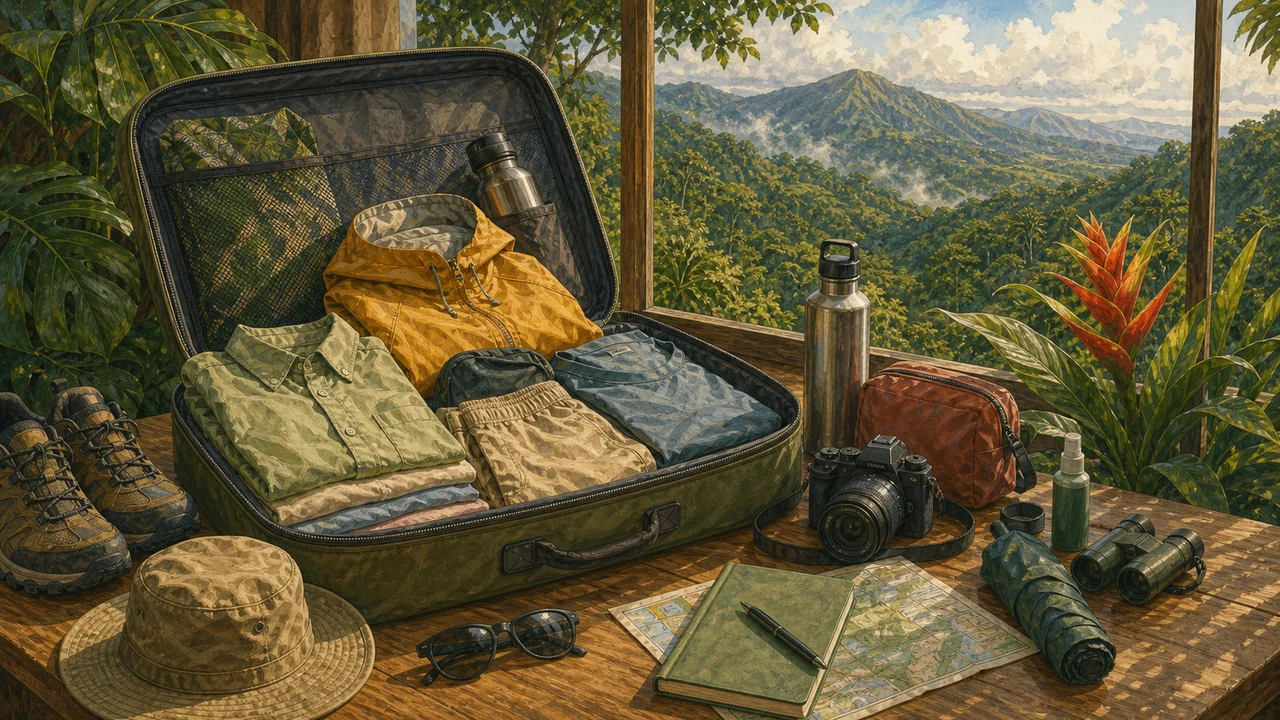
Packing smart for Costa Rica means balancing two realities: tropical heat on the coast and refreshingly cool air in the cloud forests and highlands. Packing light layers for Costa Rica’s varied microclimates pays off — a light fleece or long-sleeve shirt that fits into a small daypack will serve you well on a morning volcano hike after a sweltering beach afternoon.
Core items every visitor should bring:
- Rain gear — a packable rain jacket or poncho. Even the dry season (December through April) brings occasional showers, and the rainy season (May through November) delivers reliable afternoon downpours.
- Footwear — waterproof sandals or aqua shoes for rivers and waterfalls; closed-toe hiking shoes for trails; flip-flops for the beach.
- Sun and insect protection — reef-safe SPF 50+ sunscreen, DEET-based insect repellent, and a wide-brim hat.
- Electronics care — a dry bag or ziplock bags for your phone and camera, especially on boat tours or white-water trips.
- Health kit — any prescription medications with extra supply, anti-diarrheal tablets, and oral rehydration salts.
USD is widely accepted alongside the Costa Rican colón, and ATMs are plentiful in most towns. The emergency number throughout the country is 911.
Recommended Dress
Costa Rica is refreshingly relaxed about dress. The unspoken rule is simple: casual works almost everywhere, beachwear stays at the beach. Light, breathable fabrics — cotton, linen, or moisture-wicking synthetics — are your best friends in the tropical lowlands.
A few context-specific tips:
- Coastal areas: Shorts, tank tops, and sundresses are perfectly appropriate in restaurants and shops, but throw on a cover-up when you leave the sand.
- San José and highland cities: Elevations above 1,000 meters can feel surprisingly cool, especially at night. A light jacket or cardigan is worth packing.
- Religious sites and traditional communities: Modest dress — covered shoulders and knees — is appreciated.
- Adventure activities: Quick-dry pants and long sleeves protect against scratches, sun, and insects on jungle trails.
Driving in Costa Rica

A rental car unlocks an enormous amount of Costa Rica that simply isn’t reachable by bus — secluded beaches, hidden waterfalls, and off-the-beaten-path villages. Renting a 4WD vehicle for Costa Rica’s rural roads is highly recommended outside the main highways, particularly in the rainy season when unpaved roads can become genuinely impassable.
Key points for drivers:
- Road conditions vary widely. Major highways (including the Pan-American Highway) are well-maintained, but secondary roads — especially in the Nicoya Peninsula, southern Osa region, and along the Caribbean slope — can be rough and potholed.
- River crossings. Some routes require fording rivers. Never attempt a crossing if water is above the vehicle’s bumper or moving fast. Ask locals for advice.
- San José traffic. The capital’s rush hours (roughly 7–9 a.m. and 4–7 p.m.) are legendary. When possible, enter and exit the city outside these windows.
- Speed bumps (muertos). Often appear without warning, including on major roads. Watch for the yellow paint markings.
- Driving after dark. Unmarked hazards, pedestrians on roadsides, and animals on roads make night driving genuinely risky outside urban areas.
- Driving license: Most visitors may drive on their home-country license for the duration of a tourist stay, but check current entry requirements for your nationality.
Public Transportation
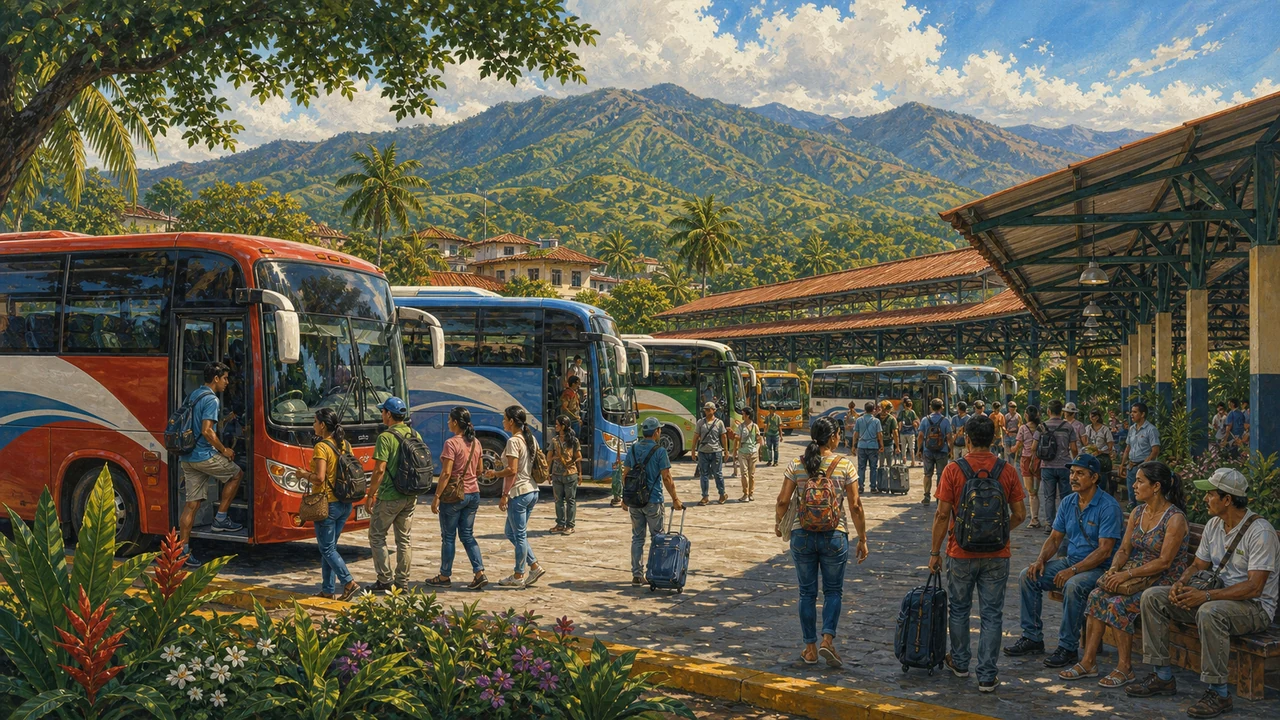
Costa Rica operates an extensive public bus network that connects virtually every town and village in the country at very affordable fares. For travelers on a budget, using Costa Rica’s public bus system between major destinations is both economical and surprisingly comfortable on the main inter-city routes.
Transport options at a glance:
- Public buses: Reliable for routes between San José and major destinations (Liberia, Jacó, Quepos, Puerto Viejo, La Fortuna). Book popular routes a day ahead.
- Shared shuttles: Companies like Interbus and Grayline offer door-to-door shared vans between tourist hubs. More comfortable than local buses, faster logistics, and moderately priced.
- Private transfers: The most flexible option, particularly useful for early morning flights or remote lodge arrivals.
- Domestic flights: SANSA and other carriers link San José’s Tobías Bolaños Airport (SYQ) with Quepos, Tamarindo, Drake Bay, Puerto Jiménez, and other regional airports. These short hops save hours of road travel and are well worth considering for distant destinations.
- Taxis and rideshares: Official taxis are red with a yellow triangle. In San José, the Uber app also operates. Always use official or app-dispatched vehicles.
Detailed public transport options →
Official Holidays
Costa Rica takes its public holidays seriously. Banks, government offices, schools, and many shops close on official holidays, and popular beach destinations fill up fast — particularly during Semana Santa (Holy Week, the week leading up to Easter Sunday), which is the country’s biggest domestic travel week.
Key official holidays to plan around:
- January 1 — New Year’s Day
- Semana Santa — Palm Sunday through Easter Sunday (dates vary; April)
- April 11 — Juan Santamaría Day (Battle of Rivas, national hero)
- May 1 — International Labor Day
- July 25 — Annexation of Guanacaste
- August 2 — Feast of Our Lady of the Angels (Cartago pilgrimage)
- August 15 — Mother’s Day
- September 15 — Independence Day (major celebration)
- October 12 — Cultures Day
- December 25 — Christmas Day
During Semana Santa, alcohol sales are restricted, and the entire country seems to head to the beach simultaneously. If your travel overlaps with this period, book accommodation months ahead.
Calendar of Special Activities and Events
Beyond official holidays, Costa Rica hosts a rich calendar of festivals, sporting events, and cultural celebrations throughout the year. Timing your visit to coincide with Costa Rica’s annual events adds an unforgettable local dimension to the trip.
Highlights across the year:
- January: Jungle Marathon trail runs, sport-fishing tournaments on the Pacific coast.
- February–March: Envision Festival (Uvita); oxcart parade and farmers’ festivals in the Central Valley.
- April: Semana Santa processions in Cartago and San José; surf competitions along the Pacific.
- June–August: Guanacaste annexation celebrations; rodeos and tope horse parades.
- September: Independence Day on the 15th — torchlight parades and school bands fill every town.
- October: Limón Carnival (Carnaval de Limón) — the Caribbean coast’s biggest party, with music, dance, and color.
- November–December: Coffee harvest festivals in the Central Valley; Christmas lights in San José’s downtown.
Plan Your Trip Well

Practical preparation transforms a good trip into a great one. Beyond the topics covered in this section, a few broader resources will help you plan your visit to Costa Rica with confidence:
- Costa Rica travel tips — a broader overview of on-the-ground logistics.
- Is Costa Rica safe? — safety context and practical advice for travelers.
- Costa Rica entry requirements — passports, visas, and current entry rules.
- Costa Rica international airports — everything you need to know about arriving at SJO (San José) or LIR (Liberia).
- Why visit Costa Rica — if you still need convincing.
Costa Rica’s extraordinary natural wealth — over 25% of its territory is protected as national parks and reserves, sheltering roughly 5% of all species on Earth — means that almost any trip here connects you with something genuinely remarkable. The practical prep covered in this section simply ensures that wonder is the loudest thing you feel.
Frequently asked questions
What should I pack for a trip to Costa Rica?
Light, breathable clothing is the foundation, but always include a rain jacket or poncho — afternoon showers are common even in the dry season. Add sturdy closed-toe shoes for trails, reef-safe sunscreen, insect repellent with DEET, and a reusable water bottle. A small daypack and a dry bag for electronics round out the essentials.
Do I need to rent a car to get around Costa Rica?
Not necessarily. Major tourist corridors are served by affordable public buses and shared shuttles. However, a 4WD rental car opens up remote beaches, national parks, and mountain communities that are difficult to reach otherwise. If you plan to venture off the main highways, especially in the rainy season, 4WD is strongly recommended.
When are Costa Rica's public holidays, and how do they affect travel?
Costa Rica observes around 12 official public holidays per year, including Semana Santa (Easter week), Independence Day on September 15, and Christmas. Banks, government offices, and many businesses close on these dates. Semana Santa in particular is extremely busy at the beaches, so book accommodation well in advance.
What is the dress code in Costa Rica?
Casual and comfortable is the norm. Light cotton or moisture-wicking fabrics work best in the heat and humidity. Beachwear stays at the beach — cover up with a sarong or shirt when entering restaurants, shops, or churches. In San José's higher elevations, bring a light layer for cooler evenings.
Is it safe to drink tap water in Costa Rica?
Tap water is safe to drink in most urban and tourist areas of Costa Rica, which is unusual for Central America. In remote rural communities, stick to bottled or filtered water to be safe. Always check with your accommodation if you are unsure about local water quality.