Braulio Carrillo National Park: Cloud Forest to Caribbean
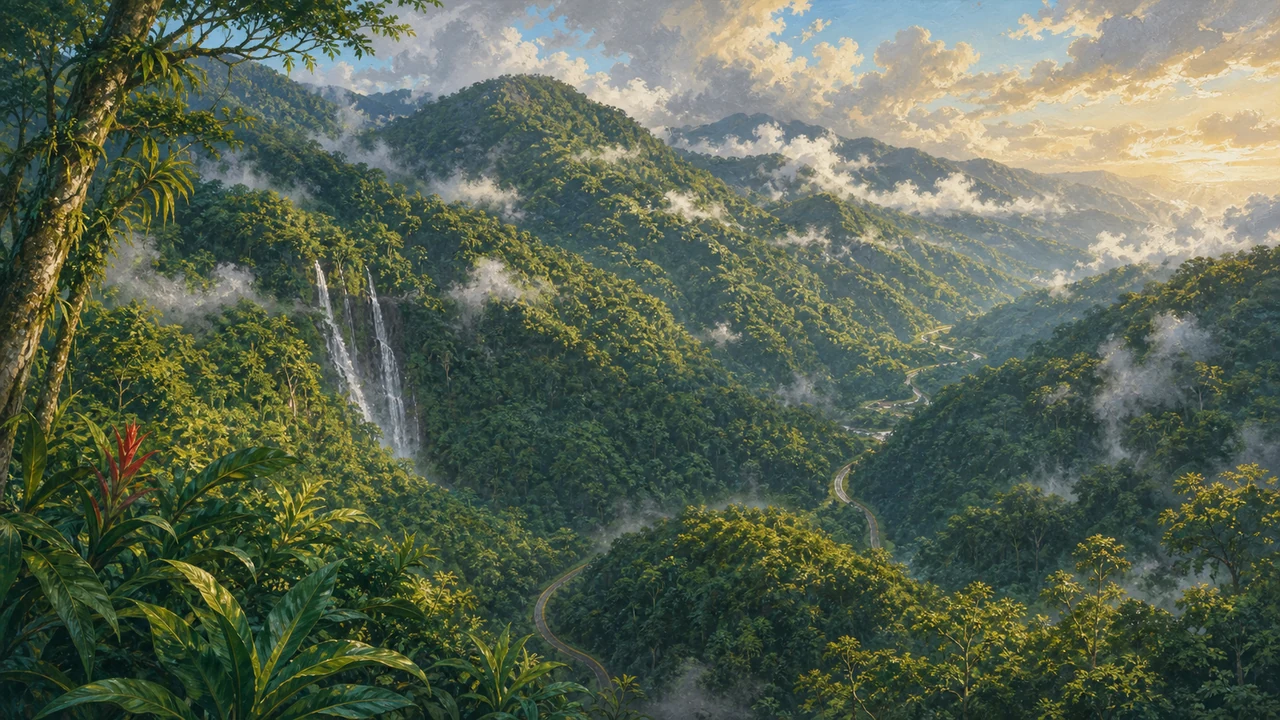 Braulio Carrillo National Park is one of Costa Rica’s largest and most ecologically dramatic protected areas — a wall of ancient rainforest that rises straight from the suburbs of San José and tumbles down toward the Caribbean coast. Covering more than 44,000 hectares, the park straddles a dramatic altitudinal range: cool, mist-soaked cloud forest near the Barva Volcano massif gives way to steaming lowland jungle just a few hours’ walk (or a short drive) away. All of it is threaded by rivers that carve deep canyons, fed by waterfalls that pour off every slope.
The park was created in 1978 and named in memory of Braulio Carrillo, Costa Rica’s third head of state, who championed an ambitious road linking the Central Valley to the Caribbean coast. That dream eventually became Highway 32 — the same road that now carries visitors through the park’s heart.
Getting There
Braulio Carrillo sits northeast of San José along Highway 32 (the Ruta 32 / Carretera a Guápiles), the main arterial road to Limón and the Caribbean coast. The Quebrada González ranger station — the most visited entrance — is on the right side of the highway approximately 23 km from the capital, before the Zurqui tunnel. Parking is available at the entrance.
If you are driving from San José, the journey typically takes under an hour in normal traffic. Public buses to Guápiles pass through the park and can drop you near the entrance, making the park accessible without a private vehicle.
Landscape and Geology
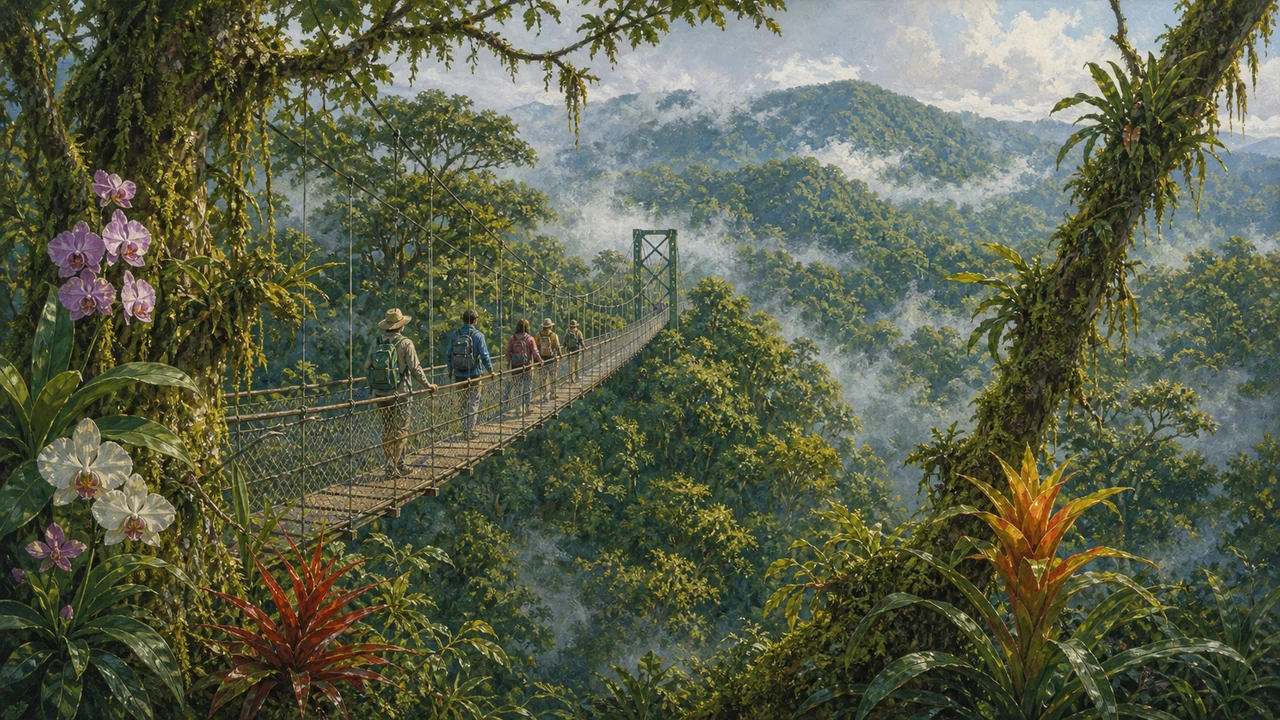 The terrain inside Braulio Carrillo is spectacularly rugged. Towering volcanic peaks — including the extinct Barva Volcano (with its crater lakes Barba and Danta) and the cone-shaped Cacho Negro — anchor a landscape fractured by deep river canyons with near-vertical walls. The highway provides the most accessible views: pull-outs offer dramatic panoramas of the forested canyons below.
The park receives around 4,500 mm of rain per year on average, making it one of the wettest protected areas in Central America. That rainfall powers an almost infinite number of waterfalls visible throughout the park, from roadside cascades to remote plunges deep in the backcountry.
Barva Volcano holds two crater lakes: Lago Barba, a round, crystal-clear pool roughly 70 meters across, and Lago Danta, which spans about 500 meters in diameter. Reaching Barva’s summit involves a full-day hike and requires entering from the Barva ranger station on the Heredia side of the park — a much quieter and more challenging approach than the highway entrance.
Forests and Plant Life
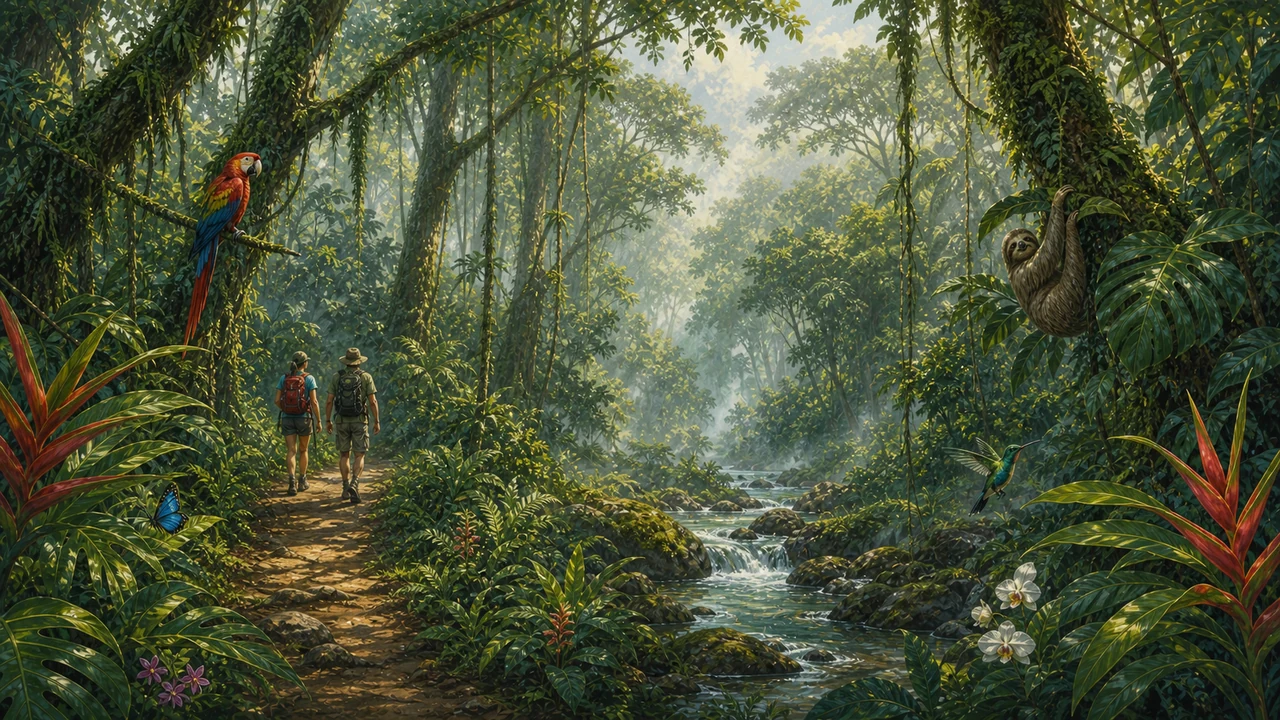 Braulio Carrillo protects one of the most biodiverse patches of primary forest in the country. The park’s 6,000-plus plant species reflect a full spectrum of forest types determined by altitude, rainfall, and cloud cover.
In the lowland zones, the forest reaches its greatest height and complexity — massive canopy trees draped in bromeliads, orchids, and mosses, with a dense understory of tree ferns and heliconias. At higher elevations the trees become shorter and more gnarled, battered by persistent clouds and wind, transitioning into elfin forest near the peaks.
One unmistakable roadside plant is the poor man’s umbrella (Gunnera insignis), whose leaves can grow large enough to shelter several people from a downpour. You’ll also find wild palms, copal, wild fig, and mountain cypress among the many species present.
Wildlife
The altitudinal gradient and the sheer size of the park make Braulio Carrillo one of Costa Rica’s richest wildlife corridors. Mammals recorded here include the Baird’s tapir, jaguar, cougar, ocelot, kinkajou, agouti, northern tamandua, red brocket deer, and both two-toed and three-toed sloths. Three monkey species — howler, spider, and white-faced capuchin — inhabit the forest and are often spotted near the main trail.
Herpetology enthusiasts will find frogs and toads especially plentiful in the Bajo de la Hondura area. An endemic species, the Holdridge’s toad (Incilius holdridgei), is found on Barva Volcano — though it is critically endangered and rarely encountered. The park also shelters the bushmaster, Central America’s most venomous snake, so staying on marked trails is wise.
Birding inside Braulio Carrillo is exceptional. Nearly 350 species have been recorded, including the resplendent quetzal, three-wattled bellbird, bare-necked umbrellabird, ornate hawk-eagle, solitary eagle, king vulture, and an impressive array of trogons and tanagers.
The Aerial Tram and Nearby Activities
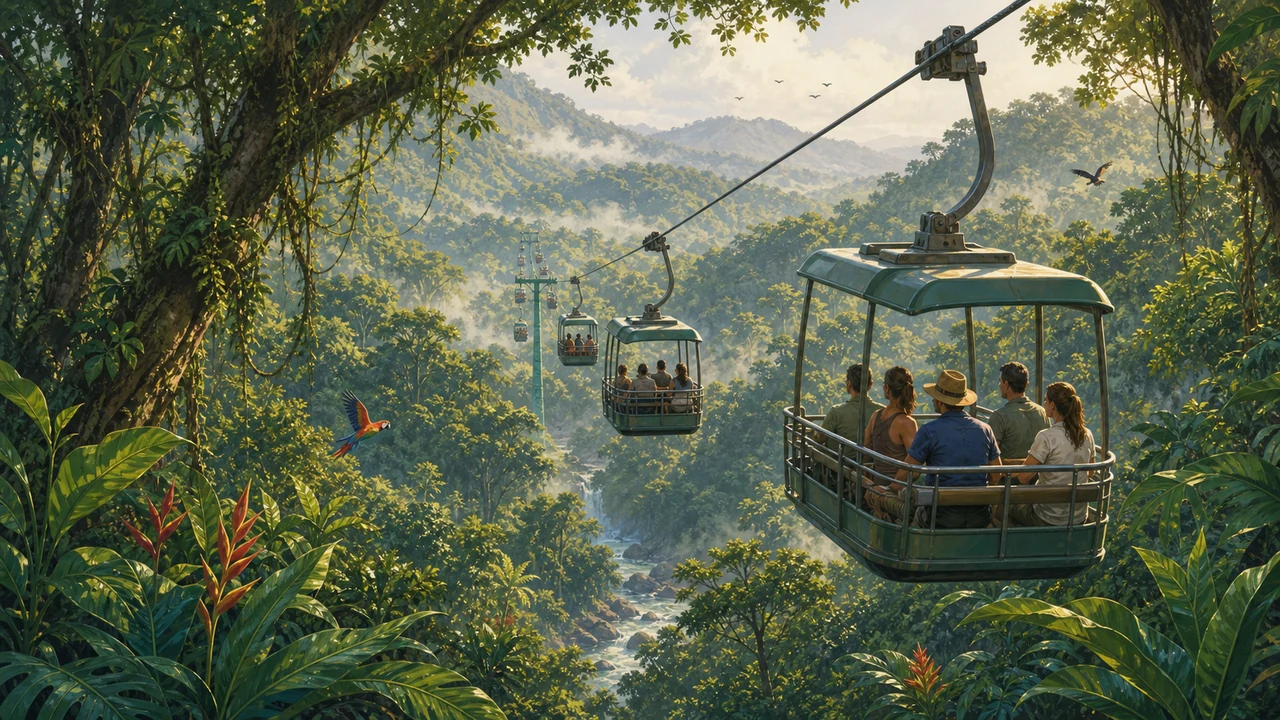 Just outside the park boundary along Highway 32 sits the Rain Forest Aerial Tram, a privately operated attraction that glides visitors through the canopy on an open gondola system. It offers a bird’s-eye perspective of the same dense forest that covers Braulio Carrillo and is a popular addition for those making the trip from San José. Guided naturalist tours are available, and the site includes walking trails through the rainforest reserve.
A visit to Braulio Carrillo pairs naturally with a stop at the Poás Volcano or an excursion toward the Caribbean lowlands — the highway continues to Puerto Viejo de Sarapiquí and the Tortuguero lowlands. Adventure seekers will find white-water rafting on the Pacuare River is within reach on the same route east.
Trails and Visitor Facilities
The Quebrada González station offers the park’s most developed trail network, though “developed” here means rustic paths through primary rainforest. The main loop trail runs several kilometers and frequently rewards hikers with sightings of toucans, monkeys, and — with patience — tapirs at stream crossings.
Facilities at the entrance include a ranger station with information boards, restrooms, potable water, and signage. A certified local guide can be arranged at the entrance; ask to see official guide identification before setting out. Trail conditions vary with rainfall and can be muddy year-round, so waterproof boots are strongly advised.
Entrance fees apply; check current pricing directly with Costa Rica’s SINAC or your accommodation, as fees are subject to change.
Planning Your Visit
Braulio Carrillo is one of the easiest national parks in the country to visit without a tour — the highway entrance, paved parking, and clear signage make it genuinely accessible for independent travelers. As a day trip from San José, it fits naturally before or after an arrival at Juan Santamaría International Airport (SJO) in nearby Alajuela.
The park is open daily; hours may vary by season and station, so confirm times in advance. Bring rain gear regardless of forecast, pack insect repellent, and carry cash for the entrance fee. If you want to hike to Barva Volcano’s crater lakes, plan for a full day and arrange transport to the Heredia-side entrance the evening before.
For broader trip context, Costa Rica’s ecotourism and nature scene offers rich options across the country, and Braulio Carrillo stands as one of the most rewarding — and most accessible — expressions of it.
Frequently asked questions
How far is Braulio Carrillo National Park from San José?
The main Quebrada González ranger station is roughly 23 km northeast of San José along Highway 32 (Ruta 32, the road to Limón). It is a straightforward day trip from the capital, typically reachable in under an hour depending on traffic.
What is the best time of year to visit Braulio Carrillo?
The drier months run from January through April, but much of the park stays wet year-round due to its extraordinary rainfall — around 4,500 mm annually. Even in the dry season, expect clouds and morning mist, which is part of the experience.
What wildlife can I see in Braulio Carrillo National Park?
The park shelters an exceptional range of mammals — tapirs, jaguars, ocelots, three species of monkey, two species of sloth, and more. Birdwatchers can spot resplendent quetzals, three-wattled bellbirds, king vultures, and nearly 350 recorded species in total.
Is the aerial tram inside the national park?
The Rain Forest Aerial Tram operates on private reserve land adjacent to the park boundary. It offers a canopy-level glide through forest similar to Braulio Carrillo's and is a popular add-on for visitors already making the drive on Highway 32.
Do I need a guide to visit Braulio Carrillo?
Guides are not required but are strongly recommended for wildlife spotting and for venturing beyond the main trails, which can be slippery and unmarked. Certified guides with official identification can be arranged at the park entrance.