Limón Real Estate: Caribbean Coast Property Guide
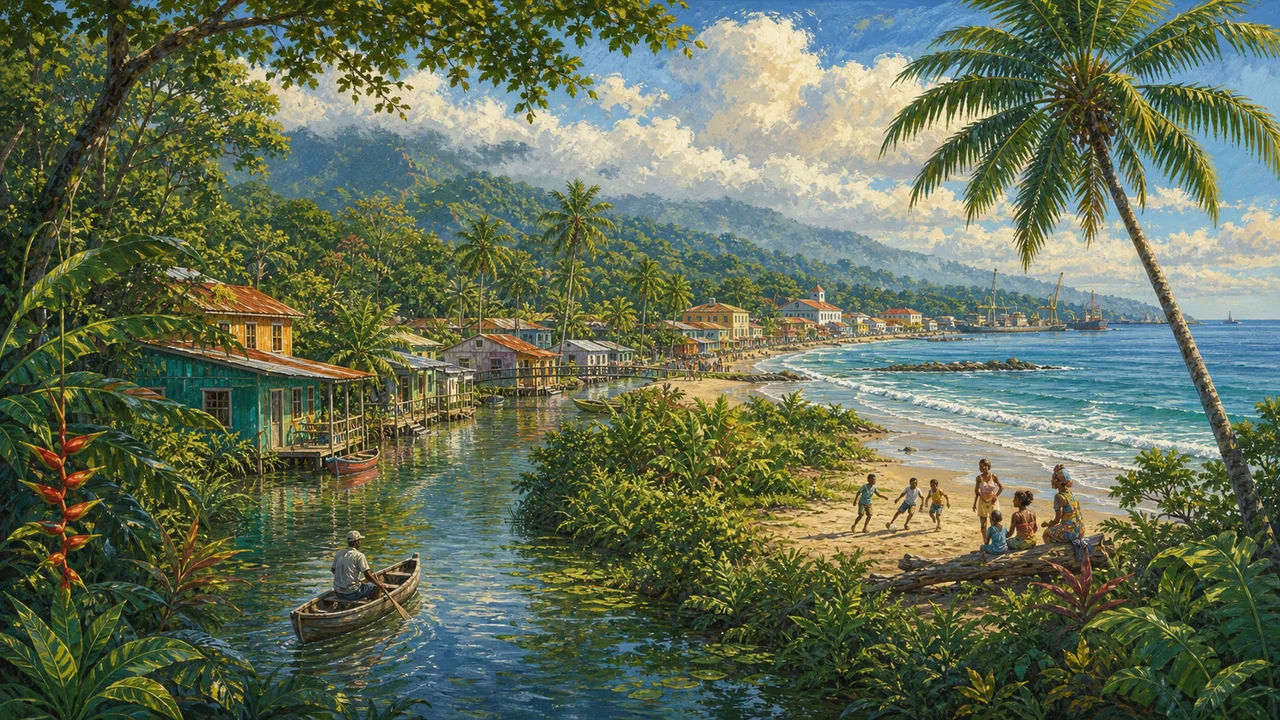 Limón real estate offers something increasingly rare among Caribbean destinations: a coastline of extraordinary natural beauty where property is still genuinely affordable, the culture is authentic, and the development wave has not yet erased what made the place worth discovering in the first place. Costa Rica’s Caribbean province sits on the eastern side of the country — a world apart from the Pacific in both feel and price — drawing a growing community of eco-buyers, surfers, digital nomads, and investors who recognize an undervalued market with real long-term upside.
This guide covers the essential information for anyone considering buying property in Limón: the top areas, property types, investment dynamics, practical logistics, and the legal basics every foreign buyer needs to understand. For the full framework of buying property in Costa Rica — including the step-by-step purchase process and Maritime Zone rules — see the complete Costa Rica Real Estate guide.
Why buy real estate in Limón
The case for Limón real estate begins with the fundamentals. It is the most affordable coastal market in Costa Rica — a consistent fact across property types and neighborhoods — which matters enormously for buyers who want genuine value rather than paying a premium for a well-marketed location. In markets like Puerto Viejo or Cahuita, the price per square meter for a well-sited beach or jungle property can be a fraction of what comparable land commands in Guanacaste or the Central Pacific.
But affordability alone rarely sustains a market. What gives Limón its genuine long-term appeal is the combination of factors that cannot be manufactured or replicated elsewhere:
Exceptional biodiversity and natural environment. Limón borders some of Costa Rica’s most biodiverse terrain — a province where ecotourism and nature are not a marketing line but a daily reality. Sloths move through the trees behind residential lots. Howler monkeys are audible at dawn. Sea turtles nest on the beaches. Coral reefs and calm Caribbean waters define the southern coast. Buyers drawn to authentic nature — rather than manicured resort landscapes — consistently find Limón compelling.
Afro-Caribbean and Indigenous cultural richness. Limón’s culture is unlike anywhere else in Costa Rica. The province has deep Afro-Caribbean roots, with a heritage shaped by the descendants of Jamaican workers who built the Atlantic railway in the nineteenth century, alongside several Indigenous Bribri and Cabécar communities in the Talamanca highlands. The result is a culture that expresses itself through reggae and calypso music, English-Creole language, and distinctive cuisine — most famously rice and beans cooked in coconut milk, a preparation that signals immediately that you are on the Caribbean side. Buyers looking for cultural authenticity, not a sanitized resort experience, find Limón deeply rewarding.
Growing demand from a new buyer profile. The traditional beach-and-golf buyer of Guanacaste is not who drives Limón’s market. Instead, demand comes from eco-conscious buyers, remote workers, surfers seeking uncrowded waves, and investors who track emerging markets early. Cacao and chocolate heritage has generated a thriving agro-tourism circuit of working cacao farms — a form of land use that appeals to buyers interested in sustainable agriculture alongside residential ownership. These converging trends point toward durable appreciation rather than a single-cycle price spike.
Location, climate & lifestyle
Limón Province occupies the entire Caribbean (eastern) coast of Costa Rica, stretching from the Nicaraguan border in the north to the Panamanian border in the south. The geography is defined by coastal lowlands, tropical rainforest, the Talamanca mountain range inland, and a network of canals and lagoons particularly prominent in the northern section around Tortuguero.
Puerto Limón, the provincial capital, is a working port city and the country’s primary Atlantic cargo terminal. It receives cruise ships regularly and functions as a commercial hub, but it is not the focus of the residential property market. The buyer activity that interests most international purchasers is concentrated in the south, in the Talamanca district, where the village of Cahuita and the town of Puerto Viejo de Talamanca anchor a stretch of coast that runs down to Manzanillo and the Panamanian border.
Climate here diverges sharply from Costa Rica’s Pacific side. Because the Caribbean coast lies in the windward path of trade winds carrying moisture from the Caribbean Sea, it receives rainfall throughout the year. There is no single pronounced dry season equivalent to Guanacaste’s bone-dry December through April. Instead, rainfall patterns are more distributed, with somewhat drier windows typically falling in February–March and September–October — though these are relative, not absolute. The practical implication for property owners: the landscape stays green and lush at all times, which is precisely what buyers seeking jungle and nature want, but it also means tropical maintenance — managing vegetation, monitoring moisture, caring for wooden structures — is a year-round consideration.
Lifestyle in Limón’s southern communities is genuinely laid-back. Puerto Viejo operates at its own unhurried rhythm, with surf culture, yoga studios, open-air restaurants, and a cosmopolitan mix of Costa Ricans, Afro-Caribbean locals, and long-term international residents. The town has grown considerably over the past decade but retains a bohemian character that distinguishes it from more polished beach destinations. Cahuita is smaller and quieter, the kind of village where everyone recognizes each other, anchored by the extraordinary reef and wildlife of Cahuita National Park just steps from the center of town.
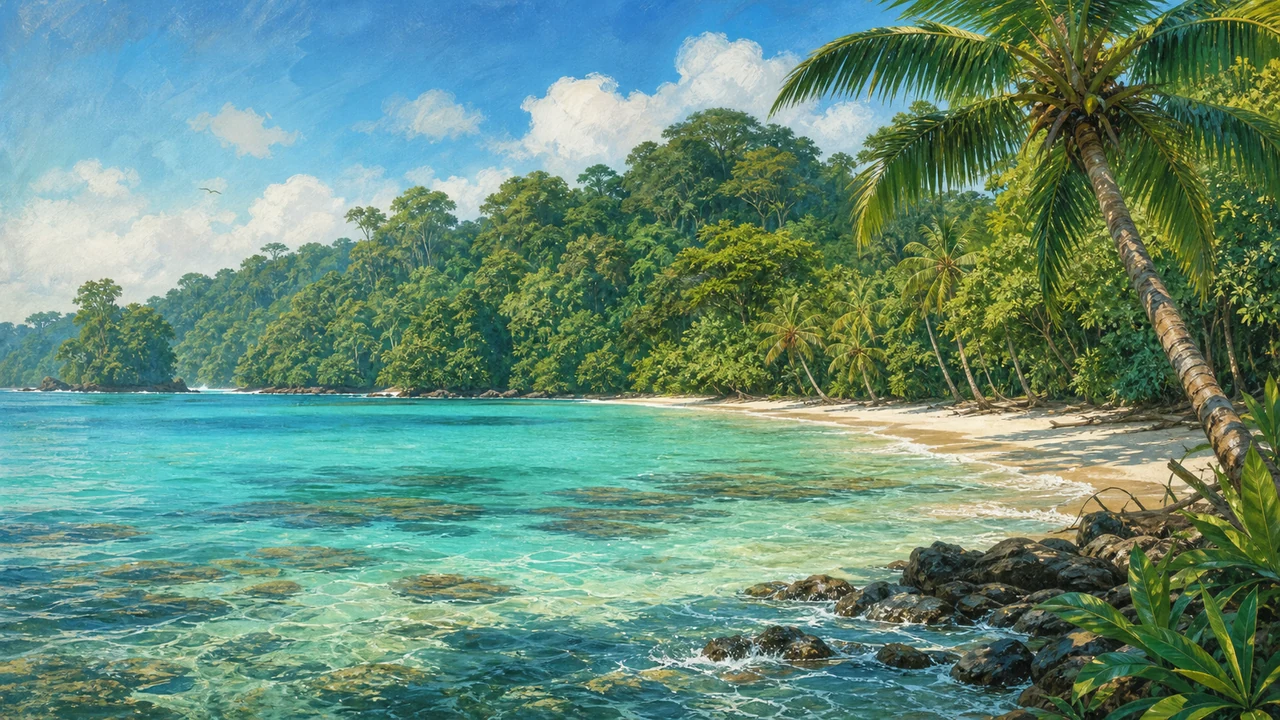
The Costa Rica beaches of the Caribbean coast — Playa Negra, Playa Blanca, Punta Uva, Manzanillo — are among the most photogenic in the country, characterized by the calm turquoise water of the sheltered southern Caribbean, soft sand, and a wall of tropical forest that runs directly to the shore.
Where to buy: top areas in Limón
 ### Puerto Viejo de Talamanca
Puerto Viejo is the commercial and social hub of southern Caribbean real estate activity. A surf town with an international reputation, it draws a steady flow of travelers — and a growing population of digital nomads and remote workers who have discovered that Caribbean-facing high-speed internet now reaches most of the town. The real estate market here is the most active in the province: a mix of small residential homes, rental bungalows, guesthouses, and lots ranging from the village center out to the surrounding jungle and coastal areas. Rental demand is strong relative to other parts of the province, making Puerto Viejo a natural focus for buyers seeking income-generating property.
Cahuita
Cahuita is smaller and more residential than Puerto Viejo, with a distinct Afro-Caribbean character and a pace of life that can feel like stepping back several decades — in the best possible way. The village sits at the western edge of Cahuita National Park, which protects one of Costa Rica’s most important coral reef systems and beaches of striking natural beauty. Property here consists primarily of small lots and homes within or near the village, with limited new development compared to further south. Buyers attracted to Cahuita are generally looking for quiet authenticity over convenience services.
Punta Uva and Manzanillo
This southern corridor — roughly 8 to 15 kilometers south of Puerto Viejo — is considered by many buyers to be the most naturally spectacular part of the Caribbean coast. The beaches at Punta Uva, with their clear shallow water, quiet coves, and framing jungle vegetation, consistently appear on short lists of the most beautiful beaches in Costa Rica. Manzanillo, at the end of the road, sits at the entrance to the Gandoca-Manzanillo Wildlife Refuge, a protected area that prevents development from encroaching further south and ensures the landscape remains intact. Property in this corridor — particularly eco-homes, jungle lots, and small boutique accommodations — commands a premium over other Limón locations, though still far below Pacific equivalents.
Tortuguero
Tortuguero occupies a category of its own. This canal-side community in northern Limón is reachable only by boat or small plane — there is no road access — which shapes both the nature of the real estate market and the type of buyer it attracts. Tortuguero National Park is famous globally for sea turtle nesting, particularly green and leatherback turtles that arrive in large numbers between July and October, drawing ecotourism that sustains the local economy. Property investment here is niche: small lodges, canal-front homes, and land suited to eco-tourism development attract buyers who understand and embrace the logistical reality of living off the road network.
Types of property available
Limón’s property mix reflects both its natural character and its position as an emerging rather than mature market:
- Jungle and beach lots — raw or lightly cleared land bordering forest or near the water, suited for buyers planning to build. Many of the most compelling lots in this province are titled parcels within walking distance of the coast but set back from the Maritime Zone, combining privacy with natural surroundings.
- Eco-homes and jungle bungalows — construction in Limón tends toward open-air, wood-frame, naturally ventilated designs that work with the tropical climate rather than fighting it. Existing eco-homes and bungalows — often built with sustainability principles — are common in the market and popular with rental buyers.
- Small-town residential homes — houses within the villages of Puerto Viejo, Cahuita, and Manzanillo, ranging from modest wooden structures to well-finished homes with modern amenities.
- Small hotels and guesthouses — the backbone of the local tourism economy, boutique guesthouses and small eco-lodges come to market regularly and represent an operational as well as investment purchase for the right buyer.
- Fincas and agricultural land — larger farm parcels (fincas) in the Talamanca hills and lowlands, some with cacao cultivation or other tropical agriculture. These attract buyers interested in agro-tourism, self-sufficient living, or long-term land banking.
One important note on beachfront property: Costa Rica’s Maritime Terrestrial Zone governs the first 200 meters from the high-tide line. The first 50 meters are public land that cannot be privately owned. The next 150 meters are typically concession (leasehold) land administered by the local municipality, with restrictions on majority foreign ownership without residency. Fully titled fee-simple property does exist in Limón but is more commonly set back from the immediate beachfront. Always confirm with an independent Costa Rican attorney whether a given property is titled or concession before proceeding — this distinction is fundamental to understanding what you are actually buying.
Investment and rental potential
Limón is correctly understood as an emerging market — which means the investment calculus differs from established markets like Guanacaste. The upside is greater, the timeline is longer, and the due-diligence requirements are higher.
On the rental income side, Puerto Viejo and Punta Uva are the strongest performers within the province. Surf travelers, ecotourists, and remote workers generate demand throughout the year, with peak concentration during Christmas and New Year, the February–March drier window, and the July–October sea turtle nesting season in Tortuguero. Well-positioned, well-managed properties in Puerto Viejo — particularly those near the beach or with distinctive eco-aesthetic appeal — can achieve meaningful occupancy, though rental management infrastructure is less developed than on the Pacific coast.
The longer-term investment case rests on factors that favor continued appreciation: growing international awareness of the Caribbean coast as an undiscovered alternative to the Pacific; sustained interest from the digital nomad and remote-work community who prioritize authentic environments over resort polish; the irreplaceable natural assets of the Gandoca-Manzanillo refuge and Cahuita National Park that permanently limit supply in the most desirable areas; and Costa Rica’s broader political stability, established rule of law, and low annual property tax burden (0.25% of registered value).
Buyers who approach Limón expecting Guanacaste-level liquidity or a quick flip will be disappointed. Buyers who take a five-to-ten-year view on an authentic Caribbean property in a biodiverse and culturally rich environment — and who price it accordingly — are more likely to find the market rewarding.
Getting there and infrastructure
Limón is connected to San José by Route 32, the Braulio Carrillo highway, one of the more dramatically scenic drives in the country — a two-and-a-half to three hour route through cloud forest and the Braulio Carrillo National Park that descends to the Caribbean lowlands. The highway carries commercial traffic and is well-maintained by Costa Rican standards, though mountain sections can be affected by landslides during heavy rains. Most buyers and visitors travel this route by car or shuttle bus from San José.
Air access is more limited than on the Pacific. Juan Santamaría International Airport (SJO) in San José is the main entry point for international flights, and from there travelers either drive to Limón or take a small charter flight. A domestic airport serves Tortuguero (no road access). Puerto Limón has a small regional airport, but commercial domestic service is limited. The absence of a major international airport in the province is a genuine infrastructural constraint — one that suppresses both tourist volume and property prices relative to Guanacaste, and one that could drive significant appreciation if direct access ever improves.
Services in Puerto Viejo have improved substantially. Reliable high-speed internet, supermarkets, pharmacies, restaurants, and a small but competent set of professional services (attorneys, real estate agents, property managers) are available. The HEBE and La Colina clinics handle routine medical needs; the nearest major hospitals are in San José. The southern Caribbean road — Route 36 from Cahuita to Manzanillo — is paved and generally passable year-round, though some side roads to individual properties require four-wheel drive.
For buyers considering the full landscape of coastal options in Costa Rica, comparing Limón’s accessible, nature-first character against the Pacific alternatives covered in the Costa Rica Real Estate guide is a worthwhile exercise. The Caribbean coast is not for every buyer — but for the buyer it suits, it is often exactly right.
Frequently asked questions
Is Limón a good place to buy real estate in Costa Rica?
Limón is widely considered the most affordable coastal province in Costa Rica, making it an appealing market for buyers who want genuine Caribbean character, exceptional biodiversity, and long-term upside without the price premium of the Pacific coast. The market is less mature than Guanacaste, which means more discovery-phase opportunity — and more due-diligence care is required. Buyers willing to research carefully and work with a qualified local attorney can find compelling value in areas like Puerto Viejo, Cahuita, and Punta Uva.
Can foreigners own property in Limón, Costa Rica?
Yes. Foreign nationals have the same property ownership rights as Costa Rican citizens for titled (fee-simple) property. The main exception is the Maritime Terrestrial Zone (Zona Marítimo Terrestre): the first 50 meters from the high-tide line are public land and cannot be owned by anyone; the next 150 meters are typically concession (leasehold) land administered by the local municipality, with restrictions on majority foreign ownership unless certain residency conditions are met. Always have an independent attorney verify whether a specific property is fully titled or concession before signing anything.
What are the most popular areas to buy property in Limón?
The most active buyer markets are Puerto Viejo de Talamanca (surf town atmosphere, bohemian lifestyle, strong short-term rental demand), Cahuita (small-town feel, adjacent to Cahuita National Park), and the Punta Uva and Manzanillo corridor (some of the most beautiful turquoise-water beaches in the country, sought after for eco-homes and jungle lots). Tortuguero, accessible only by boat or small plane, attracts niche eco-investment. Puerto Limón, the provincial capital, functions primarily as a port and cruise city rather than a residential buyer market.
What is the climate like in Limón for property owners?
Limón's Caribbean climate is distinctly different from Costa Rica's Pacific coast. There is no single long dry season; rainfall is distributed across the year, with some drier windows typically in February–March and September–October. This keeps the landscape intensely green and lush year-round — a major draw for eco-buyers and nature lovers — but means property owners should plan for ongoing tropical maintenance. The region experiences warm temperatures and high humidity typical of a Caribbean rainforest environment.
Is Limón good for vacation rental investment?
Vacation rental potential in Limón is real but more seasonal than on the Pacific coast. Puerto Viejo and Punta Uva attract a steady flow of surf travelers, digital nomads, backpackers, and ecotourists, with peak demand concentrated around dry windows and international holidays. Properties in well-located, well-maintained condition can generate meaningful income, but rental management is less institutionalized than in Guanacaste — buyers benefit from researching local property managers or planning to self-manage more actively.