Manuel Antonio: Rainforest Meets Beach in Costa Rica
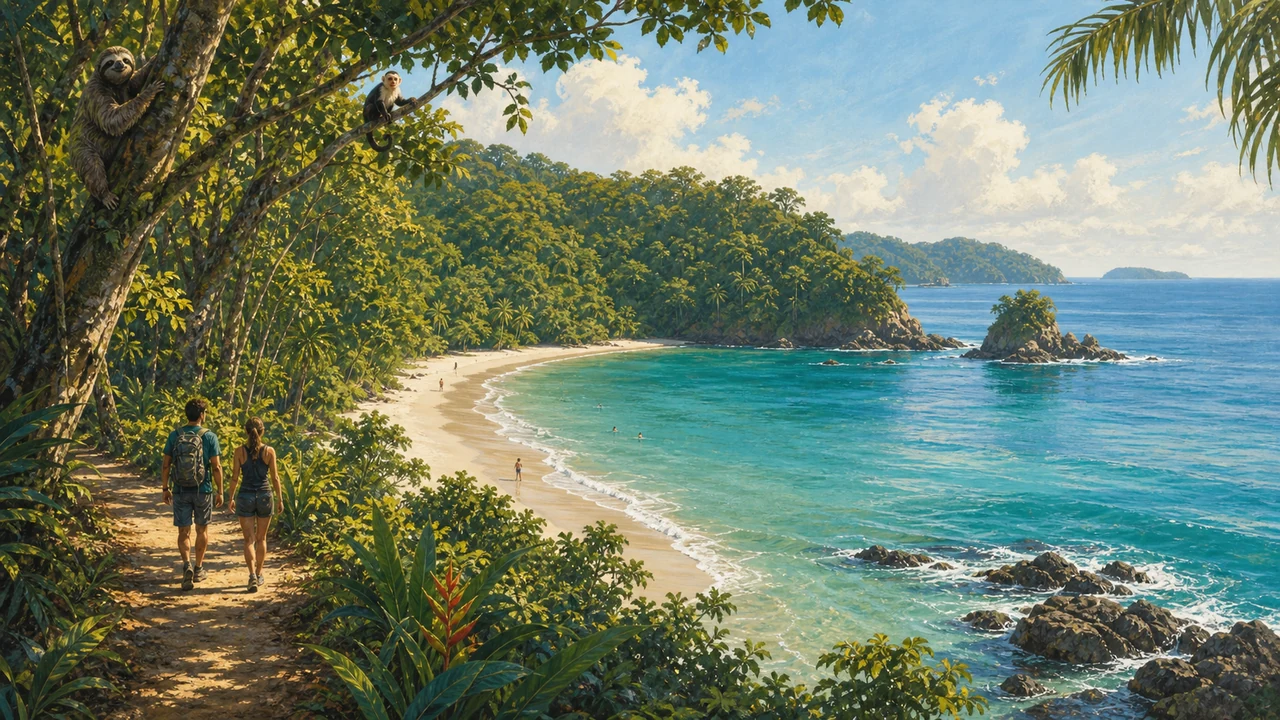 Manuel Antonio is the spot where Costa Rica’s Pacific rainforest tumbles straight into the sea — a rare meeting of dense jungle canopy, white-sand coves, and warm turquoise water that has made it one of the country’s most-visited and most-loved corners. Sitting just a short distance from the fishing town of Quepos on the Central Pacific coast, it packs an extraordinary range of natural experiences into a compact stretch of coastline that is easy to reach and endlessly rewarding to explore.
The National Park: Small but Extraordinary
Manuel Antonio National Park is one of the smallest national parks in Costa Rica, yet it consistently ranks among the most biodiverse and popular in the entire country. Within its boundaries you will find four sheltered beaches separated by rocky headlands, a network of jungle trails weaving through humid tropical rainforest, and offshore islands that form part of the protected marine zone. For the full picture of what the park offers — entrance logistics, trail maps, and conservation history — see the dedicated pages on Manuel Antonio National Park and the Quepos & Manuel Antonio guide.
This highlight page focuses on why Manuel Antonio belongs on every ecotourism & nature itinerary and what sets the wider area apart.
Wildlife at the Forest Edge
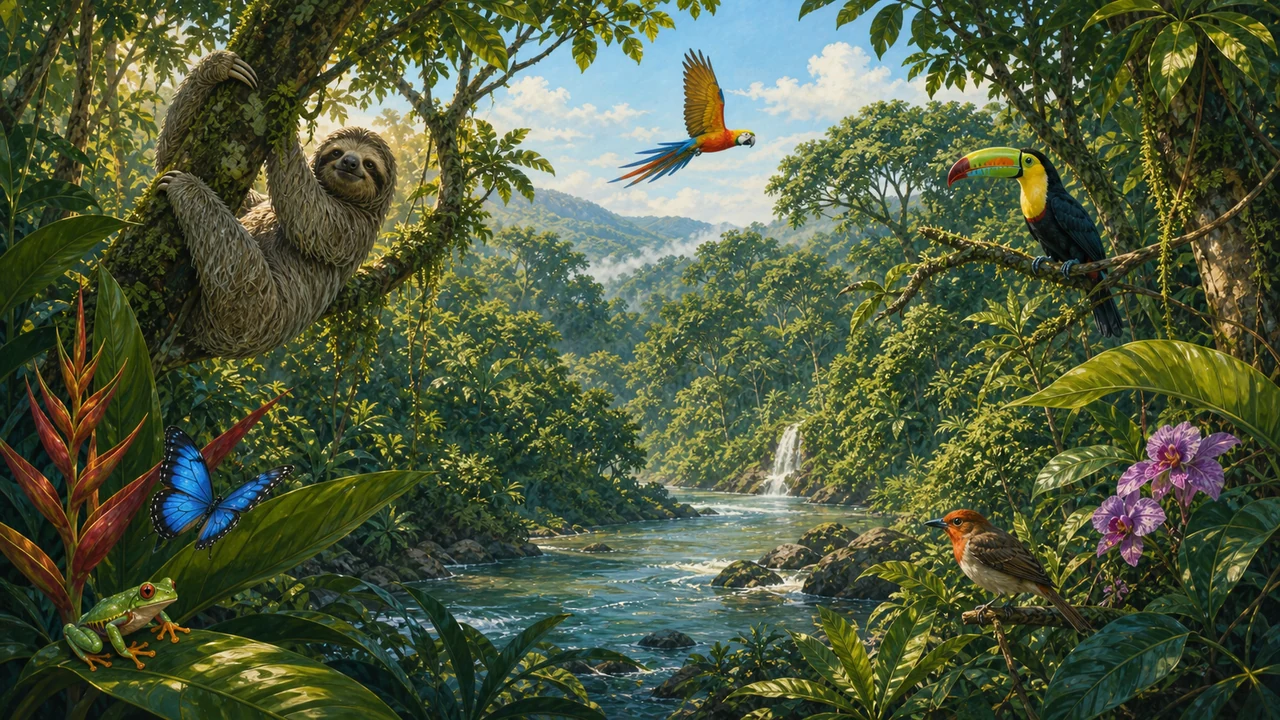 The draw of Manuel Antonio is not any single species but the sheer density of wildlife you encounter doing ordinary things — strolling the beach path, waiting for a bus, or sitting at a roadside restaurant. Spotting three-toed sloths draped in the coastal trees is almost guaranteed, and the park hosts four species of monkey, including the rare and endearing squirrel monkey (mono tití), found in few other places along the Pacific coast.
Birders will find herons, kingfishers, toucans, and flocks of scarlet macaws that have made a remarkable comeback in the region. The rocky offshore islands shelter seabirds and, in season, provide a lookout point for humpback whales and dolphins visible from the beach. Bring binoculars and, ideally, hire one of the licensed naturalist guides who wait at the park entrance — they carry powerful spotting scopes and know every sloth hollow.
One important note: do not feed any wildlife. Monkeys that receive processed human food suffer real health consequences, and habituated animals lose the natural wariness that protects them.
Beaches That Deserve Their Reputation
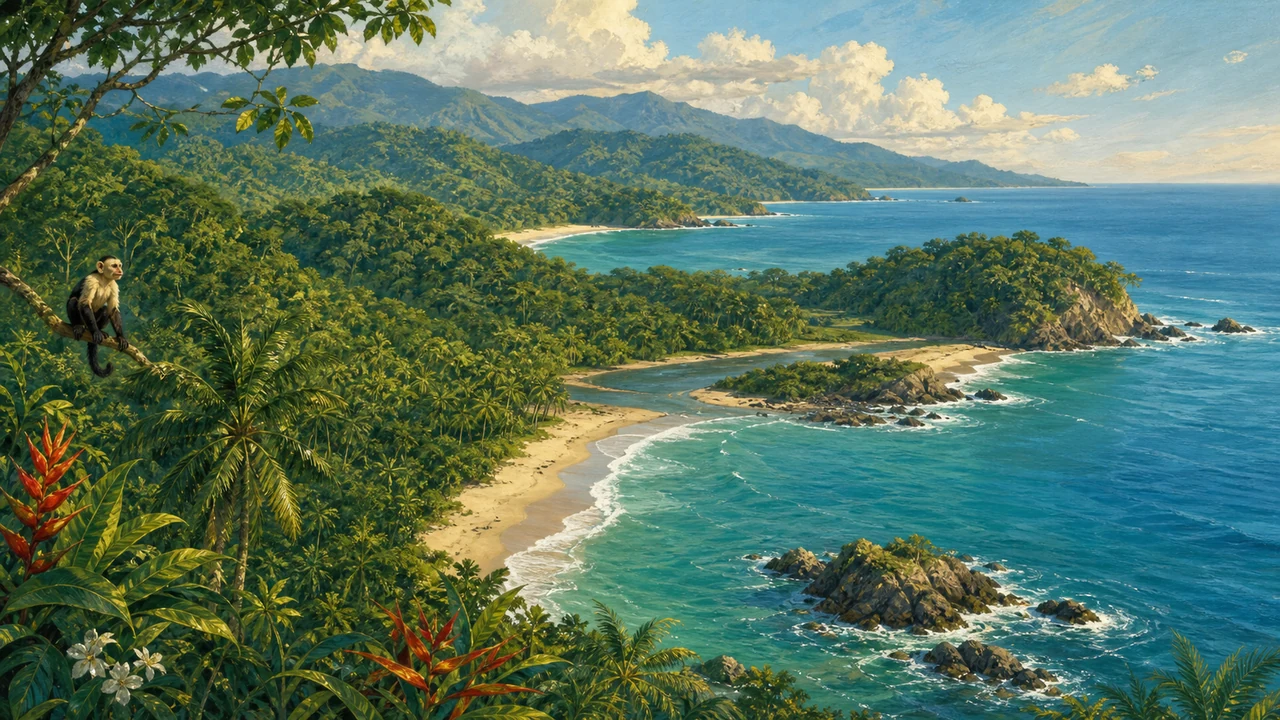 The beaches inside the park range from wide, calm swimming coves to more secluded crescents backed by jungle. Swimming at Manuel Antonio’s rainforest-backed beaches feels like stepping into a nature documentary — the trees lean over the sand, coatis trot along the tideline, and pelicans cruise the surf break. Most beach areas have lifeguard coverage during peak hours and calm-enough water for confident swimmers; always check posted conditions.
Outside the park, the central Pacific coast offers additional beaches at Hermosa Beach and other spots accessible from the Quepos–Manuel Antonio road, each with its own character and services.
The Quepos–Manuel Antonio Road
The 7-kilometer paved road connecting Quepos to the park entrance is a destination in itself. Hotels, boutique lodges, and restaurants are tucked into the forested hillsides above the Pacific, and the panoramic ocean views from the hillside hotels are genuinely spectacular — especially at sunset when the sky ignites over the water. Small buses run the route frequently and are the easiest way to travel; taxis are also plentiful. Traveling with others helps split taxi costs.
Along the way you will find operators offering the full range of Costa Rica activities: canopy tours, white-water rafting on nearby rivers, sea kayaking, sport fishing out of Quepos marina, dolphin-watching excursions, and snorkeling trips to the offshore islands.
Getting There and Getting Ready
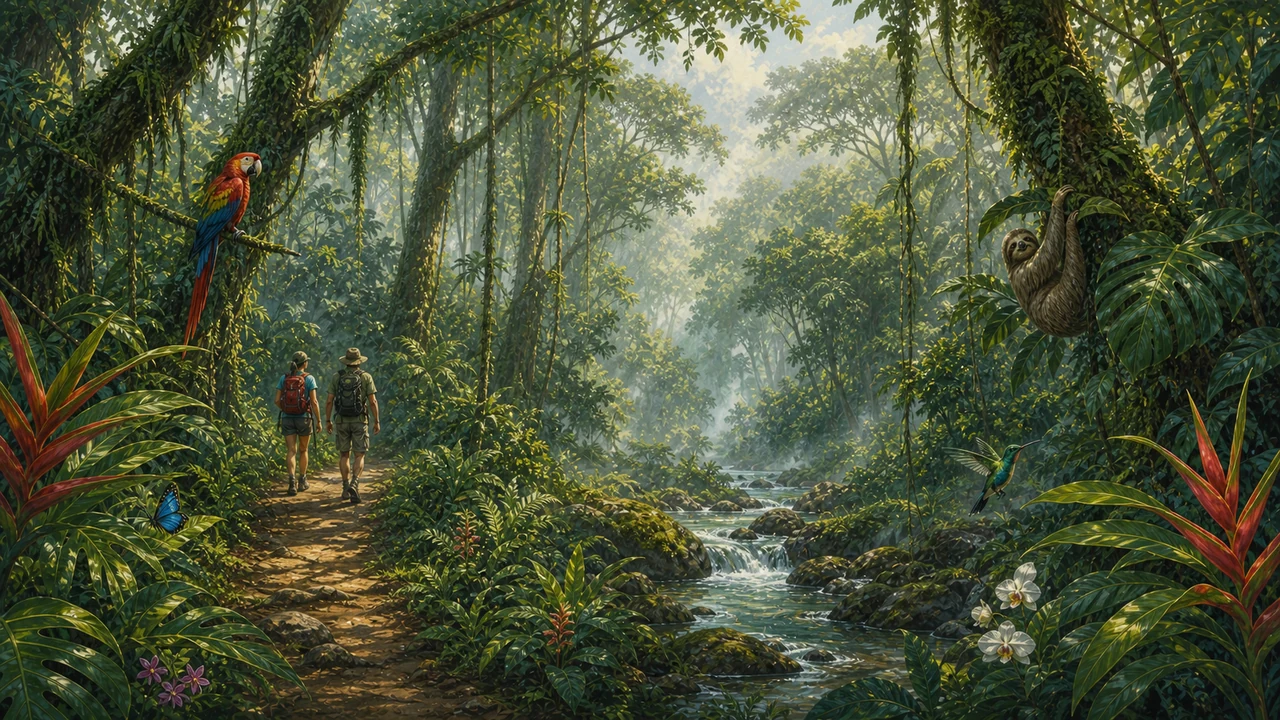 Manuel Antonio is one of the most accessible nature destinations in Costa Rica. From San José, the drive takes roughly three hours. Direct shuttle services operate daily from the capital and from other tourist hubs. Domestic flights from Tobías Bolaños Airport (SYQ) reach Quepos in under 30 minutes, making it a practical option for tighter itineraries.
Packing light but smart for a rainforest-beach visit means reef-safe sunscreen, a quick-dry towel, waterproof sandals, a light rain jacket, and insect repellent for the trails. The park limits daily visitor numbers, so booking in advance — especially during the dry-season peak — is strongly recommended.
For broader planning, Costa Rica travel tips covers everything from currency to transport, and the Costa Rica national parks section links to every protected area in the country if you want to combine Manuel Antonio with a park like Carara National Park to the north, which offers its own spectacular birding along the Tárcoles River.
A Window into Responsible Tourism
Manuel Antonio has long been a model for how tourism and conservation can coexist. Local hotels, tour operators, and community organizations have invested heavily in protecting the forests and coastline that draw visitors in the first place. Supporting certified sustainable operators in Manuel Antonio is an easy way to ensure your visit contributes to that effort rather than undermining it.
The wider Central Pacific region offers community-based experiences worth adding to your itinerary — see Rural Tourism in Central Pacific for options beyond the main park. Costa Rica protects more than a quarter of its territory in parks and reserves — a commitment you experience nowhere more vividly than at Manuel Antonio, where the jungle ends at the water’s edge and the wildlife is simply part of the view.
Frequently asked questions
What makes Manuel Antonio unique compared to other Costa Rica destinations?
Manuel Antonio is one of the only places in the country where dense humid rainforest meets pristine Pacific beaches within a single, compact national park. You can hike jungle trails past sloths and howler monkeys in the morning and swim at a white-sand cove in the afternoon — all within a few square kilometers.
What wildlife can I expect to see at Manuel Antonio?
The area is famous for three-toed sloths, white-faced and squirrel monkeys, howler monkeys, raccoons, iguanas, and dozens of bird species. Offshore, dolphins and humpback whales pass through seasonally. A licensed local guide dramatically increases your sightings.
Is Manuel Antonio National Park suitable for families?
Yes — it is one of the most family-friendly parks in Costa Rica. Trails are well-marked and relatively flat, beaches are calm for swimming, and wildlife is abundant and highly visible. Keep children away from the monkeys and never feed them.
When is the best time to visit Manuel Antonio?
The dry season (December through April) brings sunny days and calmer seas, making it peak season. The green season (May through November) sees lush foliage, fewer crowds, and lower hotel rates — afternoon showers are brief and wildlife activity actually increases.
How do I get from San José to Manuel Antonio?
The drive from San José takes roughly 3 hours along the Central Pacific highway. Direct shuttle buses and shared transfers are widely available, as are domestic flights into Quepos (QEP) airport for the quickest connection.